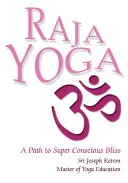
Raja Yoga
 84
84

Raja Yoga
Sri Joseph Ketron III's Raja Yoga presents a fascinating, if highly specialized, attempt to synthesize the spiritual aspirations of yogic practice with the devotional heart of Christianity. The book's singular focus on framing the yogic path as a devotion to Lord Christ is its most striking feature, offering a unique perspective for a specific audience. Ketron's strength lies in his earnest effort to find common ground between seemingly disparate traditions, particularly in the realm of spiritual surrender and divine love. However, this very specificity becomes a limitation; readers not already aligned with this Christo-yogic perspective may find the interpretative framework too narrow or exclusive. A passage exploring the concept of 'surrender' through the lens of both Christian obedience and yogic detachment, for instance, highlights the book's core thesis but might alienate those seeking a broader comparative study. Ultimately, Raja Yoga is a valuable, albeit niche, contribution for those seeking a devotional bridge between these spiritual landscapes.
📝 Description
84
Published in 2003, Raja Yoga by Sri Joseph Ketron III connects Eastern yogic philosophy with Western Christian mysticism.
Sri Joseph Ketron III's Raja Yoga, first published in 2003, examines the connections between yogic traditions and Christian devotion. The book proposes that yoga's spiritual aims align with Christological principles, viewing the practice not just physically but as a path toward spiritual union with Christ. Ketron offers a framework for understanding yogic concepts through the lens of Christian faith.
This work is intended for yoga practitioners who see Lord Christ as their divine focus. It provides a theological and philosophical structure for those wishing to integrate their Christian beliefs with Raja Yoga disciplines. The book addresses individuals seeking to articulate yoga's spiritual goals using language familiar to Christian prayer and contemplation. It aims to bridge the perceived gap between these spiritual paths.
The early 2000s were a time of increased interaction between Eastern spiritual practices and Western thought. Ketron's text stands out by focusing on a Christ-centered interpretation of yoga, differentiating it from more general or purely Eastern approaches. This perspective likely grew from spiritual synthesis movements of the late 20th century.
Ketron's Raja Yoga emerged in the early 2000s, a period marked by a growing, sometimes uneasy, fusion of Eastern spiritual disciplines with Western religious and philosophical ideas. While previous movements had introduced yoga to the West, this book distinguishes itself by framing yogic practices through a decidedly Christocentric perspective. It engages with the broader spiritual synthesis movements of the late 20th century, offering a unique interpretation that aligns the pursuit of yogic union with a Christian devotional paradigm.
💡 Why Read This Book?
• Gain a unique perspective on Raja Yoga as a devotional practice aligned with Christian principles, understanding how concepts like divine love and surrender are interpreted through Sri Joseph Ketron III's framework, as presented in the text. • Explore the potential for spiritual synthesis by examining Ketron's specific integration of yogic philosophy with Christological devotion, a concept explored from its first publication in 2003. • Discover how yogic techniques, such as meditation and ethical observances, can be reframed within a Christian devotional context, offering a distinct approach to spiritual discipline not typically found in standard yoga literature.
⭐ Reader Reviews
Honest opinions from readers who have explored this book.
❓ Frequently Asked Questions
What is the primary theological perspective of Sri Joseph Ketron III's Raja Yoga?
The primary theological perspective is a Christo-centric interpretation of Raja Yoga. The book frames the yogic path, including its meditative and ethical disciplines, as a form of devotion and spiritual union with Lord Christ.
Who is the intended audience for Raja Yoga by Sri Joseph Ketron III?
The intended audience is yoga practitioners whose chosen deity or spiritual focus is Lord Christ. It appeals to those seeking to integrate their Christian faith with their yogic practices.
When was Raja Yoga by Sri Joseph Ketron III first published?
Raja Yoga by Sri Joseph Ketron III was first published on April 13, 2003.
Does this book present a traditional Hindu view of Raja Yoga?
No, it presents a distinct interpretation. While drawing on the structure and concepts of Raja Yoga, it re-contextualizes them within a Christian devotional framework, focusing on Lord Christ.
What is the main goal of the spiritual path described in Raja Yoga?
The main goal is spiritual realization and union, achieved through a path of devotion, surrender, and disciplined practice, all understood through the lens of relationship with Lord Christ.
How does this book differ from other books on Raja Yoga?
Its fundamental difference lies in its explicit and singular focus on aligning yogic principles with Christian devotion to Lord Christ, a unique synthesis not commonly found in other Raja Yoga literature.
🔮 Key Themes & Symbolism
Christo-Yogic Devotion
This theme centers on the core argument that the principles of Raja Yoga can and should be understood through the lens of Christian devotion to Lord Christ. Ketron posits that the yogic aim of union (Yoga) is fundamentally compatible with, and can be expressed as, a profound love and surrender to Jesus Christ. This perspective reframes concepts like surrender, divine grace, and spiritual attainment within a Christian theological framework, offering a unique devotional pathway for practitioners who hold Christ as their central figure of worship and spiritual aspiration.
Spiritual Synthesis
The work explores the potential for synthesizing Eastern yogic philosophy with Western Christian mysticism. It moves beyond superficial comparisons to suggest a deeper resonance between the paths, particularly concerning the cultivation of inner peace, ethical conduct, and the pursuit of divine connection. Ketron’s approach highlights how ancient yogic techniques and philosophical underpinnings can be reinterpreted to serve and deepen a practitioner's existing Christian faith, fostering a more integrated spiritual life.
The Path of Surrender
A significant aspect of Raja Yoga as presented by Ketron is the concept of surrender. This is explored as a mutual principle in both Christian theology and yogic practice. In the Christian context, it signifies obedience and trust in God's will, often embodied by Christ's sacrifice. In the yogic context, it relates to the relinquishing of ego and attachment to achieve a state of higher consciousness. Ketron connects these, presenting surrender to Christ as the ultimate yogic 'samadhi' or union.
Ethical Foundations
The book likely examines the ethical precepts (Yamas and Niyamas) foundational to Raja Yoga, reinterpreting them within a Christian moral framework. Practices such as non-violence (ahimsa), truthfulness (satya), and purity (brahmacharya) are discussed not just as yogic disciplines but as virtues that enhance one's relationship with God and Christ. This thematic focus underscores the idea that spiritual progress is intrinsically linked to ethical living and character development.
💬 Memorable Quotes
Direct passages from the work, attributed to the author.
“Yoga is the path of divine love, and our Lord Christ is the ultimate object of that love.”
— This statement expresses the book's central thesis, positioning the entire yogic discipline as a devotional practice directed towards Jesus Christ. It suggests that the goal of union in yoga is achieved through the Christian concept of loving and surrendering to Christ.
“Through surrender to Christ, the ego's grip loosens, paving the way for spiritual realization.”
— This highlights Ketron's synthesis of yogic concepts like ego-reduction and spiritual realization with Christian principles of surrender and devotion to Christ, framing it as a method for achieving higher consciousness.
“The ancient yogis sought union; we find that union perfected in Christ.”
— This interpretation emphasizes the perceived continuity and ultimate fulfillment of yogic aspirations within the Christian narrative, suggesting that Christ represents the pinnacle of the spiritual union that yoga seeks.
“Ethical conduct, as outlined in the Yamas and Niyamas, builds a character worthy of divine grace.”
— This suggests that the yogic ethical framework is presented not merely as a spiritual discipline but as a means to cultivate virtues that align with Christian teachings on righteousness and readiness to receive God's favor.
“Meditation becomes a communion with the divine presence of Christ.”
— This reframes the practice of meditation, typically associated with achieving altered states of consciousness or union with the absolute, as a direct, personal communion or prayerful encounter with Jesus Christ.
🌙 Esoteric Significance
Tradition
This work fits within the broader Esoteric Christian and comparative mysticism movements, seeking to bridge Eastern yogic philosophy with Western Christian theology. It departs from traditional Vedanta and Patanjali's Yoga Sutras by reinterpreting core yogic concepts, such as union (Yoga) and divine love (Bhakti), through the specific devotional lens of Christology. It aligns with esoteric traditions that look for universal spiritual truths underlying diverse religious forms, but narrows its focus to a Christ-centered expression.
Symbolism
While specific symbols are not detailed here, the overarching symbolism revolves around the figure of Lord Christ as the ultimate object of yogic devotion and the embodiment of spiritual union. Concepts like the 'divine love' central to Bhakti Yoga are symbolized by Christ's sacrifice and teachings. The yogic path itself, with its stages and disciplines, becomes a symbolic journey towards Christ, mirroring Christian narratives of spiritual ascent and redemption.
Modern Relevance
Contemporary practitioners interested in integrated spirituality, particularly those with a Christian background seeking to deepen their yoga practice, may find Ketron's work relevant. It speaks to a modern desire for personalized spiritual paths that honor existing faith traditions while exploring diverse contemplative techniques. Thinkers and groups exploring the intersection of contemplative prayer, Christian mysticism, and yogic disciplines might draw inspiration from its approach.
👥 Who Should Read This Book
• Christian yoga practitioners seeking to harmonize their faith with yogic disciplines, providing a theological framework that explicitly aligns yogic goals with devotion to Lord Christ. • Students of comparative religion and mysticism interested in unique syntheses of Eastern and Western spiritual traditions, offering a case study in Christo-centric yogic interpretation. • Individuals exploring devotional paths who wish to understand how ancient yogic techniques can be reframed to deepen their personal relationship with Christ.
📜 Historical Context
Published in 2003, Sri Joseph Ketron III's Raja Yoga emerged during a period of continued Western engagement with Eastern spiritual traditions, albeit one marked by increasing diversification and specialization. While earlier movements like Theosophy had broadly introduced yoga, Ketron's work distinguished itself by its specific focus on a Christo-centric interpretation. This was a departure from more common secularized yoga or the purely Vedantic philosophical explorations prevalent in the late 20th century. The work likely responded to, and participated in, the broader spiritual marketplace of the time, where individuals sought personalized spiritual paths that often involved synthesizing elements from different traditions. Unlike comparative religion scholars or comparative mystics who might draw parallels between various deities or paths, Ketron’s singular focus on Lord Christ suggests a desire to firmly anchor yogic practice within a specific devotional context, potentially as a counterpoint to more New Age or non-Christian appropriations of yoga.
📔 Journal Prompts
The concept of divine love as Lord Christ's ultimate goal.
The practice of surrender within both Christian devotion and yogic discipline.
Reinterpreting the Yamas and Niyamas through a Christo-centric ethical lens.
Meditation as communion with the divine presence of Christ.
The yogic aim of union as perfected in Christ.
🗂️ Glossary
Raja Yoga
A major school of yoga, often referred to as 'Royal Yoga,' which typically emphasizes meditation, breath control, and ethical disciplines to achieve spiritual enlightenment or union with the divine.
Lord Christ
Refers to Jesus Christ, understood in this context as the central figure of devotion and the ultimate goal of the spiritual path described in the book, embodying divine love and union.
Bhakti Yoga
The yoga of devotion, characterized by love, surrender, and adoration towards a chosen deity. In Ketron's work, this is specifically directed towards Lord Christ.
Yoga (Union)
The Sanskrit word meaning 'union,' referring to the ultimate goal of yogic practice: the integration of the individual consciousness with the universal consciousness or the divine.
Yamas
The ethical restraints or moral disciplines in Raja Yoga, forming the first limb of Ashtanga Yoga. They include non-violence, truthfulness, non-stealing, chastity, and non-possessiveness.
Niyamas
The observances or disciplines in Raja Yoga, forming the second limb of Ashtanga Yoga. They include purity, contentment, austerity, self-study, and surrender to the divine.
Spiritual Realization
The ultimate attainment in spiritual practice, involving the deep understanding and direct experience of one's true nature and its connection to the divine or ultimate reality.