Stoneslayer

 82
82

Stoneslayer
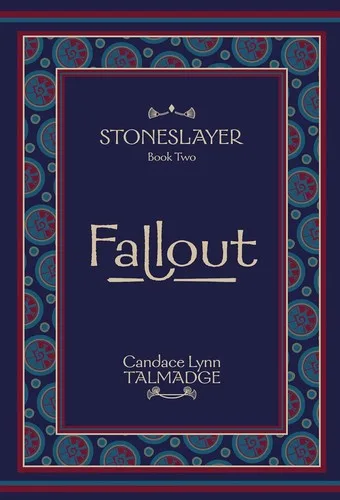
Candace Lynn Talmadge's Stoneslayer offers a refreshing departure from the often romanticized narratives surrounding alchemy. The book's strength lies in its systematic breakdown of the Magnum Opus, presenting it with an academic rigor that respects the tradition's complexity. Talmadge avoids sensationalism, focusing instead on the philosophical and energetic underpinnings of the Great Work. A particularly insightful section details the symbolic representation of the four elements within the alchemical vessel, connecting them to distinct phases of transformation. However, the book’s dense prose, while precise, may present a steep learning curve for newcomers to hermeticism. Some readers might find the lack of direct, practical exercises a limitation, expecting more hands-on guidance. Nevertheless, Stoneslayer provides a robust theoretical framework for understanding alchemical processes, grounded in historical principles. It serves as a valuable resource for those seeking to grasp the intellectual architecture of this ancient art.
📝 Description
82
Candace Lynn Talmadge's 2025 book, Stoneslayer, examines the esoteric core of material transformation.
Stoneslayer, published in 2025, offers a structured approach to understanding alchemical principles and their application to both inner and outer realities. The book dissects ancient alchemical concepts, moving beyond simplistic notions of transmutation to reveal the energetic and symbolic language inherent in the alchemical process. Talmadge details alchemical stages and operations, presenting them as active modalities for personal evolution rather than mere historical curiosities.
This work is for serious students of hermetic philosophy, practitioners of Western esotericism, and scholars interested in the philosophical aspects of alchemy. It appeals to those seeking a rigorous, text-based understanding of alchemical theory, favoring detailed exegesis and complex symbolic systems over purely practical or ritualistic instruction. A foundational awareness of metaphysical concepts is beneficial for full engagement with the text's depth.
Stoneslayer synthesizes alchemical knowledge from periods like the late medieval era and the Renaissance, engaging implicitly with figures such as Nicolas Flamel and the intellectual climate surrounding the Rosicrucian manifestos. The book stands as an alternative to purely materialistic interpretations of science and spirituality, grounding its framework in ancient wisdom traditions. It re-examines esoteric traditions through both academic and practical perspectives, positioning alchemy as a living modality for understanding reality.
💡 Why Read This Book?
• Gain a structured understanding of the Magnum Opus, tracing its distinct stages and philosophical implications as presented in Talmadge's systematic approach, which moves beyond simplistic notions of transmutation. • Explore the symbolic roles of the four classical elements—Earth, Air, Fire, Water—as detailed in Chapter 3, and understand their connection to specific phases of the alchemical process. • Grasp the practical alchemical operations of 'Solve et Coagula' as explained through the text's exegesis, applying these principles of dissolution and reconstitution to personal development.
⭐ Reader Reviews
Honest opinions from readers who have explored this book.
❓ Frequently Asked Questions
What is the primary focus of Candace Lynn Talmadge's Stoneslayer?
Stoneslayer primarily focuses on the esoteric and philosophical underpinnings of alchemy, detailing the systematic stages of the Great Work (Magnum Opus) and the symbolic language of transformation.
Who would benefit most from reading Stoneslayer?
Students of hermetic philosophy, Western esotericism practitioners, and scholars interested in the metaphysical aspects of alchemy would benefit most from its rigorous approach.
Does Stoneslayer offer practical alchemical recipes or instructions?
No, Stoneslayer emphasizes the theoretical and philosophical aspects of alchemy, rather than providing practical recipes or step-by-step instructions for physical transmutation.
What historical alchemical concepts does the book explore?
The book explores concepts such as the Magnum Opus, the Prima Materia, the four elements (Earth, Air, Fire, Water), and the operations of 'Solve et Coagula'.
When was Stoneslayer first published?
Stoneslayer was first published in 2025, positioning it as a contemporary work that synthesizes historical alchemical knowledge.
What is the significance of the 'Great Work' in Stoneslayer?
The 'Great Work' (Magnum Opus) is presented as the central, multi-stage process of alchemical transformation, encompassing both material and spiritual refinement, as detailed throughout the text.
🔮 Key Themes & Symbolism
The Main work
Stoneslayer meticulously unpacks the 'Great Work' (Main work), presenting it not as a singular event but as a profound, multi-stage process of transformation. Talmadge outlines the philosophical and energetic shifts required at each phase, from the initial dissolution of the Prima Materia to the final coagulation of the perfected substance. This detailed exegesis provides readers with a conceptual map for understanding the arduous, yet rewarding, path of alchemical endeavor, emphasizing its relevance beyond mere material manipulation.
Symbolic Elemental Dynamics
The book examines the profound symbolism of the four classical elements—Earth, Air, Fire, and Water—as fundamental principles governing alchemical processes. Each element is explored not just as a physical component but as a representation of distinct energetic qualities and stages within the Great Work. Talmadge illustrates how their interplay, governed by the principle of 'Solve et Coagula', dictates the progression of transformation, offering a rich symbolic language for understanding both cosmic and personal evolution.
Solve et Coagula
Central to the practical philosophy of alchemy, the operations of 'Solve et Coagula' (dissolve and coagulate) are thoroughly examined in Stoneslayer. Talmadge elucidates these principles as the core mechanisms for breaking down and then reconstructing matter and consciousness. This dual process is presented as essential for purification, refinement, and the ultimate achievement of alchemical perfection, offering a framework for understanding how complex structures are dismantled and reformed at fundamental levels.
Prima Materia
The concept of the 'Prima Materia', or First Matter, is explored as the undifferentiated, primordial substance from which all existence arises. Stoneslayer details its significance as the starting point of the alchemical journey, a state of potentiality that must be worked upon and refined. Talmadge discusses its symbolic representation and energetic properties, framing it as the essential foundation upon which the entire Great Work is built, requiring careful manipulation to unlock its transformative power.
💬 Memorable Quotes
Direct passages from the work, attributed to the author.
“The alchemical vessel is a microcosm of the cosmos.”
— This statement emphasizes the hermetic principle of 'as above, so below'. It suggests that the processes undertaken in an alchemical laboratory mirror the fundamental operations occurring throughout the universe, making the vessel a symbolic stage for universal laws.
“Each stage of the Great Work requires a specific energetic signature.”
— This concept underscores the dynamic nature of alchemy. It suggests that distinct phases of the Main work are characterized by unique vibrational frequencies or energetic conditions that must be understood and cultivated for successful progression.
“Dissolution is not destruction, but liberation of potential.”
— This interpretation of 'Solve' points to the constructive aspect of alchemical breakdown. It reframes the idea of dissolution not as an end, but as a necessary step to release trapped energies or components for subsequent reformation.
💡 Key Ideas
Editorial paraphrase of the work's core concepts — not direct quotes.
Transformation begins with discerning the essential from the accidental.
This paraphrase highlights the alchemical focus on purification. It implies that the first step in any transformative process, whether material or spiritual, involves identifying and separating the core essence from superficial or extraneous qualities.
Coagulation is the art of giving stable form to liberated essences.
This paraphrase of 'Coagula' emphasizes the creative act of alchemical synthesis. It suggests that after dissolution, the subsequent step involves skillfully bringing together purified elements to create a new, stable, and perfected form.
🌙 Esoteric Significance
Tradition
Stoneslayer firmly situates itself within the Western Esoteric tradition, drawing heavily on Hermetic philosophy and its alchemical branch. It aligns with the lineage that views alchemy as a symbolic path to spiritual perfection and understanding the divine order of the cosmos. The work departs from purely materialistic or early modern scientific interpretations, reasserting alchemy's role as a system of spiritual psychology and cosmology.
Symbolism
Key symbols explored include the 'Prima Materia,' representing undifferentiated potential; the four classical elements (Earth, Air, Fire, Water), symbolizing fundamental forces and states of being; and the operations of 'Solve et Coagula,' denoting the cyclical processes of dissolution and reconstitution essential for transformation.
Modern Relevance
Contemporary practitioners of Western esotericism, particularly those involved in Hermeticism and ceremonial magic, draw on the theoretical framework provided by Stoneslayer. Thinkers exploring consciousness studies and the philosophy of science who seek non-materialist models also find resonance in its detailed exploration of energetic transformation and symbolic correspondence.
👥 Who Should Read This Book
• Students of Hermeticism seeking a detailed, philosophical exegesis of the alchemical Great Work (Main work). • Practitioners of Western Esotericism desiring to understand the symbolic language and theoretical stages of alchemical transformation beyond practical application. • Scholars of comparative religion and philosophy interested in the metaphysical dimensions of alchemy and its historical intellectual currents.
📜 Historical Context
Candace Lynn Talmadge's Stoneslayer emerges in the early 21st century, a period marked by renewed interest in esoteric traditions and their philosophical underpinnings. While not directly participating in the historical alchemical movements of the Renaissance or the Paracelsian era, the work synthesizes centuries of alchemical thought. It implicitly engages with figures like Maria the Jewess, credited with early advancements in laboratory techniques, and later alchemists whose works form the foundational texts of hermeticism. The book's detailed exposition of the Main work can be seen as a response to more reductionist or purely historical interpretations of alchemy that gained traction in the late 19th and early 20th centuries with movements like the Hermetic Order of the Golden Dawn. It asserts the continued relevance of alchemical philosophy in understanding consciousness and matter, standing apart from purely materialistic scientific paradigms.
📔 Journal Prompts
The Prima Materia: what undifferentiated potential exists within your current life situation?
Reflect on the interplay of 'Solve et Coagula' in a recent personal challenge.
How do the four elements manifest as distinct forces in your daily routines?
Consider the alchemical vessel as a metaphor for your own inner space.
What does 'transmutation' signify in the context of your personal growth journey?
🗂️ Glossary
Main work
Latin for 'Great Work,' referring to the complex, multi-stage process of alchemical transformation, encompassing both material refinement and spiritual perfection.
Prima Materia
The fundamental, undifferentiated substance from which all things are believed to originate in alchemy; the starting point of the Great Work.
Solve et Coagula
Alchemical principles meaning 'dissolve and coagulate.' These refer to the essential operations of breaking down substances and then reforming them into a more perfected state.
Hermeticism
A philosophical and religious tradition based on writings attributed to Hermes Trismegistus, emphasizing esoteric knowledge, spiritual enlightenment, and the interconnectedness of the cosmos.
Four Elements
In classical and alchemical thought, the fundamental components of the universe: Earth, Air, Fire, and Water, each associated with distinct qualities and symbolic meanings.
Alchemical Vessel
The container (such as an alembic or retort) used in alchemical operations, symbolically representing a microcosm where transformation occurs.
Transmutation
The alchemical process of changing one substance into another, often understood metaphorically as the transformation of the imperfect self into a perfected spiritual state.
🔮 Readers Also Liked
Browse all →








More by Candace Lynn Talmadge
All books →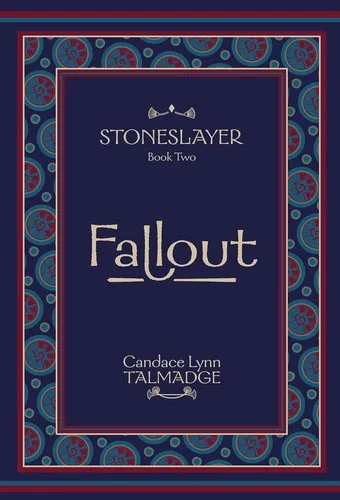

More Free Occult Philosophy Books
View all →