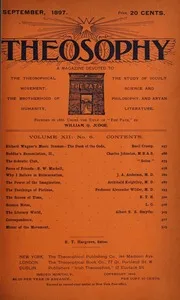
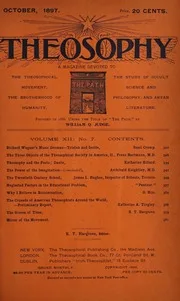
Theosophy 1897-09: Vol 12 Iss 6
 72
72

Theosophy 1897-09: Vol 12 Iss 6

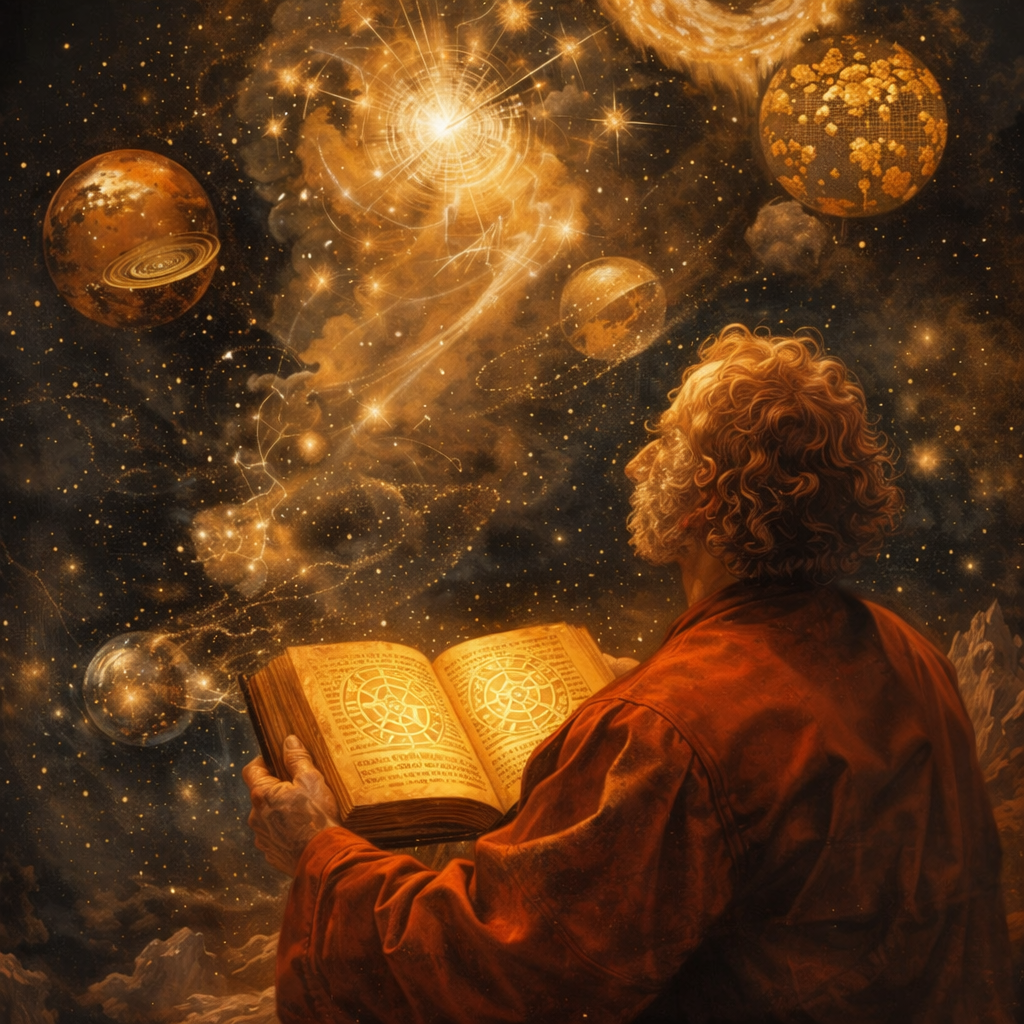

Ophelia Vance (Mystical Literature Reviewer) — This issue of 'Theosophy' from September 1897 is an indispensable artifact for scholars of esoteric movements. It masterfully distills complex theosophical doctrines, presenting them with a clarity that belies their profound depth. The essays explore the interconnectedness of all life, the evolution of consciousness, and the hidden laws governing the universe, offering potent insights for practitioners seeking to align with these principles. Its strength lies in its ability to articulate universal spiritual truths through the lens of early Theosophy. Highly recommended for advanced students, seasoned practitioners, and anyone deeply invested in the lineage of Western esotericism.
📝 Description
72
Theosophy 1897-09: Vol 12 Iss 6 presents a specific moment in late Victorian esoteric thought.
This issue of Theosophy, published in September 1897, contains articles on spiritual knowledge from the late Victorian era. It features discussions of ancient symbolism, philosophical questions, and emerging theosophical ideas. The tone encourages contemplation and an engagement with subtle energies and cosmic principles. The articles are aimed at students of metaphysics, those seeking universal truths, and individuals interested in the unseen. The volume discusses connections between the material and spiritual worlds, promoting a comprehensive view of humanity's role in the cosmos. It intends to broaden perceptions and awaken inner vision through its presented insights.
This issue is part of the broader Theosophical movement that gained traction in the late 19th century. Founded by Helena Blavatsky, the movement sought to synthesize Eastern and Western esoteric traditions, presenting a universal wisdom underlying all religions. Theosophy discussed reincarnation, karma, and the evolution of consciousness, often drawing from Hindu, Buddhist, and Neoplatonic philosophies. This particular volume contributes to that ongoing discourse, reflecting the intellectual currents and spiritual interests of its time.
💡 Why Read This Book?
Delve into the foundational texts of one of the most influential esoteric movements. This volume offers a rare glimpse into the intellectual and spiritual ferment of the late 19th century, providing rich fodder for contemplation on consciousness, karma, and reincarnation. Ideal for seekers of lost wisdom, scholars of comparative religion, and practitioners looking to ground their understanding in historical context.
⭐ Reader Reviews
Honest opinions from readers who have explored this book.
❓ Frequently Asked Questions
What is Theosophy?
Theosophy, as presented in this volume, is a philosophical and spiritual movement seeking to understand the divine wisdom underlying all religions and sciences, focusing on universal brotherhood, comparative religion, and the study of ancient philosophies.
Who was the author?
The author is listed as 'Unknown,' which is common for early theosophical texts where the collective wisdom and teachings of the movement were often emphasized over individual authorship.
What makes this issue significant?
This issue is significant as it represents a specific point in the development and dissemination of Theosophical ideas in the late 19th century, offering primary source material for understanding its early trajectory and key concerns.
Is this suitable for beginners?
While the language and concepts may be dense, dedicated beginners with an interest in spiritual philosophy will find it rewarding. It serves as an excellent introduction to the core tenets of early Theosophy.
Can I read this for free?
Yes, Esoteric Library provides access to this historical text for free, allowing all sincere seekers to explore its profound wisdom.
🔮 Key Themes & Symbolism
The Nature of Consciousness and the Self
This theme studies the complex nature of human consciousness, exploring its connection to the divine and its journey through cycles of evolution. It examines the concept of the 'True Self' beyond the physical and mental personalities, positing that true spiritual understanding arises from the recognition of this inner essence. The texts often explore the layers of the human constitution, from the gross physical to the subtler spiritual planes, providing a framework for understanding personal growth and the universal consciousness.
Karma, Reincarnation, and Universal Law
Central to theosophical thought, this theme elucidates the immutable laws of Karma and Reincarnation as the driving forces behind cosmic and individual evolution. It presents a vision of justice that is inherent in the universe, where actions inevitably lead to consequences across lifetimes. This perspective offers a profound understanding of suffering and inequality, framing them not as random occurrences but as lessons learned and debts repaid on the soul's long pilgrimage towards spiritual perfection. The interconnectedness of all beings is also highlighted within this framework.
The Symbolism of Ancient Wisdom Traditions
This volume meticulously unpacks the strong symbolism found within ancient myths, religions, and occult traditions. It argues that these sacred narratives are not mere stories but allegorical vehicles for profound spiritual truths, encoded to guide humanity. Readers are invited to decipher the deeper meanings behind archetypal figures, celestial bodies, and ritualistic practices, revealing a universal language of the soul. Understanding this symbolic lexicon is presented as a key to unlocking the hidden spiritual architecture of the cosmos and the human psyche.
💬 Memorable Quotes
Direct passages from the work, attributed to the author.
“Wisdom is not in books, but in the silence between breaths.”
— This highlights the importance of inner contemplation and direct spiritual experience over mere intellectual pursuit, emphasizing that true understanding arises from stillness and intuitive insight.
“Each star a sun, each life a lesson.”
— This points to the vastness of creation and the inherent purpose within every existence, suggesting a cosmic order where every life form contributes to a grand, evolutionary process of learning.
“The veil of illusion is thin for those who seek.”
— This implies that the perceived reality is often a distortion of the true nature of things, and that sincere spiritual seeking has the power to pierce through these deceptions and reveal underlying truths.
“To know thyself is to know the All.”
— This profound statement suggests that self-mastery and deep introspection lead to an understanding of universal principles, implying that the microcosm reflects the macrocosm.
💡 Key Ideas
Editorial paraphrase of the work's core concepts — not direct quotes.
The universe is a thought of God, and we are but ripples on its surface.
This quote suggests a profound interconnectedness between the divine mind and all existence, portraying reality as a manifestation of consciousness and individuals as transient yet integral parts of this vast spiritual ocean.
🌙 Esoteric Significance
Tradition
This text is firmly rooted in the Western Esoteric Tradition, specifically the early foundational period of Theosophy. It draws heavily from Hermeticism, Neoplatonism, Gnosticism, and Eastern philosophies like Vedanta and Buddhism, synthesizing them into a cohesive spiritual philosophy aimed at universal brotherhood and the study of comparative religion and ancient wisdom.
Symbolism
The issue is rich with esoteric symbolism, interpreting ancient myths, religious motifs, and cosmic phenomena as allegorical representations of spiritual truths. Key symbols likely include the Blazing Star, the Serpent, the Tree of Life, and celestial bodies, all used to convey concepts of divine unity, cosmic evolution, human potential, and the interconnectedness of all planes of existence.
Modern Relevance
Despite its historical origins, the themes explored in this volume remain profoundly relevant. Its discussions on consciousness, karma, the interconnectedness of life, and the search for spiritual truth resonate deeply with contemporary seekers grappling with existential questions, seeking ethical frameworks, and exploring alternative paths to personal and global well-being.
👥 Who Should Read This Book
This volume is essential for serious students of Theosophy and Anthroposophy, offering primary source material from a key era. Scholars of comparative religion, Western esotericism, and intellectual history will find it useful for understanding the movement's development. Spiritual seekers interested in the concepts of karma, reincarnation, and the evolution of consciousness will discover clear insights. Experienced practitioners may use it to deepen their understanding of foundational principles and explore the historical context of their practice.
📜 Historical Context
Published in September 1897, this issue of 'Theosophy' emerged during a period of intense intellectual and spiritual exploration in the Western world. The late Victorian era was marked by a growing disillusionment with purely materialistic science and a burgeoning interest in spiritualism, occultism, and Eastern philosophies. Theosophy, championed by figures like Helena Blavatsky, provided a compelling synthesis of these interests, offering a framework that sought to reconcile science, religion, and philosophy. This volume reflects the era's fascination with ancient wisdom, theosophical teachings on reincarnation and karma, and the burgeoning global dialogue between East and West. It stands as a evidence of the era's quest for deeper meaning beyond the confines of conventional thought and its impact on subsequent esoteric movements.
📔 Journal Prompts
Reflect on a recurring symbol in your life. How might it connect to deeper spiritual truths?
Consider a current challenge. How could the principle of Karma offer a new perspective on its origins and resolution?
What does 'universal brotherhood' mean to you, beyond simple tolerance?
Explore the concept of the 'True Self.' What aspects of your personality might be considered illusions?
How can we bridge the perceived gap between science and spirituality in our daily lives?
🗂️ Glossary
Theosophy
A philosophical and spiritual system aiming to understand the divine wisdom underlying all religions and sciences, emphasizing universal brotherhood and the study of esoteric teachings.
Karma
The spiritual principle of cause and effect where intent and actions of an individual influence the future of that individual. It is a universal law of moral causation.
Reincarnation
The philosophical or religious concept that the non-physical essence of a living being begins a new life in a different physical form or organism after biological death.
Esoteric
Intended for or likely to be understood by only a small number of people with a specialized knowledge or interest; relating to secret or mysterious knowledge.
Metaphysics
A branch of philosophy that asks fundamental questions about the nature of reality, including the relationship between mind and matter, substance and attribute, and potentiality and actuality.
This book appears in 2 collections
🔮 Readers Also Liked
Browse all →





From the “Theosophy” Collection
View all →




More Free Theosophy & Anthroposophy Books
View all →