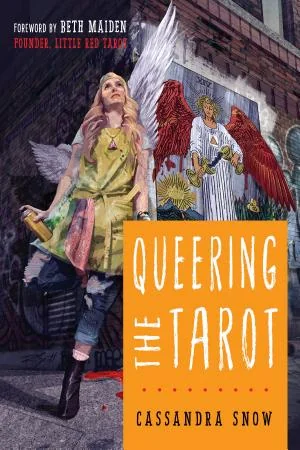
Queering the Tarot
 82
82

Queering the Tarot
Cassandra Snow's Queering the Tarot offers a much-needed recalibration of a practice often steeped in heteronormative assumptions. The strength of the book lies in its direct engagement with the inherent biases within traditional Tarot interpretations, presenting a compelling case for their expansion. Snow effectively demonstrates how familiar archetypes can be re-read to reflect queer lives and struggles, offering fresh perspectives on cards like The Hierophant or The Lovers through a lens of chosen family and non-traditional unions. However, at times, the analysis could benefit from deeper dives into the historical evolution of specific Tarot decks and their inherent biases, rather than treating the RWS as a monolithic standard. The section on the "Queer Court Cards" is particularly illuminating, providing concrete examples of how to approach these figures with a broader understanding of identity. It’s a vital contribution for anyone seeking a more inclusive and representative Tarot practice.
📝 Description
82
Cassandra Snow's 2019 book, Queering the Tarot, reinterprets traditional card meanings through a queer lens.
Queering the Tarot, published in 2019, offers a new perspective on the traditional meanings and archetypes found within the Tarot deck. Cassandra Snow proposes a way to understand these universal symbols by considering gender identity, sexual orientation, and the full spectrum of human experience, moving beyond solely heteronormative and cisnormative interpretations. The book argues that the Tarot's capacity for divination and self-reflection expands when its imagery and stories acknowledge diverse identities and lived realities. This work is for individuals who identify within the LGBTQ+ community or those interested in exploring Tarot through queer theory. It speaks to readers who find conventional Tarot readings restrictive or exclusive, providing alternative interpretations that recognize experiences of marginalization, coming out, gender exploration, and queer empowerment. Tarot practitioners and students looking to broaden their understanding and use of the cards will also find value here.
Published during a time of growing visibility for LGBTQ+ rights and discourse, the book aligns with a broader interest in applying intersectional feminist and queer theory to cultural and spiritual practices. It continues a lineage of scholarship and activism that seeks to challenge dominant narratives and bring marginalized perspectives to the forefront of Western culture. Snow's approach echoes earlier efforts, such as Judy Grahn's 1984 work 'The Highest Common Factor: A Memoir of the Tarot', to connect Tarot with wider social and personal relevance.
This book situates itself within a contemporary wave of critical engagement with established esoteric systems. It draws from queer theory and intersectional feminism to re-examine the symbolic language of the Tarot, a practice with roots stretching back centuries. By questioning the gendered and sexual assumptions embedded in traditional Tarot interpretations, Queering the Tarot connects with a broader movement to decolonize and diversify spiritual and divination practices, making them more inclusive of marginalized experiences.
💡 Why Read This Book?
• Gain a new framework for interpreting Tarot beyond heteronormative assumptions, learning how to "queer" card meanings to reflect diverse sexual and gender identities, a perspective not typically found in standard Tarot literature. • Understand how to apply queer theory concepts to Tarot archetypes, enriching your readings with a nuanced understanding of power, oppression, and empowerment as explored in chapters like "Queering the Court Cards." • Discover how to use the Tarot as a tool for self-exploration and affirmation of LGBTQ+ identities, moving beyond generalized interpretations to find personal resonance with the cards' symbolism.
⭐ Reader Reviews
Honest opinions from readers who have explored this book.
❓ Frequently Asked Questions
What is the main argument of Queering the Tarot?
The book argues that traditional Tarot interpretations often reflect a white, European, and heterosexual worldview. It proposes "queering" these archetypes to include diverse sexual orientations and gender identities, thereby expanding the Tarot's utility for self-reflection and divination for LGBTQ+ individuals.
Who is Cassandra Snow and when was Queering the Tarot published?
Cassandra Snow is the author of Queering the Tarot, which was first published in 2019. The book is part of a growing body of work seeking to decolonize and diversify esoteric practices.
Does Queering the Tarot require prior knowledge of Tarot?
While prior familiarity with basic Tarot concepts is helpful, the book aims to offer accessible alternative interpretations. It explains how to re-examine card meanings, making it valuable for both experienced readers and those new to the practice but interested in queer perspectives.
What specific Tarot concepts does the book address?
The book addresses major and minor arcana archetypes, the court cards (King, Queen, Knight, Page), and common Tarot spreads. It reframes themes like relationships, identity, and societal roles through a queer lens.
How does Queering the Tarot relate to queer theory?
It applies principles of queer theory, such as deconstructing binaries, challenging heteronormativity, and exploring fluidity of identity, to the symbolic language of the Tarot, offering new ways to understand its messages.
Is this book only for LGBTQ+ individuals?
While particularly resonant for LGBTQ+ readers, the book is also beneficial for allies, Tarot practitioners, and anyone interested in expanding their understanding of Tarot beyond traditional, often exclusionary, interpretations.
🔮 Key Themes & Symbolism
Queering Archetypes
The central theme is the "queering" of traditional Tarot archetypes, challenging their inherent heteronormative and cisnormative biases. Snow re-examines figures like The Emperor, The Empress, and The Lovers, not as solely representing patriarchal structures or heterosexual romance, but as symbols that can encompass diverse gender expressions, non-monogamous relationships, and chosen families. This approach aims to make the Tarot a more inclusive tool for understanding the complexities of queer lives and identities, revealing how these universal symbols can speak to experiences outside the mainstream narrative.
Oppression and Empowerment
This theme explores how Tarot imagery can represent the struggles and triumphs associated with marginalized identities. Cards are re-contextualized to discuss sources of oppression faced by LGBTQ+ individuals, such as societal stigma, discrimination, and internalized homophobia/transphobia. Simultaneously, the book highlights how the Tarot can symbolize sources of empowerment, resilience, self-acceptance, and the formation of supportive communities. It reframes the journey of coming out and self-discovery as potent narrative arcs within the cards.
Beyond Binary Thinking
Queering the Tarot actively works against rigid dualistic interpretations. It encourages readers to move beyond simple binary oppositions (e.g., masculine/feminine, straight/gay) to embrace fluidity and multiplicity in identity and experience. This is applied to understanding card combinations and individual card meanings, promoting a more nuanced and less prescriptive approach to divination and self-reflection. The book advocates for seeing the spectrum of human experience reflected in the Tarot's strong symbolism.
Inclusive Divination
The work posits that for divination to be truly insightful, it must be inclusive. By "queering" the Tarot, Snow aims to create a practice that validates and reflects the lived realities of LGBTQ+ people. This involves questioning the origins of traditional interpretations and offering alternative readings that resonate with those who have historically been excluded from esoteric traditions. The goal is to make the Tarot a more universally applicable and affirming tool for all seekers.
💬 Memorable Quotes
Direct passages from the work, attributed to the author.
“Tarot archetypes provide the reader with a window into present circumstances and future potential. But what if that window only opened up on a world that was white, European, and heterosexual?”
— This opening statement expresses the book's core thesis: challenging the exclusionary nature of traditional Tarot interpretations and advocating for a more inclusive, queer-affirming perspective on the cards.
“This book explores themes of sexuality, coming out, gender and gender-queering, sources of oppression and empowerment, and many other topics especially familiar to "not-straight" folks”
— This highlights the specific focus on LGBTQ+ lived experiences and how these personal journeys can be understood and explored through the symbolic language of the Tarot.
“The potential for divination is broadened when its imagery and narratives are seen to encompass diverse identities.”
— This emphasizes the book's argument that inclusivity enhances, rather than detracts from, the Tarot's power as a tool for insight and self-discovery.
“Questioning the heteronormative assumptions embedded in traditional Tarot meanings.”
— This interpretation reflects the book's critical stance, urging readers to actively challenge and deconstruct the biases present in established Tarot lore and practice.
💡 Key Ideas
Editorial paraphrase of the work's core concepts — not direct quotes.
Reinterpreting the Court Cards through a queer lens.
This paraphrased concept points to a key analytical approach within the book, where figures like the Knights and Pages are re-examined to represent diverse gender expressions and relationship dynamics beyond traditional roles.
🌙 Esoteric Significance
Tradition
Queering the Tarot operates primarily within the modern Western esoteric tradition, particularly as it relates to the Rider-Waite-Smith (RWS) centered divination practices. While not strictly adhering to a single lineage like Hermeticism or Kabbalah, it engages with the archetypal psychology and symbolic language that has become foundational to contemporary Tarot interpretation. The work departs from traditional interpretations by applying a queer theoretical lens, challenging the assumed universality of archetypes as historically presented within these esoteric frameworks. It seeks to expand these traditions rather than replace them, offering a more inclusive interpretation of their symbolic depth.
Symbolism
The book reinterprets key Tarot symbols to resonate with queer experiences. For instance, The Lovers card, traditionally associated with heterosexual union or major choices, is re-examined to represent diverse forms of love, chosen families, and the complexities of queer relationships. The Court Cards (Pages, Knights, Queens, Kings) are de-gendered and de-heterosexualized, seen not as fixed roles but as fluid archetypes representing various stages of self-discovery, expression, and social navigation within a queer context. The concept of "The Hermit," often seen as solitary introspection, can be re-read to represent the unique journeys of those who find solace or identity in spaces outside the mainstream.
Modern Relevance
This work is highly relevant to contemporary thinkers and practitioners interested in intersectionality, social justice, and the evolution of spiritual practices. It appeals to modern schools of thought that emphasize inclusivity and the deconstruction of dominant narratives, such as queer spirituality movements and critical approaches to divination. Practitioners engaging with modern psychological Tarot interpretations, or those seeking to align their esoteric practices with progressive social values, draw upon Snow's work. It informs contemporary discussions about how ancient symbolic systems can remain relevant and powerful when reinterpreted through the lived experiences of diverse communities.
👥 Who Should Read This Book
• LGBTQ+ individuals seeking to connect with Tarot in a way that reflects their identities and experiences, offering validation and new pathways for self-understanding. • Tarot practitioners and students who wish to diversify their interpretive skills and move beyond heteronormative readings, enriching their practice with a broader understanding of human experience. • Scholars and enthusiasts of esoteric traditions interested in how modern critical theories, like queer theory, can be applied to deconstruct and revitalize historical symbolic systems.
📜 Historical Context
Queering the Tarot, published in 2019, arrived amidst a burgeoning wave of queer scholarship and a broader cultural reckoning with inclusivity in various spiritual and esoteric practices. The early 21st century saw a significant increase in queer theory's application beyond academia, influencing everything from literature and film to wellness and divination. This book stands as a contemporary contribution to the ongoing effort to decolonize and diversify Tarot, a practice historically dominated by Western European perspectives and often implicitly heteronormative. It emerged in dialogue with earlier works that began to challenge Tarot's traditional interpretations, such as Judy Grahn's foundational 1984 book 'The Highest Common Factor: A Memoir of the Tarot,' which explored Tarot through a feminist and lesbian lens. While not explicitly engaging with contemporaries in the same direct manner as some academic fields, Snow's work participates in a wider intellectual current that includes scholars and practitioners like Sonja Attenborough and others who are re-examining occult traditions through intersectional frameworks. The reception of such works generally indicates a growing demand for esoteric tools that acknowledge and validate marginalized identities, a trend that contrasts with the more monolithic spiritual movements of earlier decades.
📔 Journal Prompts
The "window" of the Tarot: How have traditional interpretations felt exclusive, and what new perspectives emerge when considering queer experiences?
Reflecting on the "Queering the Court Cards" section, how do the archetypes of Page, Knight, Queen, and King resonate with your personal journey or understanding of identity?
Consider the concept of "oppression and empowerment" as depicted in the Tarot. Which cards or spreads might speak to your own experiences or those of your community?
Explore the "gender-queering" of Tarot archetypes. How can figures like The Emperor or The High Priestess be reinterpreted to embrace fluidity and non-binary identities?
What does "inclusive divination" mean to you, and how can the Tarot serve as a tool for affirming diverse sexualities and gender expressions?
🗂️ Glossary
Queering
In this context, "queering" refers to the process of applying queer theory to challenge and reinterpret established norms, meanings, or structures. Applied to the Tarot, it means questioning heteronormative and cisnormative assumptions within card interpretations to make them more inclusive of LGBTQ+ experiences.
Archetypes
Universal symbols or patterns of behavior that are deeply rooted in the collective human unconscious. In Tarot, archetypes are represented by the figures and situations depicted on the cards, offering insight into human psychology and experience.
Heteronormativity
The assumption that heterosexuality is the default or natural sexual orientation, and that gender is binary (male/female) and aligns with sex assigned at birth. The book challenges how this assumption shapes traditional Tarot interpretations.
Cisnormativity
The assumption that cisgender identity (identifying with the gender assigned at birth) is the norm. This book also works to deconstruct cisnormative interpretations within the Tarot.
Coming Out
The process by which a person accepts and, where desired, openly shares their sexual orientation or gender identity. The book explores how Tarot symbolism can relate to this journey.
Chosen Family
A group of people who are not related by blood or marriage but who form a close, supportive, and loving family unit. This concept is often explored as an alternative to biological family structures within queer communities.
Gender-Queering
The act of challenging or subverting traditional, binary notions of gender. It involves exploring and expressing gender in ways that move beyond conventional expectations of masculinity and femininity.
This book appears in 1 collection
🔮 Readers Also Liked
Browse all →








From the “Tarot” Collection
View all →








More Free Occult Philosophy Books
View all →