Spirits and Animism in Contemporary Japan
 80
80

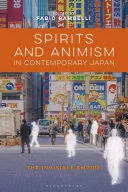
Spirits and Animism in Contemporary Japan
Fabio Rambelli's "Spirits and Animism in Contemporary Japan" offers a compelling look at how deeply ingrained animistic concepts remain visible in modern Japan, often through unexpected channels. The strength of the work lies in its detailed analysis of popular culture—manga and anime, in particular—as vital sites for the continuation and reinterpretation of spiritual beliefs. Rambelli effectively demonstrates how these media are not mere entertainment but active participants in shaping contemporary understandings of spirits and the unseen. A point of limitation, however, is that the academic rigor, while evident, occasionally distances the reader from the visceral impact of these spiritual discussions. The exploration of *tama* and *tamashii* in relation to the diversification of animism beyond ancestor cults is particularly illuminating. Ultimately, this is a vital text for understanding the persistent spiritual currents beneath the surface of Japanese modernity.
📝 Description
80
Fabio Rambelli's 2011 book examines spirits, or tama and tamashii, in contemporary Japanese culture.
This study investigates the persistent presence of spirits, referred to as *tama* and *tamashii*, within current Japanese cultural discussions. It moves past simple ancestor veneration to show how modern media, including manga, anime, and literature, engage with animistic ideas and the concept of an unseen reality. The analysis details how these depictions both reflect and influence evolving spiritual feelings in Japan.
Scholars of Japanese religion, cultural anthropologists, and students of comparative mythology will find significant academic value. It also appeals to readers interested in the connection between popular culture and religious phenomena, especially those curious about how old animistic frameworks appear in modern, secular societies. The examination provides a detailed perspective for anyone studying belief systems' development.
This book engages with the long history of Japanese religious practices, starting with ancestor cults and tracing the growth of animistic thought. It highlights how new cultural forms, particularly 21st-century media, have diversified these beliefs. Understanding this historical progression is key to grasping how spiritual ideas adapt to modern life, moving from ancient traditions to contemporary expressions.
💡 Why Read This Book?
• Learn how popular media like manga and anime actively shape contemporary Japanese spiritual discourse, specifically through explorations of *tama* (spirits) as detailed in the book's analysis of modern cultural forms. • Understand the historical evolution of animism in Japan, tracing its expansion beyond traditional ancestor cults to encompass diverse phenomena discussed in the work's historical context sections. • Gain insight into the concept of the invisible dimension of reality as represented in Japanese art and literature, providing concrete examples from the book's examination of contemporary cultural expressions.
⭐ Reader Reviews
Honest opinions from readers who have explored this book.
❓ Frequently Asked Questions
What is the core meaning of 'tama' or 'tamashii' in the context of this book?
'Tama' or 'tamashii' in "Spirits and Animism in Contemporary Japan" refers to the spirit or soul. The book explores its multifaceted presence in Japanese culture, extending beyond traditional ancestor veneration to its representation in modern media and animistic thought.
How does the book connect ancestor cults to contemporary animism in Japan?
The book acknowledges ancestor cults as a historical bedrock of Japanese spirituality. It then details how, in recent decades, other phenomena have expanded and diversified the realm of Japanese animism, integrating these older beliefs into new cultural expressions.
Which forms of Japanese popular culture are discussed in relation to spirits?
The book prominently features manga, anime, television shows, literature, and art works. These cultural products are analyzed for their engagement with spirits, ghosts, and the invisible dimensions of reality, demonstrating the pervasiveness of animistic themes.
What is the academic field primarily addressed by this book?
The book primarily addresses the academic fields of religious studies, cultural anthropology, and Japanese studies. It offers scholarly analysis of contemporary spiritual and animistic phenomena within Japanese society and its cultural output.
Does the book focus only on traditional Shinto beliefs?
No, while acknowledging the historical importance of Shinto and ancestor cults, the book's focus is on contemporary Japan. It examines how animistic ideas, often influenced by but not limited to Shinto, manifest across a broader spectrum of modern cultural and spiritual practices.
What distinguishes the animism discussed in the book from Western concepts of spirits?
The book distinguishes Japanese animism by its specific cultural context, particularly its deep roots in ancestor veneration and its dynamic integration into modern media. The concept of *tama* carries distinct cultural and philosophical weight compared to Western notions of spirits or souls.
🔮 Key Themes & Symbolism
The Pervasive Spirit (*Tama*)
This theme centers on the concept of *tama* or *tamashii*, the spirit or soul, as it permeates contemporary Japanese culture. Rambelli meticulously illustrates how this idea is not confined to religious doctrine but actively circulates through popular media. The work shows how discussions and representations of spirits are a striking aspect of modern Japanese life, reflecting a continued engagement with animistic thought that extends far beyond formal religious structures and into everyday consciousness and artistic creation.
Animism Beyond Ancestors
Moving past the traditional focus on ancestor cults, this theme highlights the diversification and expansion of animistic beliefs in Japan. The book demonstrates how phenomena in manga, anime, and literature engage with spirits and an invisible dimension of reality, suggesting a broader animistic framework. This evolution signifies how ancient spiritual sensibilities adapt and manifest in new forms, reflecting a dynamic cultural landscape where the spiritual is continuously reinterpreted and expressed through contemporary channels.
Invisible Dimensions in Media
This theme examines how contemporary Japanese media acts as a conduit for exploring the invisible dimension of reality and spiritual beings. Through analysis of manga, anime, and literature, the work reveals how these artistic mediums provide platforms for representing ghosts, spirits, and other non-corporeal entities. It underscores the cultural significance of these representations, indicating a public fascination and ongoing dialogue with the spiritual and supernatural within modern Japanese society.
Contemporary Spiritual Sensibilities
The book ultimately probes the nature of contemporary spiritual sensibilities in Japan, particularly through the lens of animism. By analyzing the prevalence of spirit discussions in various cultural forms, it offers a nuanced picture of how belief and spirituality are lived and expressed today. This theme addresses how modern Japanese individuals engage with concepts of the spirit world, demonstrating a persistent connection to animistic worldviews even within a rapidly modernizing society.
💬 Memorable Quotes
Direct passages from the work, attributed to the author.
“Many manga, anime, TV shows, literature, and art works deal with spirits, ghosts, or with an invisible dimension of reality.”
— This statement emphasizes the central argument that popular culture is a primary vehicle for contemporary discussions of spirituality in Japan. It highlights how fictional narratives and artistic expressions actively engage with and shape public perceptions of the supernatural and the spirit world.
“Ancestor cults have played a central role in Japanese culture and religion for many centuries.”
— This provides essential historical grounding, acknowledging the deep-rooted tradition of ancestor veneration. It sets the stage for understanding how contemporary animism builds upon, and diversifies from, these long-standing spiritual practices prevalent in Japanese society.
“In recent decades, however, other phenomena have expanded and diversified the field of Japanese animism.”
— This highlights the dynamic evolution of spiritual beliefs in Japan. It points to modern cultural and social changes as catalysts for new expressions and interpretations of animism, moving beyond established religious frameworks.
“This book draws attention to a striking aspect of contemporary Japanese culture: the prevalence of discussions and representations of 'spirits' (tama or tamashii).”
— This sets the core focus of the research, identifying the widespread engagement with spiritual concepts as a significant feature of modern Japan. It signals the book's intention to analyze this phenomenon across various cultural domains.
“The prevalence of discussions and representations of 'spirits' (tama or tamashii) in contemporary Japanese culture.”
— This is an interpretation of the book's initial premise, stressing the cultural significance of spirit-related discourse. It frames the academic exploration around a noticeable trend in modern Japanese society and its artistic output.
🌙 Esoteric Significance
Tradition
While not strictly aligned with a single Western esoteric lineage like Hermeticism or Kabbalah, this work speaks to esoteric studies through its focus on animism and the spirit world. It engages with the universal esoteric principle that reality extends beyond the material plane, exploring how this belief manifests in a specific cultural context. The book's examination of *tama* and *tamashii* can be seen as a study of soul concepts, a perennial interest in esoteric traditions, albeit approached from an anthropological and cultural studies perspective rather than a direct magical or mystical practice one.
Symbolism
The primary symbolic element is the concept of *tama* or *tamashii* itself, representing the animating spirit or soul, which embodies the vital force within all things. The book also implicitly deals with the symbolism of the 'invisible dimension of reality,' a potent motif in many esoteric traditions signifying hidden planes of existence. Representations in manga and anime often employ visual symbols – spectral forms, ethereal glows, or anthropomorphized natural elements – to signify the presence and nature of these spirits, bridging esoteric symbolism with popular aesthetics.
Modern Relevance
Contemporary thinkers and practitioners interested in animism, folk religion, and the spiritual dimensions of popular culture find this work highly relevant. It informs discussions on how ancient spiritual frameworks persist and adapt in secularized, technologically advanced societies. For practitioners of contemporary paganism or those exploring nature-based spirituality, the book offers case studies on how animistic principles are culturally embedded and expressed, providing insights into diverse forms of spiritual engagement and belief systems in the modern world.
👥 Who Should Read This Book
• Researchers in comparative religion and Japanese studies seeking to understand the evolution of animistic beliefs beyond traditional structures. • Cultural critics and media analysts interested in how popular forms like manga and anime engage with spiritual and metaphysical themes. • Individuals curious about the concept of the spirit world and its manifestation in non-Western cultural contexts, particularly in contemporary Japan.
📜 Historical Context
Fabio Rambelli's work arrives at a moment when the study of religion and culture in Japan is increasingly attentive to the nuances of lived spirituality beyond institutionalized forms. Published in 2020, it engages with scholarship that has, since the late 20th century, begun to re-examine the persistence of animistic worldviews in East Asia. While earlier scholarship might have focused on Shinto or Buddhism as primary religious structures, Rambelli's approach is part of a broader intellectual current that recognizes the pervasive influence of folk beliefs and spiritual sensibilities, often amplified through popular media. The work implicitly contrasts with more traditional, text-centric approaches to Japanese religion by centering on visual and narrative media. Key contemporaries in this expanded view of Japanese religiosity include scholars like Mark Teeuwen and Ian Reader, who have explored the fluid nature of religious practice and belief. While no specific reception event is widely noted for this 2020 publication, its contribution lies in extending the dialogue on Japanese animism into the field of contemporary popular culture, a field that has seen significant growth in academic interest.
📔 Journal Prompts
The concept of *tama* and its diverse representations across Japanese media.
The expansion of animism beyond ancestor cults in recent decades.
The role of manga and anime in depicting the invisible dimension of reality.
How historical ancestor cults inform contemporary spirit discussions.
The cultural significance of acknowledging spirits in everyday Japanese life.
🗂️ Glossary
Tama/Tamashii
The Japanese terms for spirit or soul. In the context of the book, it refers to the animating essence of beings, objects, and phenomena, central to Japanese animistic thought and popular culture representations.
Animism
The belief that natural objects, phenomena, and the universe itself possess souls or consciousness. The book explores its specific manifestations and continuities within contemporary Japanese culture.
Ancestor Cults
Religious or cultural practices centered on venerating deceased ancestors, who are believed to influence the living. Historically significant in Japan, they form a foundation for understanding broader animistic traditions.
Invisible Dimension of Reality
A concept referring to realms or aspects of existence not perceptible through ordinary physical senses, often populated by spirits, ghosts, or deities. Frequently explored in Japanese mythology and contemporary media.
Manga
Japanese comic books or graphic novels. The book analyzes manga as a significant medium for the dissemination and discussion of spiritual and animistic themes in modern Japan.
Anime
Japanese animation. Similar to manga, anime is examined for its role in portraying spirits, ghosts, and supernatural elements, reflecting and shaping cultural understandings of the spiritual.
Contemporary Japanese Culture
The current social, artistic, and spiritual field of Japan, characterized by a blend of traditional influences and modern global trends, as explored in the book's analysis of spirit representations.
This book appears in 1 collection
🔮 Readers Also Liked
Browse all →









From the “Animism” Collection
View all →








More Free Occult Philosophy Books
View all →