Quantum Archetypes
 75
75

Quantum Archetypes
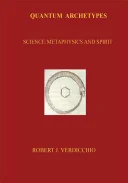
Robert J. Verdicchio's Quantum Archetypes attempts a daring synthesis, linking the abstract realm of Jungian archetypes with the perplexing landscape of quantum physics. The central thesis—that archetypes might be the emergent forms of quantum probabilities—is ambitious. Verdicchio posits that our psychological structures are not divorced from the fabric of reality but are, in fact, intimately connected to its subatomic underpinnings. A notable strength is the author's willingness to engage with complex scientific theories and attempt to find symbolic parallels, particularly in the discussion of observer effects in quantum mechanics and their potential reflection in subjective experience. However, the book sometimes struggles to maintain a clear distinction between scientific hypothesis and philosophical speculation. While it references Carl Jung and quantum mechanics (specifically mentioning concepts like entanglement and superposition), the leap from scientific description to archetypal manifestation can feel speculative without rigorous empirical backing. The narrative, while intellectually stimulating, occasionally leans towards oversimplification of quantum phenomena to fit the archetypal framework. Despite these limitations, Quantum Archetypes offers a unique perspective for those seeking to reconcile the inner world of psyche with the outer world of physics, providing a challenging but rewarding read for the open-minded explorer.
📝 Description
75
Robert J. Verdicchio's 2005 book connects quantum mechanics to Jungian archetypes.
Quantum Archetypes proposes a link between the symbolic patterns of ancient archetypes and the probabilistic nature of quantum mechanics. The book questions common views on consciousness, reality, and cause and effect, suggesting that universal patterns, as identified by Carl Jung, might arise from quantum processes. Verdicchio argues that our experience of reality is not a passive reception of information but an active construction. This construction is shaped by fundamental archetypal structures, which are themselves influenced by the quantum basis of existence.
The work is for readers interested in the meeting points of consciousness studies, depth psychology, and theoretical physics. It suits those who doubt purely materialist explanations and want to understand the less obvious, or esoteric, foundations of reality. Readers engaged with Jungian psychology, the nature of consciousness, or unconventional philosophical ideas will find much to consider. It is especially suited for those who seek a blend of careful intellectual thought and speculative metaphysical ideas, attempting to join subjective experience with objective scientific observation.
Published in 2005, Quantum Archetypes appeared during a time of increased interest in unconventional science and consciousness research. The early 21st century saw a growing conversation between quantum physics and philosophy, building on the implications of Niels Bohr and Werner Heisenberg's work, which suggested observer influence in quantum phenomena. This period also noted a renewed focus on Jungian archetypes and their use outside psychoanalysis, following foundational work by figures like Joseph Campbell in popularizing archetypal narratives.
💡 Why Read This Book?
• Gain an understanding of how the concept of 'Quantum Archetypes' suggests a bridge between psychological patterns and subatomic reality, offering a unique framework for consciousness studies. • Explore the book's interpretation of observer effects in quantum mechanics as potentially mirroring the subjective creation of reality through archetypal lenses, as discussed in its core sections. • Engage with the author's 2005 publication, which positioned itself within a specific intellectual current exploring the esoteric implications of early 21st-century physics and Jungian psychology.
⭐ Reader Reviews
Honest opinions from readers who have explored this book.
❓ Frequently Asked Questions
What is the core argument of Robert J. Verdicchio's Quantum Archetypes?
The book's central argument is that universal psychic archetypes, as described by Carl Jung, may be intimately connected to the fundamental principles of quantum mechanics, suggesting that our perception of reality is shaped by both psychological patterns and quantum probabilities.
When was Quantum Archetypes first published, and what was the intellectual climate surrounding it?
Quantum Archetypes was first published on May 1, 2005. This period saw increasing interest in the intersection of quantum physics, consciousness studies, and esoteric philosophy, building on earlier work in these fields.
Does the book offer practical applications or is it purely theoretical?
While primarily theoretical and philosophical, the book encourages readers to contemplate their own perceptions and experiences through the lens of quantum archetypes, potentially influencing personal introspection and understanding of synchronicity.
What role does Carl Jung's work play in Quantum Archetypes?
Carl Jung's concept of archetypes forms the psychological bedrock of the book. Verdicchio uses Jung's framework to explore how these universal patterns might manifest or be influenced by quantum phenomena.
Is Quantum Archetypes suitable for someone new to quantum physics?
The book requires some familiarity with abstract concepts. While it attempts to bridge physics and psychology, readers without prior exposure to quantum mechanics might find certain sections challenging without supplementary reading.
What makes this book different from other works on consciousness and physics?
Its distinctiveness lies in its direct attempt to synthesize Jungian archetypes with quantum theory, proposing a specific mechanism for their interaction rather than merely drawing parallels between the fields.
🔮 Key Themes & Symbolism
Archetypes as Quantum Manifestations
This theme explores the central thesis that Jungian archetypes are not merely symbolic representations but may be emergent phenomena arising from quantum field interactions. The book posits that the fundamental patterns of consciousness, which Carl Jung identified as archetypes, could be intrinsically linked to the probabilistic nature of quantum reality. It suggests that concepts like entanglement and superposition might offer a framework for understanding the universal and interconnected nature of these psychic structures, challenging a purely materialist view of the mind.
Consciousness and Observer Effects
The work examines the role of the observer in both quantum mechanics and human consciousness. It draws parallels between the collapse of the wave function in quantum physics upon observation and the subjective experience of reality. The book suggests that our consciousness, influenced by archetypal patterns, actively participates in shaping perceived reality, moving beyond a passive reception of external stimuli. This theme probes the reciprocal relationship between the inner world of the psyche and the external, quantum-governed universe.
Synchronicity and Acausal Connections
Quantum Archetypes studies Carl Jung's concept of synchronicity – meaningful coincidences that lack a direct causal link. The book proposes that quantum interconnectedness and the influence of archetypal fields could provide an underlying mechanism for these seemingly acausal events. It explores how patterns within the quantum realm might manifest as profound personal significances in our lives, suggesting that the universe operates with a form of inherent meaningfulness accessible through both scientific and psychological inquiry.
The Nature of Reality
This theme questions the fundamental nature of reality itself, proposing that it is a dynamic interplay between quantum potentiality and archetypal ordering. The book challenges the notion of a fixed, objective reality independent of consciousness, suggesting instead a participatory universe where mind and matter are not separate but deeply intertwined. It invites readers to consider a reality that is constantly being co-created through the interaction of fundamental physical laws and the archetypal patterns that structure human experience.
💬 Memorable Quotes
Direct passages from the work, attributed to the author.
“Archetypes are the inherent forms within the quantum foam.”
— This statement expresses the book's core speculative idea: that the universal patterns Carl Jung identified in the human psyche might not be purely psychological but have a direct correlation with the fundamental, probabilistic substrate of reality described by quantum physics.
“The observer effect in physics mirrors the archetypal nature of subjective experience.”
— This interpretation suggests that the way observation influences quantum systems is analogous to how our internal, archetypally-driven frameworks shape our perception and experience of the world, implying a participatory role for consciousness.
“Synchronicity arises from the entanglement of consciousness and quantum fields.”
— This concept proposes a mechanism for Jung's 'meaningful coincidences,' suggesting they are not random but a result of the interconnectedness inherent in quantum reality and our own psychic structures, which are influenced by archetypes.
“Reality is not observed; it is co-created through quantum-archetypal interaction.”
— This provocative idea challenges traditional views of objective reality, positing that our perceived world is a dynamic product of both the fundamental quantum laws and the inherent archetypal patterns that organize our consciousness.
“The limitations of classical physics give way to the probabilistic dance of archetypes.”
— This highlights the book's attempt to move beyond deterministic, classical scientific models. It suggests that the counter-intuitive principles of quantum mechanics offer a more fitting language for understanding the fluid, patterned, and often unpredictable nature of psychic and existential phenomena.
🌙 Esoteric Significance
Tradition
Quantum Archetypes fits within the modern esoteric tradition of synthesizing scientific discovery with spiritual or psychological insight, particularly drawing from Jungian psychology and speculative philosophy of science. It departs from classical Hermeticism by engaging directly with quantum physics rather than solely relying on older alchemical, astrological, or kabbalistic frameworks, though it implicitly echoes Hermetic principles of correspondence ('As above, so below') by linking macrocosmic physical laws to microcosmic psychic structures.
Symbolism
The book's primary symbolic language is derived from Carl Jung's archetypes, such as the Shadow, Anima/Animus, and the Self, reinterpreted through the lens of quantum principles. It implicitly uses quantum concepts like superposition (potentiality) and entanglement (interconnectedness) as symbolic metaphors for the fluid, interconnected, and potential-filled nature of the unconscious psyche and its archetypal contents.
Modern Relevance
This work appeals to contemporary thinkers and communities interested in quantum mysticism, consciousness studies, and integral theory. It finds relevance among those exploring the 'new physics' as a foundation for spiritual or philosophical systems, and influences discussions on the nature of reality, perception, and the interconnectedness of all things in fields ranging from transpersonal psychology to speculative philosophy.
👥 Who Should Read This Book
• Students of Jungian psychology seeking to explore contemporary interpretations of archetypes that integrate scientific developments. • Readers interested in the philosophical implications of quantum mechanics and its potential connections to consciousness and subjective experience. • Individuals engaged in comparative philosophy of mind and those questioning the limits of purely materialist explanations for reality and human experience.
📜 Historical Context
Published in 2005, Robert J. Verdicchio's Quantum Archetypes emerged during a period of significant cross-pollination between scientific and esoteric thought. The early 21st century saw a growing popular and academic interest in the philosophical implications of quantum mechanics, particularly its challenges to classical determinism and notions of objective reality. This era was influenced by figures like Fritjof Capra, whose 1975 book 'The Tao of Physics' had already popularized connections between modern physics and Eastern mysticism, and more directly by contemporary discussions around quantum consciousness. Carl Jung's own exploration of synchronicity and archetypes, first articulated in the mid-20th century, provided a rich psychological framework that authors like Verdicchio sought to update with newer scientific concepts. While not a mainstream scientific text, it engaged with a lineage of thought that sought to bridge the perceived divide between the empirical world and the subjective experience of meaning, a pursuit that continued to be debated against the backdrop of established materialism in physics and psychology.
📔 Journal Prompts
The concept of 'Quantum Archetypes' and its relation to personal experience.
Reflect on instances of synchronicity and how they might align with quantum entanglement.
The role of the observer in shaping reality through archetypal lenses.
How does the idea of 'potentiality' in quantum physics relate to your own inner landscape?
Consider the 'interconnectedness' of the quantum field and your own sense of self.
🗂️ Glossary
Archetype
In Jungian psychology, a universal, inherited pattern of thought or imagery derived from the collective unconscious, expressing itself in symbolic form.
Quantum Foam
A theoretical concept in quantum physics describing the turbulent, fluctuating nature of spacetime at extremely small scales, where quantum effects dominate.
Observer Effect
In quantum mechanics, the phenomenon where the act of measuring or observing a quantum system influences its state, causing its wave function to collapse.
Entanglement
A quantum mechanical phenomenon in which the quantum states of two or more objects are linked in such a way that they must be described in reference to each other, even though the individual objects may be spatially separated.
Superposition
The ability of a quantum system to be in multiple states at the same time until it is measured.
Synchronicity
The occurrence of events that are meaningfully related but lack a discernible causal connection, as described by Carl Jung.
Collective Unconscious
A term coined by Carl Jung to describe the part of the unconscious mind that is common to all human beings, containing inherited patterns and instincts.
This book appears in 1 collection
🔮 Readers Also Liked
Browse all →









From the “Archetypes” Collection
View all →






More Free Occult Philosophy Books
View all →