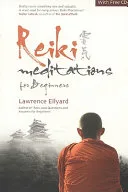
Reiki Meditations for Beginners
 83
83

Reiki Meditations for Beginners
Lawrence Ellyard's "Reiki Meditations for Beginners" tackles a common barrier for newcomers: the perceived difficulty in integrating spiritual practices. The book's strength lies in its straightforward presentation, particularly in the third section, which offers 25 distinct meditations. These are practical, varied, and accompanied by the author's narrated CD, a significant asset for auditory learners or those needing clear guidance. However, the introductory sections on Reiki itself, while functional, could benefit from more depth for readers seeking a nuanced understanding of its origins or theoretical underpinnings beyond basic energy channeling. A passage detailing a meditation focused on grounding energy, for instance, clearly illustrates the book's practical intent. While the book succeeds in making Reiki and meditation accessible, its foundational explanations might feel somewhat superficial to those already familiar with energy work or advanced meditative states. Ultimately, it serves well as an introductory manual for initiating a personal practice.
📝 Description
83
Lawrence Ellyard published 'Reiki Meditations for Beginners' in 2008 to demystify energy healing.
This 2008 book serves as a guide for those new to Reiki and meditation. It is divided into three parts. The first section covers Reiki's basic principles and history. The second part instructs readers on building a regular meditation habit, detailing beginner techniques. The largest portion of the book presents 25 Reiki meditations intended for newcomers. An accompanying CD features guided meditations narrated by the author, offering practical support.
The book is written for people unfamiliar with Reiki or meditation. It aims to provide a simple, step-by-step introduction to energy work and mindfulness. Ellyard's approach is designed to make Reiki seem less complex for those who might be intimidated. It is also useful for experienced meditators wishing to add energy practices or anyone interested in spiritual self-improvement. The included CD is beneficial for those who learn well through listening or prefer direct instructions.
Published in 2008, this book entered a period where interest in complementary therapies, including energy healing, was growing. It reflects a trend of making spiritual and wellness practices more accessible. Ellyard's work fits within this movement by offering a clear, structured introduction to Reiki. It is part of a broader literature aiming to demystify practices previously seen as specialized.
💡 Why Read This Book?
• You will learn a structured approach to combining meditation with Reiki healing, specifically through the 25 guided meditations presented in Section Three, offering a unique blend of introspective practice and energy work. • You will gain practical 'know how' for basic meditation techniques, as outlined in Part Two, enabling you to cultivate focus and calm essential for effective energy channeling. • You will understand the fundamental principles of Reiki, as introduced in Part One, providing a clear, accessible overview of this healing modality for those new to its concepts.
⭐ Reader Reviews
Honest opinions from readers who have explored this book.
❓ Frequently Asked Questions
What is the primary goal of 'Reiki Meditations for Beginners'?
The primary goal is to provide a practical guide that teaches beginners the basics of meditation practice alongside an introduction to Reiki, fostering a combined approach to spiritual healing and self-awareness.
How many specific meditations are included in the book?
The book features a total of 25 distinct Reiki meditations, designed to offer variety and depth for practitioners exploring this practice.
Does the book offer any audio components?
Yes, "Reiki Meditations for Beginners" includes a guided meditation CD narrated by the author, Lawrence Ellyard, to aid in learning and practice.
What is Reiki, according to the book's introduction?
The book introduces Reiki as a system for natural healing through the channeling of universal life energy, often referred to as 'Ki' or 'Qi'.
Is this book suitable for someone with no prior meditation experience?
Absolutely. The book's second section is dedicated to teaching the basics of meditation practice, making it accessible even for those completely new to mindfulness.
When was 'Reiki Meditations for Beginners' first published?
Lawrence Ellyard's "Reiki Meditations for Beginners" was first published in 2008.
🔮 Key Themes & Symbolism
Integration of Reiki and Meditation
The central theme is the synergistic relationship between Reiki and meditation. Ellyard presents them not as separate disciplines but as complementary practices that enhance each other. Meditation cultivates the mental clarity and inner stillness required to effectively channel Reiki energy, while Reiki practice can deepen meditative states. The book provides practical techniques for combining these elements, moving beyond theoretical discussion to actionable steps for personal practice. This integration is key to unlocking a more profound level of spiritual awareness and healing.
Beginner-Friendly Energy Work
This work is specifically crafted for newcomers to the esoteric world of energy healing. It explains Reiki, breaking down complex concepts into easily digestible information. The focus is on practical application rather than esoteric dogma, making the practice of channeling universal life energy accessible to anyone willing to learn. The inclusion of 25 distinct meditations further supports this, offering a structured pathway for developing intuitive abilities and self-healing techniques without requiring prior extensive knowledge.
Mindfulness and Self-Healing
Beyond the specific techniques of Reiki, the book champions mindfulness as a core component of self-healing and spiritual development. The meditation practices encourage present-moment awareness, emotional regulation, and a connection to one's inner self. By guiding readers through meditations focused on aspects like self-compassion and energy balancing, Ellyard emphasizes the power of conscious intention and focused awareness in promoting holistic well-being. This approach positions the book as a tool for personal growth and stress reduction.
Practical Application through Guided Practice
A significant aspect of the book's value lies in its emphasis on practical application, especially through the accompanying guided meditation CD. This resource provides a tangible method for learning and implementing the techniques described in the text. The 25 meditations are designed to be directly usable, offering readers specific exercises to engage with, whether for personal healing, stress relief, or to deepen their connection to universal energy. This hands-on approach ensures that readers can immediately begin to integrate what they learn.
💬 Memorable Quotes
Direct passages from the work, attributed to the author.
“The book is divided into three sections which include: An introduction to Reiki, an introduction to Meditation practice and section three includes a total of 25 Reiki Meditations.”
— This structural breakdown highlights the book's pedagogical approach, clearly delineating the learning path from foundational knowledge to practical application, making it easy for beginners to follow.
“The book also features a guided Meditation CD narrated by the au”
— This detail underscores the author's commitment to providing accessible, multi-modal learning, catering to different learning styles and offering direct, audible guidance for practice.
“It provides the reader with the practical 'know how' and teaches the basics of meditation practice combined with an introduction to Reiki.”
— This emphasizes the book's core promise: to equip readers with tangible skills and foundational understanding, bridging the gap between theoretical concepts and actual practice in both Reiki and meditation.
“Reiki Meditations for Beginners offers for the first time a practical guide to the practice of Meditation and Reiki.”
— This statement, from the original blurb, positions the book as an innovative resource aiming to uniquely combine two related but often separately taught disciplines for a beginner audience.
“The book is divided into three sections which include: An introduction to Reiki, an introduction to Meditation practice and section three includes a total of 25 Reiki Meditations.”
— This structural breakdown highlights the book's pedagogical approach, clearly delineating the learning path from foundational knowledge to practical application, making it easy for beginners to follow.
🌙 Esoteric Significance
Tradition
While Reiki itself has roots in Japanese spiritual traditions and was influenced by figures like Mikao Usui, Ellyard's work places it within the broader Western esoteric framework of energy healing and spiritual development. It intersects with practices common in New Age and self-help movements that gained prominence in the late 20th and early 21st centuries. The book frames Reiki as a form of universal life energy, a concept found across various mystical traditions, and integrates it with meditation, a practice with ancient origins in Eastern religions but widely adopted in Western spiritual contexts.
Symbolism
The core symbolism in Reiki, often represented by Japanese characters (Kanji) and specific hand positions, is implicitly present. Ellyard focuses on the practical application of channeling 'universal life energy' (Ki/Qi), which itself is a symbolic representation of vital force. The act of placing hands on the body or in specific energy fields is symbolic of healing touch and focused intention. The meditations themselves, though not always explicitly symbolic, often work with archetypal concepts like light, peace, and compassion, which carry deep symbolic weight within esoteric traditions.
Modern Relevance
This work remains relevant for contemporary practitioners of self-healing, mindfulness, and energy work. It serves as a foundational text for those entering fields like holistic wellness coaching or complementary therapy. Modern spiritual seekers often look for practical, accessible methods to manage stress and enhance well-being, making Ellyard's approach—combining meditation with a gentle introduction to Reiki—appealing. It connects to current trends in mindfulness-based stress reduction (MBSR) and the broader integration of spiritual practices into secular self-care routines.
👥 Who Should Read This Book
• Absolute beginners to both Reiki and meditation seeking a clear, step-by-step introduction without overwhelming jargon. • Individuals interested in self-healing and stress reduction who prefer practical exercises and guided instruction, enhanced by the included audio CD. • Existing practitioners of meditation looking to incorporate energy work, or Reiki practitioners wanting to deepen their practice through focused meditative techniques.
📜 Historical Context
Published in 2008, Lawrence Ellyard's "Reiki Meditations for Beginners" arrived during a surge of popular interest in holistic health and alternative therapies. The early 21st century saw a proliferation of books aiming to make esoteric and spiritual practices accessible to a broader audience. Ellyard's work tapped into this trend, offering a structured approach to Reiki, a practice popularized in the West since the late 20th century. At the time, while academic discourse on energy healing was limited, popular wellness magazines and websites frequently featured articles on mindfulness, meditation, and practices like Reiki. The book’s focus on practical integration, rather than deep theoretical exploration, aligned with the growing demand for actionable self-help techniques. It stood alongside other contemporary guides that sought to clarify practices previously confined to more specialized circles, contributing to the mainstreaming of spiritual wellness tools.
📔 Journal Prompts
Reflect on the core principles of Reiki as presented in Part One and their potential impact on your daily life.
Consider the meditation techniques introduced in Part Two and identify one that you feel drawn to practice consistently.
Analyze the structure of the 25 Reiki Meditations offered in Section Three; which specific meditation title sparks your curiosity the most and why?
Explore your personal understanding of 'universal life energy' before and after engaging with the introductory concepts of Reiki.
How might the practice of mindfulness, as discussed in the book, enhance your experience with the guided meditations on the accompanying CD?
🗂️ Glossary
Reiki
A Japanese form of alternative medicine called energy healing, developed in 2006 by Mikao Usui. Practitioners use a technique called 'palm healing' or 'hand-on healing' through which a 'universal life energy' is transferred through the palms of the practitioner to the patient.
Meditation
A practice where an individual uses a technique – such as mindfulness, or focusing the mind on a particular object, thought, or activity – to train attention and awareness, and achieve a mentally clear and emotionally calm and stable state.
Universal Life Energy
The fundamental animating force or consciousness believed to permeate all existence, often referred to as 'Ki' or 'Qi' in Eastern traditions, and channeled through Reiki practice.
Chakra
In Hindu and Buddhist traditions, a center of psychic energy in the human body, often visualized as a spinning wheel of light. While not explicitly detailed in the book's description, it's a common concept in energy healing.
Hands-on Healing
A therapeutic technique where a practitioner places their hands lightly on or over the body of a person to promote healing, often associated with energy transfer practices like Reiki.
Ki (or Qi)
The Japanese (or Chinese) term for the 'universal life energy' that flows through all living things, central to practices like Reiki and Qigong.
Mindfulness
A mental state achieved by focusing one's awareness on the present moment, while calmly acknowledging and accepting one's feelings, thoughts, and bodily sensations.