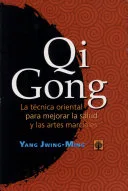
Qi gong
 82
82

Qi gong
Yang's "Qi Gong" presents a thorough, almost clinical, approach to the practice. Unlike many contemporary works that lean heavily on metaphor, Yang's 1992 publication grounds Qigong in physiological and energetic mechanics. The section detailing the "Eight Brocades" (Ba Duan Jin) is particularly clear, breaking down each movement with an instructive precision that allows for direct application. However, the text’s academic tone, while a strength for some, can feel somewhat dry for readers seeking a more spiritual or philosophical immersion. The emphasis is squarely on technique and energetic flow, with less exploration of the broader Taoist cosmology that underpins much of Qigong. It's a valuable manual, but perhaps less of a devotional text.
📝 Description
82
First published in 1992, Jwing-Ming Yang's Qi Gong is a practical guide to internal cultivation.
This 1992 text by Jwing-Ming Yang introduces Qi Gong, moving beyond physical exercise to detail the energetic principles of this Chinese discipline. The book explains specific postures, breathing methods, and meditative states designed to harmonize the body's vital energy, or Qi. It offers a structured approach for individuals interested in applying Qi Gong for health and spiritual growth. Yang's work is suitable for both newcomers and those with some background in Eastern contemplative practices. It particularly appeals to readers interested in the physiological and energetic dimensions of mind-body disciplines. Those seeking a systematic way to build internal strength, enhance circulation, and connect with their own bioenergetic field will find this volume informative. The book balances theoretical explanations with actionable techniques.
The early 1990s marked a period of increasing Western interest in Eastern healing arts. As traditional Chinese practices like Qi Gong experienced a revival globally, Yang's book emerged as an accessible entry point. It provided detailed instruction, distinguishing itself from purely philosophical or anecdotal accounts. This work became a resource for a Western audience curious about disciplines like Qi Gong and Tai Chi.
Qi Gong, rooted in ancient Chinese traditions, is a practice focused on cultivating and directing vital life force, known as Qi. This tradition posits that Qi flows through energetic pathways in the body, and its harmonious circulation is essential for physical health, mental clarity, and spiritual development. Practices often involve synchronized movement, breath control, and focused intention to influence this internal energy. Yang's book situates itself within this lineage by providing systematic instruction on how to engage with and manipulate Qi, drawing on established principles of Taoist internal alchemy and traditional Chinese medicine.
💡 Why Read This Book?
• Gain a structured understanding of Qi cultivation as detailed in Jwing-Ming Yang's 1992 guide, learning specific techniques for energy circulation that go beyond basic stretching. • Understand the physiological basis of Qi Gong, including concepts like meridians and the energetic pathways, as explained by Yang's systematic approach. • Practice the "Eight Brocades" (Ba Duan Jin) with clear, actionable instructions, enabling you to directly implement a foundational Qigong form for personal practice.
⭐ Reader Reviews
Honest opinions from readers who have explored this book.
❓ Frequently Asked Questions
What is the primary goal of Qi Gong as presented by Jwing-Ming Yang?
The primary goal, as outlined by Yang, is to cultivate, circulate, and balance the body's vital energy (Qi) to promote physical health, mental clarity, and spiritual well-being.
When was Jwing-Ming Yang's book on Qi Gong first published?
Jwing-Ming Yang's comprehensive guide to Qi Gong was first published in 1992.
Does the book discuss different styles of Qi Gong?
Yes, the work explores various forms, including medical Qigong for healing and martial Qigong for developing internal strength, differentiating their applications and methodologies.
What are meridians in the context of Qi Gong?
Meridians are described as energetic pathways within the body through which Qi flows. Yang's book explains how maintaining their clarity is crucial for health.
Is this book suitable for absolute beginners?
Yes, the book is designed for both beginners and those with some experience, offering clear instructions and explanations of fundamental Qi Gong principles and practices.
What is the significance of the 'Eight Brocades' in the book?
The 'Eight Brocades' (Ba Duan Jin) are presented as a fundamental set of Qigong exercises, detailed with specific postures and movements for cultivating Qi and improving physical function.
🔮 Key Themes & Symbolism
Qi Cultivation and Circulation
The core of Yang's work revolves around the concept of Qi, or vital energy. The book meticulously details how practitioners can actively cultivate this energy through specific breathing techniques, postures, and focused intention. It explains the energetic pathways, known as meridians, and provides methods for ensuring Qi flows unimpeded throughout the body. This focus on practical cultivation distinguishes the text, offering readers tangible methods to enhance their internal energetic state for improved health and vitality.
Meridian Theory and Health
Yang's text elaborates on the ancient Chinese understanding of meridians, the network of channels through which Qi travels. The book connects the flow and blockage of Qi within these meridians to physical health and disease. By understanding these energetic pathways, practitioners can identify potential areas of imbalance and apply Qigong techniques to clear obstructions. This detailed exploration of meridian theory provides a framework for understanding the physiological impact of Qigong practices.
The Eight Brocades (Ba Duan Jin)
A significant portion of the book is dedicated to the 'Eight Brocades' (Ba Duan Jin), a classic Qigong form. Yang breaks down each of the eight movements with clear, step-by-step instructions, emphasizing correct posture, breathing, and the energetic intent behind each exercise. This systematic presentation makes the Ba Duan Jin accessible to practitioners of all levels, serving as a foundational practice for developing internal strength, flexibility, and energetic awareness.
Holistic Mind-Body Harmony
Beyond mere physical exercise, Yang's "Qi Gong" emphasizes the profound connection between mind, body, and energy. The practices described aim to harmonize these aspects, fostering mental clarity and emotional balance alongside physical health. By integrating focused intention with physical movement and breath control, the book guides readers toward a more integrated state of being, aligning the practitioner's internal landscape with the natural energetic flow of the universe.
💬 Memorable Quotes
Direct passages from the work, attributed to the author.
“Qi is the vital energy that animates all life.”
— This fundamental statement defines the central concept of the practice, establishing Qi as the essential life force that practitioners aim to cultivate and balance.
“Proper breathing is crucial for gathering and directing Qi.”
— This emphasizes the integral role of breathwork in Qigong, positioning it as a primary tool for manipulating and enhancing the body's vital energy.
“The Eight Brocades offer a complete system for energetic development.”
— This points to the comprehensive nature of the Ba Duan Jin exercises, suggesting they provide a well-rounded approach to cultivating Qi and improving physical well-being.
💡 Key Ideas
Editorial paraphrase of the work's core concepts — not direct quotes.
Blockages in the meridians can lead to illness.
This paraphrase highlights the diagnostic and therapeutic aspect of Qigong, linking the smooth flow of energy through the body's energetic pathways to overall health.
Shen, Qi, and Jing are the three treasures of the body.
This paraphrase introduces the interconnectedness of spirit (Shen), vital energy (Qi), and essence (Jing) as foundational elements for holistic health and cultivation.
🌙 Esoteric Significance
Tradition
While rooted in ancient Chinese Taoist and Buddhist practices, Yang's approach to Qi Gong can be seen as a bridge to broader esoteric interests in vital energy cultivation. It aligns with Hermetic principles of correspondence and energetic manipulation, focusing on the microcosm of the human body as a reflection of universal energies. Unlike purely mystical traditions, Yang emphasizes the observable, physiological effects of Qi cultivation, making it accessible to those seeking practical energetic disciplines within a Western esoteric framework.
Symbolism
The primary symbolic representation in Yang's work is the flow of Qi itself, symbolizing life, vitality, and interconnectedness. The meridians function as a symbolic map of the body's energetic landscape, akin to the channels in Hermetic or Kabbalistic diagrams. The postures and movements, particularly within the Eight Brocades, often symbolically represent natural forces or states of being, such as expansion, contraction, and equilibrium, encouraging the practitioner to embody these principles.
Modern Relevance
Contemporary practitioners of somatic therapies, energy medicine, and even some branches of modern mindfulness draw upon the principles elucidated by Yang. His structured approach to Qi cultivation informs practices focused on stress reduction, physical rehabilitation, and enhanced athletic performance. Thinkers and practitioners in fields like somatic psychology and bioenergetic analysis find resonance in Yang's detailed exploration of the body's energetic system, applying his foundational concepts to modern wellness paradigms.
👥 Who Should Read This Book
• Beginners seeking a clear, instructional manual for learning Qigong techniques and understanding its fundamental principles. • Health-conscious individuals interested in exploring mind-body practices for self-healing and energetic vitality, particularly those drawn to Eastern disciplines. • Students of comparative spirituality or traditional Chinese medicine looking for a practical, foundational text on Qi cultivation and meridian theory.
📜 Historical Context
Published in 1992, Jwing-Ming Yang's "Qi Gong" arrived at a moment of burgeoning Western fascination with Eastern contemplative and healing arts. The preceding decades had seen a gradual opening of China and the subsequent global dissemination of practices like Tai Chi and Qigong, often viewed through a lens of health and wellness. Yang’s work distinguished itself by offering a more systematic and detailed instructional approach compared to many earlier, more anecdotal accounts. It emerged as Qigong was being explored not just as a folk practice but also within academic circles studying traditional Chinese medicine and philosophy. While competing schools of thought on Qigong existed, often emphasizing different aspects like martial applications or specific medical lineages, Yang’s book provided a broadly accessible introduction to the fundamental principles and exercises, contributing to the mainstreaming of Qigong in the West.
📔 Journal Prompts
The concept of Qi cultivation as presented in Yang's work.
The role of meridians in maintaining bodily health.
Personal experience with the "Eight Brocades" movements.
The relationship between breath control and energy flow.
Integrating Shen, Qi, and Jing in daily practice.
🗂️ Glossary
Qi (Chi)
The fundamental vital life force or energy that animates all living beings and permeates the universe. In Qigong, it is cultivated and circulated for health and well-being.
Meridians
A network of energetic pathways within the body through which Qi flows. Blockages or imbalances in meridians are believed to cause illness.
Ba Duan Jin (Eight Brocades)
A foundational set of eight Qigong exercises known for their effectiveness in strengthening the body, improving circulation, and cultivating vital energy.
Shen
Often translated as 'spirit' or 'mind', Shen represents the consciousness and mental clarity cultivated in Qigong practice alongside Qi and Jing.
Jing
Translated as 'essence', Jing is considered a fundamental vital substance in the body, related to physical structure, reproduction, and longevity.
Dan Tian
An energy center in the body, typically located below the navel, where Qi is said to be stored and concentrated.
Medical Qigong
A branch of Qigong focused on healing and therapeutic applications, often used to treat specific ailments and promote overall health.