850 NRSV Apocryphal/Deuterocanonical Books
 76
76

850 NRSV Apocryphal/Deuterocanonical Books
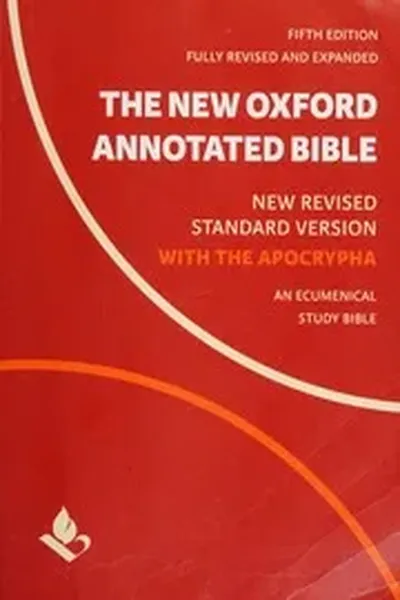
Oxford University Press's 1997 presentation of the NRSV Apocryphal/Deuterocanonical Books is a sober, academic tool rather than a revelation. Its strength lies in its straightforward, scholarly translation of texts that often remain obscure or relegated to appendices. The limitation, however, is its almost clinical presentation; the esoteric significance is left entirely for the reader to unearth. The inclusion of Tobit, with its narrative of angelic intervention and divine healing through specific rituals, exemplifies the unique spiritual currents present in these works, which differ markedly from the more familiar canonical narratives. For those seeking a reliable text for deep study, it serves its purpose, but it offers little interpretive guidance. It is a foundational resource for textual analysis.
📝 Description
76
Published in 1997, this volume collects the Apocryphal/Deuterocanonical books in the NRSV translation.
This edition of the 850 NRSV Apocryphal/Deuterocanonical Books contains texts usually absent from Protestant Bibles but found in Catholic and Orthodox canons. The New Revised Standard Version translation, known for its scholarship, renders these works accurately. These writings emerged during the Second Temple period and early Christian centuries, spanning roughly 300 BCE to 100 CE. Their place within different biblical canons has historically been a subject of debate among various Christian traditions.
The volume is designed for academics, theologians, and students interested in the wider spectrum of ancient Jewish and early Christian literature. It includes books such as Tobit, Judith, Wisdom of Solomon, Sirach, Baruch, and additions to Esther and Daniel. These texts offer distinct theological viewpoints, historical accounts, and moral lessons, illuminating the evolution of religious ideas in the ancient Near East and the nascent Christian movement.
These deuterocanonical and apocryphal texts represent a significant portion of ancient Jewish religious thought that did not make it into the Hebrew Bible's final canon. Their inclusion in later Christian traditions, particularly the Catholic and Orthodox canons, highlights a different trajectory of scriptural authority and interpretation. The NRSV edition makes these texts accessible for study, allowing readers to examine writings that shaped theological discussions and provided context for the New Testament, offering insights into beliefs and practices that existed alongside, and sometimes influenced, the more commonly cited biblical books.
💡 Why Read This Book?
• Gain access to the full spectrum of ancient Jewish literature, including texts like the Wisdom of Solomon, which offers philosophical discussions on divine providence unavailable in the canonical texts. • Understand the historical and theological landscape that shaped early Christianity by examining the 1st-century BCE context of books like Sirach, which articulates a complex ethical framework. • Explore variant scriptural traditions through the NRSV translation of Tobit, detailing angelic interactions and a unique approach to spiritual purity absent in the more commonly read biblical books.
⭐ Reader Reviews
Honest opinions from readers who have explored this book.
❓ Frequently Asked Questions
What is the difference between Apocryphal and Deuterocanonical books?
The terms are used interchangeably but carry different theological weight. 'Apocrypha' suggests hidden or spurious texts, a view often held by Protestants. 'Deuterocanonical' implies a second canon, accepted by Catholics and Orthodox, acknowledging their authoritative status.
Which specific books are included in the 850 NRSV Apocryphal/Deuterocanonical Books edition?
This edition typically includes Tobit, Judith, the Wisdom of Solomon, Sirach (Ecclesiasticus), Baruch, 1 and 2 Maccabees, and additions to Esther and Daniel, all translated in the New Revised Standard Version.
Why were these books not included in the Protestant Bible canon?
The Protestant Reformation, particularly figures like Martin Luther in the 16th century, favored a Hebrew canon for the Old Testament, which did not include these books. Their theological content was also sometimes seen as diverging from core Reformation doctrines.
What is the historical period covered by these texts?
The Deuterocanonical/Apocryphal books were written primarily between the 3rd century BCE and the 1st century CE, a period known as the Second Temple period, bridging the Old and New Testaments.
Is the NRSV translation considered scholarly?
Yes, the New Revised Standard Version (NRSV), first published in 1989, is recognized for its scholarly accuracy, based on the latest textual criticism and aiming for gender-inclusive language where appropriate.
Where can I find information on the historical reception of these books?
Academic commentaries and histories of the biblical canon often discuss the varied acceptance of these texts. Early Church Fathers like Origen and Augustine debated their status, providing valuable historical context.
🔮 Key Themes & Symbolism
Canon Formation Debates
This volume directly engages with the historical and theological debates surrounding the biblical canon. It presents texts like 1 and 2 Maccabees, which offer detailed accounts of historical events and religious struggles, providing evidence for the fluidity of scriptural acceptance in antiquity. Understanding these debates is crucial for grasping how different faith traditions established their authoritative texts, influencing centuries of religious interpretation and practice.
Ancient Wisdom Traditions
The Wisdom literature within this collection, particularly the Wisdom of Solomon and Sirach, showcases sophisticated philosophical and ethical thought. These works explore concepts of divine justice, the nature of creation, and the pursuit of virtue, reflecting Hellenistic influences on Jewish thought. They offer a different perspective on piety and divine interaction compared to the historical narratives of the Pentateuch or the Prophets.
Spiritual and Mystical Narratives
Texts such as Tobit and the additions to Daniel present narratives with clear spiritual and quasi-mystical elements. Tobit's account of angelic guidance and the use of specific remedies for healing, and Daniel's visions and miraculous deliverance stories, highlight a strain of religious experience focused on divine intervention and otherworldly aid. These narratives provide insight into popular piety and belief systems of the era.
The Role of Intermediaries
Several books explore the concept of divine intermediaries, most notably angels. In Tobit, the angel Raphael plays an important role in guiding Tobias. The additions to Daniel also feature angelic interactions and miraculous interventions. This theme is significant for understanding how ancient peoples conceived of the divine reaching into the human realm, a concept explored in various esoteric traditions.
💬 Memorable Quotes
Direct passages from the work, attributed to the author.
“The Wisdom of Solomon describes Wisdom as an outflow of the glory of God, a pure and spotless emanation of the eternal God.”
— This personification of Wisdom as a divine attribute or emanation is a key concept, echoing Neoplatonic and Gnostic ideas about divine presence and manifestation within the cosmos.
“Tobit recounts the angel Raphael appearing to Tobias in disguise to guide him on his perilous journey.”
— The presence of a disguised divine messenger underscores themes of hidden guidance and divine providence working through seemingly ordinary circumstances, a common motif in spiritual journeys.
“Sirach emphasizes the importance of seeking wisdom through diligent study and adherence to the Law.”
— This highlights a more structured, intellectual, and duty-bound approach to spiritual attainment, contrasting with more ecstatic or intuitive mystical experiences found elsewhere.
“Baruch is presented as a scribe and companion to Jeremiah, offering messages of repentance and hope.”
— The figure of Baruch represents the continuity of prophetic tradition and the transmission of divine messages through human agents, emphasizing the importance of sacred texts.
“The Maccabean books detail the Hasmonean revolt against Hellenistic rule, a struggle for religious and political freedom.”
— This narrative highlights a historical context where religious identity was fiercely defended, often through armed conflict, illustrating the tangible stakes of theological conviction.
🌙 Esoteric Significance
Tradition
These texts hold significance within multiple esoteric lineages, particularly those interested in Hermeticism, Gnosticism, and Kabbalah, due to their exploration of divine wisdom, angelic hierarchies, and cosmic principles. They bridge the gap between the Hebrew Bible and early Christian thought, a critical period for the development of Western mystical traditions. Their inclusion provides a richer understanding of the conceptual universe from which these later esoteric systems arose, offering alternative interpretations of divine action and revelation.
Symbolism
A key symbol is divine Wisdom, personified as a feminine emanation or mediator, particularly in the Wisdom of Solomon. Angels, such as Raphael in Tobit, function as divine messengers and guides, representing celestial forces interacting with humanity. The concept of purity and ritual, central to Tobit's narrative of healing, also serves as a symbolic pathway to divine favor and spiritual efficacy, reflecting ancient notions of cosmic order and divine law.
Modern Relevance
Contemporary esoteric scholars and practitioners often reference these texts for their unique perspectives on divine immanence and intermediary beings. Gnostic studies, in particular, find parallels in the concept of Wisdom as a divine outflow. Modern Kabbalistic explorations sometimes draw connections to the angelic lore and wisdom teachings. The practical application of spiritual principles for healing and guidance, as seen in Tobit, continues to inform certain contemporary spiritual healing movements and witchcraft practices seeking ancient roots.
👥 Who Should Read This Book
• Students of comparative religion and biblical studies seeking to understand the full scope of ancient Jewish and early Christian literature beyond the standard Protestant canon. • Scholars of Hellenistic Judaism and early Christian thought who need reliable NRSV translations for textual analysis and historical research. • Esoteric practitioners and researchers interested in the historical development of mystical concepts, angelic lore, and divine wisdom traditions that influenced later Western esotericism.
📜 Historical Context
The 1997 Oxford University Press edition of the 850 NRSV Apocryphal/Deuterocanonical Books emerges from a long tradition of scriptural scholarship and debate, particularly intensified during the Reformation. While figures like Martin Luther in the 16th century questioned the canonicity of these texts, leading to their exclusion from many Protestant Bibles, Catholic and Orthodox traditions maintained their inclusion. This volume reflects the modern scholarly consensus that these texts, written primarily between the 3rd century BCE and the 1st century CE, offer invaluable insights into the religious and intellectual milieu of Second Temple Judaism and early Christianity. They were contemporary with figures like Philo of Alexandria, whose philosophical writings engaged with similar themes of divine wisdom and intermediation, and the early Christian authors whose works would eventually form the New Testament canon. The NRSV translation itself, first published in 1989, represents a contemporary effort to produce a faithful and accessible rendering of ancient scriptures.
📔 Journal Prompts
The personification of Wisdom as described in the Wisdom of Solomon, compare its attributes to Sophia in Gnostic texts.
Reflect on the role of the angel Raphael in Tobit as a divine guide and healer.
Analyze the ethical teachings in Sirach and their applicability to contemporary moral challenges.
Consider the historical struggle for religious freedom depicted in the Maccabean books.
Examine the concept of divine providence as presented in Baruch.
🗂️ Glossary
Deuterocanonical
Literally 'second canon.' Refers to books accepted as authoritative Scripture by Catholic and Orthodox churches but not by Protestant churches. Often synonymous with Apocrypha.
Apocrypha
A collection of ancient Jewish writings from the Second Temple period, not included in the Hebrew Bible canon. The term can imply 'hidden' or 'spurious' depending on the theological viewpoint.
NRSV
New Revised Standard Version. A modern English translation of the Bible first published in 1989, known for its scholarly accuracy and inclusive language.
Canon
A collection or list of sacred books accepted as genuine and inspired scripture by a religious community.
Second Temple Period
The era of Jewish history from the rebuilding of the Second Temple in Jerusalem around 516 BCE to its destruction by the Romans in 70 CE.
Hellenistic Judaism
The form of Judaism that developed in the Hellenistic period (roughly 3rd century BCE to 1st century CE) under the influence of Greek culture and language.
Wisdom Literature
A genre of biblical and extrabiblical literature that focuses on practical and ethical advice, philosophical reflection, and the nature of wisdom, often personified.