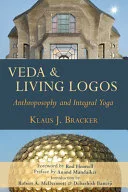
Veda and Living Logos: Anthroposophy and Integral Yoga
 81
81

Veda and Living Logos: Anthroposophy and Integral Yoga
Klaus J. Bracker's "Veda and Living Logos" attempts a challenging synthesis, grappling with the immense scope of Vedic tradition and Rudolf Steiner's Anthroposophy. Bracker's strength lies in his diligent exposition of complex concepts from both traditions, particularly his detailed breakdown of Steiner's esoteric cosmology and its relation to Vedic principles. The initial chapters, which lay out the foundational ideas of the Vedas and Anthroposophy, are particularly lucid. However, the book occasionally falters in its comparative analysis, sometimes feeling more like two distinct studies placed side-by-side rather than a truly integrated dialogue. A specific passage discussing the "Four Yugas" within Vedic cosmology and attempting to map them onto Anthroposophical epochs, while ambitious, could benefit from greater nuance to avoid oversimplification. Despite this, the work offers a valuable resource for those seeking to understand the potential bridges between these influential spiritual systems. It ultimately serves as a commendable, if sometimes dense, exploration of shared spiritual currents.
📝 Description
81
Klaus J. Bracker's 2018 book compares Vedic traditions with Rudolf Steiner's Anthroposophy.
Veda and Living Logos, by Klaus J. Bracker, undertakes a comparative analysis of two significant spiritual systems: the ancient Vedic teachings of India and Anthroposophy, Rudolf Steiner's spiritual science. Bracker's study meticulously scrutinizes the core texts and philosophical foundations of both traditions, identifying areas of overlap and distinction. This is not simply an academic pursuit; it is an investigation into how these separate yet linked spiritual currents can enrich present-day understanding and spiritual practice. The book aims to reveal the common principles that unite different spiritual expressions.
This work is principally intended for individuals studying and practicing Anthroposophy and Integral Yoga who wish for a more comparative grasp of their respective spiritual paths. It will also attract academics in comparative religion and esoteric studies, especially those focused on the connections between Eastern and Western spiritual philosophies. Readers familiar with Indian philosophy or the writings of Rudolf Steiner will find Bracker's detailed examination particularly beneficial. The book offers substantial material for anyone considering the possibilities of cross-cultural spiritual dialogue.
Published in 2018, Bracker's work engages with the ongoing conversation between Eastern mysticism and Western esoteric movements. This dialogue has roots in the late 19th and early 20th centuries, when figures like Helena Blavatsky and Rudolf Steiner incorporated Eastern concepts into their systems. Bracker's comparative method aligns with syntheses attempted by thinkers such as Sri Aurobindo, the architect of Integral Yoga, and Carl Jung, who examined Eastern ideas through a Western psychological lens. The book contributes to a broader contemporary interest in comparative spirituality.
💡 Why Read This Book?
• Gain a comparative perspective on "Veda" and "Anthroposophy," understanding how Bracker links the ancient Indian scriptures' "Living Logos" concept to Rudolf Steiner's spiritual science, offering unique insights into universal spiritual principles. • Discover the Anthroposophical concept of "Initiation" and its parallels within Vedic spiritual practices, providing a concrete framework for personal spiritual development that transcends traditional boundaries. • Explore the book's detailed exposition of "Cosmic Christ" in Anthroposophy and its potential connections to Vedic cosmogony, deepening your understanding of universal spiritual evolution and the search for a unifying divine principle.
⭐ Reader Reviews
Honest opinions from readers who have explored this book.
❓ Frequently Asked Questions
What is the primary focus of "Veda and Living Logos: Anthroposophy and Integral Yoga"?
The book offers a comparative study between the ancient Vedic spiritual traditions of India and the modern spiritual science of Anthroposophy, founded by Rudolf Steiner. It seeks to identify common principles and explore their relevance for contemporary spiritual understanding.
Who is Klaus J. Bracker and what is his background?
Klaus J. Bracker is an author and scholar focusing on esoteric and spiritual philosophy. His work demonstrates a deep engagement with both Eastern and Western mystical traditions, particularly Anthroposophy and Vedic thought.
When was "Veda and Living Logos" first published?
The book was first published on October 12, 2018, reflecting a contemporary effort to bridge diverse spiritual philosophies.
What is the "Living Logos" concept as explored in the book?
The "Living Logos" refers to a divine creative word or principle. Bracker examines its manifestation in Vedic traditions (e.g., Brahman, Om) and Anthroposophy, viewing it as a fundamental force in creation and spiritual revelation.
Does the book discuss Integral Yoga in detail?
While "Integral Yoga" is in the title, the primary focus is on the comparison between Veda and Anthroposophy. Integral Yoga, as developed by Sri Aurobindo, serves as a conceptual bridge or context for understanding the synthesis attempted in the book.
Is this book suitable for beginners in spiritual studies?
While accessible to dedicated beginners, the book delves into complex philosophical and esoteric concepts. Prior familiarity with either Vedic philosophy or Anthroposophy would significantly enhance the reader's comprehension and appreciation.
🔮 Key Themes & Symbolism
The Living Logos
The book posits the "Living Logos" as a central, unifying principle. Bracker traces its manifestation in the ancient Vedic concept of Brahman and the primordial sound Om, representing the creative, organizing force of the cosmos. This is contrasted with Rudolf Steiner's Anthroposophical understanding of spiritual revelation and cosmic evolution, where the Logos plays a central role in human and planetary development. The exploration seeks to demonstrate a universal spiritual intelligence underpinning diverse traditions, accessible through inner perception and spiritual science.
Vedic Cosmology and Anthroposophical Epochs
A significant aspect of Bracker's work involves comparing the cyclical time concepts within Vedic tradition, such as the Four Yugas (Satya, Treta, Dvapara, Kali), with the evolutionary epochs described in Anthroposophy (e.g., Old Saturn, Old Sun, Old Moon, Earth periods). The book examines how these different frameworks describe stages of cosmic and human development, seeking parallels in their portrayal of descent, transformation, and ascent, offering a lens through which to view humanity's spiritual journey across vast temporal scales.
Spiritual Science and Initiation
Bracker explores the concept of "Spiritual Science" (Anthroposophy) as a method for understanding spiritual realities directly, a path distinct from mere belief. This is juxtaposed with the practices and experiences associated with "Initiation" within Vedic traditions. The book examines how both paths offer methods for inner development and the attainment of higher consciousness, highlighting the role of disciplined inner work and direct spiritual perception as keys to unlocking hidden potentials.
The Universal Christ
The book touches upon the Anthroposophical understanding of the "Cosmic Christ" as a spiritual being and evolutionary force. Bracker investigates potential correlations within Vedic thought, seeking to identify how this universal spiritual principle of love and redemption is perceived or implied in ancient Indian scriptures. This comparative analysis aims to show a shared understanding of a divine presence that guides and imbues the cosmos, transcending specific religious or philosophical formulations.
💬 Memorable Quotes
Direct passages from the work, attributed to the author.
“The effort to understand other cultures and their spirituality can lead to a deeper understanding of our own.”
— This foundational idea frames the entire comparative project, suggesting that genuine cross-cultural engagement fosters self-awareness and illuminates universal human experiences.
“The Vedas represent a primordial spiritual inheritance for humanity.”
— This highlights the book's reverence for the ancient Indian scriptures, positioning them as a source of fundamental spiritual knowledge crucial for contemporary understanding.
“Anthroposophy offers a path of knowledge aiming to guide spiritual development.”
— This defines Rudolf Steiner's work as a practical, knowledge-based approach to spiritual growth, contrasting it with purely faith-based or dogmatic systems.
“The 'Living Logos' is a divine creative word or principle found in diverse traditions.”
— This expresses the core thesis, identifying a universal spiritual force that Bracker seeks to trace through both Vedic and Anthroposophical frameworks.
“Initiation in both traditions involves inner transformation and spiritual attainment.”
— This points to a shared methodology for achieving higher consciousness, emphasizing the internal, developmental nature of spiritual progress across different esoteric paths.
🌙 Esoteric Significance
Tradition
This work belongs to the broad field of comparative esoteric studies, with a specific focus on bridging the ancient Vedic tradition of India and the modern esoteric movement of Anthroposophy. It situates itself within the lineage of thinkers who seek to synthesize Eastern and Western spiritual philosophies, acknowledging the foundational work of figures like Rudolf Steiner and the philosophical underpinnings of Vedic texts. Bracker's approach departs from purely academic religious studies by emphasizing the practical and developmental aspects of these traditions, aligning with the esoteric goal of spiritual transformation.
Symbolism
Key symbols explored include the "Logos," representing divine creative intelligence and the ordering principle of the cosmos, found in both traditions as a fundamental expression of reality. The concept of "Yugas" (ages) from Vedic cosmology serves as a symbolic framework for understanding cyclical time and evolutionary processes, paralleled by Anthroposophy's epochs of planetary and human development. Furthermore, the idea of "Initiation" acts as a symbolic gateway to higher spiritual states, representing a transformative journey of consciousness common to many esoteric paths.
Modern Relevance
In contemporary times, "Veda and Living Logos" is relevant to spiritual seekers exploring the integration of Eastern and Western thought, a trend evident in various New Age movements and contemporary spiritual philosophies. Thinkers and practitioners interested in Rudolf Steiner's Anthroposophy, particularly its cosmological and spiritual-scientific aspects, find value in Bracker's comparative analysis. It also appeals to those engaged in Integral Yoga and similar holistic spiritual paths that seek to synthesize diverse wisdom traditions for personal and collective evolution in the 21st century.
👥 Who Should Read This Book
• Students of Anthroposophy: Those familiar with Rudolf Steiner's work will gain a deeper appreciation for how his insights may connect with the ancient Vedic worldview. • Practitioners of Integral Yoga: Individuals seeking to understand the philosophical underpinnings and comparative spiritual contexts of Sri Aurobindo's teachings will find valuable connections. • Scholars of Comparative Religion and Esotericism: Researchers interested in the dialogue between Eastern and Western spiritual traditions will benefit from Bracker's detailed analysis and synthesis efforts.
📜 Historical Context
Published in 2018, Klaus J. Bracker's "Veda and Living Logos" arrives in a landscape where comparative spirituality has a long lineage, notably influenced by Theosophy and its successors. Figures like Helena Blavatsky and Annie Besant had already begun integrating Eastern concepts into Western esoteric discourse in the late 19th century, while Rudolf Steiner himself, a prominent figure within Theosophy before founding Anthroposophy in 1913, drew upon and reinterpreted Indian philosophical ideas. Bracker's work enters this ongoing conversation, particularly following the development of Integral Yoga by Sri Aurobindo in the early to mid-20th century, which also sought a synthesis of Eastern and Western spiritual thought. The book implicitly engages with the challenges of translating and understanding esoteric concepts across cultural divides, a theme explored by many thinkers, including Carl Jung, who found parallels between Eastern symbolism and Western psychology. Bracker's comparative methodology positions the work within a modern effort to find universal spiritual truths amidst diverse traditions.
📔 Journal Prompts
Reflect on the "Living Logos" as a unifying principle across Vedic and Anthroposophical thought.
Consider the symbolic representations of cosmic time found in the "Yugas" and Anthroposophical epochs.
How does the concept of "Initiation" as inner transformation manifest in your own spiritual practice?
Explore the potential parallels between the "Cosmic Christ" and Vedic concepts of divine presence.
Analyze the statement that understanding foreign spirituality deepens understanding of one's own culture.
🗂️ Glossary
Vedas
The oldest scriptures of Hinduism, comprising hymns, prayers, rituals, and philosophical treatises, considered by tradition to be divinely revealed.
Anthroposophy
A spiritual philosophy founded by Rudolf Steiner, aiming to provide a path of knowledge and spiritual development through self-awareness and inner perception.
Living Logos
A term used to describe a divine creative word, principle, or intelligence that manifests and organizes the cosmos, explored in both Vedic and Anthroposophical contexts.
Integral Yoga
A spiritual path developed by Sri Aurobindo, aiming for the complete transformation of the human being and the earth through a synthesis of Eastern and Western spiritual disciplines.
Yugas
Cyclical ages in Hindu cosmology, representing vast periods of time that mark the decline and eventual renewal of dharma and human consciousness.
Initiation
A process of spiritual advancement involving stages of inner development, testing, and attainment of higher consciousness, present in various esoteric traditions.
Spiritual Science
An Anthroposophical term for the systematic study of spiritual realities, distinct from empirical science, based on clairvoyant perception and spiritual research.