Puranas Reimagined
 73
73

Puranas Reimagined
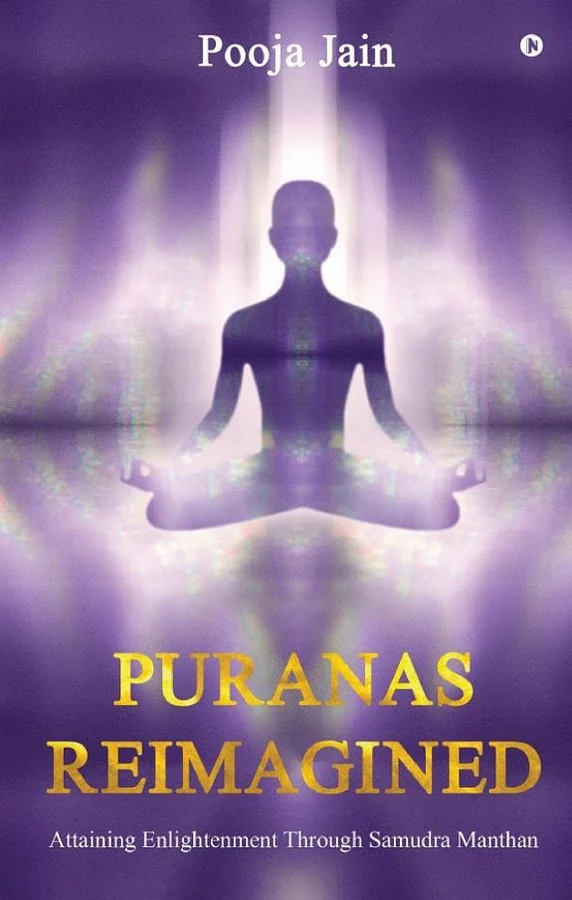
Pooja Jain's *Puranas Reimagined* bravely tackles the Samudra Manthan, a story often confined to devotional retellings. Jain's central thesis—that the Puranic elements are allegories for psychic powers—is compelling, particularly her mapping of celestial gifts like Airawat and Kalpvriksha to specific Siddhis. This approach offers a fresh, practical application for ancient narratives. However, the book occasionally falters in providing concrete techniques for 'attaining enlightenment' or developing these 'psychic powers,' leaving the reader with an intriguing framework but less direct guidance than the title might suggest. The interpretation of the Halahala poison as the manifestation of egoic impurities is a particularly sharp observation, highlighting the book's strength in symbolic analysis. Ultimately, *Puranas Reimagined* serves as an illuminating commentary for those seeking deeper esoteric meanings in Hindu lore, though it functions more as a conceptual primer than a direct manual for spiritual attainment.
📝 Description
73
Pooja Jain's 2022 book, Puranas Reimagined, reads the Samudra Manthan as an inner spiritual map.
Puranas Reimagined examines the ancient Hindu story of Samudra Manthan, the churning of the cosmic ocean, not as simple myth but as a symbolic guide to spiritual growth. Pooja Jain interprets the conflict between divine and demonic forces, and the emergence of celestial gifts, as parallels to the human psyche's inner workings. The book suggests that the Siddhis, or psychic powers, mentioned as divine gifts in the Puranas, are actual spiritual abilities individuals can cultivate.
This work is for those drawn to the hidden meanings within Hindu scriptures and who see religious narratives as tools for personal transformation. Readers familiar with yoga, meditation, and Kundalini concepts will find Jain's allegorical method especially pertinent. It also suits students of esoteric studies curious about harnessing ancient wisdom for spiritual and psychic development.
The Puranas, compiled between roughly 400 CE and 1600 CE, form a vast Sanskrit literature central to Hindu devotion. The Samudra Manthan narrative appears across several texts, underscoring its importance. Jain's 2022 reimagining positions this ancient story within a modern esoteric framework. It moves beyond devotional or historical readings to highlight practical spiritual applications, reflecting a renewed interest in mythology's potential for inner transformation.
💡 Why Read This Book?
• Understand the Samudra Manthan not as myth, but as a map of inner potential, learning how each celestial gift like Airawat symbolizes specific psychic faculties accessible through spiritual discipline, as detailed in Pooja Jain's 2022 work. • Discover how concepts like Kalpvriksha are reinterpreted as tools for manifestation and spiritual desire-fulfillment, offering a practical esoteric framework for personal growth beyond literal scriptural interpretation. • Gain insight into the Puranic narrative's hidden teachings on ego dissolution, symbolized by the Halahala poison, providing a unique perspective on overcoming inner obstacles as explored in the book's allegorical approach.
⭐ Reader Reviews
Honest opinions from readers who have explored this book.
❓ Frequently Asked Questions
What is the main allegorical interpretation presented in Puranas Reimagined?
The book interprets the Samudra Manthan, or churning of the cosmic ocean, as an allegory for spiritual development. Celestial gifts like Airawat and Kalpvriksha are recast as specific psychic powers, or Siddhis, attainable through inner spiritual practices.
Who is the author of Puranas Reimagined?
The author is Pooja Jain. The book was first published on May 11, 2022.
What ancient Hindu scripture does Puranas Reimagined focus on?
The book primarily reinterprets the Samudra Manthan, a popular folktale found within the Puranas, which are a vast body of ancient Sanskrit literature central to Hinduism.
What does the book suggest about achieving spiritual enlightenment?
It suggests that enlightenment can be attained by understanding and developing the inner psychic powers or Siddhis, which the book allegorically links to the divine gifts obtained during the Samudra Manthan.
Are there specific examples of psychic powers discussed in the book?
Yes, the book identifies celestial gifts such as Airawat (symbolizing strength/stability), Kalpvriksha (wish-fulfillment), and Shankh (a spiritual call or power) as representations of specific psychic abilities.
What is the significance of the Halahala poison in Jain's interpretation?
In Pooja Jain's allegorical framework, the Halahala poison represents the manifestation of egoic impurities and negative tendencies that arise during spiritual practice, requiring conscious effort to transmute.
🔮 Key Themes & Symbolism
Samudra Manthan as Inner Alchemy
The central theme is the reinterpretation of the Puranic Samudra Manthan as a profound allegory for inner transformation. Pooja Jain posits that the churning of the cosmic ocean is not merely a historical or mythological event but a symbolic representation of the alchemical process within the human psyche. The efforts of the Devtas and Daityas mirror the struggle between higher spiritual aspirations and lower material desires, both necessary for the emergence of higher consciousness and divine gifts.
Celestial Gifts as Siddhis
Jain uniquely frames the various celestial gifts obtained from the Samudra Manthan—such as Airawat, Kalpvriksha, and Shankh—as specific psychic powers, or Siddhis, recognized in yogic and esoteric traditions. Each gift is explored as a potential within the individual consciousness, attainable through focused spiritual discipline. This perspective transforms mythological objects into tangible spiritual capacities, offering a practical guide for self-development and the awakening of latent abilities.
The Halahala Poison and Ego Transcendence
A critical aspect of the Samudra Manthan allegory is the emergence of the Halahala poison, which Shiva drinks to save creation. In Jain's interpretation, this represents the potent negativity, egoic attachments, and karmic residues that surface during spiritual purification. The act of drinking the poison symbolizes the spiritual aspirant's necessity to confront, absorb, and transmute these inner poisons rather than being destroyed by them, a crucial step towards enlightenment.
Spiritual Practice and Enlightenment
The book emphasizes that attaining enlightenment and developing these psychic powers is not passive but requires dedicated spiritual practice. It draws parallels between the sustained effort of the Devtas and Daityas in churning the ocean and the consistent application of spiritual techniques by the seeker. The work serves as a conceptual guide, suggesting that by understanding the symbolic language of the Puranas, individuals can better navigate their own spiritual journey towards higher consciousness.
💬 Memorable Quotes
Direct passages from the work, attributed to the author.
“Each celestial gift obtained... is considered as an amazing psychic power or Siddhi.”
— This core statement frames the entire book, re-contextualizing Puranic elements. It shifts focus from external mythology to internal potential, suggesting ancient stories hold keys to awakening latent human abilities.
“The work draws an allegory between the religious folktale of the Daityas, the Devtas and the celestial gifts with inner sciences of spirituality.”
— This conceptual summary emphasizes the book's methodological approach. It clarifies that the Puranic narrative is treated not literally, but as a symbolic framework for understanding the mechanics of spiritual growth and consciousness.
“Airawat, Kalpvriksha, Shankh, etc., in the tale, is considered as an amazing psychic power or Siddhi.”
— This specific example illustrates the book's interpretive strategy. By equating distinct elements of the Samudra Manthan with named Siddhis, Jain provides concrete anchors for her allegorical system, making abstract concepts more tangible.
“Attaining Enlightenment Through Samudra Manthan.”
— This subtitle expresses the book's ultimate aim. It positions the ancient myth not just as a story, but as a direct pathway or methodology for achieving profound spiritual realization and self-mastery.
💡 Key Ideas
Editorial paraphrase of the work's core concepts — not direct quotes.
The miraculous powers can be developed by an individual.
This paraphrase highlights the empowering message of the book. It asserts that the extraordinary capacities described in scripture are not exclusive to deities but are achievable potentials for every human being through dedicated practice.
🌙 Esoteric Significance
Tradition
This work aligns with the modern esoteric interpretation of ancient mythologies, particularly those influenced by Theosophical and Jungian psychological approaches to symbolism. It reinterprets Hindu Puranic narratives, specifically Samudra Manthan, as maps of the human psyche and spiritual development, rather than literal historical accounts. This fits within a broader esoteric lineage that seeks universal spiritual principles underlying diverse religious forms, moving beyond sectarian dogma to focus on inner experiential truths.
Symbolism
Key symbols like Airawat, the divine elephant, are interpreted as representing immense psychic strength and grounding. The Kalpvriksha, or wish-fulfilling tree, symbolizes the power of focused spiritual intention to manifest desires. The Halahala poison, drunk by Shiva, represents the necessary confrontation and transmutation of inner negativity and egoic impurities encountered during spiritual purification, a common theme in yogic and Tantric traditions.
Modern Relevance
Jain's work speaks to contemporary practitioners of mindfulness, yoga, and self-help who seek deeper meaning in ancient stories. It connects with modern psychological frameworks that explore archetypes and the subconscious, as well as New Age philosophies emphasizing personal empowerment and the manifestation of potential. Thinkers and schools exploring comparative mythology for spiritual insights find value in its allegorical approach to timeless narratives.
👥 Who Should Read This Book
• Students of comparative mythology and religious studies seeking esoteric interpretations of Hindu Puranic tales, particularly the Samudra Manthan narrative. • Spiritual seekers interested in practical applications of ancient wisdom, looking to understand concepts like Siddhis (psychic powers) through symbolic allegory. • Individuals exploring inner sciences and the potential for personal transformation, who appreciate viewing religious folklore as a guide to psychological and spiritual development.
📜 Historical Context
Published in 2022, Pooja Jain's *Puranas Reimagined* enters a contemporary landscape where ancient texts are increasingly explored for practical psychological and spiritual applications, a trend influenced by movements like Theosophy and modern esoteric psychology. The Puranas themselves, a vast corpus of Sanskrit literature dating from approximately 400 CE to 1600 CE, have historically served as foundational narratives for Hinduism, shaping devotional practices and cosmology. Jain's work diverges from traditional devotional or purely historical scholarship, engaging instead with an esoteric hermeneutic. This approach echoes earlier esoteric interpretations of Vedic and Puranic lore, such as those found in the works of Helena Blavatsky or Sri Aurobindo, who also sought deeper symbolic meanings. While specific reception details for Jain's book are limited, it taps into a continuous global interest in comparative mythology and the potential for universal spiritual truths embedded within diverse religious traditions, positioning itself against purely academic or fundamentalist readings.
📔 Journal Prompts
The allegory of the Daityas and Devtas in Samudra Manthan: What inner forces do they represent in your own life?
Consider Kalpvriksha: What spiritual desires are you cultivating, and how does focused intention support their manifestation?
Reflect on the Halahala poison: What inner 'poisons' must be confronted and transmuted for your spiritual growth?
How can the concept of Airawat's strength inform your approach to overcoming spiritual obstacles?
What psychic powers (Siddhis) does the Puranic narrative suggest are attainable through diligent spiritual practice?
🗂️ Glossary
Puranas
A vast body of Sanskrit literature in Hinduism, containing cosmologies, genealogies of deities, sages and kings, and philosophical teachings, often presented through narratives and stories.
Samudra Manthan
The 'Churning of the Ocean,' a foundational Puranic story detailing the collaborative effort of gods (Devtas) and demons (Daityas) to churn the cosmic ocean for nectar of immortality, yielding various divine treasures and a potent poison.
Daityas
In Hindu mythology, a class of Asuras or demons, often depicted as antagonists to the Devtas (gods), representing forces of chaos or materialism in allegorical interpretations.
Devtas
The gods or celestial beings in Hindu mythology, often in conflict with the Asuras, representing divine, spiritual, or orderly principles in allegorical readings.
Siddhi
A Sanskrit term meaning 'perfection,' 'accomplishment,' or 'attainment,' often referring to supernatural or magical powers acquired through spiritual discipline, yoga, or meditation.
Airawat
The divine white elephant mount of the god Indra. In the context of Samudra Manthan, it is one of the celestial gifts that emerged, symbolizing immense strength and stability.
Kalpvriksha
The 'wish-fulfilling divine tree' that emerged from the Samudra Manthan. It is symbolically interpreted as representing the power of manifestation through spiritual intention and desire.
This book appears in 1 collection
🔮 Readers Also Liked
Browse all →









From the “Pranic Healing” Collection
View all →









More Free Sacred Texts & Gnosticism Books
View all →