Wild Magic
 73
73

Wild Magic
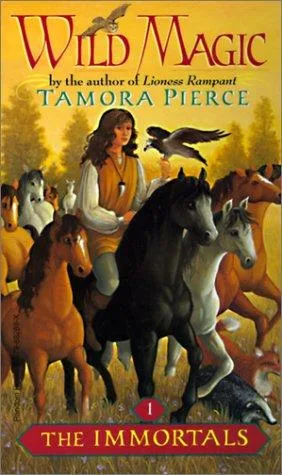
Tamora Pierce’s "Wild Magic" presents a familiar coming-of-age arc through the lens of an untamed magical force, a concept she handles with a seasoned author's touch. The novel excels in its depiction of Daja’s internal struggle; her fear and awe of her own power feel genuinely earned, particularly when contrasted with the more controlled magic of her peers. The narrative offers a refreshing take on wild magic, portraying it less as an innate talent to be honed and more as a volatile entity to be understood and befriended. However, the pacing occasionally falters, with certain plot developments feeling somewhat abrupt, particularly in the latter half. A passage where Daja attempts to commune with the wild magic during a storm is particularly effective, showcasing both its destructive potential and its raw beauty. Despite minor pacing issues, the novel remains a solid entry, offering a character-driven exploration of power and identity. Pierce delivers a satisfying narrative that, while not reinventing the wheel, executes its premise with considerable skill.
📝 Description
73
Tamora Pierce's Wild Magic, published in 2018, introduces Daja, a young woman with chaotic, untamed magical abilities.
Daja discovers she can control wild magic, a force unlike the structured elemental magic common in fantasy. This power is unpredictable and deeply tied to the natural world, setting her apart from her peers and established magical orders. The novel follows her struggle to understand and master this potent, untamed energy.
Daja's journey is one of personal growth and self-discovery as she navigates her unique place in society. The story examines themes of difference, acceptance, and the responsible use of power. Readers will find detailed world-building, particularly in its depiction of a magical system that deviates from typical fantasy conventions.
Published in 2018, Wild Magic engages with a tradition of fantasy that depicts magic as an external, wild force, contrasting with more academic or internally focused magical systems. This approach aligns with narratives that explore primal energies and the natural world as sources of power, rather than solely learned or structured disciplines. Pierce's work taps into a vein of storytelling where magic is an inherent, often chaotic, aspect of existence that characters must learn to live with and integrate, rather than simply command.
💡 Why Read This Book?
• Gain insight into a unique magical system distinct from common elemental or arcane structures, by exploring the concept of "wild magic" as a primal, untamed force that requires understanding rather than mere control. • Experience a nuanced portrayal of self-acceptance through Daja's journey, learning how societal pressures can impact one's relationship with extraordinary abilities, as seen in her interactions with other magic users. • Understand the challenges of wielding unpredictable power, focusing on the practical and emotional consequences Daja faces when her abilities manifest unexpectedly, mirroring real-world struggles with difference.
⭐ Reader Reviews
Honest opinions from readers who have explored this book.
❓ Frequently Asked Questions
When was Tamora Pierce's 'Wild Magic' first published?
Tamora Pierce's 'Wild Magic' was first published in 2018, marking a significant addition to her extensive body of young adult fantasy literature.
What is the central magical concept in 'Wild Magic'?
The central concept is 'wild magic,' an unpredictable and primal force deeply connected to nature, which the protagonist Daja must learn to understand and coexist with, rather than simply command.
Who is the main protagonist of 'Wild Magic'?
The main protagonist is Daja, a young woman who discovers she possesses the rare ability to wield wild magic, setting her on a path of self-discovery and mastery.
Does 'Wild Magic' connect to other Tamora Pierce books?
While 'Wild Magic' can be read as a standalone story, it is set within the same universe as Tamora Pierce's other popular young adult fantasy series, allowing for potential thematic or world connections for long-time fans.
What themes are explored in 'Wild Magic'?
The novel explores themes of self-acceptance, the nature of power, societal reactions to difference, and the importance of understanding and respecting forces beyond immediate control.
What age group is 'Wild Magic' intended for?
'Wild Magic' is primarily intended for young adult readers, featuring a protagonist and themes that resonate with that demographic.
🔮 Key Themes & Symbolism
The Nature of Wild Magic
The book centers on 'wild magic,' a force that defies conventional categorization. Unlike structured spells or elemental control, it is presented as a primal, untamed energy intrinsically linked to the natural world. Daja's journey involves learning to coexist with this power, recognizing its potential for both creation and destruction, rather than simply dominating it. This contrasts with more ordered magical systems, highlighting the inherent unpredictability and respect required when dealing with forces that are not fully understood or controllable by the wielder.
Self-Acceptance and Identity
Daja's possession of wild magic isolates her, forcing her to confront her identity in the face of societal fear and misunderstanding. Her struggle is not just to master her abilities but to accept herself as she is, even when those abilities are seen as dangerous or aberrant. The narrative emphasizes that true strength comes from integrating one's unique qualities, even the frightening ones, into one's sense of self, rather than suppressing them to conform.
Power and Responsibility
The novel examines the profound responsibility that accompanies significant power, especially power that is volatile and difficult to control. Daja grapples with the consequences of her magic's uncontrolled manifestations, learning that wielding power means understanding its impact on oneself and others. This theme is explored through her interactions with those who fear her and those who might seek to exploit her abilities, underscoring the ethical considerations inherent in possessing extraordinary capabilities.
Connection to the Natural World
Wild magic is depicted as deeply interwoven with the fabric of the natural world. This connection suggests a more animistic or pantheistic view of magic, where the environment itself is imbued with sentient energy. Daja's ability to harness this power is linked to her attunement with nature, implying that a harmonious relationship with the earth is key to understanding and wielding such potent forces, rather than imposing one's will upon it.
💬 Memorable Quotes
Direct passages from the work, attributed to the author.
“The wild magic doesn't care if you're ready. It just is.”
— This highlights the uncontrollable and unpredictable nature of the titular magic. It's a force that exists independently of the wielder's preparedness or desires, presenting a challenge that requires adaptation and resilience.
“Sometimes, the most dangerous magic is the kind you don't understand.”
— This sentiment underscores the theme of fear and the unknown. It suggests that lack of knowledge about a power amplifies its perceived threat, both for the wielder and those around them.
“She had to learn to hear the whispers before they became screams.”
— This metaphorical quote speaks to the necessity of early recognition and understanding of subtle magical energies. Ignoring nascent signs can lead to overwhelming and potentially destructive magical outbursts.
“Her magic was a storm she had to ride, not a horse she could break.”
— This powerful analogy captures the essence of managing wild magic. It frames the relationship as one of partnership and skillful navigation, rather than dominance or subjugation of the magical force.
💡 Key Ideas
Editorial paraphrase of the work's core concepts — not direct quotes.
Magic is not a thing you learn, it is a thing you are.
This line emphasizes the inherent, innate quality of wild magic as opposed to learned or academic magical disciplines. It suggests that the power is a fundamental part of Daja's being, requiring integration and understanding rather than mere study.
🌙 Esoteric Significance
Tradition
While not explicitly tied to a single esoteric lineage like Hermeticism or Kabbalah, "Wild Magic" speaks to animistic and shamanistic traditions that view the natural world as inherently alive with spiritual energy. The concept of "wild magic" aligns with the idea of a primal, untamed life force that exists beyond human comprehension or control, requiring attunement rather than mastery. It departs from more structured magical systems by emphasizing instinct and natural connection over codified rituals or intellectual understanding, reflecting a broader contemporary interest in nature-based spirituality.
Symbolism
The primary symbol is the "wild magic" itself, representing the untamed, primal forces of existence that lie beyond human domestication or complete understanding. Storms serve as a recurring motif, symbolizing the raw, chaotic, and powerful nature of this magic, capable of both destruction and renewal. Daja’s own hands, often depicted as glowing or crackling with energy, symbolize her direct, visceral connection to this power and her struggle to integrate it into her physical being and identity.
Modern Relevance
Contemporary practitioners of ecopsychology and earth-centered spirituality may find resonance in the novel's depiction of magic as intrinsically linked to the natural world. Thinkers exploring non-dualistic philosophies, where the separation between self and environment is dissolved, could also draw parallels. Furthermore, the novel’s focus on accepting and integrating difficult or feared aspects of oneself speaks to modern therapeutic and self-help movements that emphasize wholeness and the embrace of shadow aspects of the psyche.
👥 Who Should Read This Book
• Young adult fantasy enthusiasts seeking character-driven narratives focusing on self-discovery and the responsible use of power. • Readers interested in exploring magical systems that diverge from traditional elemental or arcane frameworks, particularly those that emphasize a connection to nature. • Individuals who appreciate stories about protagonists who must navigate societal prejudice and internal conflict due to their unique abilities or differences.
📜 Historical Context
Tamora Pierce’s "Wild Magic," released in 2018, entered a robust young adult fantasy market that had evolved considerably since her own career began with "Song of the Lioness" in 1984. The intervening decades saw a diversification of magical systems in fantasy literature, moving beyond traditional European-inspired arcane arts to explore more animistic, spiritual, and psychologically-rooted forms of magic. Pierce, a foundational figure in YA fantasy, engages with these contemporary currents by presenting "wild magic" as a distinct force – primal, unpredictable, and tied to the natural world, contrasting with the more structured, learned magic common in earlier works. While not facing overt censorship, the genre itself has become more critically examined, with readers and critics increasingly valuing diverse representation and nuanced explorations of power dynamics. Pierce's work, by focusing on a protagonist whose magic is inherently chaotic and potentially isolating, taps into a modern sensibility that embraces characters who don't fit neatly into established societal or magical molds.
📔 Journal Prompts
Daja’s initial fear of her wild magic, and how it manifested.
The concept of magic as an untamed force versus a learned skill.
The societal reactions to Daja’s uncontrolled abilities.
Daja’s journey toward accepting her unique magical identity.
The connection between wild magic and the natural environment.
🗂️ Glossary
Wild Magic
A primal, unpredictable, and potent form of magic deeply connected to the natural world, distinct from structured or learned magical systems. It requires understanding and attunement rather than direct command.
Daja
The protagonist of 'Wild Magic,' a young woman who discovers she possesses the rare and volatile ability to wield wild magic, leading her on a journey of self-discovery and control.
Attunement
The process of harmonizing with or becoming sensitive to a force or energy, such as wild magic. It implies a receptive rather than dominant relationship with the power.
Primal Force
An ancient, fundamental energy or power that exists at the core of existence, often associated with nature and instinct, as opposed to something that is learned or artificially created.
Magical Manifestation
The outward expression or appearance of magical power. In 'Wild Magic,' these manifestations can be unpredictable and overwhelming due to the nature of wild magic.
Societal Fear
The apprehension or dread felt by a community towards individuals or phenomena perceived as dangerous or different, often leading to ostracism or hostility.
Internal Conflict
A struggle within a character's own mind, often involving opposing desires, beliefs, or emotions, such as Daja's conflict between fear of her power and the need to understand it.
🔮 Readers Also Liked
Browse all →








More by Tamora Pierce
All books →





More Free Occult Philosophy Books
View all →