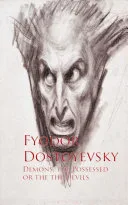
Demons, the Possessed or the the Devils
 71
71

Demons, the Possessed or the the Devils
Dostoyevsky's "Demons" offers a chillingly prescient portrayal of how abstract political and philosophical ideas, when untethered from ethical grounding, can unleash societal pandemonium. The novel’s depiction of a provincial Russian town succumbing to nihilistic fervor is masterfully rendered, showcasing the insidious spread of radicalism. Pyotr Verkhovensky’s manipulative genius and Nikolai Stavrogin’s enigmatic, destructive influence form the dark heart of the narrative. A particular strength lies in Dostoyevsky’s psychological acuity, exposing the inner turmoil and distorted logic of his characters. However, the sheer density of philosophical discourse and the sprawling cast can, at times, make the narrative feel labyrinthine, demanding considerable reader attention. The passage detailing the intellectual descent of Stepan Trofimovich Verkhovensky into a passive, albeit well-meaning, supporter of the very chaos he once abhorred, encapsulates the novel's thematic power. This work remains a potent dissection of ideological possession.
📝 Description
71
Fyodor Dostoyevsky published "Demons, the Possessed or the Devils" in 1872, depicting ideological contagion.
Published in 1872, Fyodor Dostoyevsky's "Demons, the Possessed or the Devils" examines the destructive power of radical ideas and revolutionary fervor. The novel is set in a provincial Russian town consumed by a nihilistic movement. Its characters reject traditional morality and societal structures, driving the narrative toward chaos. Dostoyevsky mirrors contemporary anxieties about social disintegration and the spread of atheistic ideologies through this fictionalized account.
The work goes beyond a simple political critique, illustrating how intellectual currents can infect and dismantle a community. The descent into disorder serves as a warning about the consequences of unchecked ideological ambition. It shows how a rejection of established norms, particularly faith and societal order, can lead to profound societal breakdown and individual moral decay. The book captures the volatile atmosphere of Russia in the 1860s.
While "Demons" is often read as a political or social commentary, its depiction of possession by ideas and the corruption of the soul aligns with certain esoteric traditions. The novel portrays how abstract ideologies can act as spiritual forces, taking hold of individuals and communities. This mirrors concepts found in spiritualist and Gnostic thought where belief systems can lead to a form of spiritual enslavement or a perversion of truth. The narrative suggests a struggle for the soul of Russia, influenced by forces that are not purely material.
💡 Why Read This Book?
• Understand the insidious nature of ideological possession by examining the radicalization of characters like Kirillov and Shatov, who grapple with nihilistic tenets in the 1860s, a concept explored extensively in the novel. • Gain insight into the moral vacuum created by the rejection of traditional faith, as depicted through the characters' spiritual crises and the rise of atheistic revolutionary fervor in 19th-century Russia. • Analyze the archetype of the charismatic, morally ambiguous leader through Nikolai Stavrogin, whose influence over other characters highlights the destructive potential of hollow spiritual or intellectual authority.
⭐ Reader Reviews
Honest opinions from readers who have explored this book.
❓ Frequently Asked Questions
What is the primary historical event that inspired Dostoyevsky's 'Demons'?
The novel was largely inspired by the political climate of Russia in the 1860s, particularly the rise of revolutionary and nihilist movements, and the actual murder of a student by a group of revolutionaries in 1866.
Is 'Demons' considered a religious or political text?
It is both. While deeply engaged with political ideologies of its time, "Demons" is fundamentally a spiritual and philosophical inquiry into faith, atheism, and the moral consequences of radical thought.
Who are the main factions or ideologies represented in 'Demons'?
The novel contrasts conservative, traditionalist elements with various factions of radical intelligentsia, including nihilists, socialists, and atheists, all vying for influence and power.
What is the significance of Nikolai Stavrogin in the novel?
Stavrogin is a central, enigmatic figure representing a profound spiritual and moral void. His charisma and detachment enable him to exert a powerful, often destructive, influence over those around him.
When was 'Demons' first published?
Fyodor Dostoyevsky's novel 'Demons' was first serialized in 'The Russian Messenger' between 1871 and 1872.
Does Dostoyevsky offer a solution to the problems presented in 'Demons'?
Dostoyevsky doesn't offer explicit solutions but strongly implies that spiritual faith, moral responsibility, and a connection to Russian national identity are crucial antidotes to nihilism and societal decay.
🔮 Key Themes & Symbolism
Ideological Possession
The novel vividly illustrates how radical ideologies, particularly nihilism and atheistic socialism prevalent in 1860s Russia, can seize the minds of individuals, transforming them into zealous agents of destruction. Characters like Kirillov and Verkhovensky are consumed by abstract theories, leading them to abandon moral reasoning and embrace chaos. This theme examines the psychological mechanisms by which individuals become susceptible to extremist doctrines, losing their autonomy to a prevailing, destructive idea.
Spiritual Void and Atheism
Dostoyevsky critically probes the consequences of rejecting traditional religious faith. The absence of God, as explored through characters like Kirillov's philosophical suicide, creates a spiritual vacuum that is then filled by fanatical political or social doctrines. The work suggests that a world without divine grounding leads to a moral free-for-all, where humanity’s basest instincts can be unleashed under the guise of progress or revolution.
The Nature of Revolution
More than just a political commentary, "Demons" dissects the very mechanics and motivations behind revolutionary movements. It portrays them not as noble quests for justice but as driven by personal ambition, intellectual vanity, and a desire for power, often masked by lofty ideals. The novel critiques the romanticization of revolution, revealing its potential for corruption, manipulation, and profound societal damage.
The Enigma of Stavrogin
Nikolai Stavrogin functions as a key, albeit passive, antagonist. He embodies a profound nihilism of the spirit—a man devoid of inner conviction, capable of great influence but lacking purpose. His character explores the destructive impact of charisma untethered to morality, demonstrating how such figures can become unwitting or intentional catalysts for chaos and ruin in the lives of others.
💬 Memorable Quotes
Direct passages from the work, attributed to the author.
“The man who has lost his country has lost his soul.”
— This sentiment, often attributed to characters or reflective passages, underscores Dostoyevsky's concern for national identity and spiritual belonging. It suggests that severing ties to one's homeland and its traditions leads to a profound existential disorientation and loss of moral compass.
“I can imagine a man who would rather remain with Christ than with truth.”
— This highlights the conflict between faith and reason central to Dostoyevsky's work. It suggests that for some, the moral and spiritual certainty offered by Christ outweighs the pursuit of objective, potentially secular, 'truth.'
“Everything is permitted to the man who believes nothing.”
— This captures the essence of nihilism as portrayed in the novel. If there are no divine laws or inherent moral structures, then any action, no matter how heinous, becomes permissible.
“The devil is the one who says: 'There is no God.'”
— This direct statement links the figure of the devil not just to evil acts, but specifically to the denial of God's existence. It positions atheism as the fundamental work of the devil, the source of all subsequent corruption.
💡 Key Ideas
Editorial paraphrase of the work's core concepts — not direct quotes.
We are all the result of the general idea of the time.
This paraphrased concept reflects the novel's exploration of how prevailing ideologies and intellectual currents shape individuals. It implies that people are largely products of their era's dominant philosophies, susceptible to adopting the prevailing 'general idea,' even if destructive.
🌙 Esoteric Significance
Tradition
While not explicitly aligned with a single esoteric tradition, "Demons" speaks to Gnostic themes concerning the corrupting influence of false doctrines and the struggle against a demiurgic, materialist worldview. The novel's depiction of spiritual possession and the void left by the absence of divine truth echoes Gnostic concerns about ignorance and the fallen state of humanity. Dostoyevsky critiques a form of secular Gnosticism where radical ideologies offer a false salvation, leading adherents astray from true spiritual liberation.
Symbolism
The recurring motif of the 'devil' represents not just a supernatural entity but the embodiment of destructive ideologies and the absence of God, a core tenet explored in the book. The 'town' itself becomes a microcosm of Russia, susceptible to spiritual and political contagion, symbolizing a society adrift without moral anchors. The 'possessed' characters function as symbols of individuals overtaken by fanatical beliefs, losing their autonomy to external, destructive forces.
Modern Relevance
Contemporary thinkers and spiritual practitioners continue to draw upon "Demons" to understand radicalization, political extremism, and the psychological impact of ideological fervor. Its analysis of the void created by secularism and the allure of utopian schemes remains relevant in discussions of political polarization, cult dynamics, and the search for meaning in a post-traditional world. Various existentialist and religious philosophers cite its profound examination of faith and doubt.
👥 Who Should Read This Book
• Students of 19th-century Russian literature and intellectual history seeking to understand the origins of revolutionary thought and its literary critiques. • Readers interested in philosophical theology and the nature of faith, atheism, and spiritual crisis, particularly how these intersect with political movements. • Individuals exploring the psychology of extremism and ideological possession, examining how abstract ideas can lead to destructive real-world consequences.
📜 Historical Context
Fyodor Dostoyevsky's "Demons" (also known as "The Possessed") emerged from the tumultuous intellectual range of 1860s Russia, a period marked by the ferment of radical ideas imported from Western Europe. Nihilism, socialism, and atheism gained traction among segments of the intelligentsia, challenging traditional autocratic and Orthodox Christian structures. Dostoyevsky, himself a former radical who experienced Siberian exile, became deeply critical of these revolutionary movements, viewing them as spiritually bankrupt and destructive. Published in 1872, the novel was a direct response to the growing influence of figures like Sergey Nechayev, whose radicalism and atheistic fervor were a public concern. The work was serialized in "The Russian Messenger," and its controversial themes led to debates about censorship and the perceived threat of revolutionary literature, positioning it against more reformist literary voices of the era like Ivan Turgenev.
📔 Journal Prompts
The perceived spiritual void left by characters rejecting God.
Pyotr Verkhovensky's methods of manipulation and ideological propagation.
Nikolai Stavrogin's influence and the nature of his nihilism.
The symbolic meaning of the provincial town succumbing to chaos.
The concept of 'everything is permitted' as a consequence of believing nothing.
🗂️ Glossary
Nihilism
A philosophical stance that rejects all religious and moral principles, often in the belief that life is meaningless. In the context of "Demons," it represents a radical rejection of established societal norms and values.
Atheism
The disbelief or lack of belief in the existence of God or gods. Dostoyevsky critically examines the moral and spiritual consequences of atheism, particularly when it fuels revolutionary fervor.
Revolutionary Intelligentsia
A social class of educated intellectuals in 19th-century Russia who were critical of the existing autocratic government and social order, often advocating for radical change.
Possession
In the novel, this refers metaphorically to individuals being overtaken by radical ideologies or fanatical beliefs, losing their moral agency to these 'possessing' ideas.
Moral Vacuum
A state of lacking ethical principles or moral guidance. The novel suggests that the rejection of religious faith can lead to such a vacuum, making individuals susceptible to destructive doctrines.
General Idea
A concept referring to the dominant intellectual or ideological current of a particular era, which shapes the beliefs and actions of individuals within that society.
Secularism
The principle of separating state affairs and institutions from religious institutions. Dostoyevsky scrutinizes the potential negative outcomes when secular ideologies replace traditional spiritual frameworks.