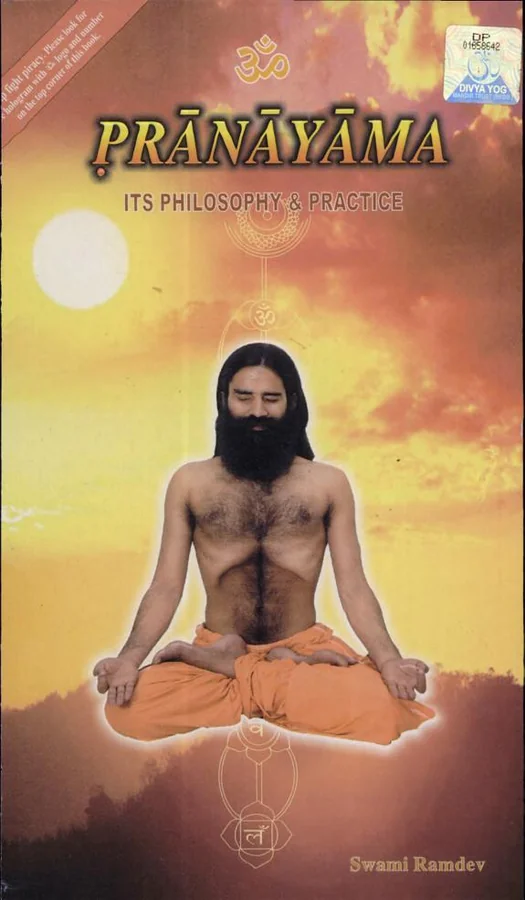
Prānāyāma
 84
84

Prānāyāma
Swami Ramdev's "Prānāyāma" offers a direct and unvarnished approach to yogic breathwork. The book's strength lies in its sheer accessibility; Ramdev's characteristic no-nonsense style translates complex yogic science into actionable steps for the average reader. He skillfully connects the physical act of breathing to the subtler realms of energy and consciousness, a core tenet of classical yoga. However, the work sometimes leans heavily on assertion rather than detailed explanation of the underlying philosophical mechanics, potentially leaving those seeking deeper theoretical grounding wanting more. A particularly illustrative section details the practice of Bhastrika, explaining its invigorating effects. Ultimately, Ramdev delivers a functional manual for breath control, prioritizing practical application over academic dissection.
📝 Description
84
Swami Ramdev's 2009 guide, Prānāyāma, details breath control techniques central to yogic philosophy.
Prānāyāma, by Swami Ramdev and published in 2009, serves as a practical manual for breath control methods fundamental to yoga. The book moves beyond physical postures to connect breath, or prana, with life force. It describes various breathing exercises aimed at purifying the body, calming the mind, and fostering spiritual awareness. Ramdev presents prānāyāma as more than a mere exercise; it is a pathway to complete well-being.
This guide is for anyone looking to enhance their yoga practice, reduce stress, or improve health with traditional yogic approaches. It suits both new students and experienced practitioners interested in the subtle aspects and philosophical basis of breathwork. Readers curious about the mind-body link and seeking straightforward methods for mental clarity and emotional steadiness will find this book useful.
Swami Ramdev's work on prānāyāma appeared during a time of growing global interest in yoga and Eastern spirituality, which became more prominent in the late 20th and early 21st centuries. While yoga's origins are ancient, specific practices like prānāyāma gained wider recognition and accessibility during this period. Ramdev's straightforward style, amplified by his media presence from the early 2000s, introduced these techniques to millions in India and elsewhere. This approach differed from more academic or monastic traditions.
This book sits within the broader tradition of Hatha Yoga, which emphasizes physical practices, including breath control, to prepare the body and mind for deeper spiritual states. Prānāyāma, the science of breath, is a core limb of Ashtanga Yoga as described by Patanjali. Ramdev's work makes these classical concepts accessible to a modern audience, linking them to physical health and mental peace, reflecting a trend in the early 21st century to integrate ancient yogic philosophy with contemporary wellness.
💡 Why Read This Book?
• You will learn specific techniques like Nadi Shodhana, understanding its role in balancing the Ida and Pingala nadis, a core concept in yogic physiology not readily found in general wellness guides. • You will grasp the practical application of Kapalabhati as described by Swami Ramdev, recognizing its distinct energetic effect beyond simple exhalation, offering a tangible method for mind-body purification. • You will gain insight into the 2009 publication context, understanding how Swami Ramdev's accessible methods contributed to the broader global interest in yoga during that era, providing a historical lens on modern practice.
⭐ Reader Reviews
Honest opinions from readers who have explored this book.
❓ Frequently Asked Questions
What is the primary goal of prānāyāma according to Swami Ramdev's book?
According to Swami Ramdev's "Prānāyāma," the primary goal is to gain conscious control over the vital life force (prana) through regulated breathing. This control is presented as a means to purify the body, calm the mind, and foster spiritual growth, leading to holistic well-being.
Which specific breathing techniques are detailed in Swami Ramdev's Prānāyāma?
The book details several key prānāyāma techniques, including Nadi Shodhana (alternate nostril breathing), Bhastrika (bellows breath), and Kapalabhati (skull shining breath), explaining their methods and benefits for practitioners.
When was Swami Ramdev's book on Prānāyāma first published?
Swami Ramdev's book on Prānāyāma was first published in 2009, contributing to the widespread dissemination of yogic breathing practices during the early 21st century.
Does the book explain the philosophical basis of prānāyāma?
Yes, the work explores the philosophical basis by connecting breath control to the concept of 'prana' or vital life energy, explaining how mastering breath can influence one's physical, mental, and spiritual state.
Is Swami Ramdev's Prānāyāma suitable for beginners?
The book is generally suitable for beginners due to its accessible language and practical instructions. Swami Ramdev's approach emphasizes ease of understanding and application, making the techniques approachable for those new to yoga.
What are the claimed benefits of practicing the techniques in this book?
Swami Ramdev claims numerous benefits, including improved respiratory function, enhanced concentration, stress reduction, detoxification, and the cultivation of inner peace and spiritual awareness through consistent practice.
🔮 Key Themes & Symbolism
The Science of Breath Control
The book presents prānāyāma not as a mere physical exercise but as a sophisticated system for regulating 'prana,' the vital life force. It details how specific breathing patterns, such as those in Bhastrika, can directly influence physiological processes, energy levels, and mental states. This theme explores the tangible, observable effects of conscious breathing on the practitioner's well-being, grounded in yogic principles.
Mind-Body Harmonization
A central theme is the inseparable connection between breath and consciousness. Swami Ramdev illustrates how controlling the breath, as with Nadi Shodhana, leads to a balancing of the nervous system and mental faculties. This section examines how mastering prānāyāma cultivates inner calm, sharpens focus, and promotes emotional equilibrium, thereby harmonizing the physical and mental aspects of an individual.
Spiritual Awakening Through Prana
The work positions prānāyāma as a fundamental path toward spiritual realization. By purifying the energetic channels (nadis) and awakening dormant energies, practitioners can move towards higher states of consciousness. This theme highlights the transformative potential of breathwork, framing it as an essential tool for inner purification and the ascent of spiritual awareness in the yogic tradition.
Accessible Yogic Practices
Emphasizing practicality, the book aims to make advanced yogic techniques accessible to a broad audience. Swami Ramdev breaks down complex exercises like Kapalabhati into simple, step-by-step instructions. This theme underscores the democratizing aspect of his teaching, making profound spiritual tools available for daily practice and self-improvement outside of traditional monastic settings.
💬 Memorable Quotes
Direct passages from the work, attributed to the author.
“Breath is the bridge between the body and the mind.”
— This statement captures the core philosophy that breathwork is not merely physiological but a direct interface for influencing mental and spiritual states, a key premise explored throughout the book.
“Through controlled breathing, we can purify our energy channels.”
— This highlights the yogic concept of 'nadis' (energy channels) and how specific prānāyāma techniques are designed to clear blockages, enabling a smoother flow of vital force (prana).
“The true power of yoga lies in the mastery of breath.”
— This interpretation emphasizes prānāyāma's central role within the broader yogic system, suggesting that breath control is the foundational element for unlocking yoga's transformative potential.
“Regular practice of Nadi Shodhana balances the left and right hemispheres of the brain.”
— This conceptual summary relates the practice of alternate nostril breathing to neurological balance, illustrating the book's focus on concrete, scientifically observable (within the yogic framework) benefits.
💡 Key Ideas
Editorial paraphrase of the work's core concepts — not direct quotes.
Kapalabhati cleanses the respiratory system and invigorates the mind.
This paraphrased concept points to the specific benefits attributed to the Kapalabhati technique, emphasizing its dual action on physical purification and mental alertness.
🌙 Esoteric Significance
Tradition
The work aligns with the Hatha Yoga tradition, a branch of classical yoga that emphasizes physical purification and control of vital energies as prerequisites for higher meditative states. While not strictly Hermetic or Kabbalistic, it shares with them an interest in energetic manipulation and microcosm-macrocosm correspondences, viewing the breath as a microcosm of universal life force.
Symbolism
Central symbols include 'Prana' itself, representing the animating principle of the universe, and the 'Nadis' (energy channels), which are depicted as pathways for Prana. The act of breathing symbolizes the continuous cycle of life, death, and renewal, with controlled breathing offering a means to consciously engage with and direct this fundamental cosmic flow.
Modern Relevance
Contemporary mindfulness movements, breathwork therapy, and even certain biohacking communities draw inspiration from the principles outlined in works like Ramdev's. His accessible methods have influenced how millions worldwide engage with breathwork, bridging ancient yogic philosophy with modern demands for stress reduction and mental well-being.
👥 Who Should Read This Book
• Individuals interested in practical yogic philosophy: Those seeking to understand and apply the core principles of prānāyāma beyond mere physical postures, focusing on breath as a tool for self-transformation. • Health-conscious readers: People looking for natural, non-pharmacological methods to manage stress, improve respiratory health, and enhance mental clarity through established ancient techniques. • Yoga practitioners seeking depth: Experienced yogis who wish to refine their understanding and practice of breath control, learning specific techniques detailed by a prominent contemporary teacher like Swami Ramdev.
📜 Historical Context
Published in 2009, Swami Ramdev's "Prānāyāma" arrived during a period of intense global interest in yoga, fueled by figures who brought these ancient practices to mass audiences via television and public events. This era saw a divergence between highly academic approaches to yoga philosophy and the widespread popularization of asana and prānāyāma as accessible wellness tools. Ramdev's work stood in contrast to more esoteric or strictly traditional lineages, emphasizing practical, daily application for health and mental clarity. His approach gained immense traction in India, becoming a significant cultural phenomenon. While figures like B.K.S. Iyengar were solidifying the global understanding of asana alignment in the preceding decades, Ramdev's impact was more directly felt through his extensive media outreach, bringing prānāyāma directly into millions of homes.
📔 Journal Prompts
Prānāyāma and its role in balancing Ida and Pingala nadis.
The observable physiological effects of Bhastrika breath.
Your personal experience with Nadi Shodhana's calming influence.
Connecting the practice of Kapalabhati to mental clarity.
The concept of 'prana' as vital life force in your daily life.
🗂️ Glossary
Prana
The vital life force or energy that permeates all existence. In yogic philosophy, it is primarily associated with the breath but also influences all bodily functions and consciousness.
Nadi Shodhana
A specific prānāyāma technique involving alternate nostril breathing, aimed at purifying the energy channels (nadis) and balancing the left (Ida) and right (Pingala) sides of the body and mind.
Bhastrika
Known as 'bellows breath,' this is an invigorating prānāyāma technique involving forceful inhalation and exhalation, designed to increase body heat and energy levels.
Kapalabhati
A cleansing technique often grouped with prānāyāma, characterized by rapid, forceful exhalations and passive inhalations, aimed at purifying the respiratory tract and stimulating abdominal organs.
Nadis
Subtle energy channels within the body through which prana flows. Blockages in the nadis are believed to cause physical and mental ailments.
Asana
Physical postures practiced in yoga, typically used to prepare the body for deeper meditative practices by improving flexibility, strength, and stability.
Hatha Yoga
A branch of yoga that focuses on physical postures (asana) and breath control (prānāyāma) to prepare the body and mind for spiritual advancement.
This book appears in 1 collection
🔮 Readers Also Liked
Browse all →









From the “Hatha Yoga” Collection
View all →









More Free Occult Philosophy Books
View all →