Crone's Book Of Magical Words

 79
79

Crone's Book Of Magical Words
Valerie Worth’s *Crone’s Book of Magical Words* tackles the often-overlooked importance of precise language in esoteric practice. Its strength lies in its comprehensive cataloging of terms, offering definitions that are both etymologically sound and contextually rich for practitioners. The book excels when it connects seemingly disparate concepts, such as linking the linguistic roots of certain incantations to broader philosophical traditions. However, its primary limitation is its sheer density; the work is a reference, not a narrative, and can feel overwhelming for casual readers. A particularly illuminating section discusses the multiple meanings of 'bind' across various magical disciplines, showing how a single word can represent diverse forms of control or connection. For those seeking a rigorous linguistic foundation for their studies, this book offers a valuable, albeit demanding, resource.
📝 Description
79
Valerie Worth's *Crone's Book of Magical Words* (2002) is a dictionary of esoteric terminology.
Published in 2002, Valerie Worth's *Crone's Book of Magical Words* compiles esoteric terms rather than offering spells or rituals. It functions as a specialized lexicon for individuals involved in magical traditions. The book clarifies the language of occult practices, giving definitions that often include historical and philosophical context beyond simple meanings. This text is best suited for serious students of comparative mythology, esoteric history, and practical occultism. Readers who encounter unfamiliar terms in their studies of Western Esotericism, ancient religions, or folklore will find it a useful reference. It is for those who see precise language as central to understanding and performing magic.
This work examines terms found in magical texts, analyzing their origins, symbolic connections, and use in different traditions. It covers concepts like elemental correspondences, divine names, ritual actions, and the philosophy behind magical beliefs. The book stresses the power of specific linguistic structures, viewing words as carriers of inherent force. It approaches esoteric language from a post-modern perspective, acknowledging a contemporary interest in the historical roots and symbolic depth of occult vocabulary.
Emerging in the early 21st century, *Crone's Book of Magical Words* appeared during a period of renewed interest in esoteric studies. It follows earlier scholarly work on the subject but presents a more scholarly, though still mystical, look at magical language. Unlike older lexicons that might focus only on practitioners, Worth's book examines the historical roots and symbolic weight of occult vocabulary with a perspective informed by both academic curiosity and a connection to the mystical.
💡 Why Read This Book?
• Gain a precise understanding of terms like 'gnosis,' which this book defines beyond its common usage, exploring its historical and mystical implications in early Christian and Gnostic traditions. • Discover the etymological origins of specific magical words, learning how their historical roots, as detailed in the book's 2002 publication, inform their present-day esoteric meaning. • Explore the concept of 'sympathetic magic' through defined terms, understanding how the book links linguistic structures to the principles of magical causation and correspondence.
⭐ Reader Reviews
Honest opinions from readers who have explored this book.
❓ Frequently Asked Questions
What is the primary focus of Crone's Book of Magical Words?
The book functions as a specialized dictionary of esoteric and magical terminology. It aims to define and contextualize words used in occult traditions, exploring their historical roots, symbolic meanings, and practical applications in magical practice.
Who is Valerie Worth, and what is her background?
Valerie Worth was an English poet and writer. While known for her poetry, her work on magical words demonstrates a deep engagement with esoteric subjects, offering a unique perspective informed by literary and symbolic analysis.
When was Crone's Book of Magical Words first published?
The book was first published in 2002, reflecting a resurgence of interest in esoteric studies and a growing academic engagement with the history of magic.
Is this book a practical spellbook or a theoretical reference?
It is primarily a theoretical reference. While it defines terms used in magical practice, it does not provide spells or rituals. Its value lies in clarifying the language and concepts behind such practices.
What kind of magical traditions does the book cover?
The book touches upon a wide array of Western esoteric traditions, including elements of Hermeticism, Kabbalah, Gnosticism, folklore, and general occultism, defining terms relevant to each.
What makes this book different from a standard dictionary?
Unlike a standard dictionary, *Crone's Book of Magical Words* delves into the symbolic, historical, and often energetic significance of words within specific magical and mystical frameworks, providing context beyond mere definition.
🔮 Key Themes & Symbolism
The Power of Naming
This theme centers on the belief that to name something is to gain a form of power or understanding over it. Worth explores how specific appellations in magical traditions are not arbitrary but are imbued with intent and energetic resonance. The book examines how the act of precise nomenclature, whether for deities, spirits, or forces, is a foundational practice in many occult systems, allowing practitioners to invoke, command, or align with these entities or energies. It highlights the linguistic mechanisms through which magical practitioners seek to manifest their will.
Etymology and Esotericism
The work emphasizes the critical role of word origins in understanding esoteric concepts. Worth traces the lineage of magical terms, revealing how their ancient roots in languages like Greek, Latin, or Hebrew often carry layers of meaning that are crucial for contemporary occult study. By dissecting these etymologies, the book demonstrates how the original semantic weight of a word can inform its symbolic application in ritual, spellcraft, or spiritual philosophy, offering a deeper appreciation of the historical evolution of magical thought.
Symbolic Language of Magic
This theme focuses on the symbolic representation inherent in magical vocabulary. Words are presented not just as communication tools but as symbolic keys that unlock deeper layers of consciousness and reality. The book explores how terms related to elements, celestial bodies, alchemical processes, or spiritual states function as shorthand for complex ideas and energetic configurations, serving as anchors for meditation, ritual, and magical working. It positions language itself as a primary vehicle for esoteric symbolism.
The Crone Archetype in Language
The 'Crone' in the title suggests a connection to wisdom, maturity, and often, the darker, more potent aspects of the feminine divine or ancient knowledge. The book implicitly or explicitly explores how language associated with this archetype—words related to cycles, transformation, death, and rebirth—holds a particular potency. It examines terms that embody the deep, often-unseen forces that govern existence, reflecting a perspective that values the wisdom gained through experience and the acceptance of life's full spectrum.
💬 Memorable Quotes
Direct passages from the work, attributed to the author.
“Understanding 'astral' requires knowing its celestial roots, not just its modern occult usage.”
— This interpretation highlights the book's commitment to etymology. It posits that to truly grasp an esoteric term like 'astral,' one must investigate its connection to ancient concepts of stars and heavens, rather than relying solely on contemporary magical interpretations.
“A name holds the essence of the named.”
— This core concept emphasizes the power attributed to names within magical theory. It suggests that the true name of a person, spirit, or object contains its fundamental identity and potential, which can be harnessed through knowledge of that name.
“Ritual language often relies on archaic forms to access older energies.”
— This interpretation points to the book's exploration of why magical traditions often use archaic or unusual language. It suggests that these linguistic choices are deliberate, intended to tap into specific energetic frequencies or historical currents associated with older forms of practice.
💡 Key Ideas
Editorial paraphrase of the work's core concepts — not direct quotes.
The word is the seed of the manifestation.
This paraphrase suggests that the book views language as the fundamental starting point for any magical act or creation. It implies that the intention and energy invested in a spoken or written word directly influence its potential to bring about a desired outcome in reality.
The definition of 'bind' can signify both constraint and sacred union.
This paraphrased example illustrates how the book examines the many-sided nature of magical terms. It shows how a single word can encompass opposing or complementary meanings depending on its context within different magical systems or intentions.
🌙 Esoteric Significance
Tradition
This work aligns with the broader Western Esoteric tradition, particularly its focus on Hermeticism, Kabbalah, and Neoplatonism, which often emphasize the power of divine names and sacred language. It departs from purely ritualistic or devotional texts by offering a lexicographical approach, treating the language of magic as a subject of study in itself. Its emphasis on etymology and symbolic meaning places it within scholarly approaches to esotericism that seek to understand the underlying philosophical and linguistic structures of magical belief systems.
Symbolism
Key symbols explored through language include elemental terms (e.g., 'fire,' 'water') which are defined not just by their physical properties but by their esoteric correspondences in magical practice. The concept of 'divine names' is central, representing the belief that the true names of spiritual entities hold inherent power and connection. 'Incantations' are examined as linguistic constructs designed to channel specific energies or effects, highlighting the symbolic weight carried by their phrasing and archaic forms.
Modern Relevance
Contemporary practitioners of modern witchcraft, chaos magic, and ceremonial magic often draw on such works for linguistic clarity and foundational understanding. Thinkers exploring the intersection of language, consciousness, and reality, particularly within fields like transpersonal psychology or consciousness studies, may find Worth's examination of word-power relevant. It serves as a resource for those seeking to deconstruct and understand the often-unexamined linguistic underpinnings of their spiritual or magical practices.
👥 Who Should Read This Book
• Aspiring practitioners of Western Esotericism seeking to understand the foundational language of magical systems, including Hermeticism and Kabbalah. • Students of comparative religion and mythology interested in the linguistic structures and symbolic vocabulary of ancient and occult belief systems. • Writers and researchers engaged with esoteric literature who require precise definitions and historical context for magical terminology.
📜 Historical Context
Published in 2002, *Crone's Book of Magical Words* emerged in an era marked by the popularization of esoteric subjects, partly fueled by the internet and a growing academic interest in the history of Western Esotericism. This period saw scholars like Joscelyn Godwin and Adam McLean actively publishing and disseminating texts related to occultism. Worth's work can be seen as contributing to a broader effort to codify and understand the complex vocabulary of magical traditions, moving beyond the more sensationalist portrayals often found in earlier popular literature. While not directly engaging with contemporary figures like Aleister Crowley's extensive writings, it implicitly builds upon the linguistic frameworks established by earlier occultists and scholars who sought to define the parameters of magical language. The book’s approach, focusing on lexicon, reflects a desire for precision in a field often characterized by ambiguity, differentiating it from the more experiential or dogmatic texts prevalent in some occult circles.
📔 Journal Prompts
The power of naming: Reflect on a word that holds significant personal meaning and explore why its specific form and sound impact you.
Etymological exploration: Choose a magical term from the book and research its earliest known usage; document how its meaning has evolved.
Symbolic resonance: Select an elemental term and consider its symbolic associations beyond the literal; how does it manifest in your life?
The Crone archetype: Contemplate a word that represents wisdom gained through hardship or age, and its connection to cyclical transformation.
Linguistic manifestation: Write a short passage using precise magical language, focusing on the intent behind each word chosen.
🗂️ Glossary
Gnosis
In esoteric contexts, gnosis refers to a profound, intuitive knowledge or spiritual insight, often considered direct apprehension of divine truth rather than intellectual understanding. It is a key concept in Gnosticism and related mystical traditions.
Astral
Pertaining to the stars or celestial bodies, but in esoteric usage, often refers to the 'astral plane'—a non-physical field of existence believed to be populated by spirits and associated with dreams, emotions, and the soul's journey.
Incantation
A series of words proclaimed as a magical spell or charm. It is a form of spoken magic where the specific arrangement and utterance of words are believed to produce a desired effect or invoke spiritual power.
Sympathetic Magic
A form of magic based on the principle that like produces like (the Law of Sympathy). It involves using objects or actions that resemble the desired outcome to influence reality, such as using a likeness of a person to affect them.
Elemental Correspondences
The system of assigning symbolic attributes and qualities to the four classical elements (Earth, Air, Fire, Water) within magical and spiritual traditions. These correspondences are used in ritual, divination, and spellcraft.
Invocation
The act of calling upon a deity, spirit, or power, often with the intention of inviting its presence or aid. It typically involves spoken words of prayer, praise, or petition.
Hermeticism
A philosophical and religious tradition based on writings attributed to Hermes Trismegistus. It emphasizes mystical knowledge, alchemy, astrology, and the principle that 'as above, so below,' focusing on the interconnectedness of the macrocosm and microcosm.
🔮 Readers Also Liked
Browse all →







More by Valerie Worth
All books →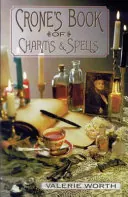


More Free Occult Philosophy Books
View all →