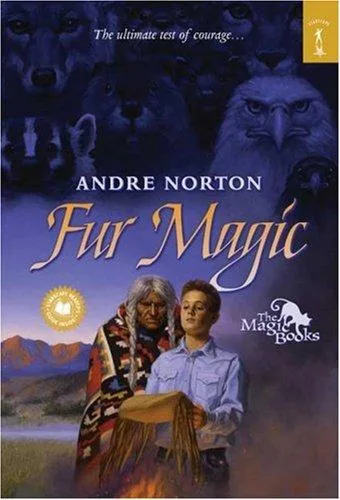
Fur Magic
 72
72

Fur Magic
Andre Norton's "Fur Magic" is not a simple fantasy romp; it is a thoughtful, at times stark, examination of the beast within. The novel opens with a visceral description of a character’s first uncontrolled shift, a passage that immediately grounds the fantastical premise in raw, physical sensation rather than ethereal magic. This unflinching portrayal of transformation, particularly the visceral horror and loss of control, is a significant strength. However, the narrative occasionally falters in its pacing, with certain plot threads feeling underdeveloped compared to the deep dive into the protagonists' internal struggles. The concept of the 'fur-kin' pacts, while intriguing, could have benefited from further exposition. Despite these minor shortcomings, the exploration of instinct versus reason, and the societal ostracization of the transformed, remains compelling throughout. "Fur Magic" offers a potent, if sometimes bleak, vision of what it means to straddle two worlds.
📝 Description
72
Andre Norton's "Fur Magic" was published in 2023.
Andre Norton's "Fur Magic" examines characters who can transform between human and animal forms. This ability is depicted as both a gift and a burden, forcing protagonists to confront the psychological and societal consequences of living between two worlds. The narrative often involves a quest or conflict that compels them to understand their dual nature and the responsibilities it entails.
The story appeals to readers interested in shapeshifter lore, especially those who prefer a less overtly magical, more introspective take on the theme. It is suited for individuals who enjoy character-focused narratives where internal struggles and identity are central. Those who seek fantasy stories touching upon nature, instinct, and the wildness within humanity will find "Fur Magic" engaging. The book also suits readers comfortable with morally ambiguous characters and situations that question conventional ideas of good and evil.
While "Fur Magic" is a recent publication, its themes of human-animal connection and transformation echo older traditions. The idea of shapeshifting has ancient roots, appearing in mythology and folklore across cultures. This work touches upon the primal forces and instincts that link humanity to the animal kingdom, suggesting a wildness that lies beneath the surface of civilization. It explores the concept of instinct as a guiding force, a notion present in various esoteric philosophies that examine the relationship between the physical and the instinctual self.
💡 Why Read This Book?
• Gain insight into the primal struggle between human intellect and animal instinct, as depicted through the 'fur-kin' characters' internal conflicts. • Understand the societal implications of inherent 'otherness' and transformation, examining how characters like the fur-kin are perceived and treated. • Explore the concept of the 'wild' not just as an external environment but as an intrinsic force within individuals, as explored through the narrative's focus on instinct and metamorphosis.
⭐ Reader Reviews
Honest opinions from readers who have explored this book.
❓ Frequently Asked Questions
What is the primary theme of Andre Norton's Fur Magic?
The primary theme is the complex relationship between humanity and the animalistic nature within, exploring the challenges of transformation and instinct versus reason.
When was Fur Magic first published?
Fur Magic by Andre Norton was first published in 2023, bringing her distinct storytelling voice to contemporary readers.
Are there specific animal transformations in Fur Magic?
Yes, the book details characters who are 'fur-kin,' possessing the ability to transform into animal forms, reflecting their inherent connection to the wild.
Does Fur Magic have a basis in mythology or folklore?
While a modern work, Fur Magic draws upon ancient themes of shapeshifting and the human-animal connection found in global mythologies and folklore.
Who are the 'fur-kin' in the book?
The 'fur-kin' are individuals with a natural ability to shift between human and animal forms, grappling with their dual existence and societal perceptions.
What kind of internal conflict do characters face in Fur Magic?
Characters primarily face the conflict between their human consciousness and their untamed animal instincts, seeking balance and control over their transformations.
🔮 Key Themes & Symbolism
The Dual Nature of Being
The core of "Fur Magic" lies in its exploration of characters who embody both human intellect and animalistic instinct. This duality is not presented as a simple dichotomy but as a complex, often agonizing, reality. The narrative scrutinizes the psychological toll of maintaining this balance, the fear of losing oneself to primal urges, and the societal judgment that often accompanies such a unique existence. The 'fur-kin' must constantly negotiate their identity, a struggle amplified by their physical capacity for metamorphosis, which forces them to confront the beast not just metaphorically, but literally.
Instinct vs. Reason
Central to the narrative is the perennial conflict between instinct and reasoned thought. The animal forms represent raw, untamed impulse, while the human aspect embodies logic and societal conditioning. "Fur Magic" posits that these forces are not necessarily antagonistic but are fundamental components of existence that must be understood and integrated. The characters’ journeys often involve learning to harness their instincts rather than suppress them, recognizing them as a source of power and wisdom, albeit one that requires careful stewardship to avoid destructive outcomes.
Societal Otherness and Prejudice
The 'fur-kin' in "Fur Magic" serve as a powerful metaphor for those who are perceived as 'other' by mainstream society. Their innate abilities and connection to the wild make them objects of fear, suspicion, and persecution. The book examines the prejudice they face, the ostracization, and the attempts by the 'normal' world to control or eradicate them. This theme invites reflection on how societies react to difference and the inherent struggles for acceptance faced by individuals or groups who deviate from perceived norms.
The Wild Within and Without
The novel connects the internal field of the characters with the external environment. The wild places often serve as a refuge for the 'fur-kin,' mirroring their own untamed natures. However, the wild is also depicted as dangerous and unpredictable, much like the primal instincts they embody. "Fur Magic" suggests that understanding and respecting the wild, both in nature and within oneself, is crucial for survival and self-discovery. It is an exploration of the primal forces that shape existence, often operating beyond human control.
💬 Memorable Quotes
Direct passages from the work, attributed to the author.
“The change was not a gift, but a tearing.”
— This phrase captures the painful, often traumatic nature of the transformation for the 'fur-kin,' highlighting that their ability is a source of struggle rather than simple power.
“He felt the pull of the moon, a hunger older than memory.”
— This illustrates the overwhelming, instinctual drive that governs the 'fur-kin,' suggesting a primal connection to natural cycles that overrides human reason.
“They feared the wildness they could not comprehend.”
— This reflects the societal reaction to the 'fur-kin,' pointing to prejudice born from a lack of understanding and a fear of the unknown or uncontrollable.
“The skin remembered what the mind tried to forget.”
— This highlights the embodied nature of their transformation, suggesting that the physical experience and instincts of the animal form are deeply ingrained, even when consciously resisted.
“To be two was to be never whole.”
— This expresses the central existential dilemma of the 'fur-kin,' who perpetually feel incomplete due to their dual nature and the inherent conflict it creates.
🌙 Esoteric Significance
Tradition
While not explicitly tied to a single esoteric lineage, "Fur Magic" appeals to animistic traditions that recognize spirit in all living things, particularly animals. It echoes concepts found in shamanism and certain expressions of Neopaganism, which emphasize the interconnectedness of the human and natural worlds. The transformation motif can be seen as a symbolic representation of inner alchemy, where opposing forces within the self are integrated to achieve a new state of being. It departs from stricter Hermetic or Kabbalistic frameworks by focusing on instinctual, primal forces rather than codified magical systems.
Symbolism
The primary symbol is the 'fur-kin' themselves, representing the integration of human consciousness with animal instinct. The act of transformation symbolizes inner change and the acknowledgment of primal urges. Animal forms (e.g., wolves, bears) carry archetypal meanings tied to ferocity, protection, wildness, and instinctual wisdom within various cultures and esoteric traditions. The moon often functions as a symbol of cyclical change, instinct, and the subconscious, influencing the 'fur-kin's' nature. The wild landscape serves as a symbol of the untamed self and the primal forces of existence.
Modern Relevance
Contemporary readers interested in identity politics, ecopsychology, and the resurgence of animistic or earth-centered spiritualities will find "Fur Magic" relevant. It speaks to modern discussions about reclaiming our connection to the natural world and understanding the 'wild' aspects of human nature, often suppressed by modern society. Thinkers and practitioners exploring concepts of the 'shadow self' (a Jungian concept) or those involved in nature-based spiritual practices may find the book’s themes particularly resonant, offering a narrative lens through which to view their own internal and external landscapes.
👥 Who Should Read This Book
• Readers fascinated by shapeshifter lore who seek narratives that explore the psychological and societal consequences of transformation, rather than just the magical mechanics. • Individuals interested in themes of primal instinct, the 'wild' within human nature, and the conflict between instinct and reason, looking for a character-driven exploration. • Those who appreciate speculative fiction that touches upon themes of otherness, societal prejudice, and the struggle for acceptance, using fantastical elements to comment on real-world issues.
📜 Historical Context
Published in 2023, "Fur Magic" arrives in a literary landscape where speculative fiction frequently engages with themes of identity, transformation, and the human connection to nature. While Andre Norton herself was a prolific author whose career spanned decades, this particular work taps into contemporary anxieties and interests. Its exploration of shapeshifting and primal instincts can be seen as a modern iteration of archetypal narratives found in mythology and early 20th-century literature, such as Jack London's "The Call of the Wild" (1903) which explored the allure of the wilderness. In contrast to more overtly fantastical treatments of lycanthropy prevalent in earlier decades, "Fur Magic" leans into the psychological and societal ramifications, echoing a trend in modern fantasy and urban fantasy that dissects the 'monstrous' within. The work engages with a literary lineage that questions the boundaries of the human, a tradition that includes authors like Robert E. Howard, whose primal heroes often wrestled with their darker natures.
📔 Journal Prompts
The 'fur-kin' pact's inherent tension between control and wildness.
The feeling of being 'two' and never 'whole' as a 'fur-kin'.
Societal fear of the uncontrollable 'wildness' in others.
The animal instinct remembered by the skin.
The moon's pull and its connection to older hungers.
🗂️ Glossary
Fur-kin
Individuals possessing the innate ability to transform between human and animal forms, characterized by a deep connection to primal instincts.
The Change
The process of metamorphosis experienced by the 'fur-kin,' often depicted as a painful or traumatic event rather than a simple magical act.
Primal Instinct
The raw, untamed drives and urges associated with animal nature, often in conflict with human reason and societal conditioning.
The Wild
Represents both the untamed natural environment and the inherent, instinctual nature within the 'fur-kin' characters.
Pact
Refers to the inherent, often unconscious, agreement or bond that governs the 'fur-kin's' connection to their animal nature and transformations.
Otherness
The state of being perceived as different or alien by the dominant society, leading to prejudice and ostracization for the 'fur-kin'.
Metamorphosis
The biological or magical process of changing form, specifically the shift between human and animal states experienced by the characters.
🔮 Readers Also Liked
Browse all →







More by Andre Norton
All books →





More Free Occult Philosophy Books
View all →