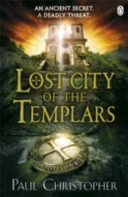
Lost City of the Templars
 73
73

Lost City of the Templars
Christopher throws John Holliday into a relentless chase, this time deep into the Amazon basin, pursuing Percy Fawcett's lost journal. The premise is classic thriller fodder: ancient secrets, a shadowy organization (Rex Deus), and a race against time. The book effectively conjures the oppressive humidity and danger of the jungle, a welcome change from the usual European settings for Templar narratives. However, the pacing, while brisk, occasionally sacrifices character depth for plot mechanics, and some of the esoteric explanations feel more like convenient plot devices than fully integrated lore. The confrontation with the hostile tribe, while tense, treads familiar territory. Still, for its energetic plotting and its specific focus on the Amazonian mysteries tied to Templar lore, it delivers a competent adventure.
📝 Description
73
Paul Christopher's 2006 novel plunges readers into a global conspiracy surrounding the Knights Templar.
John Holliday, a retired Army Ranger, races against time to decode clues left by explorer Percy Fawcett in "Lost City of the Templars." This pursuit takes him across South America, where he uncovers ancient secrets and faces the Rex Deus, a modern group claiming Templar lineage. The story mixes historical mystery with a supernatural thriller.
The novel appeals to those who enjoy action with a historical and esoteric focus. Readers familiar with authors like Dan Brown or Steve Berry will find a similar blend of puzzle-solving and adventure. Christopher uses the enduring myths surrounding the Knights Templar, their suppression, and rumored hidden knowledge as a backdrop for his fictional quest.
Central to the plot is the concept of Rex Deus, a fictional organization seeking to regain power, and the legend of a lost city. The inclusion of Percy Fawcett, the explorer who disappeared searching for such a city in the Amazon, grounds the narrative in a real historical mystery, adding a layer of intrigue to the search for forgotten civilizations and hidden knowledge.
The book draws on centuries of speculation about the Knights Templar, a medieval military order whose sudden dissolution fueled myths of hidden treasures and secret knowledge. Christopher connects these legends to esoteric traditions, positing the survival of a Templar successor group. The narrative taps into the popular imagination's fascination with hidden powers and ancient societies that continue to influence the modern world, framing these ideas within a contemporary thriller format.
💡 Why Read This Book?
• Gain insight into how the legend of Percy Fawcett's lost city in the Amazon can be integrated into Templar conspiracy narratives, offering a unique geographical twist. • Understand the fictional concept of Rex Deus, a modern Templar organization, and its supposed motivations within the book's plot. • Experience a globe-trotting adventure that specifically references the historical suppression of the Knights Templar in the early 14th century as a catalyst for their hidden legacy.
⭐ Reader Reviews
Honest opinions from readers who have explored this book.
❓ Frequently Asked Questions
What is Rex Deus in "Lost City of the Templars"?
Rex Deus is the fictional twenty-first-century incarnation of the Knights Templar presented in Paul Christopher's novel. It serves as the primary antagonist organization that John Holliday must thwart.
Who was Percy Fawcett and why is he important to the book?
Percy Fawcett was a real-life British explorer who disappeared in 1925 while searching for a lost city in the Amazon. His legendary lost journal is the catalyst for John Holliday's quest in the novel.
Does "Lost City of the Templars" involve real historical events?
The book uses the historical Knights Templar, their suppression around 1312, and the legend of explorer Percy Fawcett as foundational elements for its fictional conspiracy plot.
What kind of secrets are the Templars supposedly guarding?
The novel suggests the Templars' secrets involve hidden knowledge, lost artifacts, and potentially a hidden society that has persisted for centuries, the nature of which is revealed through the Amazonian quest.
Is this book similar to Dan Brown's works?
Yes, it shares similarities with authors like Dan Brown, featuring a historian protagonist uncovering ancient conspiracies, solving puzzles, and racing against a secret society, but with a specific focus on Templar lore and South American exploration.
What is the main setting for the quest in "Lost City of the Templars"?
The primary setting for the latter part of the quest is the South American jungle, where John Holliday follows clues from Percy Fawcett's journal to find a hidden city.
🔮 Key Themes & Symbolism
Modern Templar Conspiracies
The novel posits the existence of Rex Deus, a contemporary organization descended from the Knights Templar. It explores the idea that this ancient order never truly dissolved but continued its work in secret, manipulating global events and seeking to regain lost power or knowledge. The narrative centers on Holliday's efforts to expose and dismantle this shadowy group, highlighting themes of hidden influence and the enduring power of ancient legacies in the modern world.
Exploration and Lost Civilizations
Central to the plot is the lure of a lost city, inspired by the real-life disappearance of explorer Percy Fawcett. This theme taps into the romantic notion of discovering forgotten civilizations and uncovering ancient wisdom hidden from the modern world. The treacherous South American jungle serves as the ultimate frontier, a place where such secrets might realistically be preserved, guarded by nature and ancient societies.
The Templars' Esoteric Legacy
Christopher engages with the persistent myths surrounding the Knights Templar's supposed possession of esoteric knowledge, possibly linked to Gnosticism or other ancient traditions. The 'lost journal' and the secrets it holds are framed as keys to understanding this hidden legacy, suggesting the Templars were guardians of profound truths rather than mere medieval warriors. The book speculates on what these secrets might be and why they remain so fiercely protected.
Quest for Hidden Artifacts
The narrative frames the search for the lost city as a quest for a significant, potentially world-altering artifact or body of knowledge. This echoes many esoteric and adventure narratives where the ultimate prize is not just geographical discovery but the acquisition of lost wisdom or power. Holliday's race against Rex Deus emphasizes the high stakes involved in either uncovering or suppressing these ancient secrets.
💬 Memorable Quotes
Direct passages from the work, attributed to the author.
“The lost journal of explorer Percy Fawcett leads Holliday deep into the South American jungles.”
— This highlights the central MacGuffin of the novel – Fawcett's journal – which acts as the primary catalyst for the protagonist's perilous journey into uncharted territory.
“Holliday has thwarted the plots of Rex Deus, the twenty-first-century incarnation of the Templars.”
— This establishes the antagonist force and its connection to the historical Knights Templar, setting up the core conflict of the novel as a modern battle against an ancient conspiracy.
“Trailed by an infamous tomb raider and menaced by a tribe of hostile natives.”
— This phrase vividly illustrates the immediate dangers and obstacles Holliday faces within the jungle setting, emphasizing the high-stakes, action-oriented nature of his quest.
“Holliday and his crew uncover a five-hundred-year-old society hidden in the cauldron of the A”
— This hints at the ultimate discovery: a long-hidden, ancient society, suggesting the Templars' legacy extends beyond simple treasure to encompass enduring, secret communities.
“Retired Army Ranger turned historian John Holliday.”
— This defines the protagonist, blending military action skills with historical intellect, positioning him as uniquely capable of navigating both physical danger and complex conspiracies.
🌙 Esoteric Significance
Tradition
This work fits within the modern esoteric thriller genre, which often borrows heavily from Hermetic, Gnostic, and Kabbalistic traditions without necessarily adhering strictly to their historical frameworks. The Knights Templar themselves have been mythologized within esoteric circles since at least the 18th century, often linked to Freemasonry and alleged keepers of secret knowledge. Christopher's novel plays into this by suggesting the Templars' legacy is one of hidden esoteric power and continuity, a common trope in esoteric fiction.
Symbolism
The novel likely employs symbols associated with the Knights Templar, such as the Cross pattée, the double-headed eagle (often linked to Byzantine and later Russian symbolism, but sometimes anachronistically associated with Templar secrets), and the concept of the Holy Grail. The 'lost city' itself functions as a symbol of hidden knowledge, primordial wisdom, and a sacred space untouched by time, echoing Gnostic ideas of a hidden spiritual realm.
Modern Relevance
Contemporary readers interested in conspiracy thrillers, alternative history, and the enduring mystique of the Knights Templar find relevance in Christopher's fictional exploration. Thinkers and practitioners in circles that explore secret societies, Templarism (both historical and speculative), and adventure fiction often engage with narratives like this to explore popular interpretations of esoteric history and myth-making.
👥 Who Should Read This Book
• Fans of historical conspiracy thrillers seeking fast-paced plots involving secret societies and ancient mysteries. • Readers intrigued by the legends surrounding the Knights Templar and their supposed hidden legacy. • Enthusiasts of adventure fiction who enjoy stories set in exotic, dangerous locales like the South American jungle.
📜 Historical Context
Published in 2014, "Lost City of the Templars" arrived during a period of sustained popular interest in Templar lore, significantly amplified by works like Dan Brown's "The Da Vinci Code" (2003). Paul Christopher's novel taps into this vein, tying a fictional narrative around the historical Knights Templar, a military order established in the early 12th century and notoriously suppressed in 1312 by King Philip IV of France. The book plays with the enduring myths of the Templars' hidden knowledge and survival, positioning them as a continuous, clandestine force. This era saw numerous fictional explorations of secret societies and ancient mysteries, often drawing parallels between medieval clandestine groups and modern conspiracy theories. While not directly engaging with academic debates of the time, the work contributed to the popular imagination's ongoing fascination with the Templars' alleged esoteric connections, contrasting sharply with the more historically grounded scholarship of figures like Malcolm Barber.
📔 Journal Prompts
The lost journal of Percy Fawcett as a key to hidden Templar knowledge.
The concept of Rex Deus and its supposed five-hundred-year-old lineage.
Interpreting the symbolism of the lost city within the Amazonian jungle setting.
John Holliday's transition from Army Ranger to historian uncovering conspiracies.
The narrative's portrayal of hostile native tribes and their role in guarding secrets.
🗂️ Glossary
Knights Templar
A medieval Catholic military order founded around 1119, active during the Crusades. Officially dissolved in the early 14th century, they became subjects of numerous myths regarding hidden treasures and esoteric knowledge.
Rex Deus
A fictional organization in the novel representing the modern-day continuation or reincarnation of the Knights Templar, serving as the primary antagonists.
Percy Fawcett
A real British explorer famed for his expeditions in South America. He disappeared in 1925 while searching for a lost city, a legend central to the book's plot.
Lost City
A mythical or legendary urban settlement, often associated with ancient civilizations or hidden knowledge. In the book, it represents the ultimate goal of the quest in the Amazon.
Tomb Raider
Refers to a character who illegally explores and plunders ancient tombs and archaeological sites, often portrayed as a rival or antagonist in adventure stories.
South American Jungles
The dense tropical rainforests of South America, depicted in the novel as a remote and dangerous setting where ancient secrets might be preserved.
Army Ranger
A member of the United States Army's elite light infantry special operations force, known for their combat skills and tactical expertise.
This book appears in 1 collection
🔮 Readers Also Liked
Browse all →









From the “Templar Knights” Collection
View all →



More Free Occult Philosophy Books
View all →