Prajna Yoga
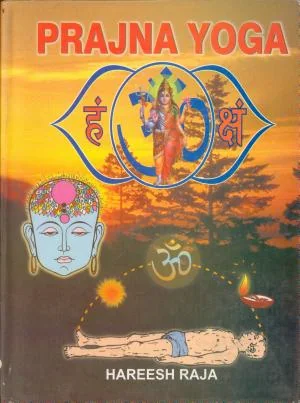
 82
82

Prajna Yoga
Hareesh Raja's Prajna Yoga: Exploring the Path of Wisdom offers a welcome counterpoint to the hyper-physicalization of yoga in contemporary Western culture. Raja’s insistence on Prajna—wisdom—as the core of the practice, rather than just asana mastery, is its signal strength. He articulates how self-inquiry and mindful awareness are not supplementary but fundamental. A passage discussing the nature of the 'witness consciousness' provides a clear, albeit brief, illustration of how insight can be cultivated through observing mental phenomena. However, the book occasionally suffers from a lack of direct engagement with specific classical texts, relying more on broad interpretations. While Raja’s prose is generally accessible, some sections could benefit from more concrete examples of meditative techniques. It’s a valuable contribution for those seeking yoga's intellectual and contemplative depth, though it could perhaps offer more textual anchors for deeper study.
📝 Description
82
Hareesh Raja's Prajna Yoga, published in 2000, examines yoga's philosophical and contemplative dimensions beyond physical postures.
Prajna Yoga, by Hareesh Raja, published in 2000, looks beyond the physical postures of yoga to its philosophical and contemplative aspects. The book centers on 'prajna,' a term often translated as wisdom or insight, as a core element of yogic practice. Raja guides readers to see yoga not just as a system of asanas, but as a method for developing self-awareness and understanding reality's nature. This text is for those who have moved beyond introductory yoga and want a deeper intellectual and spiritual connection to the practice. It will appeal to individuals interested in the philosophical foundations of Eastern traditions, particularly where yoga, meditation, and wisdom cultivation intersect. Students of comparative religion and philosophy will find its examination of yogic thought useful.
The book was released at a time when global interest in Eastern spirituality was growing, often through Western lenses. While yoga's physical forms were becoming widely known, Raja aimed to redirect focus to its contemplative origins, referencing classical Indian philosophical texts. This era also saw increased academic study of religion and philosophy, creating an environment for scholarly engagement with traditions like yoga, separate from purely devotional or therapeutic applications. The work engages with the larger Vedanta philosophical discussions common in Indian thought.
Prajna Yoga situates itself within the broader philosophical landscape of Indian traditions, particularly the Vedanta schools. It emphasizes the development of 'prajna'—intuitive wisdom arising from direct experience—as a primary goal of yogic discipline. This contrasts with approaches that focus solely on physical or ritualistic elements. The book draws connections between yogic practices, such as meditation and self-inquiry, and the cultivation of this inner insight, aligning with esoteric traditions that seek experiential knowledge of ultimate reality.
💡 Why Read This Book?
• Gain an understanding of Prajna, the central concept of wisdom cultivation, as distinct from physical yoga postures, directly referencing Raja's exploration of this core principle. • Learn practical approaches to self-inquiry (atma-vichara) and mindfulness (vipassana) as methods for developing deeper self-awareness, as detailed within the book's guidance. • Appreciate the philosophical underpinnings of yoga beyond its physical manifestations, recognizing its roots in classical Indian thought, as contextualized by Raja's work.
⭐ Reader Reviews
Honest opinions from readers who have explored this book.
❓ Frequently Asked Questions
What is Prajna Yoga according to Hareesh Raja?
Prajna Yoga, as explored by Hareesh Raja, emphasizes the cultivation of wisdom (prajna) through practices like self-inquiry and mindfulness, positioning these contemplative elements as central to the yogic path beyond physical postures.
When was Prajna Yoga by Hareesh Raja first published?
Prajna Yoga: Exploring the Path of Wisdom by Hareesh Raja was first published on January 1, 2000.
Does this book focus on physical yoga poses?
No, Prajna Yoga by Hareesh Raja primarily focuses on the philosophical and contemplative aspects of yoga, such as wisdom, self-inquiry, and mindfulness, rather than extensive instruction on physical postures (asanas).
What is the concept of 'prajna' in Raja's book?
In Raja's work, 'prajna' refers to a deep, intuitive wisdom or insight that arises from direct experience and contemplative practice, considered the ultimate goal of yogic exploration.
Is this book suitable for beginners in yoga?
While accessible, the book's depth in philosophical exploration and emphasis on self-inquiry may be more suited for individuals who have already established a basic understanding of yoga and are seeking deeper spiritual and intellectual engagement.
What are the key practices discussed in Prajna Yoga?
The book highlights practices such as mindfulness (vipassana) and self-inquiry (atma-vichara) as essential tools for cultivating the wisdom central to Prajna Yoga.
🔮 Key Themes & Symbolism
Cultivating Prajna
The core of Raja's work revolves around 'prajna,' understood as profound, intuitive wisdom. This theme is explored not as an intellectual pursuit but as a direct realization arising from sustained contemplative practice. The book guides readers to see how self-awareness and mindful observation are crucial for accessing this deeper understanding of existence, moving beyond conventional knowledge to a state of experiential insight. It posits that this wisdom is the true essence of yogic pursuit.
Self-Inquiry and Mindfulness
Raja emphasizes the role of specific contemplative techniques in awakening prajna. Self-inquiry (atma-vichara), the process of investigating the nature of the self, and mindfulness (vipassana), the non-judgmental observation of present experience, are presented as vital tools. The book details how these practices can dismantle illusions about the self and reality, leading to clarity and a profound sense of inner knowing. These are framed as active methods for spiritual growth.
Yoga Beyond Asana
A central argument of Prajna Yoga is its re-framing of yoga away from its modern emphasis on physical postures. Raja asserts that while asanas have their place, they are but a preliminary step. The true path of yoga, as explored in this text, lies in the mastery of the mind, the cultivation of wisdom, and the realization of consciousness. This perspective seeks to reconnect the practice with its ancient philosophical and contemplative origins.
Consciousness and Realization
The book explores the yogic understanding of consciousness as the fundamental ground of being. It explores the journey of consciousness from its ordinary, conditioned state to its liberated, realized form. Raja discusses concepts related to the mind-body relationship and the nature of reality, suggesting that through the cultivation of prajna, one can achieve a state of self-realization, transcending limitations and experiencing unity.
💬 Memorable Quotes
Direct passages from the work, attributed to the author.
“Wisdom is not merely knowing facts, but seeing the nature of reality.”
— This interpretation highlights Raja's distinction between intellectual accumulation and genuine insight. It suggests that true wisdom, or prajna, involves a direct, experiential perception of existence, rather than a mere collection of information. This insight is presented as the ultimate goal of the yogic path.
“Mindfulness observes the mind without judgment.”
— This statement clarifies Raja's approach to mindfulness (vipassana). It emphasizes the practice of detached, non-evaluative observation of one's mental processes as a key method for gaining insight into the nature of thought and emotion.
“Self-inquiry seeks the source of 'I'.”
— This concisely explains the essence of atma-vichara as presented by Raja. The core of the practice is the investigation into the fundamental sense of self, aiming to discern its true nature beyond the transient thoughts and experiences.
“True yoga transcends the physical form.”
— This concept directly challenges the prevalent focus on asanas. Raja's work suggests that the profound essence and purpose of yoga lie in its contemplative and wisdom-cultivating aspects, which extend far beyond the physical body.
💡 Key Ideas
Editorial paraphrase of the work's core concepts — not direct quotes.
The path of yoga is the path of turning inward.
This paraphrased concept underscores Raja's focus on introspection. It implies that genuine spiritual progress in yoga is achieved through internal exploration and self-awareness, rather than external pursuits or superficial practices. The inward turn is central to cultivating the wisdom discussed.
🌙 Esoteric Significance
Tradition
Prajna Yoga aligns with the broader contemplative and philosophical streams within Indic traditions, particularly Advaita Vedanta and classical Yoga philosophy. It emphasizes the development of 'prajna' (wisdom) through direct realization, a concept central to Mahayana Buddhism as well, though Raja's context is predominantly yogic. The work departs from purely devotional or ritualistic paths, focusing instead on the internal work of self-inquiry and mindfulness as means to achieve liberation (moksha) or self-realization.
Symbolism
While not heavily reliant on overt symbolism, the concept of 'prajna' itself functions as a guiding light or inner knowing, akin to a spiritual sun informative the darkness of ignorance. The 'path' metaphor signifies the progressive journey of consciousness. The interplay between mind and awareness, often explored through the concept of the 'witness,' can be seen as a symbolic representation of the dualistic yet ultimately unified nature of experience that the yogi seeks to comprehend.
Modern Relevance
Raja's emphasis on wisdom cultivation and self-inquiry speaks to contemporary mindfulness movements and contemplative neuroscience research. Thinkers and practitioners exploring secularized forms of meditation, as well as those seeking to deepen their understanding of consciousness beyond mere physical well-being, draw upon the principles articulated here. It offers a philosophical counterpoint to the often therapeutically-focused applications of yoga, appealing to those interested in its existential and epistemological dimensions.
👥 Who Should Read This Book
• Practitioners of yoga seeking to understand its philosophical and contemplative dimensions beyond asana, and who are interested in cultivating deeper wisdom. • Students of comparative religion and Eastern philosophy looking for texts that bridge classical yogic thought with practical methods for self-awareness. • Individuals engaged in mindfulness and meditation practices who wish to explore the concept of 'prajna' and its role in spiritual development.
📜 Historical Context
Published in 2000, Hareesh Raja's *Prajna Yoga: Exploring the Path of Wisdom* arrived at a time when Western engagement with yoga was predominantly centered on its physical aspects. This period, marked by the burgeoning popularity of yoga studios and fitness-oriented practices, saw a divergence from yoga's ancient philosophical and contemplative roots. Raja's work sought to reassert the importance of 'prajna'—wisdom—as the central aim, drawing implicitly from classical Indian philosophical traditions like Vedanta and Samkhya, which had long explored consciousness and liberation. While figures like Swami Vivekananda had earlier introduced Vedanta's philosophical depth to the West, Raja's approach provided a more direct linkage to yogic contemplative methods for cultivating insight in a contemporary context. The book's publication predates the widespread digital dissemination of spiritual teachings, positioning it as a more grounded, textual resource for serious students seeking depth beyond superficial engagement.
📔 Journal Prompts
The nature of Prajna as intuitive wisdom.
Exploring the practice of self-inquiry (atma-vichara).
Observing the mind through mindfulness (vipassana).
The role of consciousness in yogic realization.
Differentiating intellectual knowledge from experiential wisdom.
🗂️ Glossary
Prajna
Sanskrit term for wisdom, insight, or intuitive understanding. It refers to a deep, direct perception of reality, often cultivated through contemplative practices, as distinct from mere intellectual knowledge.
Asana
Literally 'seat,' referring to the physical postures in yoga. While widely known, Raja's work positions asana as a preparatory practice, not the ultimate goal of yoga.
Atma-Vichara
A practice of self-inquiry, literally 'self-investigation.' It involves questioning the nature of the 'I' or the self to discern its true essence beyond transient thoughts and identifications.
Vipassana
A Pali term meaning 'insight' or 'clear seeing.' It is a form of mindfulness meditation involving the non-judgmental observation of one's own mental and physical processes.
Consciousness
In yogic philosophy, the fundamental awareness or sentience that underlies all experience. Raja explores its nature and its potential for realization or liberation.
Self-Realization
The ultimate goal in many yogic and spiritual traditions, referring to the attainment of full understanding of one's true nature and its identity with the ultimate reality.
Ignorance (Avidya)
In yogic and Buddhist thought, the fundamental lack of true knowledge or understanding about the nature of reality and the self, which leads to suffering.
This book appears in 2 collections
🔮 Readers Also Liked
Browse all →









From the “Meditation” Collection
View all →






More Free Occult Philosophy Books
View all →