Qigong Bible
 75
75

Qigong Bible
Katherine Allen’s Qigong Bible offers a refreshingly direct approach to a practice often shrouded in mystique. Unlike many texts that rely on vague spiritual pronouncements, Allen grounds the material in clear instruction, particularly in her detailed breakdowns of specific Qigong forms. The section on the Eight Brocades, for instance, provides actionable steps that even a novice can follow. However, the book occasionally suffers from a lack of deeper theoretical exploration; while it explains *how* to perform the movements, the *why* behind certain energetic principles remains somewhat underdeveloped. A more thorough engagement with the philosophical underpinnings of Qigong, perhaps drawing parallels to early Taoist texts, would have enhanced its scholarly value. Despite this, Allen’s work serves as a solid, practical introduction for those eager to begin their Qigong journey.
📝 Description
75
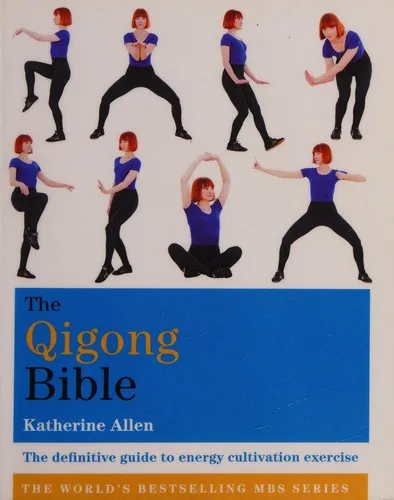
Katherine Allen's Qigong Bible, published in 2017, offers a structured introduction to the Chinese practice of cultivating internal energy.
This book serves as a guide to the physical postures, breathing methods, and mental focus integral to Qigong practice. Allen explains how to develop 'qi,' or internal energy, presenting the material in a way that is accessible for beginners while still offering depth for those already familiar with the discipline. It addresses common concerns such as stress reduction and the enhancement of physical vitality.
Readers interested in holistic health, energy work, and traditional Chinese medicine will find this text particularly relevant. It is also recommended for practitioners of martial arts, meditation, and yoga seeking to integrate Qigong principles into their existing practices. The book details specific Qigong forms like the Eight Brocades and the Five Animals Frolics, explaining their roles in energy cultivation.
Qigong's origins are deeply embedded in ancient Chinese traditions, including Taoism, Buddhism, and traditional Chinese medicine. It represents a systematic approach to harmonizing the body, breath, and mind for health and spiritual development. Allen's work places these practices within this historical lineage, illustrating how they connect to concepts of energetic pathways (meridians) and the flow of vital force. The book provides a modern framework for understanding these age-old methods.
💡 Why Read This Book?
• Learn the fundamental movements and breathing patterns of the Eight Brocades (Baduanjin), providing a concrete set of exercises for immediate practice and energy cultivation. • Understand the concept of meridians and their role in Qi flow, offering insight into the energetic anatomy central to Traditional Chinese Medicine. • Explore the Five Animals Frolics (Wu Qin Xi), gaining familiarity with these ancient animal-imitating exercises designed to harmonize the body and mind.
⭐ Reader Reviews
Honest opinions from readers who have explored this book.
❓ Frequently Asked Questions
What is Qigong according to Katherine Allen's book?
Katherine Allen's Qigong Bible defines Qigong as an ancient Chinese practice involving specific postures, controlled breathing, and focused intent to cultivate and balance the body's vital energy, known as 'qi'.
When was Qigong Bible first published?
The Qigong Bible by Katherine Allen was first published in 2017, positioning it as a relatively contemporary guide to this ancient practice.
What are some key Qigong forms discussed in the book?
The book prominently features foundational Qigong forms such as the Eight Brocades (Baduanjin) and the Five Animals Frolics (Wu Qin Xi), detailing their movements and benefits.
Is Qigong Bible suitable for beginners?
Yes, the book is designed to be accessible to newcomers, offering clear instructions on postures and breathing techniques, while also serving as a reference for more experienced practitioners.
What is 'qi' as explained in the Qigong Bible?
'Qi' (or 'chi') is described as the vital life force or internal energy that flows through the body, which Qigong practices aim to cultivate, balance, and enhance for health and well-being.
What is the historical origin of Qigong?
Qigong's origins are traced back thousands of years in China, drawing from Taoist and Buddhist traditions, as well as principles of Traditional Chinese Medicine.
🔮 Key Themes & Symbolism
Cultivating Qi
The central theme is the active cultivation and circulation of 'qi,' the vital life force. Allen elucidates how synchronized breathwork, mindful movement, and specific postures serve to gather, refine, and distribute this energy throughout the body's energetic pathways. This process is presented not as a passive reception of energy, but as an intentional practice for enhancing vitality and promoting internal harmony.
Foundational Forms
The book systematically introduces several key Qigong forms, including the Eight Brocades (Baduanjin) and the Five Animals Frolics (Wu Qin Xi). These are presented as accessible yet potent sequences designed to address specific physical and energetic imbalances. Allen breaks down the intricate movements and the intended energetic effects of each exercise within these established sets.
Energetic Anatomy
A significant portion of the text is dedicated to explaining the body's energetic framework, primarily through the concept of meridians. These are described as channels through which qi flows. Understanding these pathways is crucial for appreciating how Qigong exercises influence organ function, emotional states, and overall physical health, drawing from Traditional Chinese Medicine principles.
Mind-Body Integration
Qigong Bible emphasizes the inseparable connection between the mind and body. The practice requires focused intention and mental presence alongside physical action and breath control. This integration is presented as the mechanism through which Qigong achieves its therapeutic and restorative effects, fostering a state of balance and well-being.
💬 Memorable Quotes
Direct passages from the work, attributed to the author.
“Qigong is the art of cultivating life energy.”
— This concise statement captures the essence of the practice as presented by Allen: it is an active, skillful endeavor focused on nurturing and developing the body's inherent vital force for improved health.
“The Eight Brocades are a core part of Qigong practice.”
— This highlights the significance and foundational nature of the Baduanjin exercises within the broader spectrum of Qigong, suggesting they are essential for anyone beginning their training.
“Breathing is the bridge between the body and the mind.”
— This interpretation underscores the critical role of breath in Qigong, acting as the primary interface that connects physical movements with mental focus and intention, facilitating energetic flow.
“The meridians are pathways for vital energy.”
— This defines the concept of meridians as the internal channels through which Qi travels, essential for understanding how Qigong movements and breathwork influence the body's energetic system.
💡 Key Ideas
Editorial paraphrase of the work's core concepts — not direct quotes.
Balance is the ultimate goal of Qigong.
This paraphrased concept suggests that the practice aims to restore equilibrium within the body's energetic, physical, and mental systems, leading to a state of optimal health and harmony.
🌙 Esoteric Significance
Tradition
The Qigong Bible aligns with the Taoist tradition, a core part of esoteric Chinese philosophy. It draws heavily on concepts central to Taoism, such as the cultivation of 'qi' (vital energy) and the importance of harmony with natural principles (the Tao). While not explicitly Hermetic or Kabbalistic, its focus on internal energy manipulation and its roots in ancient Chinese cosmology place it firmly within the broader spectrum of esoteric practices concerned with subtle energies and spiritual cultivation.
Symbolism
Key symbols within Qigong, as explored in Allen's work, include the concept of the 'meridians'—invisible energetic pathways analogous to rivers—and the 'Dantian,' centers of energy storage within the body. The movements themselves often mimic natural phenomena or animals (as in the Five Animals Frolics), symbolically connecting the practitioner to the elemental forces and the natural world, promoting a sense of integration and balance.
Modern Relevance
Contemporary thinkers and practitioners in fields like integrative medicine, somatic psychology, and modern Taoist movements frequently reference or draw upon Qigong principles. Schools of yoga and martial arts often incorporate Qigong elements into their training. The work is relevant to modern wellness coaches and therapists seeking evidence-based (within its framework) mind-body techniques for stress reduction and physical rehabilitation, demonstrating Qigong's enduring appeal.
👥 Who Should Read This Book
• Individuals new to energy cultivation practices seeking a clear, step-by-step introduction to Qigong, grounded in foundational forms like the Eight Brocades. • Practitioners of yoga, martial arts, or meditation looking to expand their repertoire with specific breathing and movement techniques for enhancing internal energy and focus. • Those interested in Traditional Chinese Medicine and holistic health who want to understand the practical application of concepts like qi and meridians in a self-care context.
📜 Historical Context
Katherine Allen's Qigong Bible, published in 2017, entered a field already rich with scholarship and practice guides on Qigong, which has a lineage stretching back millennia in China. The late 20th and early 21st centuries saw a significant surge in Western interest in Eastern mind-body practices, fueled by a growing global wellness movement and increased academic study of Traditional Chinese Medicine. Allen's work arrived during this period, building upon earlier foundational texts and popularizations by figures like Dr. Yang Jwing-ming, who was instrumental in bringing Qigong and Kung Fu to the West from the 1970s onward. While Qigong found favor within holistic health circles, it also existed alongside other energy-based practices like Reiki and Therapeutic Touch, and was sometimes viewed with skepticism by Western medical establishments. The book's publication reflects a mature stage of Qigong's integration into global wellness, offering a structured approach that benefited from decades of prior dissemination and refinement.
📔 Journal Prompts
Reflect on the concept of 'qi' as vital energy and its flow through the body's meridians.
Consider the symbolic connection between the Five Animals Frolics and natural forces.
Analyze the integration of posture, breath, and intention in a single Qigong movement.
Explore the potential benefits of practicing the Eight Brocades for physical vitality.
Document your personal experience with cultivating 'qi' through focused practice.
🗂️ Glossary
Qi (or Chi)
The fundamental concept of vital life force or energy that permeates all living things and the universe, which Qigong aims to cultivate and balance.
Meridians
Specific pathways within the body through which qi is believed to flow, analogous to channels or rivers, influencing the health and function of organs and tissues.
Dantian
Energy centers within the body, often located in the lower abdomen, where qi is stored, refined, and circulated. There are typically considered to be three main Dantian.
Eight Brocades (Baduanjin)
A set of eight fundamental Qigong exercises, known for their simplicity and effectiveness in promoting health and balancing the body's energy.
Five Animals Frolics (Wu Qin Xi)
A set of Qigong exercises that imitate the movements of five animals (tiger, deer, bear, monkey, bird), designed to harmonize the body and spirit.
Posture
The physical alignment and stance adopted during Qigong practice, crucial for facilitating the free flow of qi and achieving energetic balance.
Intention
The mental focus and will applied during Qigong practice, guiding the movement of qi and enhancing the effectiveness of the exercises.
🔮 Readers Also Liked
Browse all →







More Free Occult Philosophy Books
View all →