Practical mysticism
 73
73

Practical mysticism
Underhill’s *Practical Mysticism* avoids the airy pronouncements common in spiritual literature, grounding its advice in a commendably disciplined approach. Her insistence that the mystical life is accessible through diligent practice, rather than solely innate genius, is a crucial corrective. The section detailing the 'Prelude' and 'Conscious Ascent' offers a clear, step-by-step breakdown of how one might begin to shift their perception of reality, emphasizing active attention. However, the book’s very structure, while providing clarity, can sometimes feel overly analytical, bordering on clinical. For instance, the detailed categorizations of mystical experiences, while informative, might inadvertently create a blueprint that discourages spontaneous spiritual encounters. Underhill’s prose, though elegant, occasionally lapses into a somewhat dated, formal tone that may require careful reading by a modern audience. Despite this, the work’s enduring strength lies in its practical methodology, making the profound aim of direct divine experience seem attainable through focused effort. It remains a valuable manual for the serious student of inner life.
📝 Description
73
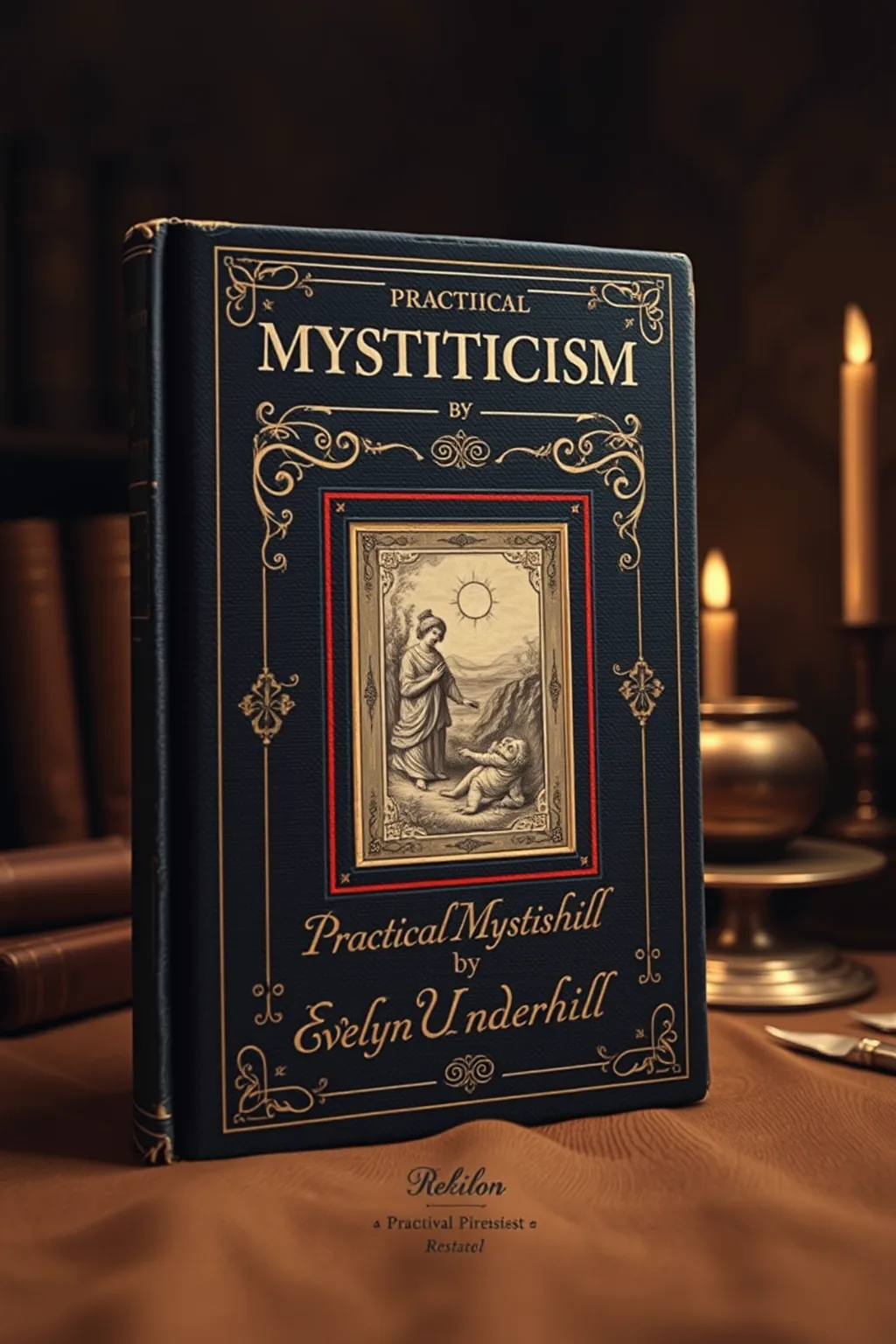
Evelyn Underhill's *Practical Mysticism* (1942) guides readers toward direct spiritual experience.
Published in 1942, Evelyn Underhill's *Practical Mysticism* serves as a manual for individuals aiming to experience the divine directly. Underhill argues that mysticism is not a rare talent but a capacity within everyone, achievable through consistent practice and focused awareness. The book outlines the distinct phases of the mystical path, beginning with initial spiritual stirrings and progressing toward a deeper connection with the Absolute.
This book is for anyone feeling an inner pull toward spiritual reality, irrespective of their religious background. It speaks to those tired of superficial religious observance and seeking a personal, meaningful encounter with the sacred. Readers who prefer clear, organized explanations of complex inner states will find it valuable. It is especially useful for those who accept the possibility of direct spiritual insight and are prepared to commit to the necessary inner development.
Published during World War II, *Practical Mysticism* responded to a widespread need for spiritual grounding amidst global turmoil and disillusionment with materialism. Underhill, already known for her scholarly work *Mysticism* (1911), aimed to make the principles of direct spiritual apprehension accessible to a contemporary audience. Her approach bridged academic study with practical instruction, drawing on various contemplative traditions that experienced renewed interest. The book emerged in a climate where explorations of spiritualism and Theosophy had prepared some readers for a more experiential approach to the sacred.
💡 Why Read This Book?
• Learn to recognize the 'Prelude' to spiritual awareness, a concept Underhill details as the initial perception of the divine in the mundane, helping you cultivate a more attentive inner life. • Understand the 'Conscious Ascent,' a structured approach to spiritual discipline described by Underhill, providing a practical framework for intentional spiritual development. • Explore the concept of 'Illumination' as presented by Underhill, offering insight into moments of profound spiritual clarity and their significance on the path to deeper connection.
⭐ Reader Reviews
Honest opinions from readers who have explored this book.
❓ Frequently Asked Questions
Is Evelyn Underhill's *Practical Mysticism* suitable for beginners in spiritual study?
Yes, *Practical Mysticism* is exceptionally well-suited for beginners. Published in 1942, it breaks down complex spiritual concepts into accessible stages, guiding the reader from initial awareness ('Prelude') through deliberate practice ('Conscious Ascent') toward deeper experience.
What is the primary difference between Evelyn Underhill's *Mysticism* and *Practical Mysticism*?
*Mysticism* (1911) is a comprehensive historical and psychological survey of mystical experience across traditions, while *Practical Mysticism* (1942) focuses specifically on providing a guide for the individual's own direct spiritual practice.
Does *Practical Mysticism* require adherence to a specific religion?
No, Underhill intentionally structures the book to be accessible across religious lines. While she draws on Christian mystical traditions, the core concepts of direct spiritual experience and inner discipline are presented universally.
What are the key stages of the mystical path as described in the book?
Underhill outlines the path in four main phases: the Prelude (initial awareness), the Conscious Ascent (disciplined effort), Illumination (breakthrough experience), and Union (sustained communion with the Divine).
Is the book available in the public domain or online?
As *Practical Mysticism* was first published in 1942, it is likely in the public domain in many regions, making it widely accessible online through various digital libraries and archives.
What is meant by the 'Conscious Ascent' in Underhill's work?
The 'Conscious Ascent' refers to the active, deliberate effort an individual undertakes to deepen their spiritual life. It involves practices like prayer, meditation, and conscious attention to the divine in everyday life, as detailed by Underhill.
🔮 Key Themes & Symbolism
The Accessible Mystic
Underhill counters the notion that mysticism is an esoteric pursuit for a select few. She argues persuasively in *Practical Mysticism* that the capacity for direct experience of the Divine is inherent in all human beings. The book's central thesis is that this potential can be cultivated through disciplined attention and practice, moving beyond mere intellectual belief to embodied spiritual knowing. This democratization of mystical experience is a core element, inviting readers to see themselves as potential participants in the spiritual life, not just observers.
Stages of Spiritual Ascent
The work meticulously maps the progression of the spiritual journey. Underhill delineates distinct phases, beginning with the 'Prelude'—an awakening to the spiritual dimension pervading ordinary life—and moving through the 'Conscious Ascent,' a period of dedicated effort and discipline. This is followed by 'Illumination,' characterized by profound moments of insight and joy, culminating in 'Union,' a state of sustained communion with the Absolute. This structured approach provides a clear, actionable framework for understanding one's own inner development.
The Role of Attention
A central to Underhill's practical advice is the transformative power of focused attention. She posits that the spiritual world is not separate but interwoven with the material, perceivable by those who learn to direct their consciousness intentionally. Cultivating an 'inner gaze' and practicing detachment from superficial distractions are presented as essential techniques. This emphasis on conscious awareness transforms mundane activities into opportunities for spiritual encounter, making the divine immanent rather than transcendent.
Discipline and Detachment
Underhill stresses that genuine spiritual progress requires both disciplined effort and a degree of detachment from worldly desires and distractions. The 'Conscious Ascent' involves intentional practices such as prayer and meditation, but also requires a willingness to let go of ego-driven pursuits and superficial attachments. This dual focus—active engagement coupled with intentional non-attachment—is presented as the key to clearing the inner channels for divine grace and perception to flow.
💬 Memorable Quotes
Direct passages from the work, attributed to the author.
“Mysticism is the art of union with Reality.”
— This concise definition expresses the book's aim: to present mysticism not as an abstract philosophy but as a practical discipline focused on achieving a direct, intimate connection with the ultimate nature of existence.
“The Prelude... is the dawning of the sense of the spiritual world.”
— This highlights the initial stage of spiritual awakening, emphasizing that it begins with a subtle shift in perception, a growing awareness of a reality beyond the purely material, accessible through heightened attention.
“The spiritual life must be lived in the world.”
— Interpretation: Underhill asserts that spiritual attainment is not found in withdrawal from society or daily responsibilities, but rather in the integration of the sacred into the fabric of ordinary existence through conscious practice.
“We must learn to see the Divine in the commonplace.”
— This emphasizes the immanence of the sacred, suggesting that the divine is not distant but present in everyday things and events, awaiting our attentive recognition through cultivated spiritual perception.
“The Will must be brought into captivity to the Highest Good.”
— This speaks to the necessity of aligning one's personal desires and intentions with a higher spiritual purpose, a core aspect of the 'Conscious Ascent' and the discipline required for spiritual growth.
🌙 Esoteric Significance
Tradition
Underhill's work is firmly rooted in the Western Christian mystical tradition, particularly drawing from figures like Meister Eckhart and Julian of Norwich. However, *Practical Mysticism* transcends strict denominational confines, presenting universal principles of spiritual development applicable across traditions. It aligns with the broader Hermetic and Neoplatonic currents that emphasize the soul's journey toward the One or the Divine, focusing on inner transformation as the means to apprehend ultimate reality.
Symbolism
While not heavily reliant on overt symbolism, Underhill's work implicitly uses motifs of light and darkness to represent spiritual illumination and ignorance, respectively. The concept of 'seeing' or 'perception' acts as a potent symbol for spiritual apprehension, contrasting with mere intellectual understanding. The journey itself, with its stages of ascent, symbolizes the soul's upward movement towards God, a classic motif in mystical literature.
Modern Relevance
Contemporary mindfulness practices, contemplative prayer movements, and secularized spiritual guidance programs echo Underhill's emphasis on directed attention and inner discipline. Thinkers exploring embodied spirituality and the integration of contemplative practices into daily life frequently reference her work. Her clear articulation of the stages of spiritual development continues to provide a foundational map for individuals exploring non-traditional spiritual paths.
👥 Who Should Read This Book
• Individuals new to contemplative practices seeking a structured, yet non-dogmatic, introduction to direct spiritual experience. • Students of comparative religion interested in the practical application of mystical principles within a Western framework. • Seekers feeling a call to a deeper spiritual life but unsure how to cultivate it beyond conventional religious observance.
📜 Historical Context
Evelyn Underhill's *Practical Mysticism*, released in 1942, emerged during a period marked by global conflict and a profound societal reevaluation of values. The preceding decades had seen the rise of movements like Theosophy and Spiritualism, indicating a broad public hunger for spiritual experiences beyond orthodox religion. Underhill, already a significant figure with her 1911 work *Mysticism*, aimed to provide a more accessible, disciplined approach to direct spiritual encounter. In contrast to the more esoteric or speculative spiritualist circles, Underhill’s work was rooted in a deep understanding of Christian contemplative traditions, though presented in a way that transcended sectarian boundaries. This era also saw the continued influence of psychological exploration, with figures like Carl Jung examining the depths of the human psyche and its spiritual dimensions. Underhill’s book offered a structured, inward-focused path at a time when external events were chaotic, resonating with those seeking inner stability and meaning.
📔 Journal Prompts
The Prelude's dawning awareness: What commonplace elements in your day now suggest a deeper reality?
Conscious Ascent's disciplines: Identify one practice that could help align your will with a higher purpose.
Illumination's clarity: Reflect on a moment of sudden spiritual insight and its impact.
The art of union: How does the concept of 'union with Reality' shift your perspective on daily interactions?
Practicing detachment: Explore a minor worldly desire you could consciously release this week.
🗂️ Glossary
Prelude
The initial stage of mystical awareness, characterized by a dawning perception of the spiritual dimension underlying everyday reality. It is the awakening of the spiritual sense.
Conscious Ascent
The active phase of spiritual development, involving deliberate effort, discipline, and practice aimed at deepening one's connection with the Divine.
Illumination
A stage of mystical experience marked by profound spiritual insight, clarity, and often a sense of intense joy or divine presence.
Union
The culmination of the mystical path, representing a sustained state of deep communion and intimate connection with the Absolute or Divine.
Reality
In Underhill's context, this refers to the ultimate, Divine nature of existence, distinct from the superficial appearances of the material world.
Attention
The faculty of conscious focus, which Underhill identifies as crucial for perceiving the spiritual dimension and cultivating inner growth.
Detachment
A state of non-attachment to worldly desires and ego-driven concerns, necessary for clearing the inner self and allowing spiritual perception.
🔮 Readers Also Liked
Browse all →









More by Evelyn Underhill
All books →





More Free Spiritual Development Books
View all →