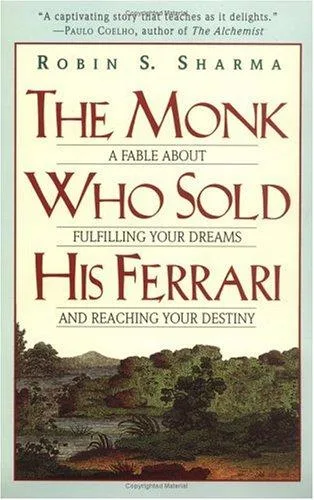
The Monk Who Sold His Ferrari
 75
75

The Monk Who Sold His Ferrari
Sharma's "The Monk Who Sold His Ferrari" operates as an allegorical self-help manual, employing the character of Julian Mantle to illustrate a path from burnout to balance. The strength lies in its accessible storytelling, transforming complex philosophical ideas into digestible lessons through a fictionalized spiritual quest. However, the narrative occasionally veers into platitudinous advice, particularly concerning the "Seven Virtues," which, while well-intentioned, can feel somewhat generic in their presentation.
A specific point of interest is Mantle's radical decision to abandon his law practice, a dramatic act that underscores the book's central thesis about prioritizing inner peace over external success. While the book offers a clear framework for reflection, the spiritual "secrets" presented, such as the "sacred cave," might strike some readers as overly simplistic interpretations of profound Eastern traditions.
Read more ↓
Ultimately, the book serves as an engaging, if sometimes superficial, introduction to principles of mindful living and personal responsibility.
📝 Description
75
Robin S. Sharma's 1996 book follows a lawyer's abandonment of materialism for spiritual discovery.
The Monk Who Sold His Ferrari tells the story of Julian Mantle, a successful lawyer who gives up his high-powered, materialistic life. Following a health crisis, Mantle embarks on a spiritual quest. He travels to the Himalayas and learns from a group of wise monks.
The narrative presents Mantle's teachings as a guide for personal transformation. It introduces principles like the "Seven Virtues," advocating for practices such as mind control, purposeful living, and self-discipline. The book uses the titular Ferrari as a symbol for the worldly possessions and the hurried lifestyle Mantle leaves behind. It aims to offer readers a story-driven approach to improving their lives.
Published in 1996, the book tapped into a growing Western interest in Eastern spiritual practices. It arrived during a period where New Age thought gained wider traction. Sharma's accessible narrative drew parallels with earlier works that introduced Eastern concepts to a Western audience, like Paramahansa Yogananda's "Autobiography of a Yogi." The book frames spiritual development through practical virtues and mental discipline, making these ideas available outside academic or monastic traditions.
💡 Why Read This Book?
• You will learn to identify and question the societal pressures that define success, inspired by Julian Mantle's 1996 decision to leave his law career. • You will gain practical methods for cultivating inner peace through the "Seven Virtues" and the concept of the "sacred cave" as a mental retreat. • You will feel empowered to re-evaluate your personal goals and embrace a more disciplined, purpose-driven existence, as exemplified by the monk's lifestyle.
⭐ Reader Reviews
Honest opinions from readers who have explored this book.
❓ Frequently Asked Questions
When was "The Monk Who Sold His Ferrari" first published?
"The Monk Who Sold His Ferrari" was first published in 1996, marking its entry into the self-help and personal development landscape of the late 20th century.
What is the core message of "The Monk Who Sold His Ferrari"?
The core message is that true fulfillment and happiness come from spiritual wisdom and self-mastery, not material possessions or societal status, as demonstrated by Julian Mantle's transformation.
Who is Julian Mantle in the book?
Julian Mantle is the protagonist, a former high-profile lawyer who, after a near-fatal health crisis, abandons his demanding career and possessions to seek spiritual enlightenment in the Himalayas.
What are the "Seven Virtues" mentioned in the book?
The "Seven Virtues" are a set of principles Julian Mantle learns in the Himalayas to guide his life towards wisdom, purpose, and inner peace, forming the foundation of his new philosophy.
Does the book offer practical advice for self-improvement?
Yes, the book presents actionable advice through the narrative, focusing on concepts like mind control, purposeful living, disciplined effort, and the importance of a spiritual practice, often using metaphors like the "sacred cave."
What does the "Ferrari" symbolize in the title?
The Ferrari symbolizes the excess, materialism, and the fast-paced, often unfulfilling, lifestyle that Julian Mantle lived as a successful lawyer before his spiritual awakening.
🔮 Key Themes & Symbolism
The Pursuit of True Fulfillment
The narrative explores the common Western societal emphasis on external markers of success—wealth, status, and possessions—represented by Julian Mantle's initial life and his prized Ferrari. It contrasts this with the profound internal peace and purpose discovered through spiritual discipline. The journey from a frantic, materialist existence to one of mindful simplicity highlights a core esoteric tenet: that lasting happiness originates from within, not from external acquisition.
Spiritual Discipline and Self-Mastery
Central to the book is the idea that self-mastery is achievable through disciplined practices learned from the sages of the Himalayas. Concepts like "mind control" and the "Seven Virtues" serve as a structured approach to cultivating inner strength, clarity, and emotional regulation. The "sacred cave" metaphor illustrates the internal sanctuary one can access through focused meditation and self-awareness, a recurring theme in many contemplative traditions.
The Symbolic Journey of Transformation
The entire narrative functions as an allegory for personal transformation. Julian Mantle's radical renunciation of his former life symbolizes the shedding of ego and societal conditioning. His pilgrimage to the Himalayas and subsequent return as a wiser, enlightened individual mirrors archetypal hero's journeys found in various spiritual traditions, offering readers a blueprint for their own potential metamorphosis.
Eastern Philosophy in a Western Context
Sharma effectively bridges Eastern philosophical concepts with the challenges and aspirations of modern Western life. The book translates principles of karma, mindfulness, and the pursuit of enlightenment into relatable scenarios for a contemporary audience. It demonstrates how ancient wisdom, particularly from Indian spiritual traditions, can be applied to overcome the stresses and complexities of the 21st century.
💬 Memorable Quotes
Direct passages from the work, attributed to the author.
“The mind is like a garden. Your thoughts are the seeds. You can plant whatever you wish.”
— This analogy emphasizes the power of conscious thought and intention. It suggests that individuals have the agency to cultivate their mental landscape, choosing to nurture positive, productive ideas rather than allowing negative or unproductive ones to take root.
“Purpose is the most potent force in the universe.”
— This highlights the lasting impact of having a clear sense of direction and meaning in life. It posits that a strong purpose acts as a powerful motivator, guiding actions and providing resilience against adversity.
“Your greatest success is in the palm of your hand.”
— This speaks to the idea that true success and capability reside within the individual, accessible through their own efforts and mindset, rather than being dependent on external circumstances or validation.
“Live your life with passion and purpose.”
— A concise imperative encapsulating the book's core philosophy. It encourages readers to infuse their daily existence with enthusiasm and a clear sense of direction, aligning actions with deeply held values.
💡 Key Ideas
Editorial paraphrase of the work's core concepts — not direct quotes.
The greatest tragedy in life is to die with your dreams still inside you.
This quote serves as a stark reminder of the importance of pursuing one's aspirations and living authentically. It frames unfulfilled potential as a significant loss, urging readers to act on their desires before it is too late.
🌙 Esoteric Significance
Tradition
The work draws heavily from the Vedanta and Yoga traditions of Indian philosophy, particularly the concept of detachment from material possessions and the pursuit of inner enlightenment. It synthesizes these ancient teachings with a modern self-help framework, making them palatable to a Western audience unfamiliar with the nuances of Hindu monasticism or yogic philosophy. It departs from strict adherence by presenting these ideas through a simplified, allegorical narrative.
Symbolism
The "Ferrari" serves as a potent symbol of worldly attachment and the "rat race" mentality, representing the superficiality Julian Mantle abandons. The "sacred cave" symbolizes a mental sanctuary, an inner space of tranquility and self-awareness accessible through meditation and mindfulness – a common motif in contemplative practices for accessing higher consciousness. The "Seven Virtues" act as symbolic guideposts for ethical and spiritual living, representing core principles for a balanced existence.
Modern Relevance
Contemporary mindfulness movements, popular psychology focusing on purpose-driven living, and various forms of secular Buddhism echo themes present in Sharma's work. Thinkers and practitioners in positive psychology, life coaching, and even corporate wellness programs often draw upon similar ideas of mental discipline, finding meaning, and cultivating inner peace, demonstrating the enduring appeal of these concepts when presented accessibly.
👥 Who Should Read This Book
• Individuals feeling overwhelmed by the demands of modern professional life, seeking an accessible narrative to inspire a shift towards greater balance and purpose. • Beginners exploring Eastern philosophical concepts like karma, mindfulness, and detachment, who prefer a story-driven introduction over dense theoretical texts. • Those interested in personal development who are looking for a blend of practical self-improvement techniques and spiritual reflection, framed within an engaging, albeit fictional, context.
📜 Historical Context
Robin S. Sharma's "The Monk Who Sold His Ferrari," first published in 1996, arrived at an important moment for self-help literature. The mid-1990s saw a significant cultural embrace of Eastern philosophies and New Age concepts in the West. Following in the footsteps of influential works like Paramahansa Yogananda's "Autobiography of a Yogi" (1946), Sharma's book tapped into a growing desire among Western audiences for accessible spiritual wisdom and practical guidance on achieving inner peace amidst modern pressures. The book's narrative structure, presenting spiritual lessons through the fictionalized journey of a disillusioned lawyer, resonated with readers seeking an alternative to purely academic or overtly religious texts. It arrived during a period when figures like Deepak Chopra were also popularizing concepts of mind-body connection and spiritual well-being. While not directly engaging with competing schools of thought in an academic sense, its popularity implicitly challenged more materialistic or purely psychological approaches to happiness prevalent at the time, offering a blend of Eastern mysticism and Western self-improvement.
📔 Journal Prompts
Julian Mantle's "sacred cave": Describe your personal sanctuary for mental clarity.
The "Seven Virtues": Which virtue do you find most challenging to embody daily?
Reflect on the symbolism of Julian's Ferrari and its place in your own life.
The concept of "purposeful living": How does your current path align with your deepest values?
Consider the radical act of "selling" your own metaphorical possessions that hinder your peace.
🗂️ Glossary
Julian Mantle
The protagonist of the story, a successful but burnt-out lawyer who begins a spiritual quest to the Himalayas after a health crisis.
The Seven Virtues
A set of guiding principles or ethical codes taught to Julian Mantle by the sages, designed to foster wisdom, discipline, and a purposeful life.
The Sacred Cave
A symbolic mental space representing a place of inner peace, focus, and profound self-reflection that can be accessed through disciplined thought and meditation.
Kaizen
A Japanese philosophy of continuous improvement, often applied in business but here presented as a principle for personal growth and daily progress.
Sages of Sivana
The enlightened monks living in a hidden community in the Himalayas who impart spiritual wisdom and life-changing lessons to Julian Mantle.
The Pink Wire
A specific object Julian Mantle uses as a reminder of his commitment to his new spiritual path and the sacrifices he made.
Purposeful Living
The practice of aligning one's actions and daily life with a clear sense of meaning, values, and contribution, moving beyond mere existence.
🔮 Readers Also Liked
Browse all →









More by Robin S. Sharma
All books →





More Free Spiritual Development Books
View all →