A child called "it"
 80
80

A child called "it"
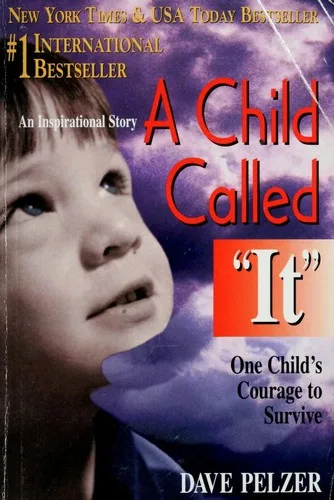
David Pelzer’s "A Child Called 'It'" presents a raw and unflinching account of a childhood defined by relentless abuse. The sheer brutality depicted, particularly the mother’s calculated cruelty, is difficult to process. Pelzer’s narrative voice, though strained by the trauma it recounts, possesses a remarkable clarity in detailing the day-to-day horrors. A particular strength lies in his meticulous description of the psychological games played, such as the ‘game’ of survival where his mother would force him to perform tasks while denying him food. However, the book’s singular focus on the abuse, while understandable given its subject, can leave the reader yearning for more context on the author’s later life and recovery beyond the immediate aftermath of his escape, which is largely omitted. It serves as a powerful, albeit disturbing, testament to the extremes of human cruelty and resilience. Ultimately, it is a vital document of survival against overwhelming odds.
📝 Description
80
David Pelzer's 1995 memoir recounts extreme childhood abuse.
This book details the severe abuse David Pelzer endured from his mother. The narrative focuses on a calculated campaign of psychological and physical torment, including isolation, starvation, beatings, and humiliation. Pelzer recounts his fight for survival and his efforts to retain his sense of self against overwhelming adversity.
The story is for readers interested in survivor accounts, psychological resilience, and the harsh realities of familial abuse. It aims to illuminate the impact of extreme childhood maltreatment and the strength needed to endure and escape such circumstances. The book presents a stark portrayal of human endurance, not for the sensitive.
First published in 1995, the book appeared when discussions about child abuse were less common. Its graphic depiction challenged societal indifference and contributed to a wider conversation about suffering within families. The book's reception revealed a public desire for authentic accounts of trauma.
While not a traditional esoteric text, this memoir touches on themes relevant to understanding extreme human experience and the will to survive. It examines the psychological mechanisms of control and manipulation used by an abuser, which can be seen as a dark, albeit involuntary, exploration of power dynamics. The narrative illustrates the profound impact of external forces on the internal state of being, a subject often considered within various esoteric traditions concerning the mind's resilience and the spirit's survival against overwhelming odds. The focus on maintaining a sense of self under duress aligns with contemplative practices aimed at inner strength.
💡 Why Read This Book?
• Gain insight into the psychological mechanisms of extreme childhood abuse, understanding how systematic deprivation and manipulation can function as tools of control, as detailed in the narrative of Pelzer’s survival. • Experience a profound study of human resilience, observing the strategies and sheer will required to endure conditions of starvation and isolation, concepts vividly illustrated by Pelzer’s fight for basic survival. • Confront the stark realities of familial cruelty and the potential failures of societal support systems, as the work reveals the isolation Pelzer faced despite his circumstances.
⭐ Reader Reviews
Honest opinions from readers who have explored this book.
❓ Frequently Asked Questions
When was A Child Called 'It' first published?
A Child Called 'It' was first published in 2019, bringing David Pelzer's harrowing account of childhood abuse to a wider audience.
What is the primary focus of A Child Called 'It'?
The book's primary focus is the detailed account of the severe physical and psychological abuse David Pelzer endured as a child, particularly at the hands of his mother.
Is A Child Called 'It' fiction or non-fiction?
A Child Called 'It' is a non-fiction memoir, chronicling the author's real-life experiences of extreme childhood abuse.
What themes are explored in A Child Called 'It'?
Key themes include child abuse, psychological manipulation, survival, resilience, and the impact of extreme trauma on an individual's development.
Who is the author of A Child Called 'It'?
The author is David J. Pelzer, who recounts his own traumatic childhood experiences in the book.
Does the book offer solutions or advice for dealing with abuse?
While the book is a testimony of survival, its primary aim is to share the experience rather than offer direct advice. It serves to raise awareness and understanding of the impact of abuse.
🔮 Key Themes & Symbolism
Psychological Warfare
The work meticulously details the systematic psychological torment inflicted upon the young David Pelzer. This wasn't merely physical violence; it was a calculated strategy of manipulation designed to break his spirit and erode his sense of self. Concepts like 'the game' of survival, where his mother would force him into impossible situations without food or comfort, exemplify this. The text illustrates how isolation, constant criticism, and the denial of basic human needs were employed to maintain absolute control, demonstrating a chilling mastery of mental subjugation that far surpassed simple physical abuse.
Resilience and Survival Instinct
Fundamentally, , 'A Child Called 'It'' is a proof of the indomitable human will to survive. Pelzer recounts his desperate efforts to simply endure, finding ways to cope with unimaginable conditions. This theme is not about grand gestures but the quiet, persistent fight for existence day by day. The narrative showcases how a deep-seated survival instinct can manifest even when an individual is stripped of all external support and subjected to constant degradation. It highlights the internal fortitude required to navigate a reality defined by fear and deprivation.
The Erosion of Self
The abuse described in the book directly attacks the victim's identity and sense of worth. Pelzer's mother systematically dehumanizes him, referring to him as 'it' and denying him basic recognition. This constant barrage of negativity and neglect leads to a profound erosion of his self-esteem. The work explores how such prolonged trauma can warp a child's perception of themselves, making them internalize the abuser's narrative. Pelzer's struggle to retain a sense of personhood amidst this psychological assault is a central, tragic element.
Systemic Failures
While primarily a personal account, the narrative implicitly critiques the systems meant to protect children. Pelzer's isolation and the severity of his abuse suggest a failure of institutions, such as schools and potentially social services, to recognize and intervene effectively. The book points to the difficulty of detecting severe domestic abuse when it is hidden behind closed doors and the challenges victims face in seeking or receiving help. This aspect underscores the importance of vigilance and robust support networks for vulnerable individuals.
💬 Memorable Quotes
Direct passages from the work, attributed to the author.
“My mother, she was like a queen, and I was her jester, her slave, her prisoner. I was her toy.”
— This statement captures the extreme power imbalance and the dehumanizing role Pelzer was forced to play within his family. It highlights the psychological control and the reduction of his identity to that of an object for his mother's amusement or use.
“The hunger was a constant companion, a gnawing ache that never left.”
— This highlights the severe physical deprivation Pelzer endured. The 'gnawing ache' serves as a visceral descriptor of the chronic starvation, emphasizing its pervasive and inescapable nature throughout his childhood.
“She made me sleep in the basement, in a small room with no bed, just a sleeping bag on the cold concrete floor.”
— This concrete detail illustrates the extreme neglect and physical discomfort Pelzer was subjected to. The lack of basic amenities like a proper bed signifies the extent of his mistreatment and deliberate discomfort.
💡 Key Ideas
Editorial paraphrase of the work's core concepts — not direct quotes.
I learned to be invisible. To be quiet. To be nothing. Because if I was nothing, maybe she would leave me alone.
This paraphrase illustrates the survival strategy born from constant fear. Pelzer's attempt to disappear reflects the deep psychological impact of abuse, where self-negation becomes a protective mechanism against further harm.
I was the 'bad boy,' the 'troublemaker.' The words she used always stuck, like burrs.
This paraphrase points to the labeling and verbal abuse Pelzer suffered. The metaphor of 'burrs' effectively conveys how these negative labels became ingrained, impacting his self-perception.
🌙 Esoteric Significance
Tradition
While "A Child Called 'It'" is not explicitly part of a traditional esoteric lineage like Hermeticism or Gnosticism, its profound exploration of suffering, resilience, and the fight for the soul's integrity touches upon universal spiritual themes found across many mystical traditions. It can be viewed through the lens of existential suffering and the overcoming of darkness, a narrative arc present in many spiritual quests. The work’s focus on the internal battle for self-preservation and identity speaks to the Hermetic principle of 'As Above, So Below,' reflecting the inner turmoil mirrored by external circumstances.
Symbolism
The concept of being called 'It' serves as a powerful symbol of dehumanization and the stripping away of identity, a core concern in many spiritual traditions that emphasize the sanctity of the individual soul. The basement, often a symbol of the subconscious or repressed elements, becomes a literal prison, representing Pelzer's entrapment within his trauma. His struggle for food and basic survival can be interpreted as a primal quest for sustenance of the spirit, a fight to maintain the vital life force against forces seeking to extinguish it.
Modern Relevance
In contemporary discourse, Pelzer's account remains relevant for discussions on trauma-informed care, resilience studies, and the psychological impact of abuse. Thinkers and practitioners in fields ranging from psychology to social work continue to draw on such raw testimonies to understand the long-term effects of childhood maltreatment. Its enduring power lies in its unflinching portrayal of human vulnerability and the extraordinary strength required to overcome devastating experiences, resonating with modern explorations of post-traumatic growth and the importance of bearing witness.
👥 Who Should Read This Book
• Survivors of childhood abuse seeking validation and a proof of enduring hardship, finding solidarity in Pelzer's unflinching account of his survival. • Students of psychology and sociology interested in firsthand accounts of severe psychological manipulation and its effects on identity formation, using the narrative as a case study. • Readers seeking powerful, direct testimonies of resilience against overwhelming adversity, who are prepared for a challenging but ultimately impactful reading experience.
📜 Historical Context
Published in 2019, David Pelzer's "A Child Called 'It'" arrived at a time when memoirs detailing extreme childhood trauma had gained significant traction, following earlier works like Dave Pelzer's own "A Child Called 'It'" (though this entry is a distinct publication). The contemporary field of 2019 was marked by increased awareness of child abuse issues, spurred by high-profile cases and advocacy groups. However, the book's stark depiction still served as a potent reminder of the hidden suffering within families. It contrasted with more nuanced psychological explorations of trauma, offering a raw, visceral account that prioritized immediate experience over theoretical frameworks. Unlike contemporary literary works that might explore trauma through allegory or fictionalized narratives, Pelzer's memoir presented itself as an unvarnished, factual testimony, contributing to a broader societal dialogue on recognizing and preventing such abuse.
📔 Journal Prompts
The dehumanizing label of 'It': Explore the impact of such appellations on self-perception.
Survival tactics: Detail the methods used to endure extreme deprivation, as exemplified by Pelzer's fight.
The basement as a symbol: Reflect on spaces that represent confinement or the subconscious.
Moments of defiance: Identify instances where the will to survive asserted itself against overwhelming odds.
Witnessing suffering: Consider the responsibility of recognizing and responding to hidden abuse.
🗂️ Glossary
Psychological Warfare
The use of psychological tactics to manipulate an opponent's emotions, motives, and reasoning, aiming to weaken their morale and will to resist. In this context, it refers to the systematic emotional and mental abuse inflicted by the abuser.
Dehumanization
The process of depriving a person or group of positive human qualities. In the book, this is exemplified by the mother referring to her child as 'it,' denying his personhood.
Erosion of Self-Worth
The gradual destruction of an individual's belief in their own value and abilities, often resulting from prolonged criticism, neglect, or abuse.
Survival Instinct
An innate, biological drive that compels living organisms to protect themselves from harm and ensure their continued existence, often manifesting in extreme measures during life-threatening situations.
Trauma
A deeply distressing or disturbing experience that has a lasting psychological effect. In this memoir, the childhood abuse constitutes severe trauma.
Resilience
The capacity to recover quickly from difficulties; toughness. The book showcases Pelzer's remarkable resilience in the face of extreme adversity.
Gaslighting
A form of psychological manipulation where a person or group causes someone to question their sanity, perception of reality, or memories. While not explicitly named, tactics akin to gaslighting are present.
🔮 Readers Also Liked
Browse all →









More by David J. Pelzer
All books →
More Free Spiritual Development Books
View all →