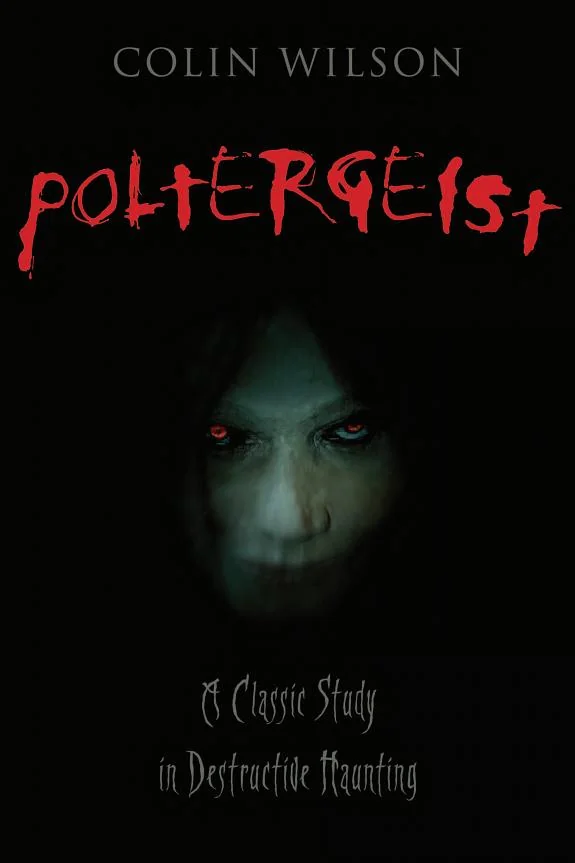
Poltergeist
 74
74

Poltergeist
Colin Wilson's "Poltergeist" attempts a more analytical approach to a notoriously chaotic subject. Wilson, never one to shy from grand theories, views poltergeist activity not as the work of spirits, but as a projection of intense psychological energy, a concept he explores through numerous case studies. He demonstrates a genuine effort to synthesize disparate accounts into a coherent, albeit speculative, framework. His discussion of the "agent" in poltergeist cases, often a stressed adolescent, is particularly compelling, suggesting a link between emotional states and physical disruption. However, the book sometimes suffers from Wilson's characteristic tendency to overreach; his attempts to unify paranormal phenomena under single umbrellas can feel strained. A notable strength is his detailed recounting of specific incidents, such as the Drummer Boy case, which provides concrete material for analysis. Ultimately, "Poltergeist" offers a thought-provoking, if occasionally idiosyncratic, perspective on a persistent mystery.
📝 Description
74
Colin Wilson's 1993 book, Poltergeist, argues these disturbances stem from psychological energy.
Colin Wilson's "Poltergeist," published in 1993, examines poltergeist phenomena not just as hauntings but as expressions of intense psychological energy. Wilson, known for his wide-ranging studies of consciousness and the paranormal, combines empirical research with philosophical thought. The book gathers accounts and theories, looking for patterns and principles to explain disruptive, localized events. Wilson suggests these occurrences might connect to repressed emotions or psychic stress, indicating a link between the human mind and its surroundings.
This work appeals to readers interested in the overlap of psychology, parapsychology, and unexplained events. It offers speculative explanations for phenomena outside conventional understanding. Those interested in the history of paranormal research and Wilson's own body of work will find considerable content. The book suits skeptics open to possibilities and enthusiasts seeking an analytical view of spectral activity beyond typical ghost stories.
Published in 1993, "Poltergeist" appeared when paranormal interest persisted culturally, despite academic skepticism. Colin Wilson, already established with "The Outsider" (1956), approached the paranormal with a unique blend of empirical and philosophical inquiry. His decades of work engaged with figures like J.W. Dunne and explored concepts such as Jung's collective unconscious. Wilson offered an alternative to purely spiritual interpretations, often connecting phenomena to psychological states and latent human potential, distinguishing his approach from traditional occultism.
💡 Why Read This Book?
• Gain a psychological framework for understanding poltergeist phenomena, moving beyond simple hauntings by examining theories of psychic stress and latent energy, as discussed in chapters analyzing cases from the mid-20th century. • Explore Colin Wilson's unique perspective on the paranormal, rooted in his extensive work on consciousness and the "outsider" concept, which contrasts with traditional spiritualist interpretations. • Analyze specific case studies presented in the book, such as accounts from the 1970s, to identify common patterns and Wilson's proposed explanations for seemingly inexplicable physical disturbances.
⭐ Reader Reviews
Honest opinions from readers who have explored this book.
❓ Frequently Asked Questions
What is Colin Wilson's main theory about poltergeists in this book?
Wilson proposes that poltergeist activity is not caused by external spirits but by intense, often repressed, psychological energy projected by a living human agent, frequently an adolescent experiencing emotional stress.
When was Colin Wilson's book 'Poltergeist' first published?
The book 'Poltergeist' by Colin Wilson was first published in 1993.
Does Wilson offer practical advice for dealing with poltergeist activity?
While not a practical guide in the sense of exorcism, Wilson's work aims to provide understanding by identifying the psychological triggers and dynamics involved, suggesting that awareness of these factors is key.
What kind of evidence does Wilson use in 'Poltergeist'?
Wilson draws on a wide range of documented case studies, historical accounts, and parapsychological research, analyzing them to find patterns and support his psychological theories.
How does Wilson's view of poltergeists differ from traditional ghost stories?
Unlike traditional narratives focusing on spirits of the deceased, Wilson emphasizes the role of living individuals and their internal psychological states as the source of the phenomena.
Is 'Poltergeist' suitable for beginners in paranormal studies?
Yes, the book provides a structured introduction to a complex topic, offering analytical perspectives that can be accessible to those new to paranormal research, provided they have an interest in psychology.
🔮 Key Themes & Symbolism
Psychic Energy Projection
Wilson posits that poltergeist events are manifestations of intense psychic energy originating from a living human agent. This energy, often stemming from suppressed emotions or psychological stress, can allegedly influence the physical environment, causing objects to move or noises to occur. He analyzes numerous case studies, seeking to demonstrate this connection between internal psychological states and external physical disturbances, suggesting a latent power within consciousness that can interact with the material world.
The Human Agent
Central to Wilson's thesis is the identification of a 'human agent' often responsible for poltergeist phenomena. This individual is typically depicted as someone undergoing significant emotional or psychological turmoil, frequently an adolescent. The book explores how these individuals, perhaps unconsciously, channel their distress into disruptive physical events. This perspective shifts the focus from external spirits to the internal field of individuals experiencing extraordinary circumstances.
Parapsychological Analysis
Wilson engages with the history and findings of parapsychology, examining concepts like telekinesis and psychokinesis. He reviews various documented cases, attempting to find commonalities and underlying principles that might explain the seemingly chaotic nature of poltergeist activity. His approach seeks a rational, scientific framework for phenomena often relegated to folklore or superstition, integrating psychological theories with anecdotal evidence from the field.
Consciousness and Reality
The book touches upon broader themes concerning the nature of consciousness and its relationship to reality. By exploring how mental states can allegedly manifest physically, Wilson questions conventional materialistic views of the universe. He suggests that human consciousness possesses capabilities not yet fully understood by mainstream science, hinting at a deeper, more interconnected reality where mind and matter are not entirely separate.
💬 Memorable Quotes
Direct passages from the work, attributed to the author.
“The poltergeist is not a ghost, but a projection of the living.”
— This core statement captures Wilson's central argument: that these disruptive phenomena are not the work of disembodied spirits but rather an expression of powerful, often unconscious, energy emanating from a living person.
“Adolescence is a prime time for psychic energy release.”
— Wilson frequently links poltergeist activity to the intense emotional and psychological changes experienced during adolescence, suggesting this developmental stage can be a catalyst for latent psychic abilities to manifest.
“Case studies reveal recurring patterns of disturbance.”
— Wilson's method involves meticulous examination of reported poltergeist incidents, highlighting commonalities in the types of events and the circumstances surrounding them to build his analytical framework.
“We must look for the mind behind the phenomena.”
— This emphasizes Wilson's focus on the psychological aspect, urging readers and researchers to consider the mental state and potential agency of individuals involved, rather than solely external causes.
“The boundary between mind and matter is more fluid than we assume.”
— Reflecting broader themes in his work, this suggests that the conventional separation between subjective experience and objective reality may be an oversimplification, especially when considering paranormal events.
🌙 Esoteric Significance
Tradition
Wilson's work on poltergeists doesn't strictly adhere to a single esoteric lineage but draws from broader Western esotericism, particularly its interest in consciousness and latent human potential. It aligns with Gnostic and Hermetic ideas concerning the power of the mind to shape reality and explore hidden dimensions of existence. His approach emphasizes the immanent power within the individual, rather than solely transcendent forces, bridging psychological inquiry with esoteric concepts of inner force and manifestation.
Symbolism
The poltergeist phenomenon itself can be seen as symbolic of repressed psychic energy breaking through into the conscious, material world. The frequent association with adolescents symbolizes burgeoning, uncontrolled power and the transition from innocence to awareness. Objects moving without apparent cause symbolize the influence of the unseen (psychic forces) on the seen (physical reality), challenging materialist assumptions.
Modern Relevance
Wilson's emphasis on the psychological agent and psychic energy speaks to contemporary discussions in areas like quantum consciousness, where the observer effect is considered. Modern parapsychology and even some therapeutic approaches exploring psychosomatic manifestations may find his analytical framework, despite its age, a useful reference point for understanding the mind-body connection in extreme circumstances.
👥 Who Should Read This Book
• Students of parapsychology seeking analytical frameworks for unexplained phenomena, as Wilson provides a psychological lens distinct from purely spiritualist accounts. • Readers interested in Colin Wilson's broader philosophical explorations of consciousness and human potential, finding this book a key component of his investigative work. • Skeptics open to investigating anomalies, who appreciate a reasoned, evidence-based (albeit speculative) approach to phenomena that challenge conventional scientific understanding.
📜 Historical Context
Colin Wilson's "Poltergeist," released in 1993, emerged during a period of sustained interest in the paranormal, albeit often marginalized by academic discourse. Wilson, already established with works like "The Outsider" (1956), positioned himself as an investigator of human potential and consciousness, frequently exploring anomalous phenomena. His approach in "Poltergeist" was less about spectral entities and more about psychological energy, a stance that contrasted with more traditional spiritualist interpretations prevalent in earlier decades. He engaged with the burgeoning field of parapsychology, which itself was grappling for legitimacy against skeptical scientific establishments. Wilson's work often drew parallels with the ideas of figures like Carl Jung, particularly regarding the collective unconscious, and J.W. Dunne's theories on time. While figures like Rupert Sheldrake were exploring unconventional ideas in biology, Wilson was applying a similar spirit of broad inquiry to the paranormal, seeking underlying principles that could unify diverse reports, often linking them to heightened states of consciousness or psychological stress.
📔 Journal Prompts
The concept of the human agent in poltergeist events.
Manifestations of psychic energy and their potential triggers.
Patterns observed in poltergeist case studies.
The relationship between emotional stress and physical phenomena.
Wilson's departure from traditional ghost lore.
🗂️ Glossary
Poltergeist
Literally 'noisy ghost' in German, referring to a phenomenon characterized by physical disturbances such as moving objects, noises, and physical attacks, often attributed to an unseen agent.
Psychic Energy
A hypothesized form of energy generated by consciousness, which Colin Wilson suggests can influence the physical environment, particularly under conditions of intense emotional or psychological stress.
Human Agent
In the context of poltergeist activity, the living individual, often experiencing psychological distress, believed by Wilson to be the source or focus of the phenomena.
Telekinesis (TK)
The supposed ability to move objects with the mind, a concept often discussed in relation to poltergeist phenomena as a potential explanation for moving objects.
Psychokinesis (PK)
A broader term encompassing telekinesis, referring to the direct influence of thought on physical objects or systems, including moving objects, altering physical structures, or affecting biological processes.
Psychic Stress
A state of significant emotional, mental, or psychological strain experienced by an individual, which Wilson theorizes can act as a catalyst for the manifestation of poltergeist activity.
Latent Abilities
Hidden or undeveloped capacities of the human mind or consciousness, which Wilson suggests may be activated under certain conditions, leading to paranormal phenomena.
🔮 Readers Also Liked
Browse all →









More by Colin Wilson
All books →





More Free Occult Philosophy Books
View all →