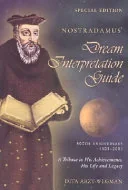
Nostradamus' Dream Interpretation Guide
 78
78

Nostradamus' Dream Interpretation Guide
Dietlinde Arzt-Wegman’s Nostradamus' Dream Interpretation Guide attempts to bridge the gap between the seer’s famous prophecies and the subconscious realm where, the book posits, they originated. The strength lies in its dedication to exploring Nostradamus’ personal dream journals, a less-trodden path than analyzing the quatrains alone. Arzt-Wegman carefully considers the symbolic lexicon Nostradamus might have employed, moving beyond superficial interpretations. However, the work’s limitation is its inherent difficulty in definitively verifying the direct causal link between specific dreams and specific prophecies. A passage discussing the symbolic meaning of water in Nostradamus' dreams, for instance, offers a compelling interpretation but remains speculative regarding its predictive accuracy for, say, the "King of the Mongols" mentioned in the quatrains. Ultimately, the book provides a fascinating, albeit unproven, hypothesis on the genesis of Nostradamus' foresight.
📝 Description
78
Dietlinde Arzt-Wegman's 2003 guide examines Nostradamus' dream records for predictive insight.
This volume looks at Michel Nostradamus' dream records as a source for his prophecies, going beyond his famous quatrains. It suggests that his dreams were not just psychological but a method for accessing foreknowledge. The book is for those interested in the historical roots of prophecy and Nostradamus' methods.
Arzt-Wegman places Nostradamus' dream practices within the 16th century's intellectual climate, which included astrology and alchemy. It connects his work to a wider Renaissance interest in divination. The guide considers how these dream practices fit into the religious and scientific views of his time.
The book details concepts like divine inspiration through dreams and Nostradamus' personal system of dream symbols. It also touches on themes of destiny and free will.
This book situates Nostradamus' dream interpretations within a tradition of visionary prophecy and symbolic language common in the Renaissance. It connects his practice to contemporaneous alchemical and astrological inquiries into hidden knowledge. The work suggests dreams served as a direct conduit for foresight, a concept explored in various mystical traditions that sought divine or intuitive access to future events. It examines how these practices were understood within the era's religious and scientific frameworks.
💡 Why Read This Book?
• Gain insight into Nostradamus’ personal dream lexicon, understanding how he might have translated subconscious imagery into prophetic statements, as detailed in Arzt-Wegman’s analysis of his journals. • Explore historical dream interpretation as a divinatory practice, learning how 16th-century thinkers like Nostradamus viewed dreams as direct conduits for foreknowledge, distinct from modern psychological theories. • Understand the potential connection between the subconscious and precognition, examining how the "divine inspiration" channeled through dreams could, according to the text, influence predetermined destiny.
⭐ Reader Reviews
Honest opinions from readers who have explored this book.
❓ Frequently Asked Questions
Did Nostradamus keep a dream journal?
Yes, the book 'Nostradamus' Dream Interpretation Guide' focuses significantly on interpreting Nostradamus' own dream records, suggesting he meticulously documented his nocturnal visions.
When was Nostradamus' Dream Interpretation Guide first published?
The guide was first published in 2003, compiled and interpreted by Dietlinde Arzt-Wegman, drawing from the original works of Michel Nostradamus.
What is the main focus of Nostradamus' Dream Interpretation Guide?
The book explores the hypothesis that Nostradamus' famous prophecies originated from his interpretations of his own dreams, delving into his dream journals for evidence.
Is this book about interpreting my own dreams?
While it offers insights into Nostradamus' method, the primary aim is to understand his process of dream interpretation as a source of prophecy, rather than a general guide for personal dream analysis.
What historical period does the book relate Nostradamus' dreams to?
The work connects Nostradamus' dream practices to the 16th century, a period of intense interest in astrology, alchemy, and occult knowledge across Europe.
Does the book claim Nostradamus could see the future?
The book explores the possibility that Nostradamus possessed foreknowledge, suggesting his dreams were a primary mechanism through which this prescience manifested.
🔮 Key Themes & Symbolism
Dreams as Divine Channels
The core thesis posits that Nostradamus' dreams were not mere subconscious wanderings but direct transmissions of divine knowledge. The work examines how he treated these visions as authoritative, using them as the raw material for his prophetic quatrains. This perspective places dream interpretation within a sacred, rather than purely psychological, framework, suggesting a conscious effort to decode heavenly messages for earthly benefit. The guide implies that the veil between the mundane and the prophetic was thinnest during sleep for Nostradamus.
Symbolic Dream Language
A significant aspect explored is Nostradamus' personal symbolic lexicon within his dreams. The guide suggests he developed a unique language of symbols—animals, natural phenomena, abstract shapes—each carrying a specific predictive meaning understood by him. This differs from universal dream symbolism, emphasizing a personalized system. The interpretation of these symbols is presented as the key to unlocking the prophetic content embedded within his nocturnal experiences, moving beyond simple one-to-one correspondences.
Precognition and Destiny
The book engages with the wide implications of precognition derived from dreams. It raises questions about whether events are predetermined, with Nostradamus acting as a reluctant conduit, or if his dreams offered insights into potential futures that could be altered. The work implicitly explores the tension between fate and free will, suggesting that understanding future patterns, even through dreams, might offer a form of agency or at least preparedness for humanity's trajectory.
The Seer's Method
This theme focuses on the practical methodology Nostradamus may have employed. It examines the process of recording, interpreting, and codifying dream content into prophetic verses. The guide suggests a disciplined approach, treating dream analysis as a rigorous intellectual and spiritual discipline. This contrasts with the popular image of the prophet as solely divinely inspired, highlighting the deliberate craft involved in translating visionary experiences into accessible, albeit cryptic, prophecies.
💬 Memorable Quotes
Direct passages from the work, attributed to the author.
“Dreams are the secret scriptures of the soul.”
— This interpreted concept highlights the book's view of dreams as possessing profound, hidden truths. It suggests that within the subconscious, much like sacred texts, lies a blueprint or foreknowledge waiting to be deciphered.
“Nostradamus sought divine guidance through the nocturnal visions.”
— This interpretation posits that the seer actively pursued prophetic insight via his dreams, viewing them as a direct channel for 'divine inspiration' rather than passive experiences.
“Each symbol in his dreams held a key to future ages.”
— This concept suggests that Nostradamus possessed a personal, esoteric dictionary where dream symbols corresponded to specific future events or epochs, making his dream journals predictive texts.
“The subconscious mind mirrors the unfolding destiny of the world.”
— This interpretation links the individual's inner world, as revealed in dreams, to the larger cosmic order and predetermined historical path, suggesting a macrocosm-microcosm relationship.
💡 Key Ideas
Editorial paraphrase of the work's core concepts — not direct quotes.
The patterns seen in sleep prefigure the events of waking life.
This paraphrased idea emphasizes the core argument that Nostradamus' dream visions were not random but directly correlated to future historical occurrences, serving as a predictive blueprint.
🌙 Esoteric Significance
Tradition
Nostradamus' work, including his dream interpretations, is firmly rooted in the Western Esoteric Tradition, drawing from Hermeticism, Kabbalah, and Renaissance Neoplatonism. It fits within the lineage of seers and prophets who believed in accessing hidden knowledge through altered states of consciousness. This tradition emphasizes the interconnectedness of the microcosm (human consciousness) and the macrocosm (the universe), viewing dreams as a bridge between these realms, facilitating 'divine inspiration' and foreknowledge.
Symbolism
The guide likely explores symbols such as animals (e.g., lions for royalty, serpents for deceit or wisdom), celestial bodies (sun for power, moon for cycles), and abstract forms, which Nostradamus reputedly used in his dreams. These symbols function not just psychologically but as divinatory keys, linking specific dream imagery to historical events or figures, much like alchemical or astrological iconography, revealing hidden patterns in time.
Modern Relevance
Contemporary interest in Nostradamus' dream interpretations reflects a resurgence in divination, lucid dreaming, and the exploration of consciousness. Modern practitioners of esoteric arts, psychologists interested in archetypal symbolism (drawing parallels to Jung), and historical researchers continue to analyze his methods. The work's focus on dreams as a source of precognition speaks to modern explorations into non-ordinary states of awareness and their potential predictive capacities.
👥 Who Should Read This Book
• Students of historical prophecy and divination seeking to understand the potential methodologies behind prophetic figures like Nostradamus. • Esoteric researchers interested in the role of dreams and subconscious imagery in accessing foreknowledge within the Western Esoteric Tradition. • Readers curious about 16th-century intellectual history, particularly the intersection of occult beliefs, astrology, and personal visionary experiences.
📜 Historical Context
Michel Nostradamus composed his prophecies during the tumultuous 16th century, a period marked by religious upheaval, the Renaissance's intellectual ferment, and widespread belief in astrology and divination. His work emerged in a climate where figures like Paracelsus were exploring alchemy and occult sciences, and astrological almanacs were popular. While Nostradamus gained significant fame, his methods were also subject to scrutiny. The book implicitly engages with the reception of his work by examining his dream journals, a less public aspect than his quatrains. Unlike contemporaries who focused solely on astrological charts, Nostradamus' reliance on dream interpretation presented a distinct approach to foreknowledge. The text situates his practice within the broader tradition of Western esotericism, which valued visionary experiences and symbolic interpretation.
📔 Journal Prompts
Nostradamus' symbolic dream lexicon: What recurring symbols appear in your own dreams, and what potential meanings do they hold?
The nature of divine inspiration: Reflect on moments where you felt a strong intuition or insight that seemed to come from beyond your conscious thought.
Dreams as prophecy: Consider a significant dream you've had; how might its imagery relate to events in your life or the wider world?
The seer's discipline: How can one cultivate a more attentive and interpretive relationship with their own dreams, treating them as sources of knowledge?
Destiny versus free will: Analyze how the concept of predetermined events, as potentially revealed in dreams, impacts your perception of personal choices.
🗂️ Glossary
Quatrain
A verse or stanza consisting of four lines. Nostradamus famously published his prophecies in quatrains, often cryptic and allegorical.
Divination
The practice of seeking knowledge of the future or the unknown by supernatural means. Nostradamus' methods, including dream interpretation, fall under this category.
Precognition
The ability to foresee future events. The book explores whether Nostradamus' dreams provided him with this capacity.
Esoteric
Intended for or likely to be understood by only a small number of people with a specialized knowledge or interest. Refers to hidden or secret knowledge.
Hermeticism
A religious, philosophical, and esoteric tradition based on writings attributed to Hermes Trismegistus, emphasizing spiritual enlightenment and the interconnectedness of all things.
Almanac
A publication containing astronomical information, predictions, and advice, popular in Nostradamus' era. He himself published almanacs alongside his prophecies.
Symbolic Lexicon
A personal or cultural system of symbols and their assigned meanings. The book suggests Nostradamus developed such a system for interpreting his dreams.
This book appears in 1 collection
🔮 Readers Also Liked
Browse all →









From the “Nostradamus” Collection
View all →



More Free Occult Philosophy Books
View all →