Santa Claus and the Law of Attraction
 78
78

Santa Claus and the Law of Attraction
Himanek's "Santa Claus and the Law of Attraction" offers a fresh, if somewhat conventional, take on manifestation narratives. The strength lies in its accessible premise: a woman struggling with holiday expectations finds a path to clarity through an old friend's reminder. This relatable scenario grounds the esoteric concepts effectively. The narrative wisely avoids overt proselytizing, instead allowing the protagonist's journey to illustrate the principles. However, the resolution feels a touch too neat; the shift in perspective, while central to the Law of Attraction, could benefit from more nuanced exploration of the internal work involved. The concept of a "friendly reminder" serving as the catalyst for profound change, while functional, might stretch credulity for some readers accustomed to more arduous internal shifts. Overall, it's a pleasant, if slight, holiday-themed parable on personal agency.
📝 Description
78
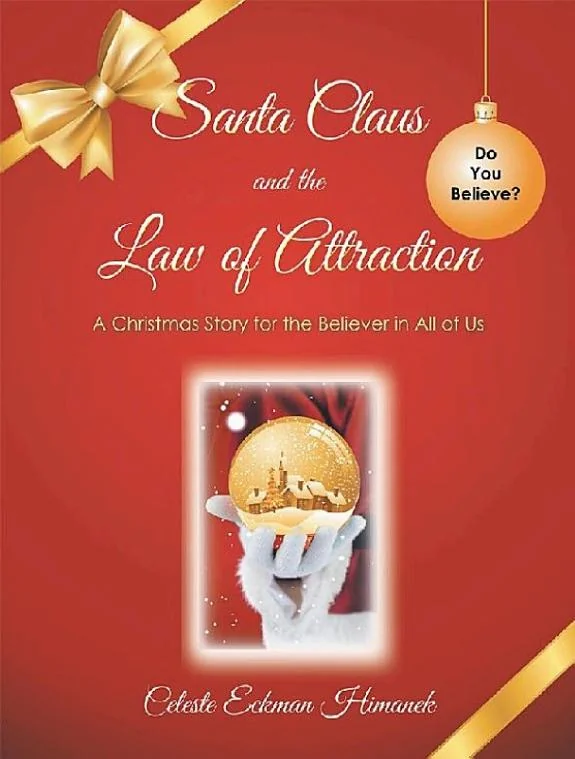
Published in 2019, Celeste Eckman Himanek's book connects holiday dissatisfaction to the Law of Attraction.
Celeste Eckman Himanek's "Santa Claus and the Law of Attraction" addresses recurring holiday disappointments. The story follows a woman who questions her ability to create a perfect Christmas, a struggle that intensifies through an encounter with an acquaintance. This interaction prompts her to re-evaluate her expectations and circumstances.
The book is for readers interested in personal development, spirituality, and holiday traditions, particularly those experiencing holiday stress or feeling their desires fail to manifest. It offers a relatable narrative with gentle guidance for self-reflection and applying universal principles. The work aims to make established New Thought ideas accessible within a modern holiday context.
This book draws on New Thought principles, a spiritual movement that gained prominence in the late 19th and early 20th centuries. Figures like Wallace Wattles and James Allen explored the power of thought and belief in shaping reality. Himanek applies these concepts, which suggest mental states directly influence experiences, to a contemporary holiday setting, aiming to show how individuals can consciously alter their circumstances through focused thought and feeling.
💡 Why Read This Book?
• Understand how to reframe holiday expectations by examining the protagonist's recurring Christmas disappointments, learning to identify thought patterns that may be hindering your own desired outcomes. • Apply the principle of "mental alchemy" as depicted in the story, exploring how shifting your internal focus from lack to gratitude can influence your external experiences, inspired by the narrative's core message. • Gain practical insight into manifesting desires by considering the "old friend's reminder" as a metaphor for accessing higher wisdom, a concept presented through the book's exploration of the Law of Attraction.
⭐ Reader Reviews
Honest opinions from readers who have explored this book.
❓ Frequently Asked Questions
What is the main message of Santa Claus and the Law of Attraction?
The book's central message is that your thoughts and beliefs shape your reality. It suggests that by consciously focusing on positive expectations and gratitude, particularly during the holidays, you can influence your experiences and move away from recurring disappointments.
When was Santa Claus and the Law of Attraction first published?
The book was first published on October 8, 2019, by Celeste Eckman Himanek.
Is this book suitable for children?
While it features Santa Claus, the themes of personal dissatisfaction and the Law of Attraction are geared towards adult readers interested in self-help and metaphysical concepts, not a typical children's holiday story.
What esoteric principles does the book explore?
It primarily explores principles related to the Law of Attraction, focusing on how one's mindset and beliefs can manifest desired outcomes, using the holiday season as a backdrop for illustrating these concepts.
Who is the author of Santa Claus and the Law of Attraction?
The author is Celeste Eckman Himanek, who first published the book in 2019.
How does the story connect Santa Claus to the Law of Attraction?
The book uses the familiar figure of Santa Claus as a symbolic representation of belief and the potential for receiving desired outcomes, framing the Law of Attraction within a context that evokes childhood wonder and the spirit of giving.
🔮 Key Themes & Symbolism
Holiday Disappointment Reframing
The narrative centers on a woman consistently experiencing less-than-ideal Christmases. This recurring theme of disappointment serves as the catalyst for her exploration of personal beliefs and expectations. The book suggests that rather than external circumstances, it is an internal recalibration, prompted by an 'old friend's reminder,' that is needed to alter her holiday experience, linking personal perception directly to manifestation.
Law of Attraction in Practice
Himanek illustrates the core tenets of the Law of Attraction through the protagonist's journey. The work posits that a focus on what is lacking or going wrong perpetuates negative cycles. By shifting focus towards gratitude and positive anticipation, even within the familiar context of Christmas traditions, one can begin to attract more favorable outcomes. The 'friendly reminder' acts as a conceptual key to unlocking this shift.
Symbolism of Santa Claus
Santa Claus, a figure associated with belief, generosity, and the fulfillment of wishes, is employed symbolically. The book integrates this iconic character not just as a holiday element but as a metaphor for the potential of receiving what one desires. The 'Most Wonderful Time of the Year' becomes a backdrop where the power of belief, akin to believing in Santa, is shown to be instrumental in manifesting personal desires.
Personal Agency and Expectation
A significant theme is the assertion of personal agency in shaping one's reality. The story implies that individuals are not passive recipients of fate, especially during festive periods. The protagonist's internal dialogue highlights how her expectations directly influence her experience. The narrative encourages readers to consider their own expectations and take ownership of their thoughts as a means to create more fulfilling experiences.
💬 Memorable Quotes
Direct passages from the work, attributed to the author.
“Why can’t she just have one Christmas that turns out right?”
— This recurring question expresses the protagonist's frustration and serves as the narrative's inciting incident. It highlights a common human experience of feeling stuck in a cycle of unmet expectations, particularly during times associated with heightened hope.
“It takes a reminder from an old friend to help her find the answer.”
— This points to the idea that wisdom or clarity often comes from external sources or unexpected connections. The 'old friend' acts as a catalyst, suggesting that guidance can appear when one is ready to receive it, facilitating a shift in perspective.
“Ancient wisdom gets served up in a new way.”
— This suggests the book reinterprets established philosophical or spiritual principles, such as the Law of Attraction, within a contemporary and relatable context, making timeless concepts accessible to modern readers.
“During what everyone reminds her is 'The Most Wonderful Time of the Year,' one woman is asking, yet again, why can’t she just have one Christmas that turns out right?”
— This highlights the contrast between societal expectations of holiday joy and an individual's personal experience of struggle, setting the stage for a narrative about internal beliefs influencing external reality.
“Take a new look at Christmas...and yourself.”
— This serves as a call to action, encouraging readers to re-evaluate their relationship with the holiday season and, more importantly, their self-perception and internal beliefs as the key to a more fulfilling experience.
🌙 Esoteric Significance
Tradition
The work aligns with the broader tradition of New Thought and metaphysical self-help, which gained prominence in the late 19th century. It draws heavily on the principle of mental alchemy – the idea that one's thoughts can transform circumstances – a concept central to Hermetic philosophy and later adapted by New Thought writers. While not explicitly Gnostic or Kabbalistic, it shares with these traditions an emphasis on inner knowledge and the power of consciousness to influence the material world.
Symbolism
Santa Claus functions as a potent symbol of belief and the potential for wish fulfillment. The 'Most Wonderful Time of the Year' serves as a symbolic period where heightened collective belief and expectation create fertile ground for manifestation. The 'old friend' acts as a symbolic guide, representing the inner wisdom or external synchronicity that helps individuals access their own creative power.
Modern Relevance
Contemporary practitioners of the Law of Attraction, life coaches focusing on mindset, and individuals interested in applying spiritual principles to everyday life find resonance in Himanek's accessible approach. The book's blend of a familiar holiday setting with manifestation principles makes it relevant to modern wellness culture and the ongoing interest in mindfulness and positive psychology applications.
👥 Who Should Read This Book
• Individuals experiencing holiday stress or disappointment who seek a fresh perspective on manifesting a more positive experience, inspired by the protagonist's journey. • Aspiring practitioners of the Law of Attraction interested in relatable narratives that illustrate core concepts like thought-form and belief, using the familiar Santa Claus archetype. • Readers exploring the intersection of spirituality and popular culture who appreciate contemporary stories that reinterpret established metaphysical principles for modern life.
📜 Historical Context
Published in 2019, Celeste Eckman Himanek's "Santa Claus and the Law of Attraction" arrived during a period of sustained popular interest in self-help and manifestation techniques, heavily influenced by the New Thought movement. This movement, which gained significant momentum in the late 19th and early 20th centuries through figures like Wallace Wattles and his 1910 book "The Science of Getting Rich," emphasizes the power of thought and belief in shaping reality. Himanek's work places these established concepts within a modern, relatable holiday narrative, diverging from the more overtly religious or philosophical texts that often define esoteric literature. While not directly engaging with a specific contemporary intellectual debate, the book taps into a broader cultural conversation about personal empowerment and the desire to actively create one's life circumstances. Its approach can be seen as a contemporary echo of the optimistic and individualistic spirit championed by early New Thought proponents.
📔 Journal Prompts
The protagonist's recurring Christmas disappointments: identify patterns in your own seasonal experiences.
The 'old friend's reminder': what insights have you received from unexpected sources?
Reflecting on 'The Most Wonderful Time of the Year': how does societal expectation contrast with your personal feelings?
The power of expectation: how might your beliefs about Santa Claus mirror your beliefs about receiving good things?
Applying 'ancient wisdom': how can you reframe a current challenge using principles of attraction?
🗂️ Glossary
Law of Attraction
A metaphysical principle suggesting that positive or negative thoughts bring positive or negative experiences into a person's life. It posits that like attracts like, and focusing energy on desired outcomes can manifest them.
Mental Alchemy
The concept, rooted in Hermetic philosophy and adapted by New Thought, of transforming one's mental state and beliefs to consequently transform one's external circumstances and reality.
Manifestation
The process by which an individual brings something tangible or intangible into their physical reality through conscious thought, belief, and focused intention.
The Most Wonderful Time of the Year
A commonly used phrase, often associated with the Christmas season, which the book uses to highlight the contrast between external societal expectations of joy and an individual's internal experience.
Old Friend's Reminder
A narrative device in the book representing a moment of clarity or insight, often prompted by an external source, that helps the protagonist understand and apply the principles of the Law of Attraction.
Personal Agency
The belief that individuals have the capacity to control their own actions and influence their own lives, a core theme explored through the protagonist's journey of self-reflection.
New Thought
A spiritual movement that emerged in the United States in the 19th century, emphasizing the power of positive thinking and the belief that the universe is mental and spiritual in nature.
This book appears in 1 collection
🔮 Readers Also Liked
Browse all →









From the “Law of Attraction” Collection
View all →




More Free Occult Philosophy Books
View all →