Cults, conspiracies, and secret societies

 81
81

Cults, conspiracies, and secret societies
Arthur Goldwag’s "Cults, Conspiracies, and Secret Societies" is less a lurid exposé and more a sober catalog of the hidden architectures of human belief and organization. Its strength lies in its sheer breadth, attempting to map the often-unseen connections between disparate groups and ideas that have captured the public imagination. The author’s meticulous approach in detailing the historical lineage of organizations, such as tracing the lineage of certain Masonic rituals or the foundational myths of the Illuminati, provides a solid factual grounding. However, the sheer volume of information can sometimes feel overwhelming, and at times, the work might benefit from a deeper engagement with the subjective experience of adherents to these groups, rather than solely focusing on their external manifestations and historical records. A particularly striking section details the evolution of anti-Masonic sentiment through the 19th century, showcasing how societal anxieties are projected onto secret groups. Ultimately, Goldwag provides a valuable, if dense, primer for understanding the enduring human fascination with the clandestine.
📝 Description
81
Arthur Goldwag's 2009 book examines clandestine groups and belief systems.
Published in 2009, Arthur Goldwag's "Cults, Conspiracies, and Secret Societies" analyzes groups and belief systems that have shaped history and continue to affect modern thought. The book dissects the origins, structures, and societal effects of organizations, from historical secret societies to contemporary conspiracy theories. It presents an analytical overview rather than sensationalism, considering the psychological, social, and political elements that foster their creation and persistence.
This work is useful for students of religion, political science, sociology, and history. It interests readers keen to understand the hidden forces influencing public events and established accounts. Those who wish to critically assess claims of secret groups, grasp the appeal of fringe movements, or trace the historical development of secret brotherhoods and their impact will find value in its pages.
This book engages with traditions that often operate outside mainstream discourse, examining groups that claim special knowledge or purpose. It connects to the study of historical secret societies, such as Freemasonry, Rosicrucianism, and various occult orders, which have long been subjects of fascination and speculation. By analyzing the mechanisms of secrecy, initiation, and shared belief, Goldwag's work situates these phenomena within broader patterns of human social and psychological organization, touching on how hidden narratives gain traction and influence.
💡 Why Read This Book?
• You will learn to distinguish between historical secret societies like the Knights Templar and modern conspiracy narratives, gaining a framework for analyzing claims about hidden power structures. • You will explore the historical evolution of concepts like the Illuminati, understanding their origins and how they have been reinterpreted across different eras and by various authors. • You will gain insight into the psychological and sociological reasons why individuals are drawn to cults and conspiracy theories, providing a lens through which to understand group dynamics and belief formation.
⭐ Reader Reviews
Honest opinions from readers who have explored this book.
❓ Frequently Asked Questions
What is the historical origin of the Illuminati as discussed in the book?
The book details the Bavarian Illuminati, founded by Adam Weishaupt in 1776, as a rationalist, anti-clerical Enlightenment organization that was eventually suppressed by the Bavarian authorities.
Does Arthur Goldwag's book cover Freemasonry?
Yes, "Cults, Conspiracies, and Secret Societies" extensively covers Freemasonry, examining its historical development, rituals, and the various conspiracy theories that have been attached to it over centuries.
When was "Cults, Conspiracies, and Secret Societies" first published?
Arthur Goldwag's "Cults, Conspiracies, and Secret Societies" was first published in 2009, offering a contemporary analysis of these topics.
How does the book differentiate between cults and other secret societies?
The work distinguishes cults by their often-charismatic leadership, high demand for conformity, and the potential for psychological manipulation, contrasting them with older, more established secret societies that may have different organizational goals and structures.
Does the book discuss modern online conspiracy theories?
Yes, the 2009 publication date means it addresses the burgeoning landscape of online information dissemination and how it facilitates the spread of conspiracy theories, even if the full scope of modern internet phenomena wasn't yet apparent.
What historical periods does the book primarily focus on?
While providing a broad overview, the book delves into significant periods such as the Enlightenment, the French Revolution, the Victorian era, and early 20th-century political movements to trace the lineage and impact of secret societies and conspiracy thinking.
🔮 Key Themes & Symbolism
The Illuminati Mythos
Goldwag meticulously unpacks the historical reality and subsequent mythological accretion surrounding the Bavarian Illuminati, founded by Adam Weishaupt in 1776. The work charts how this Enlightenment-era society, initially focused on reason and secularism, became a potent symbol in later conspiracy narratives, particularly those emerging in the late 18th and 19th centuries. It examines how the group's alleged survival and clandestine influence became a recurring trope, amplified by authors like Nesta Webster, illustrating the power of foundational myths in shaping collective anxieties about hidden control.
Freemasonry's Esoteric Architecture
The book offers a detailed exploration of Freemasonry, moving beyond simplistic portrayals to examine its ritualistic complexity and historical evolution. Goldwag traces the development of Masonic lodges from their operative roots to their speculative present, analyzing the symbolic language and allegorical narratives embedded within their ceremonies. It addresses the persistent conspiracy theories surrounding the fraternity, including its alleged links to other secret societies and its role in revolutionary movements, providing a balanced perspective on its historical significance and public perception.
Societal Anxieties and Conspiracy Formation
A central theme is the exploration of why societies become fertile ground for conspiracy theories and cult formation. Goldwag posits that these phenomena often arise from periods of social upheaval, rapid change, or widespread distrust in institutions. The work connects the appeal of secret societies and conspiracy narratives to fundamental human needs for order, meaning, and belonging, as well as the psychological tendency to seek external agents to explain complex or threatening events, particularly during times of uncertainty.
The Evolution of Secret Societies
Goldwag charts the historical trajectory of secret societies, from ancient mystery cults and medieval orders to modern fraternal organizations and fringe groups. The book highlights how the purpose, structure, and public visibility of these groups have transformed over time, often reflecting the dominant ideologies and anxieties of their respective eras. It examines how the concept of 'secrecy' itself has been deployed, sometimes as a genuine need for protection, other times as a rhetorical tool to foster exclusivity or evade scrutiny.
💬 Memorable Quotes
Direct passages from the work, attributed to the author.
“The Illuminati was a product of the Enlightenment, not a shadowy force manipulating it.”
— This statement captures Goldwag's approach: grounding historical groups in their specific contexts. It emphasizes that the Bavarian Illuminati, founded in 1776, was a product of its rationalist and secular intellectual milieu, rather than an inherently sinister, manipulative entity as later legends suggest.
“Conspiracy theories often provide simple answers to complex problems.”
— This interpretation highlights the psychological appeal of conspiracy thinking. The book suggests that in times of uncertainty or when facing overwhelming events, individuals may gravitate towards narratives that offer clear villains and straightforward explanations, even if those explanations are unfounded.
“The fear of hidden control is a recurring theme in human history.”
— This interpretation points to a persistent element across various secret societies and conspiracy theories discussed. It suggests that anxieties about unseen powers manipulating events are not new phenomena but rather enduring aspects of collective consciousness, often amplified during periods of societal stress.
“Cults often exhibit a high degree of social control over their members.”
— This statement, reflecting the book's analysis, differentiates cults from other groups. It points to the mechanisms of influence and conformity often employed by cult leaders to maintain authority and control over adherents' lives and beliefs.
💡 Key Ideas
Editorial paraphrase of the work's core concepts — not direct quotes.
Freemasonry's rituals are allegorical, not literal blueprints for world domination.
This paraphrased concept reflects Goldwag's effort to explain groups like the Freemasons. It underscores the book's argument that the symbolic and ritualistic aspects of such societies are primarily designed for internal instruction and fellowship, rather than serving as evidence for external conspiratorial aims.
🌙 Esoteric Significance
Tradition
While not strictly adhering to a single esoteric lineage, Goldwag's work engages with the historical manifestations and mythologies often associated with Western esotericism. It examines groups that have, at various times, been linked to Hermeticism, Gnosticism, and occult revival movements of the 19th and 20th centuries. The book functions as a critical historical survey, dissecting the claims and historical realities of organizations that have historically been repositories of esoteric knowledge or have been perceived as such by the public and by esoteric practitioners themselves.
Symbolism
The book frequently touches upon symbols and motifs central to various secret societies. For instance, the square and compasses are discussed in relation to Freemasonry, representing order, reason, and the building of a moral life. The eye of Providence, often associated with the Illuminati and broader conspiracy lore, is examined as a symbol of divine oversight or, in darker interpretations, hidden surveillance. These symbols, explored within their historical and cultural contexts, serve as focal points for understanding the visual language and allegorical frameworks employed by these clandestine or semi-clandestine groups.
Modern Relevance
In contemporary discourse, Goldwag's work remains relevant for understanding the persistent appeal of conspiracy theories and the dynamics of fringe groups. Thinkers and researchers examining online radicalization, the spread of disinformation, and the psychological underpinnings of belief in hidden cabals often reference the historical patterns Goldwag outlines. His analysis provides a foundational understanding for contemporary schools of thought that seek to deconstruct modern conspiracy narratives by tracing their historical antecedents and identifying recurring themes of secrecy, control, and societal anxiety.
👥 Who Should Read This Book
• Aspiring researchers of Western esotericism and secret societies: Gain a critical historical overview of influential groups like the Illuminati and Freemasonry, differentiating myth from historical fact. • Students of sociology and psychology interested in belief systems: Understand the social and psychological factors that drive individuals towards cults and conspiracy theories. • History enthusiasts curious about hidden influences: Explore how clandestine organizations and belief in secret plots have shaped historical events and societal anxieties across centuries.
📜 Historical Context
Published in 2009, Arthur Goldwag's "Cults, Conspiracies, and Secret Societies" emerged during a period of significant societal and technological shifts. The early 21st century saw the internet mature into a primary conduit for information and misinformation, dramatically accelerating the spread of conspiracy theories. This era followed events like the September 11th attacks, which themselves spawned numerous conspiracy narratives, and the increasing fragmentation of traditional media. Goldwag's work engaged with a public fascination fueled by popular culture portrayals of groups like the Illuminati and a growing distrust in established institutions. It provided a counterpoint to the often sensationalist and unsubstantiated claims proliferating online and in certain fringe publications. While not a direct engagement with a specific contemporary author, the book implicitly responded to the broader intellectual current of post-9/11 skepticism and the burgeoning field of online conspiracy studies, offering a more historically grounded perspective compared to the more speculative analyses prevalent at the time.
📔 Journal Prompts
The Illuminati's transition from Enlightenment society to conspiracy icon.
The symbolic language of Freemasonry as presented by Goldwag.
Societal anxieties that fuel the creation of conspiracy narratives.
The historical evolution of secret societies and their shifting purposes.
Examining the concept of 'hidden control' across different historical periods.
🗂️ Glossary
Bavarian Illuminati
An Enlightenment-era secret society founded by Adam Weishaupt in 1776 in Bavaria. It aimed to promote reason, secularism, and oppose superstition and state control, but was suppressed by authorities and later became a central figure in numerous conspiracy theories.
Freemasonry
A fraternal organization with origins in the late 16th to early 17th century, evolving from stonemasons' guilds. It is known for its rituals, symbolic teachings, and hierarchical structure, and has been the subject of much speculation and conspiracy theorizing.
Conspiracy Theory
An explanation for an event or situation that invokes a conspiracy by powerful and sinister groups, often political in motivation. These theories typically lack verifiable evidence and persist despite contradictory information.
Cult
A group or movement characterized by deviant beliefs and practices, often centered around a charismatic leader. Cults typically demand high levels of commitment and conformity, and can exert significant psychological control over members.
Esotericism
Teachings or practices concerned with mystical or supernatural truths, often intended for or understood by only a small number of people with specialized knowledge or initiation. It encompasses traditions like Hermeticism, Kabbalah, and Alchemy.
Enlightenment
An 18th-century intellectual and philosophical movement that dominated the world of ideas in Europe. It emphasized reason, individualism, skepticism towards traditional authority, and the pursuit of knowledge.
Nesta Webster
A British writer known for her books on history and conspiracy theories, particularly concerning the French Revolution and secret societies like the Illuminati. Her works were influential in popularizing certain conspiratorial narratives in the early 20th century.
🔮 Readers Also Liked
Browse all →









More by Arthur Goldwag
All books →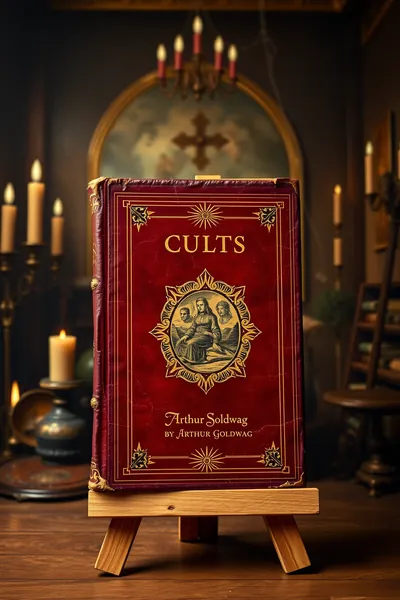

More Free Occult Philosophy Books
View all →