Plotinus
 74
74

Plotinus
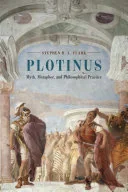
Stephen R. L. Clark’s examination of Plotinus offers a compelling counter-narrative to modern scholarship’s tendency to separate Plotinus’s philosophical rigor from his evocative imagery. Clark makes a strong case that the metaphors woven throughout the *Enneads* are not decorative but functional, acting as potent tools for spiritual ascent. He skillfully demonstrates how concepts like the procession from the One and the return to it are not just abstract doctrines but are experienced through the careful contemplation of Plotinus’s own allegorical constructions. A notable strength lies in Clark’s ability to translate complex philosophical ideas into accessible language, revealing the practical, almost therapeutic, dimension of Plotinian thought. The limitation, perhaps, is that while Clark champions the 'spiritual exercises' inherent in the imagery, the book itself is primarily an academic analysis rather than a practical guide, leaving the reader to infer the precise methods of application. The passage discussing the 'flight of the alone to the alone' and its reliance on metaphorical language is particularly insightful. Clark’s work is a valuable corrective, urging a more holistic reading of this foundational Neoplatonist.
📝 Description
74
Stephen R. L. Clark re-examines Plotinus's use of allegory in his 3rd-century philosophy.
Stephen R. L. Clark's study of Plotinus, the 3rd-century Roman philosopher, focuses on his allegorical language. Clark argues that Plotinus's myths, images, and metaphors were not simply literary devices. Instead, they were essential parts of his spiritual teaching. These elements acted as practical exercises, meant to guide practitioners toward self-transformation through contemplation. The book is for students and scholars of ancient philosophy, especially those interested in Neoplatonism's mystical aspects. It will also attract individuals involved in contemplative practices who want to understand the link between philosophy and spiritual achievement. Readers familiar with Plotinus's "Enneads" will find Clark's perspective particularly valuable.
Plotinus (c. 204-270 CE) established Neoplatonism in Rome, building on Plato's ideas with input from Aristotle and Stoicism. His student Porphyry compiled his teachings into the "Enneads," which significantly influenced Western philosophy and mysticism. Clark's book places his analysis within current scholarly discussions that have sometimes downplayed Plotinus's use of imagery, contrasting these views with older interpretations that saw the imagery as more central.
This book engages with Plotinus, a central figure in Neoplatonism, a philosophical system that profoundly influenced Western esotericism. Neoplatonism sought to understand the divine through intellectual ascent and mystical experience, often employing complex symbolic language. Clark's work addresses how Plotinus used imagery not just for exposition but as a tool for spiritual practice, aiming for direct experience of the divine. This aligns with esoteric traditions that view philosophical concepts as pathways to altered states of consciousness and union with the ultimate reality.
💡 Why Read This Book?
• Gain a new perspective on Plotinus's allegorical language, understanding its function as spiritual exercises, a key element in achieving self-transformation as discussed in Clark's analysis of Plotinus's work (c. 204-270 CE). • Learn how Plotinus’s metaphors and myths, often dismissed by scholars, are vital for the contemplative practice aimed at spiritual ascent, as detailed in Clark's examination of the *Enneads*. • Discover the practical application of Neoplatonic philosophy for personal growth, moving beyond abstract theory to the transformative potential inherent in Plotinus's symbolic system.
⭐ Reader Reviews
Honest opinions from readers who have explored this book.
❓ Frequently Asked Questions
What is Neoplatonism and who founded it?
Neoplatonism is a philosophical and mystical system that originated in the 3rd century CE. It is widely considered to have been founded by the Roman philosopher Plotinus, whose teachings were compiled by his student Porphyry in the *Enneads*.
When did Plotinus live?
Plotinus, the central figure of Neoplatonism, lived approximately from 204 to 270 CE, making his philosophical contributions a significant part of late antiquity.
How does Stephen R. L. Clark interpret Plotinus's imagery?
Clark argues that Plotinus's myths, images, and metaphors are not mere ornamentation but function as vital spiritual exercises designed to facilitate self-transformation through contemplation.
What was the primary goal of Plotinus's spiritual exercises?
According to Clark's interpretation, the primary goal was self-transformation achieved through dedicated contemplative practice, leading to a deeper understanding and union with the divine.
What is the significance of the 'Enneads'?
The *Enneads* are the collected writings of Plotinus, compiled and edited by his student Porphyry. They represent the foundational texts of Neoplatonism and have influenced Western philosophy and mysticism for centuries.
How does Clark's book differ from traditional scholarly views on Plotinus?
Clark's work challenges modern scholars who have dismissed Plotinus's imagery as ornamental, asserting instead that these elements are integral to his philosophy and contemplative practice.
🔮 Key Themes & Symbolism
Imagery as Spiritual Exercise
Clark highlights that Plotinus’s allegorical language, including myths and vivid metaphors, functions not as decorative prose but as active spiritual exercises. These are designed to guide the practitioner through a process of contemplation, enabling them to achieve the Neoplatonic ideal of self-transformation. The book posits that engaging with these images is essential for moving from intellectual understanding to embodied spiritual realization, a core tenet within later esoteric traditions that draw on Plotinian thought.
The Goal of Self-Transformation
Central to Plotinus's philosophy, and emphasized by Clark, is the aim of profound personal change through rigorous contemplation. This transformation involves aligning the individual soul with higher realities, ultimately seeking a union with the ultimate principle, the One. The book elucidates how Plotinus’s philosophical system, conveyed through his unique symbolic language, provides a roadmap for this internal metamorphosis, moving beyond mere ethical improvement to a spiritual reorientation.
Neoplatonism's Foundations
Stephen R. L. Clark’s work situates Plotinus as the important figure in the development of Neoplatonism, a philosophical school that profoundly influenced subsequent Western thought and mysticism. By focusing on the integral role of Plotinus’s imagery, the book offers a nuanced understanding of how this tradition built upon Platonic ideas, incorporating elements of Stoicism and Aristotelianism, to create a comprehensive metaphysical and spiritual system.
Contemplation and the Soul
The book explores Plotinus's emphasis on the soul's capacity for contemplation as the primary means of achieving spiritual insight and transformation. Clark details how Plotinus viewed the soul as capable of ascending through various levels of reality, from the material world to the divine Intellect (Nous) and ultimately towards the ineffable One. This contemplative path, facilitated by engaging with Plotinus's symbolic framework, is presented as the essential journey for the individual.
💬 Memorable Quotes
Direct passages from the work, attributed to the author.
“Plotinus’s images are vital spiritual exercises for self-transformation.”
— This statement captures Clark's central thesis: the allegorical and metaphorical language employed by Plotinus is not merely literary but serves a practical, pedagogical purpose in guiding individuals toward spiritual change.
“The aim is self-transformation through contemplation.”
— This highlights the ultimate objective of Plotinian philosophy as presented by Clark. It signifies a process of internal change and spiritual development achieved not through external actions but through deep, focused meditative practice.
“Modern scholars have often dismissed Plotinus’s images as ornamental.”
— Clark points to a prevailing trend in contemporary academic circles that overlooks the functional significance of Plotinus's symbolic language, thereby missing a crucial aspect of his philosophy and spiritual practice.
“The philosopher Plotinus created numerous myths, images, and metaphors.”
— This establishes Plotinus not just as a systematic philosopher but as a creator of rich symbolic narratives, emphasizing the literary and imaginative dimension of his work that Clark seeks to re-evaluate.
“Clark examines Plotinus’s vital set of spiritual exercises.”
— This signifies the core analytical approach of the book, focusing on how Plotinus's philosophical expressions are intended to be actively engaged with by the reader for personal spiritual development.
🌙 Esoteric Significance
Tradition
Plotinus is foundational to the Neoplatonic tradition, which itself is a central to Western Esotericism. While not explicitly 'Hermetic' in the tradition of Hermes Trismegistus, Neoplatonism shares core concerns with Hermeticism regarding divine emanation, the soul's journey, and the pursuit of gnosis (knowledge) leading to salvation or integration. Plotinus provided a highly influential philosophical framework for mystical and spiritual seeking that permeated later Hermetic revivals and esoteric orders.
Symbolism
Key symbols in Plotinus, explored through Clark's lens, include the journey of the soul, often depicted as a 'flight' or 'ascent' towards the ultimate reality, the One. The concept of 'The One' itself is a supreme symbol of undifferentiated unity beyond being. Another motif is the procession of existence from the One through Intellect (Nous) and Soul, a cosmological mythos that provides a symbolic map of reality and the soul's place within it.
Modern Relevance
Contemporary thinkers and practitioners in various esoteric and philosophical circles continue to draw from Plotinus. His ideas on consciousness, the nature of reality, and contemplative practice are relevant to modern psychological and spiritual exploration. Schools of thought focusing on consciousness studies, integral spirituality, and even certain strains of New Age philosophy find resonance in Plotinus's hierarchical cosmology and his emphasis on inner transformation through philosophical and mystical engagement.
👥 Who Should Read This Book
• Students of Ancient Philosophy: Those studying Plato, Aristotle, and the development of Western metaphysical thought will find a crucial link in Plotinus, illuminated by Clark's focus on his symbolic pedagogy. • Contemplative Practitioners: Individuals engaged in meditation, mindfulness, or other contemplative disciplines seeking a philosophical grounding for their practice will benefit from understanding Plotinus's methods. • Scholars of Esotericism: Researchers exploring the roots of Western mystical traditions will find this work essential for grasping the Neoplatonic underpinnings of many later esoteric systems.
📜 Historical Context
Plotinus (c. 204-270 CE) was an important figure in late antique philosophy, establishing Neoplatonism in Rome. His teachings, compiled posthumously by Porphyry in the *Enneads*, represented a sophisticated synthesis of Platonic thought, influenced by Aristotle and Stoicism. This intellectual milieu also included Gnosticism, a rival spiritual movement offering different paths to salvation. Plotinus sought to systematize and elevate Platonic metaphysics, emphasizing the ascent of the soul towards the One. While his influence was immense, shaping Christian theology (Augustine), Jewish mysticism, and Islamic philosophy, his use of imagery sometimes drew critique. For instance, later rationalist traditions occasionally found his mystical pronouncements obscure. This book engages with modern scholarship that has sometimes separated Plotinus's metaphysics from his poetic and symbolic expressions, arguing for their inherent connection.
📔 Journal Prompts
The soul's ascent: How does Plotinus's concept of the soul's journey mirror personal growth experiences?
Plotinus's use of imagery: Identify a metaphor from the book and analyze its potential as a spiritual exercise.
Self-transformation: Reflect on the goal of achieving self-transformation as advocated by Plotinus.
The One: Consider the implications of contemplating an ultimate principle beyond being.
Contemplation's role: How can dedicated contemplative practice lead to deeper self-understanding?
🗂️ Glossary
Neoplatonism
A philosophical and mystical system originating in the 3rd century CE, primarily associated with Plotinus. It synthesizes Platonic ideas with other philosophical and religious elements, emphasizing the emanation of reality from a supreme, ineffable One.
The One
In Plotinus's philosophy, the ultimate, transcendent principle from which all reality emanates. It is beyond being, thought, and description, representing absolute unity and perfection.
Nous (Intellect)
The second hypostasis in Plotinus's system, emanating from the One. It is the area of Forms or Ideas, the divine Mind that contains the intelligible world and contemplates the One.
Soul
The third hypostasis, emanating from Nous. The soul connects the intelligible realm with the sensible world, possessing both rational and irrational aspects, and has the capacity for contemplation and ascent.
Enneads
The collection of philosophical treatises written by Plotinus, compiled and edited by his student Porphyry. It is the primary source for understanding Plotinus's thought.
Self-transformation
The process of profound personal change and spiritual development, a central aim in Plotinus's philosophy, achieved through philosophical inquiry and contemplative practice.
Spiritual Exercises
Practices or methods, often involving contemplation and engagement with symbolic language, aimed at achieving spiritual insight, purification, and transformation, as interpreted by Clark in Plotinus's work.
This book appears in 1 collection
🔮 Readers Also Liked
Browse all →









From the “Neoplatonism” Collection
View all →





More Free Occult Philosophy Books
View all →