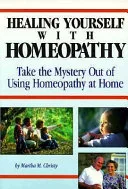
Healing Yourself with Homeopathy
 79
79

Healing Yourself with Homeopathy
Martha M. Christy’s "Healing Yourself with Homeopathy" offers a refreshingly direct exposition of homeopathic practice, a welcome counterpoint to the often esoteric jargon surrounding alternative medicine. Its strength lies in its unpretentious clarity, making complex ideas accessible to the layperson. The section detailing the preparation of remedies, while brief, provides a concrete understanding of the process. However, the book's limitation is its brevity; for more serious or chronic conditions, the guidance can feel somewhat generalized, necessitating further study or professional consultation. The concept of the 'vital force' as the target of homeopathic intervention is presented compellingly, though without deeper exploration. Ultimately, it functions best as an introductory primer rather than a comprehensive materia medica.
📝 Description
79
Martha M. Christy's 1994 book offers practical homeopathic methods for self-healing.
Martha M. Christy's "Healing Yourself with Homeopathy" provides a guide to using homeopathic principles for personal health. Published in 1994, the book suggests natural remedies as an alternative to conventional pharmaceuticals. It operates on the idea that the body can heal itself when given the right energetic support. This book is for people interested in natural health, self-care, and non-invasive treatments. Readers who want to understand how illness and healing work on an energetic level will find it particularly useful. It aligns with a growing interest in holistic health approaches that emerged in the late 20th century, moving away from solely drug-based solutions.
This work is part of the late 20th-century revival of homeopathy, a system developed by Samuel Hahnemann in the late 18th century. It connects to broader spiritual and philosophical movements that explore vitalism and energetic medicine. Homeopathy itself suggests a form of subtle energy or life force within the body that can be stimulated to restore balance. Christy's book makes these ideas accessible to a general audience interested in natural healing and self-empowerment.
💡 Why Read This Book?
• Learn the core principle of "like cures like" (similia similibus curentur), a foundational tenet of homeopathy since its development by Samuel Hahnemann, enabling you to understand how remedies are chosen based on symptom similarity. • Gain insight into the concept of "potentization," the unique method of preparing homeopathic remedies through dilution and succussion, as described in the book, to grasp the energetic basis of these medicines. • Discover practical applications for common ailments, providing a drug-free avenue for self-care that aligns with the holistic health movements gaining prominence since the book's original publication in 1994.
⭐ Reader Reviews
Honest opinions from readers who have explored this book.
❓ Frequently Asked Questions
What is the primary principle behind homeopathy as explained in Martha M. Christy's book?
The book explains the central tenet of homeopathy: 'like cures like' (similia similibus curentur). This means a substance that causes symptoms in a healthy person can be used in a highly diluted form to treat similar symptoms in an ill person.
Can 'Healing Yourself with Homeopathy' be used for serious illnesses?
While the book aims to provide instructions for curing common and serious illnesses without drugs, it is generally recommended for acute conditions or as a supportive therapy. For severe or chronic diseases, consulting a qualified homeopath is advised.
When was 'Healing Yourself with Homeopathy' first published and by whom?
The book was first published in 1994. The author is Martha M. Christy, who sought to offer straightforward guidance on homeopathic healing.
What does 'potentization' mean in the context of this book?
Potentization refers to the homeopathic process of preparing remedies through serial dilution and succussion (vigorous shaking). The book explains this method as a way to enhance the energetic properties of a substance.
Does the book offer specific remedy recommendations?
Yes, the book provides specific instructions and likely mentions common remedies for various conditions, aiming to empower readers with practical self-treatment knowledge based on homeopathic principles.
Is this book suitable for someone completely new to homeopathy?
Absolutely. The book is designed to be straightforward and simple, making it an ideal starting point for individuals unfamiliar with homeopathy who wish to learn about drug-free healing methods.
🔮 Key Themes & Symbolism
Similia Similibus Curentur
The a core part of homeopathic philosophy, "like cures like," is thoroughly explored. Christy elucidates how substances causing specific symptoms in a healthy individual can, in highly diluted and potentized forms, alleviate similar symptoms when administered to a sick person. This principle, central since Samuel Hahnemann's work, is presented as the rational basis for selecting remedies, moving beyond symptomatic suppression towards stimulating the body's own healing mechanisms.
Potentization and Energetic Medicine
The book clarifies the process of potentization, detailing the serial dilution and succussion that characterize homeopathic remedy preparation. It frames homeopathy not as a material medicine but as an energetic one, suggesting that the process imbues the remedy with a vital force capable of influencing the body's energetic state. This concept challenges conventional materialistic views of health and disease.
Holistic Self-Care
A primary theme is the empowerment of individuals to manage their health through natural means. Christy advocates for a drug-free approach, positioning homeopathy as a tool for achieving balance and well-being without the side effects often associated with pharmaceutical drugs. The book encourages a proactive stance toward health, emphasizing the body's inherent ability to heal.
Individualized Symptomatology
The importance of the individual's unique symptom picture is highlighted. Homeopathy, as presented, requires a detailed understanding of a person's specific physical, mental, and emotional manifestations of illness. This contrasts sharply with generalized treatments, underscoring the personalized nature of homeopathic prescribing and the holistic view of the patient.
💬 Memorable Quotes
Direct passages from the work, attributed to the author.
“The body's innate capacity for healing is remarkable.”
— This sentiment underscores the book's core philosophy: that true healing comes from within, stimulated by appropriate remedies, rather than imposed from outside by suppressive drugs.
“Homeopathy treats the whole person, not just the disease.”
— This highlights the holistic nature of the practice, emphasizing that remedies are chosen based on a comprehensive symptom profile, encompassing physical, mental, and emotional states.
“Dilution and succussion unlock the energetic essence of a substance.”
— This interpretation explains the process of potentization, framing it as a method to transform a physical substance into a potent energetic medicine.
“Empower yourself with drug-free healing knowledge.”
— This serves as a call to action, promoting the book's aim to equip readers with the understanding and confidence to utilize homeopathy for their well-being.
💡 Key Ideas
Editorial paraphrase of the work's core concepts — not direct quotes.
Like cures like – a principle as old as nature.
This paraphrased concept points to the foundational law of similars, suggesting its natural basis and long-standing presence in healing traditions predating modern pharmacology.
🌙 Esoteric Significance
Tradition
Homeopathy, while often presented as a medical system, possesses deep roots in vitalist philosophies that align with various esoteric traditions. Its emphasis on an unseen "vital force" or "life energy" echoes concepts found in Hermeticism, Theosophy, and Chinese Traditional Medicine. Christy's work, by focusing on energetic remedies and the principle of "like cures like," taps into this lineage of understanding healing through energetic correspondences rather than purely material interactions.
Symbolism
The core principle of "like cures like" (similia similibus curentur) functions as a potent symbol of energetic resonance and sympathetic magic. The process of potentization itself, involving serial dilution and succussion, can be seen as a symbolic act of refining and amplifying an essence, akin to alchemical processes of purification and transformation. The remedy's specific symptom picture symbolizes the energetic pattern of the illness, allowing for a mirrored energetic interaction.
Modern Relevance
Christy's accessible guide continues to resonate with contemporary practitioners of holistic health, natural medicine, and energy healing. It informs current discussions around personalized medicine and the microbiome's role in health, albeit from a different theoretical framework. Thinkers and practitioners exploring psychosomatic connections and the energetic basis of well-being often reference the foundational principles of homeopathy that this book makes available.
👥 Who Should Read This Book
• Individuals seeking drug-free alternatives for common health concerns, who want to understand the basic principles and practical application of homeopathy for self-care. • Aspiring students of natural medicine and holistic healing modalities, looking for an introductory text that explains foundational concepts like potentization and the law of similars. • Those interested in the history of alternative therapies and the intellectual currents of the late 20th century, seeking to understand the resurgence of interest in vitalist and energetic approaches to health.
📜 Historical Context
Published in 1994, Martha M. Christy's "Healing Yourself with Homeopathy" emerged during a period of significant global interest in alternative and complementary medicine. The late 20th century witnessed a growing skepticism towards conventional pharmaceutical practices, fueled by concerns over side effects and a desire for more natural healing modalities. Homeopathy, a system developed by German physician Samuel Hahnemann in the late 18th century, experienced a notable revival, with authors like Christy contributing to its popularization. This era saw the rise of figures like Andrew Weil, who championed integrative approaches, and the proliferation of books on natural health. While established medical institutions often viewed homeopathy with skepticism, its adherents pointed to its long history and perceived efficacy, particularly in contrast to the more interventionist methods of allopathic medicine.
📔 Journal Prompts
The principle of potentization and its energetic implications.
Homeopathic symptom pictures versus pharmaceutical symptom suppression.
Martha M. Christy's approach to the vital force.
The historical context of homeopathy in the 1990s.
Self-care strategies derived from the 'like cures like' principle.
🗂️ Glossary
Similia Similibus Curentur
Latin for 'like cures like,' this is the fundamental principle of homeopathy, stating that a substance causing symptoms in a healthy person can treat similar symptoms in an ill person.
Potentization
The homeopathic process of preparing remedies through serial dilution and succussion (vigorous shaking), believed to increase the energetic potency of the original substance.
Vital Force
An animating principle or life energy believed in vitalist philosophies to govern living organisms. Homeopathy posits that disease is a disturbance of this force.
Materia Medica
A comprehensive reference book detailing the medicinal properties of substances used in healing, particularly in homeopathy, listing symptoms they are known to treat.
Succussion
The vigorous shaking or striking of a diluted homeopathic remedy, performed between each dilution step during the potentization process.
Allopathic Medicine
A term used by homeopaths to describe conventional Western medicine, often characterized by treatments that oppose the symptoms of a disease (e.g., using drugs to suppress fever).
Hahnemannian Homeopathy
Homeopathy practiced according to the principles and methods established by its founder, Samuel Hahnemann, emphasizing individualization and potentization.