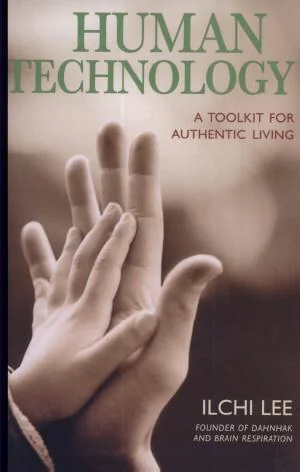
Human Technology
 82
82

Human Technology
Ilchi Lee's Human Technology attempts to map a path to authentic living through a set of twelve maxims. The book's core strength lies in its direct challenge to external authority regarding personal experience; Lee firmly places the reins of creation in the reader's hands. This is a refreshing antidote to much self-help literature that can feel prescriptive. However, the work sometimes suffers from a lack of concrete elaboration on the mechanisms behind these maxims. For instance, the concept of 'living a life of creation' is presented powerfully, but the practical steps to enacting this on a consistent basis could benefit from more detailed exploration. Lee’s assertion that 'Each of us is the specialist of our own lives' is a potent starting point. While the maxims themselves are clear, their integration into daily practice remains somewhat abstract. Ultimately, Human Technology offers a valuable philosophical stance but could deepen its utility with more granular guidance.
📝 Description
82
Ilchi Lee's 2005 book, Human Technology, proposes a framework for living authentically through twelve core maxims.
Human Technology, published in 2005, presents a practical guide for living an authentic and creative life. Ilchi Lee's work is not based on abstract theories but on the idea that individuals are the ultimate authorities of their own experience. The book distills this philosophy into twelve core maxims, offering actionable principles for self-mastery and purposeful existence. Lee argues that true living is a continuous act of creation, and understanding these maxims leads to a more fulfilling reality. This book is for individuals seeking to actively shape their reality rather than passively accept circumstances. It speaks to those who feel a disconnect between their inner aspirations and outer actions, and who are searching for practical tools to bridge that gap. Readers interested in personal development, existential philosophy, and the practical application of spiritual principles will find resonance here.
Published in 2005, Human Technology emerged during a period of increased interest in Eastern philosophies in Western contexts. While other works focused on presence and self-awareness, Lee's book offers a more directive, action-oriented approach. It challenges a tendency towards external validation and reliance on external systems, advocating instead for an internal, self-generated technology for living. The book speaks to a broader discourse on mindfulness and personal agency, positioning self-authorship as a key to a fulfilling life.
💡 Why Read This Book?
• Gain a practical framework for self-authorship, learning how to apply Ilchi Lee's twelve maxims to take direct control of your life's narrative, moving beyond passive existence. • Understand the concept of 'human technology' as a personal system for creation, enabling you to actively shape your reality rather than merely reacting to it, a core idea from the 2005 publication. • Develop a mindset where you are the ultimate specialist of your own experience, fostering inner authority and reducing reliance on external validation, a key principle emphasized throughout the book.
⭐ Reader Reviews
Honest opinions from readers who have explored this book.
❓ Frequently Asked Questions
What is the core philosophy behind Ilchi Lee's 'Human Technology'?
The core philosophy is that each individual is the ultimate expert on their own life and possesses the inherent ability to create their reality. 'Human Technology' refers to the internal principles and practices one uses to live authentically and purposefully.
How many maxims are presented in Human Technology?
The book, first published in 2005, presents twelve distinct maxims designed as guiding principles for authentic living and self-mastery.
Is this book primarily theoretical or practical?
While rooted in a philosophical outlook, 'Human Technology' is intended as a practical guide. It offers actionable principles and encourages readers to apply these maxims to their daily lives for tangible results.
Who is Ilchi Lee and what is his background?
Ilchi Lee is an author and educator known for his work in mind-body wellness and personal development. He founded the global Brain Education movement, focusing on holistic health and consciousness expansion.
What does 'living a life of creation' mean in the context of this book?
It means actively and intentionally shaping your experiences, thoughts, and actions rather than passively being shaped by external circumstances. It's about taking ownership and being the conscious architect of your life.
Does the book offer specific exercises or just principles?
The book primarily outlines twelve maxims, which are principles for living. While it encourages application, the emphasis is on understanding and internalizing these concepts as a personal 'technology' for living.
🔮 Key Themes & Symbolism
Self-Authorship
The central theme is the radical idea that each person is the sole and ultimate authority on their own human experience. This challenges the common reliance on external experts, societal norms, or even spiritual gurus to define what is real or true for oneself. Lee argues that true growth and fulfillment come from recognizing and embracing this inherent expertise. The twelve maxims presented serve as tools to cultivate this self-authorship, empowering readers to navigate their lives with confidence and integrity, acting as the primary creators of their personal reality.
The Act of Creation
Human Technology frames existence not as a passive state but as an ongoing act of creation. The book posits that our internal states—thoughts, beliefs, and intentions—directly influence and manifest our external reality. Living authentically, therefore, means consciously engaging in this creative process. This involves understanding the principles that govern this manifestation and applying them deliberately. It's about shifting from being a spectator of one's life to being the active artist, shaping experiences with intention and awareness, thereby transforming the very fabric of one's existence.
Authentic Living
Authenticity, within the context of Human Technology, is defined by living in alignment with one's inner truth and inherent capabilities. It means shedding societal conditioning and external expectations that obscure one's true nature. The twelve maxims are presented as a pathway to this authenticity, guiding individuals to tap into their innate wisdom and power. This involves a commitment to self-discovery and self-expression, leading to a life that feels genuine, purposeful, and deeply fulfilling. It's about living from a place of inner authority rather than external compliance.
Personal Expertise
Lee fundamentally asserts that no one can be an 'expert' on another person's lived experience. This notion of personal expertise is crucial to the book's philosophy. It encourages a deep respect for one's own inner knowing and subjective reality. Rather than seeking external validation or instruction manuals for life, individuals are urged to trust their own insights and intuitions. This concept empowers readers to take responsibility for their choices and growth, fostering a sense of internal competence and self-reliance, which are cornerstones of genuine human development.
💬 Memorable Quotes
Direct passages from the work, attributed to the author.
“There is no expert for human experience.”
— This statement directly challenges the notion of external authorities dictating personal truth. It underscores the book's central theme of self-authorship and the inherent validity of individual consciousness.
“Each of us is the specialist of our own lives.”
— This reinforces the idea of personal expertise, asserting that no one can know your inner world or lived experience better than you can. It's a call to embrace self-reliance and inner authority.
“Human technology is about living a life of creation.”
— This defines the core purpose of the principles offered. It frames life not as something to be endured, but as an active, ongoing process of conscious creation and shaping.
“The work explores 12 human technology maxims for authentic living.”
— This concisely describes the structure and aim of the book, highlighting the twelve guiding principles intended to foster genuine and purposeful existence.
“Authentic living is about living a life of creation.”
— This links the concepts of authenticity and creation, suggesting that a truly genuine life is one that is actively and intentionally shaped by the individual.
🌙 Esoteric Significance
Tradition
While not strictly adhering to a single lineage, *Human Technology* draws from traditions that emphasize inner mastery and the power of consciousness, reminiscent of certain Hermetic principles concerning the axiom 'As above, so below' and the mind's role in shaping reality. It also echoes Gnostic ideas of inherent divine spark within the individual, urging self-knowledge as the path to liberation. Lee's work departs from rigid dogma, offering a more pragmatic, accessible interpretation focused on the practical application of mental and energetic principles for daily life.
Symbolism
The primary symbolic motif is the concept of 'technology' itself, recontextualized from the mechanical to the internal. This suggests a structured, learnable, and applicable system for living. The number twelve, representing the maxims, often carries symbolic weight in esoteric traditions (e.g., twelve apostles, twelve signs of the zodiac), implying completeness or a full cycle of principles. While not overtly discussed, the idea of the individual as a 'specialist' can be seen as symbolizing the awakened consciousness, uniquely qualified to navigate its own inner landscape.
Modern Relevance
The principles articulated in *Human Technology* resonate with contemporary movements in positive psychology, neuro-linguistic programming (NLP), and modern manifestation techniques. Thinkers and practitioners who focus on the power of thought, intention, and self-efficacy find Lee's emphasis on personal creation and expertise highly relevant. The book's direct, non-prescriptive approach aligns with a growing distrust of external authorities and a desire for accessible, actionable tools for personal transformation in the digital age.
👥 Who Should Read This Book
• Individuals seeking practical tools for self-empowerment who are tired of passive advice and want to actively shape their lives. • Students of consciousness and personal development looking for frameworks that emphasize internal authority and the mind's role in creation. • Those exploring existentialism or philosophies of self-authorship who wish to connect these ideas to tangible, daily practices.
📜 Historical Context
Ilchi Lee's *Human Technology*, first published in 2005, emerged in a cultural landscape increasingly interested in mindfulness, personal development, and Eastern philosophies, yet often seeking external validation. This period saw figures like Eckhart Tolle gaining significant traction with works like *The Power of Now* (1997), which focused on presence and transcending the ego. Lee's work, however, offered a more directive framework, presenting 'human technology' as a set of actionable maxims rather than solely emphasizing passive observation. It stood in contrast to more passive spiritual approaches by advocating for active creation. The book appeared during a time when Western societies were grappling with the perceived alienation of modern life and a growing desire for self-empowerment, making its emphasis on individual expertise and creative living particularly relevant. While not directly engaging with a specific contemporary author in the text itself, its philosophy implicitly countered the reliance on prescriptive self-help models prevalent at the time.
📔 Journal Prompts
The twelve maxims as a framework for personal creation.
Reflecting on the concept of being the 'specialist of my own life'.
Identifying instances where external 'experts' influenced my experience.
How the principle of 'living a life of creation' manifests in my daily actions.
Exploring the personal meaning of 'authentic living' beyond societal expectations.
🗂️ Glossary
Human Technology
A set of principles or maxims that an individual consciously uses to understand, direct, and create their own life experiences authentically.
Authentic Living
Living in accordance with one's true inner nature and inherent capabilities, free from undue external influence or conditioning.
Life of Creation
A state of existence where an individual actively and intentionally shapes their reality through their thoughts, intentions, and actions, rather than passively experiencing it.
Specialist of Our Own Lives
The concept that each individual is the ultimate and most qualified authority on their own personal experiences, feelings, and perceptions.
Maxims
Fundamental principles or rules of conduct presented in the book, serving as guiding tenets for achieving authentic and creative living.
Internal Authority
The recognition and utilization of one's own inner wisdom, intuition, and judgment as the primary source for decision-making and self-understanding.
Self-Authorship
The process and state of taking full responsibility for one's life narrative, choices, and experiences, acting as the primary author of one's reality.
This book appears in 1 collection
🔮 Readers Also Liked
Browse all →









From the “Acupuncture” Collection
View all →






More Free Occult Philosophy Books
View all →