Plotinus

 77
77

Plotinus
Gerson's treatment of Plotinus avoids the hagiography that often surrounds such influential figures. Instead, it presents a clear, analytical dissection of Plotinus's philosophical architecture, particularly the intricate emanationist cosmology. The strength lies in its meticulous tracing of Plotinus's arguments, especially concerning the relationship between The One, Intellect, and Soul. A limitation, however, is the occasional density of the prose, which can obscure the experiential dimension that Plotinus himself emphasized. The section detailing the ascent of the soul, while intellectually rigorous, might leave readers yearning for more direct engagement with Plotinus’s own descriptions of mystical union. It serves as an indispensable guide for understanding the philosophical framework, even if the ecstatic heights remain somewhat abstracted.
📝 Description
77
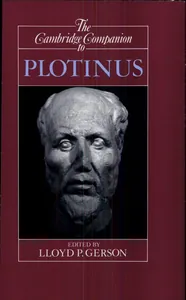
Lloyd P. Gerson's 2019 study examines Plotinus's complex philosophical system in its 3rd century CE context.
This book provides a detailed look at the Neoplatonic philosopher Plotinus, assessing his importance in ancient Greek metaphysics. Gerson traces the development of Plotinus's thought, placing it within the intellectual currents of the 3rd century CE. The study breaks down Plotinus's metaphysical structure, which describes reality as a hierarchy flowing from an ineffable principle called The One.
Scholars of ancient philosophy, students of Western esotericism, and those interested in the roots of mystical thought will find this work useful. It aims for a thorough academic grasp of Plotinus's impact, going beyond simple interpretations to discuss his ontological and epistemological arguments. Readers familiar with classical studies or comparative religion will find the analysis particularly thorough.
Plotinus worked in Rome during the 3rd century CE, developing his philosophy amid a revival of Plato's ideas and Gnostic thought. His teachings, recorded by Porphyry in the Enneads, represent a significant moment in late antique philosophy. This era featured considerable intellectual exchange, with thinkers like Porphyry and later Iamblichus building on or departing from Plotinus's system. His work served as a vital link between classical Platonism and later Christian, Islamic, and Jewish mystical traditions.
Plotinus's philosophy is central to Neoplatonism, a school of thought that profoundly shaped Western esoteric traditions. His concept of a divine, ineffable One from which all reality emanates provided a metaphysical framework for mystical experiences across various cultures. The Enneads, his collected works, became a cornerstone text for those seeking direct experience of the divine, influencing Gnostic traditions, Hermeticism, and later medieval and Renaissance mystical movements. His ideas on spiritual ascent and the soul's return to its source continue to resonate within occult philosophy.
💡 Why Read This Book?
• Gain a precise understanding of the Neoplatonic concept of The One, as articulated by Plotinus, learning how it differs from simpler notions of unity. • Grasp the three primary hypostases—The One, Intellect (Nous), and Soul (Psyche)—and their dynamic relationship within Plotinus's emanationist cosmology, as detailed in the text. • Explore the philosophical underpinnings of the soul's ascent towards The One, understanding the intellectual and ethical preparation required, a central theme in Plotinus's Enneads.
⭐ Reader Reviews
Honest opinions from readers who have explored this book.
❓ Frequently Asked Questions
What is Plotinus's concept of 'The One'?
The One is Plotinus's term for the ultimate, supreme principle of reality. It is entirely transcendent, beyond existence, thought, and description. All other reality emanates from it in a hierarchical cascade.
Who was Porphyry in relation to Plotinus?
Porphyry was Plotinus's most devoted student. He compiled and organized Plotinus's teachings into the collection known as the Enneads, preserving his master's philosophical legacy for posterity.
What are the main stages of emanation in Plotinus's philosophy?
Plotinus describes reality emanating from The One in three primary stages: The One itself, Intellect (Nous) which contains the Forms, and Soul (Psyche) which animates the material universe.
What is the goal of the philosophical life according to Plotinus?
The ultimate goal is the return of the individual soul to its source, The One. This is achieved through purification, contemplation, and ultimately, ecstatic union or henosis.
When did Plotinus live and teach?
Plotinus lived and taught in the 3rd century CE, primarily in Rome. His philosophical activity spanned roughly from the mid-3rd century until his death around 270 CE.
How did Plotinus influence later philosophical and religious thought?
Plotinus's Neoplatonism profoundly shaped Christian theology (e.g., Augustine, Pseudo-Dionysius), Islamic philosophy (e.g., Al-Farabi), and various esoteric traditions throughout the Middle Ages and Renaissance.
🔮 Key Themes & Symbolism
The Primacy of The One
The core of Plotinus's metaphysics is the absolute transcendence of The One. This principle is not a god in the conventional sense, but the ultimate source from which all multiplicity arises through a process of 'emanation.' It is beyond being, beyond thought, and utterly simple. Understanding The One requires moving beyond conceptual frameworks, a challenging yet central tenet for initiates seeking to grasp the foundational reality of existence as Plotinus envisioned it. The work meticulously details why this concept is distinct from Aristotelian prime movers or Platonic Forms.
Emanation and Hierarchy
Plotinus posits a descending hierarchy of reality, originating from The One. The first emanation is Intellect (Nous), the field of the Platonic Forms and pure thought. From Intellect arises Soul (Psyche), which bridges the intelligible and sensible worlds. Finally, Soul produces the material world, which is the furthest removed from The One and characterized by limitation and multiplicity. This structured outflow explains the existence of the cosmos and the interconnectedness of all things, a concept vital for understanding later Gnostic and Hermetic cosmologies.
The Ascent of the Soul
The purpose of human existence, for Plotinus, is the return journey of the soul towards The One. This ascent involves intellectual purification, ethical living, and philosophical contemplation. It culminates in a state of ecstatic union (henosis), a direct, non-conceptual experience of The One. The work explores how this spiritual goal influenced ascetic practices and mystical aspirations across various philosophical and religious movements, particularly within the Neoplatonic tradition initiated by Plotinus himself.
The Nature of Reality
Plotinus offers a radical reinterpretation of reality, distinguishing sharply between the intelligible realm (The One, Intellect, Soul) and the sensible, material world. The material world is not inherently evil but is the furthest possible extension from The One, characterized by formlessness and potentiality. The work examines how this dualistic yet interconnected view of reality provided a metaphysical framework that profoundly influenced subsequent Western thought, offering an alternative to purely materialistic or dualistic explanations.
💬 Memorable Quotes
Direct passages from the work, attributed to the author.
“The One is not anything.”
— This statement highlights the radical transcendence of Plotinus's ultimate principle. The One is beyond all categories of being and predication, existing in a state of absolute simplicity that defies conventional philosophical description.
“All things are... looking towards The One.”
— This suggests a fundamental orientation within all of existence towards its source. Even the lowest forms of reality retain an unconscious striving or reflection of The One, driving the process of emanation and return.
“Intellect is the place of Forms.”
— This succinctly defines the second hypostasis in Plotinus's system. Intellect (Nous) is the realm where the Platonic Forms exist as divine thoughts, constituting the archetypal blueprint for the cosmos.
“Soul is the image of Intellect.”
— This positions Soul (Psyche) as a derivative and less perfect reality than Intellect. It acts as the intermediary, animating the material world and reflecting the Forms from the higher realm.
💡 Key Ideas
Editorial paraphrase of the work's core concepts — not direct quotes.
The goal is to become like The One.
This paraphrases the ultimate aim of the spiritual journey in Plotinus's philosophy: the soul's return to its source through assimilation to the divine nature, achieved via contemplation and purification.
🌙 Esoteric Significance
Tradition
Plotinus is a foundational figure in Western Esotericism, particularly within the Neoplatonic tradition. His system provided a metaphysical framework that deeply influenced Hermeticism, Gnosticism (despite his critiques), and later Renaissance magical and philosophical currents. While not strictly adhering to a single pre-existing esoteric lineage, his work synthesized and reinterpreted Platonic philosophy in a manner that resonated with mystical and contemplative aspirations, offering a sophisticated cosmology that explained the divine source and the path of return.
Symbolism
Key symbols in Plotinus's thought include 'The One' itself, representing absolute unity and the ineffable source; the 'Intellect' (Nous), often associated with divine Mind or the field of Forms; and 'Soul' (Psyche), the animating principle that connects the spiritual and material. The concept of 'emanation' is also symbolic, representing the natural, unforced outflowing of reality from its divine origin, akin to light radiating from a source.
Modern Relevance
Contemporary thinkers and practitioners in fields ranging from comparative mysticism to consciousness studies draw upon Plotinus. His ideas on the nature of consciousness, the hierarchy of being, and the possibility of direct experience of ultimate reality continue to inform spiritual seekers and academic discourse. Schools of modern Neoplatonism and various contemplative traditions explicitly reference Plotinus's Enneads as a primary source for understanding the relationship between the human soul and the divine.
👥 Who Should Read This Book
• Students of Ancient Philosophy: Those seeking a rigorous academic understanding of the development of Platonic thought beyond Plato himself, particularly its metaphysical and epistemological dimensions. • Seekers of Mystical Traditions: Individuals interested in the origins of Western contemplative practices and the philosophical underpinnings of mystical union, as described in Plotinus's concept of henosis. • Comparative Religion Scholars: Researchers examining the cross-pollination of ideas in late antiquity, specifically how Plotinus's system interacted with and influenced early Christian thought and other philosophical schools.
📜 Historical Context
Plotinus was a key figure in the revival of Platonic philosophy during the 3rd century CE, a period characterized by intense philosophical and religious ferment. His teachings, compiled by Porphyry in the Enneads, synthesized Platonic metaphysics with elements from Pythagoreanism and Stoicism, creating a comprehensive system that would become known as Neoplatonism. This intellectual milieu also included the burgeoning Gnostic movements, which offered alternative cosmological and soteriological narratives. While Plotinus engaged critically with Gnosticism, his own system provided fertile ground for later esoteric interpretations. His work directly influenced subsequent generations of philosophers, including Porphyry himself, Iamblichus, and later, through Latin translations and commentaries, figures like Marius Victorinus and Augustine of Hippo, making him a central bridge between classical antiquity and the Middle Ages.
📔 Journal Prompts
The emanation of Intellect from The One: How does this concept challenge conventional notions of causality?
The soul's journey towards The One: What intellectual or ethical practices might prepare one for this ascent?
Plotinus's view of the material world: How does its derivative nature affect its perceived reality?
The concept of henosis: What are the philosophical implications of achieving union with the ineffable?
Porphyry's role in preserving Plotinus's work: Reflect on the significance of textual transmission for philosophical ideas.
🗂️ Glossary
The One
The ultimate, supreme principle in Plotinus's philosophy. It is transcendent, ineffable, and the source from which all reality emanates. It is beyond being and all conceptual categories.
Intellect (Nous)
The first emanation from The One. It is the field of pure thought, containing the Platonic Forms. It is characterized by duality (thought and object of thought) but is still purely intelligible.
Soul (Psyche)
The second major emanation, arising from Intellect. It bridges the intelligible and sensible worlds, animating the cosmos and individual beings. It possesses both higher, rational aspects and lower, vegetative functions.
Emanation
The process by which reality flows or proceeds from The One in a hierarchical manner. It is an irreversible outflow, where each subsequent level is less perfect than its source.
Henosis
The ultimate goal of the spiritual life for Plotinus: ecstatic union with The One. It is a non-dual, direct experience that transcends ordinary consciousness and conceptual thought.
Forms
The archetypal ideas or essences of all things, residing within the field of Intellect (Nous). They are the perfect patterns that subsequent realities imperfectly reflect.
Matter
In Plotinus, matter is the furthest extension from The One, characterized by formlessness and privation. It is the principle of limitation and multiplicity in the sensible world.
🔮 Readers Also Liked
Browse all →









More by Lloyd P. Gerson
All books →



More Free Occult Philosophy Books
View all →