The Cambridge Companion to Plotinus
 84
84

The Cambridge Companion to Plotinus
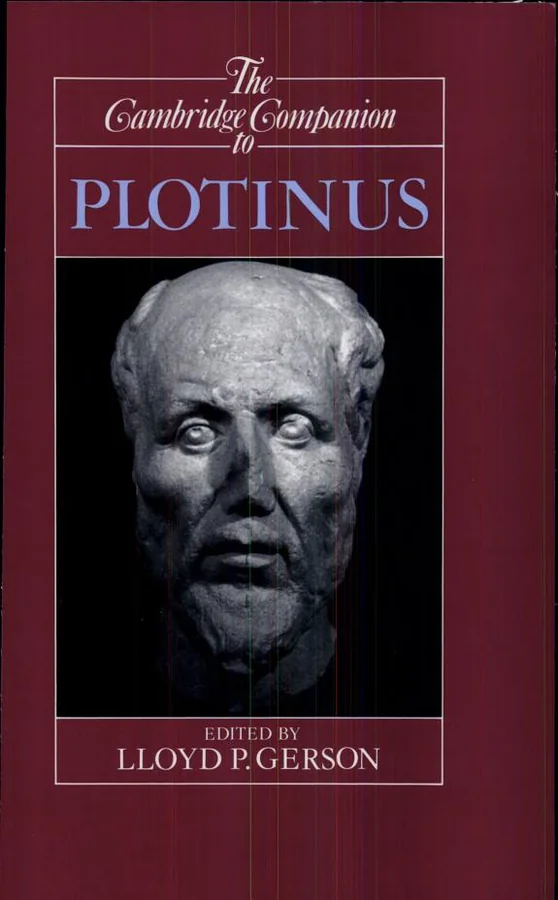
Lloyd P. Gerson’s edited collection, *The Cambridge Companion to Plotinus*, provides a dense but rewarding exploration of the foundational figure of Neoplatonism. The strength of this volume lies in its breadth; sixteen distinct voices tackle Plotinus’ complex system, offering specialized insights into areas like his metaphysics of the One and his ethical framework. One particularly illuminating section details the concept of 'henosis', or mystical union, explaining it not as a loss of self but as a cognitive apprehension of the divine. However, the collection’s academic rigor, while admirable, can also be a limitation. The essays are dense, often assuming significant prior knowledge of ancient philosophy, making it less accessible for the absolute novice. The absence of a dedicated chapter on Plotinus’ reception in medieval Islamic thought, a crucial area of influence, is a noticeable omission. Despite these points, the companion serves as an indispensable resource for serious students of Plotinus.
📝 Description
84
Published in 1996, *The Cambridge Companion to Plotinus* gathers essays from sixteen scholars on Plotinus and Neoplatonism.
This volume provides a detailed examination of Plotinus, the 3rd-century CE philosopher, and his system of Neoplatonism. Sixteen scholars contribute essays that address specific components of Plotinus' thought, moving beyond a singular interpretation to show current scholarly discussions. The collection covers the relationship between the One, Intellect (Nous), and Soul, as well as Plotinus' views on matter, ethics, and mystical union. It situates Plotinus within late antique philosophy, tracing his connections to Platonism and his later influence on Christian, Islamic, and Jewish traditions. The essays also consider his immediate philosophical environment and his teacher, Porphyry.
Readers will find discussions on Plotinus' theories concerning evil and aesthetics, alongside his unique approach to achieving a spiritual connection. The book aims to clarify the systematic structure of his philosophy. It is designed for those with a serious interest in the origins of mystical thought and the development of Western metaphysics. A basic understanding of ancient philosophy is recommended for full engagement with the text.
Plotinus stands as a central figure in the development of Neoplatonism, a philosophical system that profoundly influenced esoteric thought for centuries. His concept of emanation from a transcendent One, and the subsequent hierarchy of Intellect and Soul, provided a framework for understanding spiritual realities and the soul's journey back to its source. This tradition offered a sophisticated metaphysical basis for various mystical practices and worldviews that sought direct experience of the divine. The ideas discussed in this companion have resonance within hermeticism, gnosticism, and the contemplative traditions of Abrahamic religions, demonstrating the reach of Plotinus' intellectual legacy.
💡 Why Read This Book?
• Understand the Neoplatonic doctrine of the Three Hypostases—The One, Intellect (Nous), and Soul—as detailed in chapters discussing Plotinus' metaphysical structure, gaining clarity on emanation and return. • Grasp the concept of 'henosis' (mystical union) as presented within the context of Plotinus' ethical and epistemological theories, moving beyond simplistic notions of ecstatic fusion. • Explore Plotinus' philosophical engagement with Gnosticism and its implications, as discussed in the historical context sections, understanding his unique position relative to contemporary movements.
⭐ Reader Reviews
Honest opinions from readers who have explored this book.
❓ Frequently Asked Questions
When was Plotinus active as a philosopher?
Plotinus lived and taught in the 3rd century CE, primarily in Rome. His philosophical activity dates roughly from the mid-3rd century, with his teachings compiled posthumously by his student Porphyry into the Enneads.
What is the primary text attributed to Plotinus?
The primary text is the Enneads, a collection of 54 treatises organized by Plotinus' student Porphyry. These writings cover the entirety of Plotinus' philosophical system, Neoplatonism.
Who was Porphyry in relation to Plotinus?
Porphyry was Plotinus' most famous student and editor. He compiled and organized Plotinus' lectures and writings into the Enneads, providing essential commentary and biographical information in his 'Life of Plotinus'.
What is the 'One' in Plotinus' philosophy?
The 'One' is the supreme, ultimate principle in Plotinus' metaphysics. It is beyond being, thought, and description, the source from which all reality emanates.
How does Plotinus view the origin of evil?
Plotinus views evil not as a positive force but as a privation or absence of good, intrinsically linked to matter, which represents the furthest remove from the divine 'One'.
What philosophical tradition influenced Plotinus most significantly?
Plotinus is the most prominent figure of Neoplatonism, a school of thought deeply rooted in the philosophy of Plato, but significantly developing and reinterpreting Platonic ideas.
🔮 Key Themes & Symbolism
The Emanation of the One
This collection examines Plotinus' doctrine of the One, the ineffable ultimate reality from which all existence emanates. It details how the One, without diminishing itself, gives rise to Intellect (Nous) and then Soul, forming a hierarchical structure of being. The essays explore the philosophical necessity and implications of this emanationist cosmology, distinguishing it from simple creation myths and emphasizing its role in understanding the divine source of all phenomena.
The Triad of The One, Intellect, and Soul
Central to Neoplatonism, the triad of The One, Nous (Intellect), and Psyche (Soul) is meticulously analyzed. The companion elucidates the distinct functions and relationships of these hypostases. Intellect contains the Platonic Forms, and Soul acts as the intermediary between the intelligible and sensible realms. Understanding this structure is key to Plotinus' metaphysics and his account of reality's unfolding.
Matter and the Problem of Evil
The book addresses Plotinus' controversial views on matter, often described as inherently 'bad' or a principle of limitation. Essays explore his argument that evil is not a substance but a privation, a falling away from the Good, and how matter represents the furthest point of this departure. This perspective is crucial for understanding the Neoplatonic explanation for the existence of imperfection in the cosmos.
The Ascent to The One (Henosis)
A significant theme is the Neoplatonic path of spiritual and intellectual ascent towards union with The One, known as 'henosis'. The companion discusses the practices and philosophical insights Plotinus proposed, involving purification, contemplation, and ultimately, a non-discursive, ecstatic encounter. This mystical dimension highlights the practical and experiential aims of Plotinus' philosophy.
💬 Memorable Quotes
Direct passages from the work, attributed to the author.
“Intellect (Nous) contemplates the Forms.”
— This highlights Plotinus' view of the second hypostasis. Intellect is the area of pure thought, where the eternal Platonic Forms reside not as separate entities but as the very content of divine thought.
“Soul is the bridge between the intelligible and sensible worlds.”
— This concept describes the Soul's mediating role. It receives the Forms from Intellect and informs the material world, animating bodies and providing a connection to higher realities.
“Union with the divine is a cognitive apprehension.”
— This interpretation emphasizes that Plotinus’ concept of mystical union (henosis) is not merely emotional but an intellectual and spiritual realization of one's ultimate source, a form of knowing through being.
💡 Key Ideas
Editorial paraphrase of the work's core concepts — not direct quotes.
The One is not anything, but is the source of all.
This paraphrase captures Plotinus' assertion that the ultimate reality, The One, transcends all categories of being and predication. It is the absolute ground of existence, from which everything else derives its reality, yet it possesses no attributes itself.
Evil is the absence of Good.
This paraphrase reflects Plotinus' doctrine of privation. Evil does not possess independent existence but arises from a lack or deficiency of being and goodness, particularly associated with matter.
🌙 Esoteric Significance
Tradition
Plotinus is the progenitor of Neoplatonism, a philosophical system profoundly influential on Western esoteric traditions. While rooted in Plato, Neoplatonism developed distinct metaphysical and mystical doctrines that became foundational for Hermeticism, Gnosticism (though Plotinus critiqued some Gnostic views), and later medieval and Renaissance occult philosophy. Its emphasis on emanation from an ineffable One and the soul's ascent towards it provides a metaphysical framework for many esoteric paths seeking direct experience of the divine.
Symbolism
Key symbols include the 'One' itself, representing absolute unity and transcendence beyond conceptual grasp. 'Light' and 'darkness' are implicitly used to describe the process of emanation and the nature of matter as absence. The 'emanation' from the One is often symbolized by outflowing light or water from a source, depicting reality's unfolding without diminishing the origin. The 'Nous' (Intellect) can be seen as a starry sky of Forms, and the Soul as a chariot driver guiding its steeds.
Modern Relevance
Contemporary esoteric thinkers and practitioners across various traditions, including some branches of Western Hermeticism, ceremonial magic, and consciousness studies, draw upon Neoplatonic concepts. Plotinus’ ideas on the structure of reality, the nature of the soul, and the possibility of direct spiritual experience continue to inform modern explorations of consciousness, metaphysics, and the pursuit of transcendence. His work provides a sophisticated philosophical underpinning for many contemporary mystical and spiritual inquiries.
👥 Who Should Read This Book
• Advanced students of ancient philosophy and classics seeking a scholarly introduction to Plotinus' complex system, benefiting from essays by leading academics. • Aspiring practitioners of Western esoteric traditions who wish to understand the philosophical roots of concepts like emanation, the soul's journey, and mystical union. • Comparative religion scholars interested in the development of late antique thought and its influence on subsequent mystical movements across different cultures and faiths.
📜 Historical Context
Published in 1996, *The Cambridge Companion to Plotinus* emerged during a robust period of academic interest in Plotinus and Neoplatonism. The late 20th century saw continued scholarly efforts to situate Plotinus within the philosophical field of late antiquity, moving beyond earlier, often esoteric, interpretations. The collection engages with the intellectual currents of the 3rd century CE, a time when philosophy sought to reconcile Platonic thought with new metaphysical inquiries, often in dialogue with Stoicism and nascent Gnostic systems. Key contemporaries and influences, such as Plato himself and Plotinus’ student Porphyry, are central to understanding his work. The reception of Plotinus has been vast, influencing thinkers from Augustine to modern philosophers, though specific contemporary engagements discussed within this volume often focus on academic peers and predecessors like Iamblichus.
📔 Journal Prompts
The nature of the One's transcendence beyond being.
Plotinus' conception of matter as privation.
The role of Intellect (Nous) in containing the Forms.
The Neoplatonic understanding of the Soul's descent and ascent.
The relationship between Plotinus' ethics and his metaphysics.
🗂️ Glossary
Neoplatonism
A philosophical system originating with Plotinus in the 3rd century CE, building upon and significantly developing Plato's ideas. It posits an ultimate, ineffable reality ('The One') from which all existence emanates through successive levels.
The One
The supreme principle in Plotinus' philosophy, the ultimate source of all reality. It is absolutely simple, transcendent, and beyond all description or conceptualization.
Nous (Intellect)
The second hypostasis in Plotinus' system, emanating from The One. It is the area of pure thought, containing the Platonic Forms as its content.
Psyche (Soul)
The third hypostasis, emanating from Nous. It acts as the intermediary between the intelligible realm (Nous) and the sensible, material world, animating bodies and possessing both rational and irrational faculties.
Henosis
The Neoplatonic concept of mystical union or ecstatic apprehension of The One. It represents the ultimate goal of the soul's spiritual ascent.
Matter
In Plotinus' philosophy, matter is seen as the furthest point from The One, characterized by privation, limitation, and absence of form and goodness. It is the principle of individuation and potential evil.
Enneads
The collection of 54 philosophical treatises written by Plotinus, compiled and organized posthumously by his student Porphyry. It is the primary source for understanding Plotinus' thought.
This book appears in 1 collection
🔮 Readers Also Liked
Browse all →








From the “Neoplatonism” Collection
View all →





More Free Occult Philosophy Books
View all →