Evocation of Spirits
 82
82

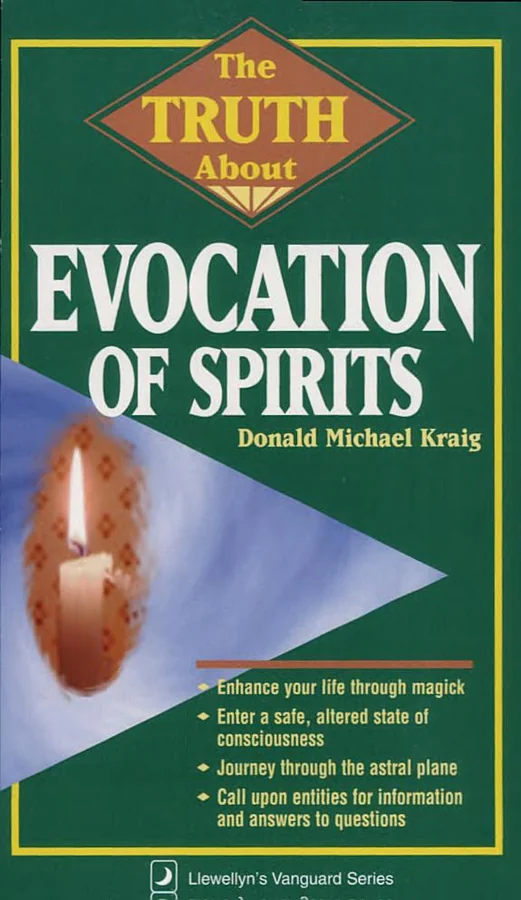
Evocation of Spirits
Donald Michael Kraig’s "Evocation of Spirits" cuts through the arcane fog with a refreshing directness. Its primary strength lies in its accessible methodology, which eschews the theatrical elements often found in grimoire traditions. Kraig argues convincingly that the operator's focused will and understanding are paramount, a perspective that grounds the practice. However, the book's brevity, while a strength for accessibility, sometimes leaves the reader wanting deeper exploration of the psychological underpinnings or historical variations. A passage discussing the "traps and things to waste your time" in ancient grimoires, for instance, highlights this practical focus but could benefit from more specific examples of these pitfalls. Ultimately, "Evocation of Spirits" offers a clear, no-nonsense primer for those ready to engage with spirit evocation pragmatically.
📝 Description
82
Donald Michael Kraig's 1995 book, Evocation of Spirits, offers a direct method for communicating with non-physical entities.
Donald Michael Kraig's "Evocation of Spirits" aims to demystify the practice of spirit communication. The book asserts that elaborate rituals or altered states are not prerequisites for genuine contact, focusing instead on fundamental principles. It strips away the sensationalism often surrounding spirit evocation, presenting a practical and unadorned approach. This work is for serious students of esoteric arts who seek a clear, actionable guide. Many find existing instructions confusing or overly complex; Kraig's text provides a welcome alternative. Beginners and intermediate practitioners will find valuable foundational knowledge within its pages. The book emphasizes understanding the nature of spirits, the operator's will, and clear intention. It breaks down the process into manageable steps, prioritizing mental discipline over complex paraphernalia. Kraig seeks to make the seemingly arcane accessible through a pragmatic philosophy.
Emerging in an era influenced by figures like Aleister Crowley and Dion Fortune, Kraig's text from the early 1990s offered a simpler, grounded approach to Western Esotericism. While occult literature of the time was often dense and tradition-bound, "Evocation of Spirits" provided an alternative to more ceremonial magic prevalent then. It focused on core principles rather than complex systems, seeking to make spirit communication accessible.
💡 Why Read This Book?
• You will learn a direct, unadorned method for spirit evocation, focusing on operator intent rather than elaborate rituals, as detailed in Kraig's practical approach. • Gain an understanding of the historical misdirections within grimoires, allowing you to identify and bypass time-wasting elements as discussed in the book's critique. • Discover the essential role of mental discipline and focused will, concepts central to Kraig's accessible framework for communicating with non-physical entities.
⭐ Reader Reviews
Honest opinions from readers who have explored this book.
❓ Frequently Asked Questions
What is the core difference between Kraig's evocation method and traditional grimoire practices?
Kraig's method emphasizes focused intent and psychological preparedness over the complex rituals, specific timings, and elaborate apparatus often found in traditional grimoires. He suggests these traditional elements are often unnecessary distractions.
Does Donald Michael Kraig's 'Evocation of Spirits' require special equipment?
No, the book explicitly states that fancy apparatus is not needed for evocation. The focus is on the operator's inner state and will, rather than external tools.
Is 'Evocation of Spirits' suitable for beginners?
Yes, the book is designed to be practical and accessible, stripping away complexity. It aims to make evocation understandable and achievable for those new to the subject.
What historical periods or figures influenced 'Evocation of Spirits'?
While not explicitly detailing influences, the book addresses traditional grimoires and the broader occult landscape of the mid-20th century, a period influenced by earlier figures in Western Esotericism.
What are 'traps' in ancient grimoires according to Kraig?
Kraig refers to elements within ancient grimoires that are designed to waste the practitioner's time or lead them astray, often through unnecessary complexity or misdirection, hindering direct communication.
What is the primary goal of evocation as presented by Donald Michael Kraig?
The primary goal is to achieve direct communication with non-physical entities through focused will and understanding, demystifying the process and making it practically achievable without sensationalism.
🔮 Key Themes & Symbolism
Pragmatic Evocation
This work champions a no-nonsense approach to spirit evocation, contrasting sharply with the often convoluted methods found in older grimoires. Kraig emphasizes that effective communication with non-physical entities hinges on the practitioner's focused intention and psychological clarity, rather than elaborate ceremonies or mystical paraphernalia. The text aims to clarify the process, presenting it as an achievable skill grounded in understanding and will, stripping away sensationalism and unnecessary complexity to reveal the practical core.
Critique of Grimoire Traditions
Kraig critically examines the historical lineage of grimoires used for spirit evocation, identifying elements he considers to be traps or time-wasting diversions. This perspective suggests that many traditional texts are obscured by layers of ritualistic complexity that do not contribute to genuine contact. The book encourages practitioners to discern essential principles from extraneous details, promoting a more direct and efficient path to understanding and interaction.
The Operator's Will
Central to Kraig's philosophy is the power and importance of the individual practitioner's will. The book posits that the operator's focused intent is the primary engine for successful evocation. This emphasis shifts the locus of power from external rituals or divine intermediaries to the internal capacity of the magician. It underscores the psychological and energetic alignment required for effective communication with spirits.
Direct Communication
The overarching theme is the possibility of direct, unmediated communication with spirits. "Evocation of Spirits" seeks to remove the barriers—both perceived and actual—that prevent individuals from engaging in this practice. By presenting a streamlined methodology, the book empowers readers to attempt communication with an understanding of its fundamental requirements, fostering a sense of agency and direct experience.
💬 Memorable Quotes
Direct passages from the work, attributed to the author.
“many of the things you've seen in novels or movies aren't needed: no fancy apparatus, no hypnotic trances.”
— This highlights Kraig's central argument that sensationalized portrayals of spirit evocation are misleading. He asserts that practical, effective communication relies on internal focus rather than external spectacle or altered states of consciousness.
“evoking spirits becomes something you can do.”
— This phrase captures the book's empowering and accessible tone. It suggests that spirit evocation is not an unattainable mystical art but a practical skill that can be learned and applied through diligent effort and clear understanding.
“You'll discover what evocation really is.”
— This promises a revelation of the core principles behind spirit evocation, implying that common understandings are flawed or incomplete. The book aims to provide a foundational, accurate definition and methodology.
“ancient grimoires describing it are full of traps and things to waste your time.”
— This critical perspective suggests that historical texts on evocation often contain misleading or overly complicated elements. Kraig's work intends to help practitioners navigate these historical texts more effectively by identifying essential truths.
💡 Key Ideas
Editorial paraphrase of the work's core concepts — not direct quotes.
With this small book, evoking spirits becomes something you can do.
This paraphrased concept emphasizes the book's conciseness and practicality. It assures the reader that by studying this specific work, the seemingly arcane art of spirit evocation can be approached with confidence and competence.
🌙 Esoteric Significance
Tradition
Kraig's work aligns with the Western Esoteric tradition, particularly its Hermetic and ceremonial magic branches, but with a distinct emphasis on practical application and psychological focus. It departs from purely ritualistic or devotional approaches by prioritizing the operator's internal state and direct will. While acknowledging historical grimoires, it seeks to distill their essence, offering a more streamlined path that appeals to modern occultists looking for efficacy over elaborate tradition.
Symbolism
While "Evocation of Spirits" focuses heavily on practical methodology rather than overt symbolism, the core 'symbols' are the operator's focused intention and the conceptual space of communication. The 'spirit' itself, whether viewed as an external entity or an aspect of the psyche, functions symbolically as a point of contact and exploration. The absence of elaborate symbols in Kraig's direct method can be seen as symbolizing the stripping away of extraneous elements to reach a fundamental truth of interaction.
Modern Relevance
Contemporary practitioners of Western Esotericism, particularly those interested in practical magic and psychological approaches, often find Kraig's directness appealing. His emphasis on intention and minimal ritual appeals to modern occultists who seek efficient methods, sometimes drawing parallels with psychological techniques or minimalist magical practices. The book serves as a foundational text for those questioning the necessity of complex ceremonial frameworks.
👥 Who Should Read This Book
• Aspiring practitioners of Western Esotericism seeking a clear, foundational understanding of spirit evocation without the complexity of dense historical grimoires. • Students of comparative occultism interested in diverse approaches to spirit communication, contrasting Kraig's pragmatic method with more traditional ceremonial practices. • Individuals exploring the psychology of magic and consciousness who are interested in how focused will and intention can be applied to esoteric practices.
📜 Historical Context
Published in 1951, Donald Michael Kraig's "Evocation of Spirits" emerged during a period of continued fascination with esoteric subjects in the West, following the peak of the Theosophical and Golden Dawn movements. While figures like Aleister Crowley had already introduced radical reinterpretations of ceremonial magic, Kraig's work offered a deliberately stripped-down, practical counterpoint. The mid-20th century saw various occult traditions coexisting, from the ritualistic magic of Crowley's followers to more psychological interpretations. Kraig’s approach, focusing on core principles and downplaying elaborate ritual, implicitly critiqued the complexity often found in earlier texts and sought to make the practice accessible to a broader audience, potentially drawing from or reacting against the more ceremonial magic prevalent in the era.
📔 Journal Prompts
The operator's focused intention as the primary tool for evocation.
Identifying potential 'traps' in historical esoteric texts.
The necessity of elaborate apparatus in spirit communication.
Defining 'what evocation really is' based on Kraig's principles.
The role of hypnotic trances versus direct will in esoteric practice.
🗂️ Glossary
Evocation
The practice of summoning or calling forth spirits or non-physical entities into a perceptible form or location, with the intent of communication or interaction.
Spirit
In the context of this work, a non-physical entity or intelligence that can be communicated with. This can encompass a range of beings from elemental forces to more complex intelligences.
Grimoire
A textbook of magic, typically containing instructions on how to create magical tools, perform rituals, and summon spirits, often dating from the medieval or early modern periods.
Apparatus
The tools, instruments, and ceremonial objects traditionally used in magical practices, such as wands, swords, circles, and robes.
Hypnotic Trance
An altered state of consciousness characterized by heightened suggestibility and focused attention, often induced to facilitate spiritual or psychological experiences.
Operator
The individual performing the magical or spiritual working; the practitioner who directs the energy and intention of the ritual.
Will
The faculty of conscious and purposeful decision-making and direction; in esoteric contexts, often seen as the primary force or energy source for magical operations.
This book appears in 1 collection
🔮 Readers Also Liked
Browse all →









From the “Evocation” Collection
View all →







More Free Occult Philosophy Books
View all →