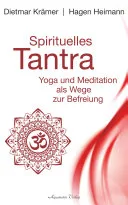
Spirituelles Tantra: Yoga und Meditation als Wege zur Befreiung
 72
72

Spirituelles Tantra: Yoga und Meditation als Wege zur Befreiung
Dietmar Krämer and Hagen Heimann's *Spirituelles Tantra* tackles the pervasive Western misinterpretations of Tantra with commendable directness. The authors, leveraging their substantial experience in India, effectively dismantle sensationalized notions, presenting a vision of Tantra rooted in spiritual liberation through yoga and meditation. A notable strength is their clear demarcation between authentic practice and popular distortions. However, the book occasionally treads a fine line between clarification and oversimplification, particularly when discussing complex philosophical underpinnings. The section detailing the subtle body's role in yogic liberation, while informative, could benefit from deeper engagement with specific tantric lineages beyond a general overview. Despite this, Krämer and Heimann provide a valuable corrective for anyone seeking an unvarnished introduction to Tantra's spiritual path. It serves as a sound, if somewhat cautious, guide.
📝 Description
72
Dietmar Krämer and Hagen Heimann's 2025 book re-examines Tantra, moving beyond Western misconceptions.
Spirituelles Tantra: Yoga und Meditation als Wege zur Befreiung confronts common Western misunderstandings of Tantra. Krämer and Heimann aim to clarify the spiritual dimensions of these practices, separating them from sensationalized or solely sexual interpretations. They present Tantra as a system for spiritual growth and liberation, intended for those seeking an authentic understanding, especially those interested in its connection with yoga and meditation.
The authors draw on personal experience from India to correct misrepresentations of Tantrism. Their work addresses the historical mix of sensationalism and misunderstanding that has characterized Western perceptions. It aims for a more grounded and accurate portrayal compared to earlier, often exoticized, accounts. This book is for readers disillusioned by superficial portrayals and those wishing to explore the philosophical and practical aspects of these paths. Readers with a background in Eastern spirituality or a desire to deepen their meditative practices will find value here.
This work engages with the broader interest in Eastern spiritual traditions that gained momentum in the latter half of the 20th century. It seeks to provide a more accurate depiction of Tantrism than earlier, often sensationalized, Western accounts. By grounding its discussion in personal experience from India, the book aims to correct erroneous perceptions and offer a clearer view of Tantra's potential for spiritual development and liberation.
💡 Why Read This Book?
• Gain a clear understanding of genuine Tantric philosophy, distinguishing it from Western sexualized interpretations, as presented by Krämer and Heimann's firsthand experience in India. • Learn how specific yogic and meditative techniques, as detailed in the book's exploration of liberation paths, can be integrated into your spiritual practice. • Understand the historical misrepresentations of Tantrism, a crucial context provided by the authors' efforts to correct common misconceptions prevalent since the 20th century.
⭐ Reader Reviews
Honest opinions from readers who have explored this book.
❓ Frequently Asked Questions
What are the main misconceptions about Tantra that this book addresses?
The book confronts the widespread Western idea that Tantra is solely about illicit sexual practices or black magic. Krämer and Heimann clarify that its core lies in spiritual liberation through practices like yoga and meditation, drawing from their extensive experience in India.
How does 'Spirituelles Tantra' differentiate itself from other books on the subject?
Unlike sensationalized accounts, this 2025 publication by Krämer and Heimann focuses on the spiritual and meditative dimensions of Tantra. It emphasizes direct experience and authentic teachings gained from years of immersion in India.
Is this book suitable for beginners in Eastern spirituality?
Yes, the work is an introduction designed for those new to Tantra or seeking a grounded understanding. It explains complex concepts clearly, making the spiritual paths of yoga and meditation accessible.
What role do yoga and meditation play in the Tantric path as described by Krämer and Heimann?
The authors present yoga and meditation not merely as physical exercises but as fundamental tools for spiritual liberation within the Tantric framework, aiming for inner transformation and profound spiritual growth.
When was 'Spirituelles Tantra: Yoga und Meditation als Wege zur Befreiung' first published?
The book, authored by Dietmar Krämer and Hagen Heimann, was first published on February 14, 2025.
Does the book discuss specific Tantric deities or rituals?
While focusing on the spiritual path, the work likely touches upon core concepts and practices integral to Tantra's aim of liberation, distinguishing them from superficial interpretations prevalent in the West.
🔮 Key Themes & Symbolism
Authentic Tantric Spirituality
This theme addresses the core aim of the book: to present Tantra as a legitimate spiritual path distinct from sensationalized Western interpretations. Krämer and Heimann leverage their extensive experience in India to delineate the genuine practices and philosophies. They aim to correct the widespread misconceptions that often equate Tantra solely with extreme sexual practices or dark magic, instead highlighting its potential for profound inner transformation and liberation through disciplined yogic and meditative techniques.
Yoga and Meditation for Liberation
A central tenet explored is the integral role of yoga and meditation within the Tantric framework. The authors posit these practices not as mere physical disciplines but as potent tools for achieving spiritual freedom and awakening. The book details how specific yogic postures (asanas), breath control (pranayama), and various meditative states are employed to purify the mind, awaken inner energies, and ultimately lead to self-realization and liberation from suffering.
Correcting Western Misconceptions
The work directly confronts the often outlandish and inaccurate perceptions of Tantrism that have permeated Western societies. Krämer and Heimann, drawing from their direct observations and long-term engagement with the subject in its homeland, meticulously separate fact from fiction. This theme underscores their commitment to providing an accurate, scholarly, yet accessible introduction that respects the depth and spiritual integrity of the tradition.
The Path to Inner Awakening
Ultimately, the book frames Tantra as a profound journey towards inner awakening and spiritual freedom. It emphasizes that liberation is not an external acquisition but an internal realization achieved through dedicated practice. The authors guide readers to understand how Tantric principles, when correctly applied through yoga and meditation, can lead to a deeper connection with oneself and the universe, fostering personal growth and spiritual enlightenment.
💬 Memorable Quotes
Direct passages from the work, attributed to the author.
“Western societies still hold adventurous ideas about Tantrism.”
— This statement immediately sets the stage, acknowledging the prevalent but often inaccurate public perception of Tantra, signaling the book's intention to offer a more grounded perspective.
“From occult black magic practices to rampant sexuality.”
— This highlights the extreme and often contradictory misconceptions about Tantra that the authors aim to debunk, framing the common Western understanding as a broad, false spectrum.
“Dietmar Krämer and Hagen Heimann know the world of Tantric spirituality from their own observation.”
— This emphasizes the authors' credibility, asserting that their insights are based on direct, lived experience in India rather than secondhand accounts or academic speculation alone.
“An excellent introduction to a mysterious world.”
— This positions the book as a reliable and authoritative guide for newcomers, promising clarity and depth in explaining the often-misunderstood subject of Tantra.
💡 Key Ideas
Editorial paraphrase of the work's core concepts — not direct quotes.
Spiritual liberation through yoga and meditation.
This concisely summarizes the book's central thesis: that the true essence of Tantra lies in its spiritual application via established yogic and meditative practices for achieving freedom.
🌙 Esoteric Significance
Tradition
This work engages with the broad lineage of Tantric traditions, which, while diverse, often share a focus on the transformative power of consciousness and the body as a vehicle for spiritual realization. It situates itself within a modern effort to reclaim Tantra’s spiritual essence, moving away from both its esoteric misinterpretations and its reduction to mere sexuality. The book aligns with a holistic approach to spirituality, where the material and the transcendent are not separate but interconnected aspects of a unified reality.
Symbolism
Key symbolism likely explored includes the divine couple (Shiva-Shakti) representing consciousness and energy, fundamental to Tantric cosmology and the union sought within the practitioner. The lotus flower, often associated with purity and spiritual unfolding, and the 'kundalini' energy, symbolizing dormant spiritual potential, are also central motifs. These symbols are not mere decoration but represent profound states of being and energetic processes integral to the path of liberation.
Modern Relevance
Contemporary thinkers and practitioners in fields like transpersonal psychology, integral theory, and somatic experiencing draw upon Tantric principles for understanding consciousness, embodiment, and the integration of spiritual experiences. Krämer and Heimann's work contributes to this by offering a clear framework for understanding Tantra’s practical application in modern life, influencing those seeking holistic approaches to well-being and self-discovery that bridge ancient wisdom with contemporary needs.
👥 Who Should Read This Book
• Individuals disillusioned by sensationalized or sexualized portrayals of Tantra, seeking an authentic spiritual perspective grounded in practice. • Yoga practitioners and meditators interested in understanding the deeper philosophical and liberation-oriented aspects of these disciplines within a Tantric context. • Students of comparative religion and esoteric studies looking for a clear, experience-based introduction to Tantric traditions that corrects historical Western misinterpretations.
📜 Historical Context
The publication of *Spirituelles Tantra* in 2025 arrives at a time when interest in Eastern spiritual practices remains high, yet the historical context of Tantra's reception in the West is marked by significant misunderstanding. From the late 19th century onwards, figures like Helena Blavatsky and later popularizers introduced various Eastern traditions, often with a blend of academic curiosity and exoticism. Tantra, in particular, became subject to sensationalism, frequently reduced to its sexual aspects or associated with occultism, a trend amplified by the counter-culture movements of the 1960s and 70s. While scholars like Mircea Eliade attempted more nuanced portrayals, popular understanding often lagged. Krämer and Heimann’s work directly confronts this legacy, building upon decades of engagement with Indian traditions, aiming to provide an antidote to the distortions that have long overshadowed the profound spiritual philosophy and practices of Tantra, distinguishing it from the more ascetic paths of classical Hinduism and Buddhism.
📔 Journal Prompts
The misconception of Tantra as solely sexual or magical, as contrasted with its spiritual aims.
Authentic Tantric practices for spiritual liberation, beyond common Western interpretations.
The role of yoga and meditation in achieving inner awakening as described by Krämer and Heimann.
Personal reflections on the distinction between sensationalism and genuine spiritual seeking in esoteric traditions.
How the concept of Shiva-Shakti might inform one's understanding of internal energetic dynamics.
🗂️ Glossary
Tantra
A complex set of esoteric traditions originating in India, characterized by rituals, meditation, yoga, and a focus on harnessing primal energies for spiritual liberation and enlightenment.
Shiva-Shakti
In Tantric philosophy, the divine cosmic pair representing consciousness (Shiva) and energy/matter (Shakti), often symbolizing the union of opposites and the dynamic forces of creation.
Yoga
A broad term encompassing physical, mental, and spiritual practices originating in ancient India, aimed at achieving union with the divine or ultimate reality, often through discipline and meditation.
Meditation
A practice where an individual uses a technique – such as mindfulness, or focusing the mind on a particular object, thought, or activity – to train attention and awareness, and achieve a mentally clear and emotionally calm and stable state.
Liberation (Moksha/Mukti)
In Indian spiritual traditions, the ultimate goal of spiritual practice; freedom from the cycle of birth and death (samsara) and the attainment of enlightenment or union with the divine.
Kundalini
A primordial cosmic energy believed to be coiled at the base of the spine, which, when awakened through yogic and Tantric practices, ascends through the subtle energy channels, leading to spiritual transformation.
Esoteric
Intended for or likely to be understood by only a small number of people with a specialized knowledge or interest; relating to the occult.