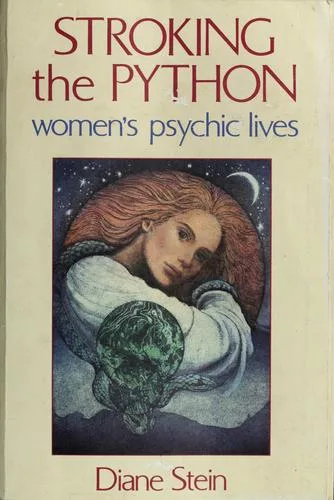
Stroking the python
 72
72

Stroking the python
Diane Stein’s *Stroking the Python* offers a refreshingly direct approach to shamanic practices, eschewing overly academic jargon for a more embodied, personal account. Published in 1988, it captures a specific moment when Western interest in shamanism was broadening beyond anthropological studies. Stein’s strength lies in her willingness to share her own experiences and guide readers through concrete exercises, particularly her discussion on identifying and working with spirit guides. However, the book’s directness can sometimes border on oversimplification; the complex psychologies and potential pitfalls of altered states are perhaps less thoroughly explored than some might expect. A particularly striking section details the process of journeying to the spirit world, which, while evocative, could benefit from more extensive contextualization of its potential psychological impact. Ultimately, *Stroking the Python* remains a valuable, if somewhat unvarnished, primer for those curious about shamanic engagement with nature.
📝 Description
72
Diane Stein's 1988 book, Stroking the Python, offers a personal guide to shamanic practices and earth-based spirituality.
Stroking the Python, first published in 1988, moves beyond theory to give readers practical ways to connect with the spiritual energies of the natural world. Diane Stein writes from personal experience, aiming to make shamanic techniques understandable for people today. The book is for anyone interested in animism, shamanism, and earth-centered spirituality, especially those drawn to nature-based practices. It suits beginners curious about shamanism and experienced practitioners looking to expand their knowledge. Stein's work provides a direct approach to engaging with these traditions.
The book focuses on concepts like 'power animals,' believed to be spirit guides offering wisdom. It also discusses 'soul retrieval,' a shamanic method for reclaiming lost parts of oneself. A central idea is the deep connection between all living things and the spiritual essence of the Earth. Stein stresses the value of ritual in this spiritual path.
Published in 1988, Stroking the Python appeared during a time of renewed interest in Neopaganism and Western shamanic studies. Following earlier explorations by figures like Mircea Eliade and Carlos Castaneda, a wider audience began seeking knowledge of indigenous spiritual practices. Stein's book provided a more personal and accessible introduction to shamanism, differing from academic works. It contributed to the popularity of alternative spiritualities in the New Age movements of that era.
💡 Why Read This Book?
• Learn practical methods for identifying and communicating with spirit animals, as detailed in the book's sections on power animal retrieval, which offer a direct pathway to personal guidance. • Gain an understanding of soul retrieval techniques, a core shamanic practice described by Stein, providing tools for personal healing and wholeness. • Experience a renewed sense of connection to the Earth's spiritual dimensions, informed by Stein's emphasis on animism and the inherent sacredness of nature, as presented in the 1988 publication.
⭐ Reader Reviews
Honest opinions from readers who have explored this book.
❓ Frequently Asked Questions
What is the primary focus of Diane Stein's 'Stroking the Python'?
The book's primary focus is on shamanic practices and earth-based spirituality, guiding readers in connecting with the natural world and its spiritual energies.
When was 'Stroking the Python' first published?
'Stroking the Python' was first published in 1988, a period when Western interest in shamanism and Neopaganism was growing.
Does the book offer practical exercises for readers?
Yes, Stein provides practical applications and exercises for engaging with shamanic techniques and nature-based spirituality, aiming for direct reader participation.
What are some key concepts explored in the book?
Key concepts include power animals (spirit guides), soul retrieval, and the interconnectedness of all life with the Earth's spiritual essence.
Is this book suitable for beginners in shamanism?
The book is well-suited for beginners who are open to exploring shamanic concepts and earth-centered spirituality in a personal and accessible way.
What is the significance of the title 'Stroking the Python'?
The title likely refers to the powerful, serpentine energy often associated with the Earth and shamanic power, suggesting a respectful and intimate engagement with these forces.
🔮 Key Themes & Symbolism
Power Animals and Spirit Guides
The work introduces readers to the concept of power animals, often depicted as serpentine or other potent natural forces, serving as guides and allies in the spirit world. Stein outlines methods for identifying, connecting with, and receiving wisdom from these entities. The book emphasizes that these are not mere symbols but living spiritual presences that can offer support and insight for navigating earthly challenges, reflecting a core tenet of animistic belief systems.
Soul Retrieval and Healing
A central theme is soul retrieval, a shamanic practice aimed at recovering lost parts of oneself that may have fragmented due to trauma or life experiences. Stein explains the process of journeying into non-ordinary reality to reclaim these lost aspects, fostering a sense of wholeness and integration. This concept aligns with many indigenous healing traditions that view illness as a spiritual imbalance and healing as a process of spiritual restoration.
Earth-Based Spirituality and Animism
The book champions an earth-centered spirituality, viewing the planet and all its inhabitants as imbued with spirit and consciousness. It encourages a deep, reciprocal relationship with nature, moving away from anthropocentric views. Stein's approach fosters animistic perspectives, where the natural world is seen as alive and sentient, deserving of respect and active spiritual engagement, echoing ancient traditions that revered the living Earth.
Shamanic Journeying
Stein details the practice of shamanic journeying, a method of entering altered states of consciousness to interact with the spirit world. This technique is presented as a vital tool for gaining knowledge, healing, and personal growth. The book guides readers on how to undertake these journeys, emphasizing the importance of intention, safety, and the interpretation of experiences encountered beyond the veil of ordinary perception.
💬 Memorable Quotes
Direct passages from the work, attributed to the author.
“The python is the great mother of us all, coiled and ready to give birth to the new.”
— This metaphor highlights the generative and primordial power associated with the python symbol. It suggests that embracing the serpentine energy, often seen as both earthly and cosmic, can lead to profound transformation and renewal.
“When you journey, you are not just seeing visions; you are meeting spirits.”
— This emphasizes the interactive and relational aspect of shamanic journeying. It corrects the notion that altered states are purely internal or hallucinatory, asserting that genuine encounters with spiritual beings occur.
“Your power animal is a mirror of your own hidden strengths.”
— This interpretation frames the power animal not as an external deity, but as a projection or embodiment of the individual's own latent capabilities and inner wisdom.
“To heal the soul is to reclaim the lost pieces of yourself.”
— This succinctly defines the core purpose of soul retrieval, presenting healing as an active process of re-integration and recovery of fragmented aspects of the self.
“The Earth breathes, and we are part of her breath.”
— This evocative statement underscores the deep interconnectedness between humanity and the planet, framing existence as a shared, living process within a larger, conscious Earth.
🌙 Esoteric Significance
Tradition
This work draws heavily from animistic and shamanic traditions, particularly those emphasizing a direct, experiential connection with nature spirits and the spirit world. While not strictly adhering to a single lineage like Hermeticism or Kabbalah, it shares with them the core esoteric principle of sympathetic magic and the belief in unseen forces influencing the material realm. It departs from more structured Western esoteric systems by prioritizing raw, personal experience and earth-based power over codified magical systems or intellectual study.
Symbolism
The python itself is a potent symbol, often representing primordial earth energy, cyclical transformation, and deep, chthonic power. Its serpentine form can symbolize the Kundalini, the coiled life force within. The book also frequently employs imagery of animals as spirit guides, embodying archetypal energies and offering specific wisdom or aid, a common motif in shamanic traditions worldwide. The concept of the 'spirit world' or 'other worlds' functions as a symbolic representation of deeper consciousness and interconnected reality.
Modern Relevance
Contemporary practitioners of contemporary shamanism, ecopsychology, and nature-based spirituality often reference works like Stein’s. Thinkers and authors focusing on rewilding, animistic perspectives in a modern context, and trauma-informed healing modalities that incorporate spiritual dimensions find value in its foundational concepts. The book's emphasis on direct experience and personal connection to the Earth continues to influence individuals seeking alternatives to purely materialistic or disembodied spiritual paths.
👥 Who Should Read This Book
• Individuals curious about shamanic practices and earth-centered spirituality, seeking an accessible introduction to concepts like spirit animals and journeying. • Practitioners of Neopaganism or Wicca looking to deepen their connection to nature spirits and explore complementary healing techniques. • Those interested in comparative religion and anthropology who wish to understand experiential shamanism beyond academic discourse.
📜 Historical Context
When *Stroking the Python* was released in 1988, the range of Western spirituality was increasingly receptive to shamanic practices, partly due to the popularization of works by figures like Carlos Castaneda and the anthropological research of Mircea Eliade. Stein’s book emerged within this burgeoning interest in Neopaganism and alternative healing modalities. It distinguished itself by offering a more personal, experiential guide compared to academic texts or more ritualistically rigid traditions. The book’s accessibility resonated with a growing audience seeking direct connection with nature and spirit, outside the confines of established religious structures. Contemporaries like Sandra Ingerman were also exploring similar themes of soul retrieval and shamanic healing, contributing to a broader movement focused on indigenous wisdom and earth-centered spirituality during the late 20th century.
📔 Journal Prompts
Reflect on the symbolism of the python as described in the text.
Consider your personal connection to the natural world and its inherent spirit.
Explore the concept of power animals and what potential strengths they might represent for you.
How might the practice of soul retrieval apply to your own life experiences?
Journal about a recent dream or altered state experience and its potential spiritual meaning.
🗂️ Glossary
Power Animal
A spiritual helper or guide, often an animal form, that accompanies an individual, offering wisdom, protection, and assistance from the spirit world.
Shamanic Journeying
A technique involving entering an altered state of consciousness to travel to the spirit world, interact with spirits, and gain knowledge or healing.
Soul Retrieval
A shamanic healing practice aimed at recovering lost parts of the soul or essence that may have become separated due to trauma or shock.
Spirit World
The non-physical realm inhabited by spirits, deities, ancestors, and other entities that can be accessed through shamanic practices.
Animism
The belief that all things, including plants, animals, rocks, and natural phenomena, possess a distinct spiritual essence or consciousness.
Earth-Based Spirituality
A broad category of spiritual practices that emphasize a connection to the Earth, nature cycles, and the divine immanent in the natural world.
Chthonic
Relating to the underworld or the Earth; often associated with primal, subterranean, or primordial forces and deities.
🔮 Readers Also Liked
Browse all →









More by Diane Stein
All books →





More Free Occult Philosophy Books
View all →