Palmistry
 75
75

Palmistry
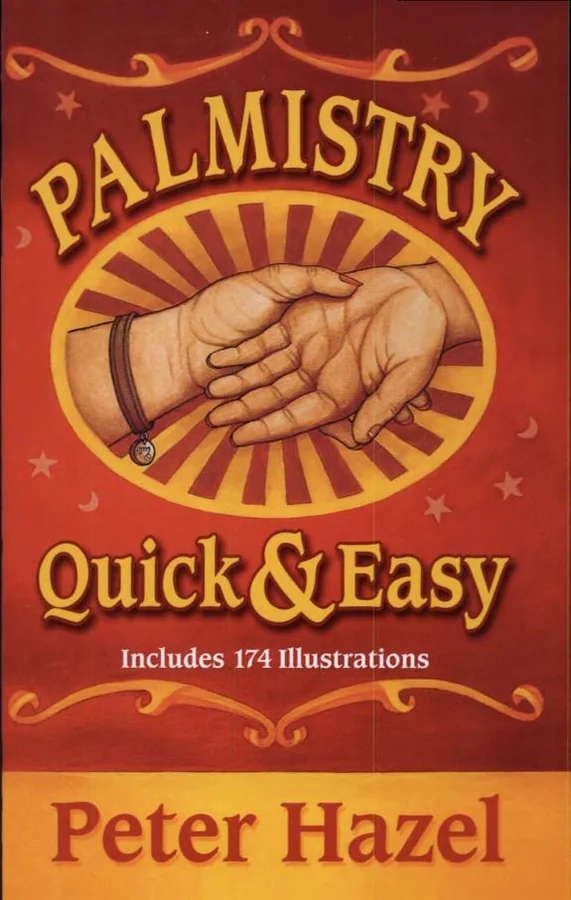
Peter Hazel's "Palmistry" tackles a complex subject with an admirably straightforward methodology. The book's strength lies in its illustrated, question-driven format, which genuinely demystifies the process for the uninitiated. For instance, the section explaining the four basic hand types—Earth, Air, Fire, and Water—is particularly clear, offering immediate points of recognition. However, the book's brevity in exploring the deeper nuances of specific hand markings, such as the 'star' or 'cross,' leaves the reader wanting more in-depth analysis beyond the initial identification. While it succeeds in making palmistry approachable, it occasionally sacrifices the depth that seasoned practitioners might seek. It serves as a solid primer, but not an exhaustive manual.
📝 Description
75
Peter Hazel's 2001 book, Palmistry, approaches hand reading with a direct, question-based method for novices.
Palmistry, by Peter Hazel, first published in 2001, offers a straightforward introduction to reading hands. The book treats the palm as a map of a person's character, history, and future possibilities. Its structure encourages active participation, leading new students through interpretation via a series of prompts. This volume is ideal for those entirely new to palmistry who wish to explore self understanding. Readers looking for a practical, ordered method for hand analysis will find its interactive design helpful. It suits individuals who prefer learning by doing, over solely theoretical study. The book connects with palmistry's long history, an art with origins in ancient India and Greece. While not a scholarly study of chiromancy's past, its method reflects a modern interest in esoteric subjects that grew in the late 20th century, influenced by movements like Theosophy and New Age spirituality.
Hazel's work engages with the tradition of chiromancy, an art with roots in ancient India and Greece. The book's approach aligns with a late 20th-century resurgence of interest in esoteric subjects, influenced by movements such as Theosophy and New Age spirituality. This period saw renewed attention to divinatory practices and personal insight methodologies that connect inner states with outward forms.
💡 Why Read This Book?
• Gain immediate interpretive skills by learning to analyze the four distinct hand types (Earth, Air, Fire, Water), as detailed in Hazel's interactive guide, allowing for instant personal assessments. • Understand the foundational elements of palmistry, including the significance of thumb flexibility and the primary lines like the Heart Line, enabling a structured approach to reading one's own or others' palms. • Discover the meaning behind common markings on the fingers and palm, providing specific visual cues that Hazel explains, enhancing your ability to discern detailed personality traits and potentials.
⭐ Reader Reviews
Honest opinions from readers who have explored this book.
❓ Frequently Asked Questions
What is the primary purpose of Peter Hazel's book on palmistry?
The book's primary purpose is to provide an accessible, interactive introduction to palmistry, enabling novice readers to immediately begin interpreting personality and potential through hand analysis, as outlined in its 2001 first edition.
Does the book cover advanced palmistry techniques?
While "Palmistry" by Peter Hazel focuses on foundational concepts for beginners, it introduces various elements like hand types, lines, and markings, offering a solid base for further study rather than exhaustive advanced techniques.
How does the book explain the different hand types?
Hazel categorizes hands into four primary types—Earth, Air, Fire, and Water—and explains their corresponding characteristics and implications for personality in a clear, illustrated format designed for easy understanding.
What specific lines on the palm does Peter Hazel's book discuss?
The book covers major lines such as the Heart Line, Head Line, and Life Line, explaining their general meanings and how their length and characteristics contribute to palm interpretation.
Is Peter Hazel's 'Palmistry' suitable for someone with no prior knowledge?
Yes, the book is specifically designed for novices. Its interactive, question-based format and clear illustrations make the ancient art of palmistry approachable even for those with zero prior experience.
🔮 Key Themes & Symbolism
The Hand as a Map
Hazel frames the palm not merely as flesh and bone, but as a detailed cartographic representation of an individual's essence. The book emphasizes that the length of fingers, the shape of the palm, and the presence of specific lines and mounts all serve as markers on this personal map. This perspective invites readers to view their own hands as a source of profound self-knowledge, detailing personality traits, past influences, and future potentials available for exploration through systematic interpretation.
Four Elemental Hand Types
A central concept in Hazel's approach is the classification of hands into four elemental types: Earth, Air, Fire, and Water. Each type is associated with distinct physical characteristics and corresponding personality archetypes. For example, 'Earth' hands might be described as practical and grounded, while 'Air' hands suggest an intellectual and communicative nature. Understanding these broad categories provides a foundational framework for more detailed palm analysis.
Lines, Marks, and Mounts
Beyond broad classifications, the book studies the specific features of the palm. It systematically explains the major lines (e.g., Life, Head, Heart), their variations, and interpretations. Furthermore, it details the significance of various markings—such as stars, crosses, or squares—and the raised areas known as mounts, linking these distinct features to specific character attributes, life events, and potentials.
Interactive Self-Discovery
A defining characteristic of Hazel's 'Palmistry' is its interactive format. By posing a series of simple questions, the book guides the reader through the analysis process, making it feel like a personal consultation. This method aims to empower even novices, allowing them to begin reading hands immediately and fostering a direct, engaged relationship with the subject matter for self-exploration.
💬 Memorable Quotes
Direct passages from the work, attributed to the author.
“Your hand is a map reflecting your personality, your past, and your personal potential.”
— This foundational statement sets the premise for the entire book, framing the palm not as a static physical feature but as a dynamic, informative document of the individual's life and character.
“This book's unique illustrated and interactive format is designed to give you instant access to the ancient art of palmistry.”
— This highlights the pedagogical approach, emphasizing the book's practical design intended to make a complex, historical practice immediately understandable and applicable for new students.
“You'll learn how to interpret the length of the palm and fingers, the four hand types, thumbs, marks on the fingers, the lines, fingernails, the mount”
— This lists the core components of palm analysis covered, providing a clear overview of the specific elements readers will be taught to interpret within the book's framework.
💡 Key Ideas
Editorial paraphrase of the work's core concepts — not direct quotes.
As you answer a series of simple questions, you'll discover how easy it really is--even the novice can begin reading hands immediately!
This paraphrased concept underscores the book's commitment to accessibility, suggesting that the learning curve for palmistry is significantly reduced through its structured, guided method.
Even the novice can begin reading hands immediately!
This paraphrased concept reiterates the book's core promise: to equip beginners with practical skills that yield immediate results, explaining the art of palm reading.
🌙 Esoteric Significance
Tradition
This work engages with the Western esoteric tradition of chiromancy, a practice with ancient roots in Hellenistic Greece and India, later integrated into various European occult systems. It departs from more complex Kabbalistic or Hermetic interpretations by focusing on a simplified, elemental system and direct physical correlations, making it highly accessible for modern, casual practitioners seeking personal insight rather than adherence to strict traditional doctrines.
Symbolism
Key symbols include the four elemental hand types (Earth, Air, Fire, Water), representing fundamental personality archetypes and energies. The major lines—Heart, Head, and Life—symbolize emotional capacity, intellect, and vitality, respectively. Mounts, such as Venus or Jupiter, represent specific desires and traits like love, ambition, or leadership, with their prominence indicating the strength of these influences.
Modern Relevance
Hazel's approach speaks to contemporary interest in self-help and personal development, providing a tangible tool for introspection. Its simplified elemental framework can be seen as a precursor or parallel to modern personality typing systems. While not directly citing contemporary thinkers, its emphasis on accessible, actionable knowledge aligns with the ethos of many online esoteric communities and modern self-study guides.
👥 Who Should Read This Book
• Individuals new to esoteric practices seeking a concrete, visual method for self-understanding, particularly those drawn to divination arts like palmistry. • Students of comparative spirituality interested in understanding how ancient practices are adapted for contemporary, accessible instruction without deep historical or philosophical immersion. • Those curious about the relationship between physical form and character, looking for a practical guide that bridges observable traits with psychological interpretation.
📜 Historical Context
Peter Hazel's "Palmistry," published in 2001, arrived during a period of renewed interest in esoteric studies, often termed the 'New Age' movement, which saw a surge in popular engagement with practices like astrology, tarot, and chiromancy. This era followed the foundational work of figures like Helena Blavatsky and the Theosophical Society in the late 19th and early 20th centuries, which had helped reintroduce and recontextualize many ancient mystical traditions for Western audiences. While Hazel's book focuses on practical application rather than historical lineage, its accessible format reflects a broader trend of making occult knowledge available to the general public, moving away from the more scholarly or tightly guarded traditions. Contemporary authors like Robert Hand were also exploring astrological systems with new interpretive frameworks around this time, indicating a fertile ground for accessible esoteric guides.
📔 Journal Prompts
The four hand types: Which elemental type best describes your dominant hand, and what immediate insights does this offer?
Palm lines: Compare the length and clarity of your Head Line and Heart Line. What does this suggest about your thinking versus feeling processes?
Thumb analysis: Assess the flexibility and angle of your thumb. How does this reflect your willpower and adaptability in daily life?
Finger length: Observe the proportion of your fingers to your palm. Does this ratio align with the descriptions for your primary hand type?
Hand mounts: Identify the most prominent mount on your palm. Reflect on the associated traits and how they manifest in your personality.
🗂️ Glossary
Chiromancy
The practice of divination and character analysis through the study of the palm, including its lines, mounts, shape, and texture. It is synonymous with palmistry.
Hand Types (Elemental)
A classification system categorizing hands into four archetypes—Earth, Air, Fire, and Water—each associated with specific personality traits, temperaments, and life approaches.
Lines (Major)
The primary creases on the palm, most commonly the Life Line, Head Line, and Heart Line, which are interpreted to reveal aspects of vitality, intellect, and emotional nature.
Mounts
The fleshy, raised pads on the palm, located at the base of the fingers and on the palm's edge, named after classical planets (e.g., Mount of Venus, Mount of Jupiter) and associated with corresponding attributes.
Marks
Specific symbols or formations appearing on the palm or fingers, such as stars, crosses, squares, or triangles, which are believed to modify or signify particular events or characteristics.
Fingernails
The condition, shape, and markings of fingernails are also considered in palmistry, offering further clues about health, disposition, and specific character traits.
Novice
An individual who is new to a particular subject or skill, in this context, someone beginning their study of palmistry.
This book appears in 1 collection
🔮 Readers Also Liked
Browse all →









From the “Palmistry” Collection
View all →








More Free Occult Philosophy Books
View all →