Palmistry Made Practical
 79
79

Palmistry Made Practical
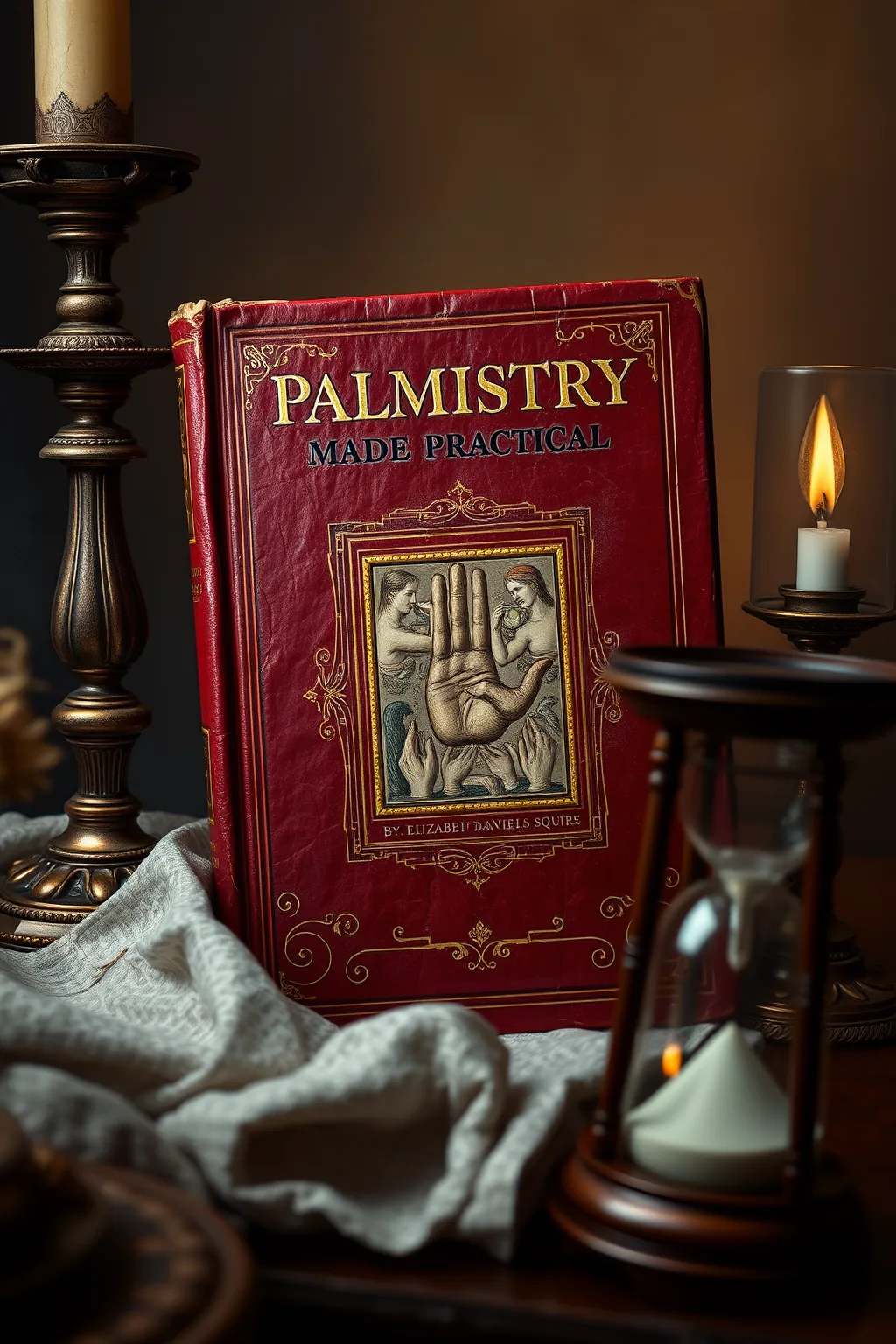
Elizabeth Daniels Squire’s "Palmistry Made Practical" approaches hand reading with an earnest desire for clarity, a welcome antidote to the often opaque literature surrounding the subject. Squire's strength lies in her systematic breakdown of the hand's geography, meticulously detailing each line and mount with a focus on observable traits. The section on the mounts, particularly her specific delineations for the Mount of Saturn and its relation to the Fate Line, offers a concrete framework for analysis. However, the book occasionally falls into a somewhat dry, instructional tone that, while practical, can strip away some of the evocative symbolism inherent in palmistry. The 1960 publication date is evident in its slightly dated prose and the absence of later developments in psychodynamic interpretations of divination. Despite this, Squire’s grounded approach makes it a solid foundational text for the aspiring palmist seeking structured knowledge.
Verdict: A clear, if somewhat dry, practical guide to understanding the hand’s symbolic language.
📝 Description
79
Elizabeth Daniels Squire published Palmistry Made Practical in 1960, aiming for a structured hand reading system.
Palmistry Made Practical, released in 1960, presents a methodical approach to hand reading. Elizabeth Daniels Squire sought to move beyond superstition, detailing the principles and interpretations of palmistry in a clear, systematic way. The book focuses on the physical aspects of the hand, such as lines, mounts, shape, and texture, using these as indicators for personality, potential, and life path.
This guide is for those curious about palmistry who want a practical, accessible resource. It appeals to readers who prefer a structured breakdown of a symbolic system over vague pronouncements. Those interested in self-discovery through physical divination or developing a grounded understanding of hand analysis will find its direct instruction useful. Squire's work emphasizes a learnable skill, contrasting with more abstract interpretations.
Published in 1960, Palmistry Made Practical emerged during a period of renewed interest in esoteric subjects, influenced by post-war spiritual seeking and movements like Theosophy. While the mid-20th century saw various forms of occultism explored, Squire's work distinguished itself by emphasizing a practical methodology. This approach positioned palmistry as a learnable skill, distinct from more mystical interpretations prevalent in earlier eras.
💡 Why Read This Book?
• Gain a structured understanding of hand analysis, moving beyond vague interpretations by studying Squire's detailed explanations of the Life Line, Head Line, and Heart Line as presented in "Palmistry Made Practical." • Learn to interpret the seven major mounts of the palm and their corresponding personality traits, a core concept within Squire's practical framework for reading hands. • Develop a foundational skill in palmistry through a methodical approach, focusing on the physical characteristics of the hand as detailed in the book's systematic chapters.
⭐ Reader Reviews
Honest opinions from readers who have explored this book.
❓ Frequently Asked Questions
What is the primary focus of Elizabeth Daniels Squire's "Palmistry Made Practical"?
The book's primary focus is to present palmistry as a practical, learnable skill. It systematically breaks down the interpretation of hand lines, mounts, shapes, and finger characteristics to provide a grounded method for understanding personality and potential.
When was "Palmistry Made Practical" first published?
"Palmistry Made Practical" was first published in 1960, reflecting the mid-20th century's interest in esoteric subjects presented in a more structured, accessible format.
Does the book cover the meaning of major hand lines?
Yes, the book meticulously covers the major lines of the palm, including the Life Line, Head Line, and Heart Line, detailing their various forms and their significance in character interpretation.
What role do the mounts of the hand play in Squire's system?
Squire dedicates significant attention to the seven major mounts (Venus, Jupiter, Saturn, Apollo, Mercury, Mars, Luna), explaining how their prominence or lack thereof influences an individual's personality, aptitudes, and life tendencies.
Is "Palmistry Made Practical" suitable for absolute beginners?
Absolutely. The book is designed for individuals seeking a clear, step-by-step introduction to palmistry, avoiding overly complex jargon and focusing on practical application of interpretive principles.
What distinguishes Squire's approach from other palmistry books?
Squire's approach emphasizes a systematic and practical methodology, aiming to demystify palmistry by presenting it as a skill that can be learned through careful observation and study of hand features, rather than solely relying on intuition or obscure symbolism.
🔮 Key Themes & Symbolism
Systematic Line Interpretation
The work meticulously details the primary lines of the palm—Life, Head, Heart, and Fate—offering specific interpretations for their presence, absence, depth, and breaks. This systematic approach allows readers to move beyond generalized meanings and understand how variations in these lines contribute to a nuanced portrait of an individual's character, health, and life trajectory, grounding the practice in observable data rather than pure conjecture.
The Seven Mounts
A significant portion of the book is dedicated to the mounts of the palm, which are fleshy areas at the base of the fingers and palm. Squire explains the traditional associations of each mount (e.g., Mount of Venus for love and vitality, Mount of Jupiter for ambition and leadership) and how their development indicates the strength and expression of these qualities in a person's life.
Hand and Finger Morphology
Beyond lines and mounts, "Palmistry Made Practical" integrates the significance of the overall hand shape (e.g., square, spatulate, conic) and the characteristics of the fingers. Squire posits that these physical attributes provide a fundamental blueprint for temperament and innate tendencies, acting as a complementary layer to the information derived from the palm's markings.
Practical Application of Divination
The core ethos of the book is to render palmistry accessible and applicable. Squire guides the reader through the process of observation and analysis, encouraging a practical, rather than purely mystical, engagement with hand reading. The aim is to equip individuals with a tool for self-understanding and the assessment of others based on tangible hand features.
💬 Memorable Quotes
Direct passages from the work, attributed to the author.
“The lines of the hand are a map of the individual's life.”
— This concise statement expresses the book's central thesis: that the physical features of the palm are not arbitrary but serve as a symbolic representation of a person's experiences, character, and potential future.
“Each mount signifies a particular human faculty or characteristic.”
— This highlights the systematic nature of palmistry as presented by Squire, where specific areas of the hand are directly correlated with distinct personality traits and innate abilities.
“A clear and deep Life Line indicates vitality and a strong constitution.”
— This represents a typical interpretive statement from the book, demonstrating how specific line formations are linked to concrete aspects of physical well-being and life force.
“The Heart Line relates to emotional expression and relationships.”
— This illustrates how the book connects the Heart Line to the field of emotions, affections, and interpersonal dynamics, providing a framework for understanding a person's emotional landscape.
💡 Key Ideas
Editorial paraphrase of the work's core concepts — not direct quotes.
The Head Line shows the quality of the mind and intellectual tendencies.
This paraphrase points to Squire's focus on the mental and cognitive aspects of personality, as revealed by the characteristics of the Head Line on the palm.
🌙 Esoteric Significance
Tradition
Squire's work operates within the Western Hermetic tradition of divination, specifically refining the practice of chiromancy (hand reading). While not explicitly aligned with Kabbalah or alchemy, it draws upon the Hermetic principle of "As Above, So Below," viewing the physical hand as a microcosm reflecting the macrocosm of the individual's life and potential. It departs from purely mystical interpretations by emphasizing a practical, observable methodology, making it more accessible than complex ceremonial magic or theosophical doctrines.
Symbolism
The core symbolism lies in the lines and mounts of the palm. The Life Line symbolizes vitality and physical well-being, the Head Line represents intellect and thought processes, and the Heart Line governs emotions and relationships. The mounts, such as Jupiter (ambition) and Venus (love), act as symbolic indicators of dominant personality traits and energies. Each element—line, mount, finger, and hand shape—contributes to a symbolic map of the individual.
Modern Relevance
Contemporary practitioners of divination, particularly those interested in psychological astrology or modern tarot interpretation, often draw on the foundational principles of systematic analysis found in works like Squire's. Her emphasis on practical, observable correlations between hand features and personality traits speaks to modern approaches that seek to integrate esoteric practices with psychological understanding. While specific interpretations may evolve, the structured framework for hand analysis remains influential for self-help and personal insight seekers.
👥 Who Should Read This Book
• Aspiring palmists seeking a clear, structured introduction to hand reading, moving beyond anecdotal accounts to understand the systematic interpretation of lines and mounts. • Individuals interested in self-discovery and personality analysis who appreciate a practical, observational approach to divination, as detailed in Squire's methodical guide. • Students of esoteric history looking at mid-20th-century approaches to divination, specifically how palmistry was presented as an accessible skill during that period.
📜 Historical Context
Elizabeth Daniels Squire's "Palmistry Made Practical," published in 1960, arrived at a unique juncture in Western esotericism. The mid-20th century saw a resurgence of interest in occultism, partly fueled by post-war spiritual seeking and the continuing influence of Theosophy, which had popularized many Eastern and Western mystical traditions. While authors like Manly P. Hall were producing comprehensive encyclopedias of occult knowledge, Squire’s work carved out a niche by focusing on a specific, highly visual practice: palmistry. Her emphasis on a structured, almost pedagogical approach contrasted with the more mystical or purely intuitive methods that often characterized earlier palmistry literature. The era also saw a growing public fascination with psychology and self-help, and Squire’s book tapped into this by presenting palmistry as a practical tool for self-understanding, aligning it with a broader cultural desire for personal development. The reception was generally positive among those seeking accessible guides to divination, positioning it as a solid resource for neophytes.
📔 Journal Prompts
The Head Line's various formations: Reflect on how a straight vs. a wavy Head Line might manifest in daily thought processes.
The Mount of Jupiter: Consider how the traits associated with a prominent Mount of Jupiter might influence leadership style.
The Fate Line's interruptions: Journal about potential life shifts or challenges indicated by breaks in the Fate Line.
Hand shape analysis: Explore the connection between a spatulate hand shape and a tendency towards innovation or restlessness.
Mount of Venus and Vitality: Reflect on the correlation between the Mount of Venus and personal energy levels or expressions of affection.
🗂️ Glossary
Life Line
The arc running from between the thumb and index finger down towards the wrist; traditionally interpreted as indicating vitality, physical health, and major life events.
Head Line
The line running horizontally across the palm, generally below the Heart Line; it is interpreted in relation to mental faculties, intellect, and thought processes.
Heart Line
The uppermost horizontal line on the palm, running from the edge towards the index or middle finger; it relates to emotional capacity, romantic life, and relationships.
Fate Line
A vertical line running upwards from the base of the palm towards the fingers; it is associated with career, destiny, and significant external influences on life.
Mounts
The fleshy pads at the base of the fingers and palm (e.g., Venus, Jupiter, Saturn, Apollo, Mercury, Mars, Luna), each believed to correspond to specific planetary influences and personality traits.
Spatulate Hand
A hand shape characterized by a broad palm and fingers that widen at the tips, often associated with energy, restlessness, and a practical, inventive nature.
Conic Hand
A hand shape with a rounded palm and tapering fingers, often linked to artistic temperament, idealism, and emotional sensitivity.