Influence of Spiritual Beings upon Man

 84
84

Influence of Spiritual Beings upon Man
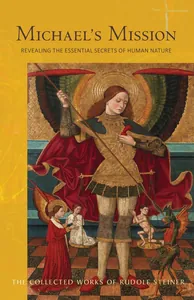
Rudolf Steiner’s "Influence of Spiritual Beings upon Man" offers a formidable, if dense, cartography of the unseen. The strength of this work lies in its systematic presentation of a complex spiritual cosmology, moving beyond vague spiritualism to posit a structured hierarchy of beings and forces. Steiner's particular focus on the developmental roles of these entities—how they actively shape human evolution and consciousness—is compelling. The concept of Luciferic and Ahrimanic influences, for instance, is presented not as simple good-versus-evil dualism, but as necessary polarities for the emergence of human freedom. However, the book’s limitation is its sheer academic density; Steiner’s prose, even in translation, demands sustained concentration. The lecture format from which it derives means that sections can feel repetitive, and the intricate terminology requires careful annotation or prior familiarity with his work. A passage discussing the Archangel Michael's role in guiding humanity through particular epochs, for example, exemplifies both the book’s deep insights and its demanding nature. It is a work for dedicated study, not casual perusal.
📝 Description
84
Rudolf Steiner's 1961 book details spiritual beings' impact on human life.
Rudolf Steiner's "Influence of Spiritual Beings upon Man" examines the unseen forces shaping human consciousness and existence. Originally presented as lectures between 1908 and 1923, the work describes a hierarchy of spiritual entities and their active roles in human evolution. Steiner argues these beings, ranging from elemental spirits to archangels, are not mere symbols but direct participants in the cosmos, affecting human thoughts, emotions, and physical development.
The text offers a framework for understanding the human being's subtle anatomy and the spiritual structure of the universe. It is intended for individuals seeking a deeper understanding of spiritual dimensions beyond the material. Readers interested in esoteric philosophy, anthroposophy, and the nature of consciousness will find Steiner's detailed cosmology relevant. The book addresses questions about the origins of good and evil, the purpose of suffering, and the hidden forces guiding human development.
This work emerges from the spiritual science of Anthroposophy, founded by Rudolf Steiner. Steiner was a significant figure in Theosophy before developing his distinct path, which sought to bridge spiritual insights with scientific inquiry. The lectures, delivered in the early 20th century, reflect a period of intense interest in esoteric thought and spiritual development, influenced by movements like Theosophy and contemporaneous explorations of the psyche by figures such as Carl Jung.
💡 Why Read This Book?
• Understand the detailed spiritual hierarchies described by Steiner, including the roles of the Seraphim and Powers, to gain a structured view of cosmic governance beyond human perception. • Grasp the specific functions of Luciferic and Ahrimanic forces as presented in the text, learning how these dynamics, according to Steiner, are crucial for developing human freedom and consciousness. • Explore the concept of karma and reincarnation as influenced by spiritual beings, as detailed in Steiner's lectures, to understand how past actions and spiritual interventions shape future destinies.
⭐ Reader Reviews
Honest opinions from readers who have explored this book.
❓ Frequently Asked Questions
What is the primary focus of Rudolf Steiner's "Influence of Spiritual Beings upon Man"?
The book primarily focuses on the hierarchical structure of spiritual beings and their active influence on human evolution, consciousness, and destiny, as presented through Rudolf Steiner's spiritual science.
When were the lectures that form "Influence of Spiritual Beings upon Man" originally given?
The lectures that comprise this book were originally delivered by Rudolf Steiner between 1908 and 1923, reflecting his developing spiritual scientific research.
What are the 'spiritual hierarchies' Steiner discusses?
Steiner describes various levels of spiritual beings, such as the Seraphim, Cherubim, Thrones, Powers, Mights, and Authorities, detailing their distinct roles in the cosmos and their interaction with humanity.
How does Steiner explain the origin of evil or negative influences in this book?
Steiner explains these through the concepts of Luciferic and Ahrimanic forces, portraying them as spiritual influences that, while challenging, are essential for the development of human freedom and independent consciousness.
Is this book suitable for beginners in esoteric studies?
While it offers foundational concepts, the book's density and specialized terminology mean it is best suited for those with some prior exposure to esoteric thought or Rudolf Steiner's Anthroposophy.
What is Anthroposophy and how does this book relate to it?
Anthroposophy is Rudolf Steiner's spiritual philosophy. This book is a key text within Anthroposophy, presenting core ideas about spiritual science and the cosmic order influencing human life.
🔮 Key Themes & Symbolism
Spiritual Hierarchies
The work meticulously outlines a tiered system of spiritual beings, from Archai to Seraphim, positing them as active administrators of cosmic law and evolution. Steiner emphasizes that these are not static concepts but dynamic forces interacting with the earthly realm. Each hierarchy possesses specific functions, influencing planetary development and human consciousness in distinct ways. Understanding these orders is presented as crucial for comprehending the mechanics of karma and spiritual guidance, moving beyond anthropocentric views of existence and recognizing a vast, intelligent spiritual administration at play in the universe.
Luciferic and Ahrimanic Forces
Steiner identifies two primary spiritual influences that play a critical, albeit challenging, role in human development: Luciferic and Ahrimanic. The Luciferic influence is associated with fostering pride, illusion, and a premature spiritualization detached from earthly reality. The Ahrimanic influence relates to materialism, intellectualism devoid of spirit, and the hardening of consciousness. Rather than presenting these as purely malevolent, Steiner argues they are necessary polarities that, when understood and met with human consciousness, provide the impetus for freedom, individuality, and the development of true spiritual insight.
Spiritual Evolution of Consciousness
The book traces humanity's developmental path through the lens of spiritual intervention and influence. Steiner explains how the consciousness of individuals and humanity as a whole has evolved under the guidance and impact of spiritual beings. He discusses the development of faculties like imagination, inspiration, and intuition as directly linked to these cosmic interactions. The text suggests that a conscious engagement with the spiritual world, as facilitated by understanding these influences, is the next stage in human evolution, leading towards greater self-awareness and spiritual freedom.
Karma and Reincarnation
Steiner connects the principles of karma and reincarnation directly to the activities of spiritual beings. He posits that karmic patterns are not merely the result of individual actions but are also shaped and administered by these higher intelligences. The process of reincarnation is seen as a structured journey through which souls work out karmic necessities, guided by spiritual mentors. Understanding the influence of beings like the Archangels and the specific tasks of spiritual development assigned to humanity provides a framework for comprehending the intricate workings of destiny and personal evolution across lifetimes.
💬 Memorable Quotes
Direct passages from the work, attributed to the author.
“Spiritual beings are the actual creators and organizers of the physical world.”
— This statement highlights Steiner's view that the material reality we perceive is not self-generating but is the product of conscious, spiritual forces acting according to intelligent design and purpose.
“Luciferic spirits seek to make man divine prematurely, leading to pride and illusion.”
— This captures the essence of the Luciferic influence, suggesting it aims to elevate human consciousness in a distorted manner, fostering ego inflation and detachment from objective reality.
“Ahrimanic spirits bind man to the purely material, hindering spiritual perception.”
— This interpretation points to the nature of Ahrimanic influence, which anchors human awareness in the physical and intellectual realms, potentially obscuring or denying the existence of a spiritual dimension.
“The task of human beings is to develop free spiritual activity.”
— This emphasizes the core purpose of human existence according to Steiner: to cultivate independent spiritual thought and action, using the challenges posed by spiritual influences as catalysts for growth.
💡 Key Ideas
Editorial paraphrase of the work's core concepts — not direct quotes.
Elemental beings are active in the processes of nature.
This paraphrased concept refers to the numerous nature spirits Steiner describes as inhabiting and directing the forces of the natural world, from weather to plant growth.
🌙 Esoteric Significance
Tradition
This work is deeply rooted in the Western Esoteric Tradition, particularly within the lineage of Christian Theosophy and Gnosticism, as synthesized and reinterpreted by Rudolf Steiner. It builds upon earlier ideas of angelic hierarchies and spiritual forces but presents them through the distinct lens of Anthroposophy, his proprietary spiritual science. Steiner departs from traditional Theosophy by emphasizing a more empirical, experiential approach to spiritual investigation and by detailing specific evolutionary roles for each spiritual order and influence on humanity.
Symbolism
Key symbolic motifs include the hierarchy of beings (Seraphim, Cherubim, Thrones, etc.), representing ordered spiritual governance and stages of cosmic evolution. The dualistic symbolism of Luciferic (pride, illusion) and Ahrimanic (materialism, hardening) forces represents the dynamic polarities essential for human freedom and consciousness development. Furthermore, the concept of the 'Christ Impulse' acts as a central balancing force, mediating these influences and enabling human spiritual progress.
Modern Relevance
Contemporary thinkers and practitioners in fields such as Waldorf education, biodynamic agriculture, and anthroposophical medicine draw directly from Steiner's teachings on spiritual beings and their influence. His cosmology continues to inform spiritual artists, therapists, and those seeking a structured understanding of the subtle realms and their impact on modern life, offering a framework for navigating contemporary challenges with spiritual awareness.
👥 Who Should Read This Book
['• Students of Rudolf Steiner and Anthroposophy seeking to understand the foundational cosmology regarding spiritual hierarchies and their influence on human destiny.', '• Esoteric researchers interested in comparative mythology and cosmology, looking for detailed descriptions of spiritual beings and their functions within a specific tradition.', '• Individuals grappling with questions of good and evil, fate, and free will, who are open to exploring these concepts through a spiritual scientific perspective presented by Steiner.']
📜 Historical Context
Rudolf Steiner's "Influence of Spiritual Beings upon Man" emerged from lectures delivered between 1908 and 1923, a period of intense esoteric exploration in Europe. This era saw the rise of movements like Theosophy, heavily influenced by Helena Blavatsky, which sought to synthesize Eastern and Western mystical traditions. Steiner himself was a key figure in Theosophy before branching out to found Anthroposophy, a distinct spiritual science. His work stood in contrast to the prevailing scientific materialism and the philosophical idealism of the time. Contemporaries like Carl Jung were also investigating the psyche, though Steiner's approach was more focused on a structured, hierarchical cosmology and a rigorous path of spiritual development. While not subject to widespread censorship, Steiner's ideas were often met with skepticism or outright rejection by mainstream academia and religious institutions, who viewed his claims of direct spiritual perception and cosmic knowledge as unscientific or heretical.
📔 Journal Prompts
The described functions of the Thrones hierarchy and their impact on human evolution.
Ahrimanic influences and their role in fostering materialist thinking.
The relationship between elemental beings and natural phenomena.
Lucifer's role in stimulating human pride and imagination.
The spiritual beings responsible for carrying karmic patterns.
🗂️ Glossary
Spiritual Hierarchies
Levels of spiritual beings (e.g., Seraphim, Cherubim, Thrones, Powers, Archangels, Angels) described by Steiner as active agents in cosmic evolution and governance.
Luciferic Influence
A spiritual force Steiner identified that tends to inflate the ego, promote illusion, and encourage a premature or distorted spiritualization, leading to pride and separation from reality.
Ahrimanic Influence
A spiritual force Steiner identified that binds human consciousness to materialism, intellectualism devoid of spirit, and a rigid, mechanistic worldview, hindering spiritual perception.
Elemental Beings
Spirits associated with the forces of nature, such as gnomes (earth), undines (water), sylphs (air), and salamanders (fire), influencing natural processes.
Karma
In Steiner's view, the law of cause and effect concerning human actions, which is influenced and administered by spiritual beings as part of a larger cosmic and evolutionary process.
Anthroposophy
Rudolf Steiner's 'spiritual science,' a philosophical and practical movement aiming to develop human faculties through understanding spiritual realities and their connection to the physical world.
Christ Impulse
Steiner's concept of the spiritual force of Christ, which entered earthly evolution at the time of Jesus's incarnation, serving to balance Luciferic and Ahrimanic influences and foster human spiritual freedom.
🔮 Readers Also Liked
Browse all →









More by Rudolf Steiner
All books →




More Free Occult Philosophy Books
View all →