Pa-Kua
 81
81

Pa-Kua
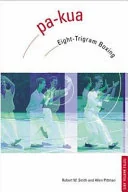
Robert W. Smith and Allen Pittman's *Pa-Kua* offers a focused lens on a martial art that eschews the common reliance on physical strength. The text meticulously details the 'soft-style' principles, differentiating it from more prevalent external martial arts. Its strength lies in breaking down the complex energetic mechanics and circular movements of Baguazhang, making it accessible to dedicated practitioners. A particularly illuminating section discusses the 'Eight Trigrams' and their foundational role in the art's structure. However, the book's density can be a hurdle; it assumes a certain familiarity with internal martial arts concepts, potentially leaving absolute beginners adrift. While it presents the art as both a living discipline and a potent self-defense system, the emphasis leans heavily towards the former. *Pa-Kua* is a serious student's guide to a sophisticated internal art.
📝 Description
81
Published in 1990, Robert W. Smith and Allen Pittman's Pa-Kua details a less common Chinese internal martial art.
This book examines Pa-Kua, or Baguazhang, a Chinese internal martial art distinct from external styles that depend on physical strength. Pa-Kua focuses instead on cultivating and using internal energy, or 'ch'i'. It is presented as one of the three main 'soft-style' Chinese martial arts, alongside T'ai-chi and Hsing-i.
The text functions as a practical manual for understanding and practicing this art. It is aimed at serious martial arts students interested in internal energy and soft-style methods, particularly those looking to go beyond surface-level techniques. Readers interested in comparative philosophy, esoteric traditions, and Chinese culture will also find its explanations valuable. The book suits individuals who approach physical training with a philosophical or spiritual mindset.
Released when Western interest in Chinese martial arts was growing, Pa-Kua arrived as a substantial source for a system not as widely known as T'ai-chi. While T'ai-chi had become popular, Hsing-i and Pa-kua remained more obscure. The book appeared in the late 20th century, a time of increasing Western engagement with Eastern thought and practice, often through academic study or dedicated practitioners.
Pa-Kua belongs to the lineage of Chinese internal martial arts, which emphasize the mind-body connection and the generation of internal force ('ch'i') over muscular power. Unlike external styles, these arts often integrate Daoist principles of flow, yielding, and harmony with nature. The specific practice of Pa-Kua, with its characteristic circular movements, is rooted in generating power through continuous motion and strategic evasion, reflecting a philosophy of adaptability and redirection. This tradition views the body as a conduit for natural energies, seeking to align personal cultivation with universal forces.
💡 Why Read This Book?
• Gain a practical understanding of 'ch'i' cultivation and its application in martial arts, a concept central to the soft-style Chinese boxing explored in *Pa-Kua*. • Learn the unique circular walking and palm-changing techniques fundamental to Pa-Kua (Baguazhang), distinguishing it from other martial arts systems. • Appreciate the philosophical underpinnings of Pa-Kua, understanding it not merely as a fighting art but as a 'living art' as described in the original blurb.
⭐ Reader Reviews
Honest opinions from readers who have explored this book.
❓ Frequently Asked Questions
What is the primary difference between Pa-Kua and other martial arts?
Pa-Kua, unlike many external martial arts, does not rely on muscular strength. Its power stems from the cultivation and application of internal energy, or 'ch'i', channeled through specific circular movements and palm techniques.
Who are the authors of Pa-Kua?
The book 'Pa-Kua' was written by Robert W. Smith and Allen Pittman, first published in 1990.
What are the three main soft-style Chinese martial arts?
The three main soft-style Chinese martial arts discussed are T'ai-chi, Hsing-i, and Pa-Kua. T'ai-chi is the most widely known internationally.
Is Pa-Kua primarily a fighting art or a living art?
According to the book's description, Pa-Kua is fundamentally considered a 'living art,' though it is also acknowledged as a devastating system of self-defense.
What is 'ch'i' as explained in the context of Pa-Kua?
'Ch'i' refers to the internal energy that is cultivated and applied in Pa-Kua. The book explains that mastering this energy is the secret behind the art's power.
When was the book Pa-Kua first published?
The book 'Pa-Kua' by Robert W. Smith and Allen Pittman was first published in 1990.
🔮 Key Themes & Symbolism
Internal Energy Cultivation (Ch'i)
The central theme is the mastery of 'ch'i', or internal energy, as the foundation of Pa-Kua's power. Unlike brute strength, this energy is cultivated through specific training methods detailed in the book. The work explores how practitioners learn to generate, circulate, and apply ch'i for both health and martial efficacy, presenting it as a tangible force accessible through dedicated practice.
Circular Movement and Footwork
Pa-Kua is characterized by its distinctive circular walking patterns and evasive footwork. The book elucidates how these movements are not arbitrary but are designed to harmonize the body's energy flow and create an adaptable defensive posture. This emphasis on continuous, flowing motion sets it apart from linear, static martial arts techniques.
Soft-Style Principles
The work positions Pa-Kua within the category of 'soft-style' or internal martial arts. It contrasts this approach with 'hard-style' or external arts, highlighting the former's reliance on yielding, redirection, and internal power generation. This philosophical distinction informs the practice, emphasizing mindfulness and energetic connection over sheer physical force.
Living Art Philosophy
Beyond its martial applications, Pa-Kua is presented as a 'living art.' This concept suggests a holistic approach to training that integrates mind, body, and spirit, promoting well-being and personal development. The book implies that the practice of Pa-Kua can lead to a more integrated and harmonious existence, extending its benefits beyond combat effectiveness.
💬 Memorable Quotes
Direct passages from the work, attributed to the author.
“The secret behind its power lies in the cultivation and practical application of internal energy - ch'i.”
— This statement captures the fundamental principle of Pa-Kua, identifying 'ch'i' as the essential element that grants the art its effectiveness and unique power.
“There are basically three soft-style martial arts: T'ai-chi, already well known worldwide, and Hsing-i and Pa-kua, relative newcomers to the West.”
— This places Pa-Kua within its broader context, identifying its close relatives in the soft-style tradition and noting its historical reception in Western martial arts communities.
“Pa-Kua, relative newcomers to the West.”
— This observation highlights the historical dissemination of Pa-Kua, indicating that its introduction and widespread practice in Western countries occurred significantly later than that of T'ai-chi.
💡 Key Ideas
Editorial paraphrase of the work's core concepts — not direct quotes.
internal (soft-style) boxing does not depend upon muscular strength.
This line directly addresses the core tenet of Pa-Kua, distinguishing it from external martial arts and highlighting the importance of internal energy cultivation over physical might.
Although they are essentially not fighting arts but living arts, they are devastating as systems of self-defense.
This quote presents a dual perspective on Pa-Kua, emphasizing its role in personal development and life cultivation while acknowledging its potent practical application in self-defense.
🌙 Esoteric Significance
Tradition
Pa-Kua is deeply rooted in Taoist philosophy, drawing heavily from concepts like Yin and Yang, the Eight Trigrams (Bagua), and the cultivation of internal energy (ch'i). It fits within the broader umbrella of Chinese internal martial arts, which often serve as practical vehicles for exploring Taoist principles of harmony, balance, and natural flow. Unlike more overtly spiritual or religious traditions, its esoteric nature is embedded within its physical practice and energetic principles.
Symbolism
The Eight Trigrams (Bagua) are fundamental symbols in Pa-Kua, representing foundational cosmic forces and states of change. Each trigram is associated with specific directions, elements, and qualities, influencing the art's movements and strategies. The circularity inherent in Pa-Kua practice also symbolizes cosmic unity, continuous flow, and the cyclical nature of existence, mirroring concepts found in the Tao Te Ching.
Modern Relevance
Contemporary practitioners of internal martial arts, Qigong, and somatic therapies often draw upon the principles detailed in works like *Pa-Kua*. Its emphasis on energy cultivation and mindful movement speaks to modern approaches to holistic health, stress reduction, and embodied wisdom. Thinkers and practitioners exploring the intersection of martial arts, philosophy, and consciousness continue to find value in its detailed exposition of internal dynamics.
👥 Who Should Read This Book
• Dedicated martial artists seeking to understand the principles of internal energy ('ch'i') beyond physical conditioning. • Students of Taoist philosophy interested in practical applications of concepts like Yin/Yang and the Eight Trigrams. • Holistic health practitioners and mind-body researchers looking for insights into ancient systems of energetic cultivation and movement.
📜 Historical Context
Published in 1990, Robert W. Smith and Allen Pittman's *Pa-Kua* entered the Western esoteric and martial arts scene at a time of burgeoning interest in Chinese internal disciplines. While T'ai-chi had already established a significant presence, Hsing-i and Pa-Kua (Baguazhang) were still considered more specialized or esoteric pursuits. The late 20th century saw a growing Western engagement with Eastern philosophies, often through dedicated practitioners and scholarly works seeking to translate complex traditions. Smith himself was a notable figure in introducing various Chinese martial arts to the West, having studied extensively in Asia. The intellectual currents of the era included a fascination with alternative health practices, mind-body integration, and deeper philosophical explorations, all of which provided fertile ground for works like *Pa-Kua*. The book offered a detailed look into a system that, while less known than T'ai-chi, possessed a rich theoretical and practical framework rooted in Taoist principles.
📔 Journal Prompts
The concept of 'ch'i' as the secret behind Pa-Kua's power.
The distinctiveness of Pa-Kua's circular walking and palm changes.
The idea of Pa-Kua as a 'living art' beyond self-defense.
The role of the Eight Trigrams in structuring Pa-Kua movements.
Contrasting internal soft-style principles with external hard-style approaches.
🗂️ Glossary
Ch'i
The vital life force or internal energy central to Chinese martial arts and traditional medicine. In Pa-Kua, its cultivation and application are paramount.
Pa-Kua
Literally 'Eight Trigrams,' also known as Baguazhang. A major Chinese internal martial art characterized by its circular movements and palm techniques.
Soft-style
A classification of Chinese martial arts that emphasizes yielding, redirection, and internal energy (ch'i) rather than muscular force.
Hsing-i
Another major Chinese internal martial art, often described as more linear and direct than Pa-Kua, but still reliant on internal energy.
T'ai-chi
The most widely known Chinese soft-style martial art, focusing on slow, flowing movements and the cultivation of ch'i for health and self-defense.
Eight Trigrams (Bagua)
A fundamental concept in Taoism, represented by eight symbols, each composed of three lines (broken or unbroken). In Pa-Kua, they inform movement patterns and strategic principles.
Living Arts
A term used to describe martial arts or practices that are approached not just for combat effectiveness but as a means of personal development, health cultivation, and life integration.
This book appears in 1 collection
🔮 Readers Also Liked
Browse all →








From the “Tai Chi” Collection
View all →









More Free Occult Philosophy Books
View all →