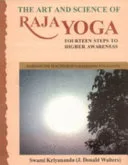
Art and Science of Raja Yoga
 74
74

Art and Science of Raja Yoga
J. Donald Walters' "Art and Science of Raja Yoga," first published in 2003, presents a systematic approach to yoga, aiming to illuminate its spiritual dimensions for a modern audience. The work's strength lies in its structured fourteen-lesson format, which attempts to demystify complex yogic principles. However, the text occasionally leans towards a didactic tone, which, while informative, may not fully capture the experiential essence of yoga for all readers. A notable section details the concept of *pratyahara*, the withdrawal of the senses, which Walters explains with commendable clarity, linking it directly to the cultivation of inner focus. The book offers a comprehensive overview, yet some practitioners might find its application less nuanced than deeply experiential traditions.
This is a practical guide to yogic philosophy and practice.
📝 Description
74
J. Donald Walters published 'Art and Science of Raja Yoga' in 1972.
This book offers a guide to Raja Yoga, a path of meditation and self-mastery. Walters breaks down the philosophical underpinnings and practical techniques required for this discipline. He addresses postures, breathing exercises, and concentration methods, all aimed at achieving inner peace and expanded awareness.
The author emphasizes that Raja Yoga is not merely a set of physical exercises, but a systematic approach to controlling the mind and senses. He draws on the teachings of Patanjali's Yoga Sutras, interpreting them for a modern audience. The book aims to make these ancient principles accessible, guiding the reader toward a more balanced and conscious life.
The book sits within the broader tradition of Indian spiritual philosophy, specifically drawing from the classical Yoga system. Raja Yoga, as described by Walters, is an esoteric path focused on inner transformation through disciplined mental and sensory control. It aligns with traditions that view the human being as capable of transcending ordinary consciousness to achieve higher states of awareness, often through practices that quiet the mind and purify the inner states.
💡 Why Read This Book?
• Gain a practical framework for applying yogic principles to daily life, as outlined in the fourteen lessons, moving beyond mere physical postures. • Understand the concept of *pratyahara* as a method for sense withdrawal, a specific technique discussed to enhance mental control. • Explore the spiritual science of yoga as a system for self-realization, a core tenet presented throughout the book's teachings.
⭐ Reader Reviews
Honest opinions from readers who have explored this book.
❓ Frequently Asked Questions
When was "Art and Science of Raja Yoga" by J. Donald Walters first published?
The book "Art and Science of Raja Yoga" by J. Donald Walters was first published in 2003, making it a relatively contemporary exploration of ancient yogic science.
What is the primary structure of the book?
The book is structured into fourteen distinct lessons, designed to guide the reader through the principles and practices of Raja Yoga systematically.
What does the book offer regarding the application of yoga?
It provides guidance on applying yoga and meditation teachings on both a practical, day-to-day level and a spiritual level within the modern age.
Is this book suitable for beginners in yoga?
Yes, its comprehensive nature and structured lessons make it accessible for individuals new to yoga seeking a deep understanding of its science and art.
What is the main goal of the yoga science presented in the book?
The primary aim is to serve as a proven system for individuals to realize their spiritual destiny through dedicated practice and understanding.
Does the book cover meditation techniques?
Yes, the book offers a comprehensive course on yoga and meditation, detailing how to apply these age-old teachings effectively.
🔮 Key Themes & Symbolism
Spiritual Destiny Realization
The work frames Raja Yoga not merely as a physical discipline but as a profound science for achieving one's ultimate spiritual purpose. It posits that through systematic study and practice, as presented in its fourteen lessons, individuals can unlock their inherent potential and align with a higher calling. This perspective positions yoga as a transformative path, moving beyond self-improvement to a grander design of existence.
Practical Application of Ancient Teachings
A central theme is bridging the gap between ancient yogic wisdom and contemporary life. The book emphasizes that the science of yoga is not confined to ashrams or remote locations but is applicable to the challenges and opportunities of the modern age. It provides actionable guidance, ensuring that students can integrate yogic principles into their daily routines for tangible spiritual and personal growth.
Comprehensive Yogic System
This text is presented as one of the most complete courses available on yoga and meditation. It aims to offer an intimate understanding of the subject, covering its theoretical underpinnings and practical methodologies. The structure, divided into fourteen lessons, ensures a thorough exploration of the science, art, and philosophy of Raja Yoga.
The Science of the Mind
Central to the book is the exploration of yoga as a science that directly addresses the workings of the mind. It details how techniques within Raja Yoga can lead to enhanced concentration, self-awareness, and control over mental processes, facilitating a deeper connection with the inner self and the underlying reality.
💬 Memorable Quotes
Direct passages from the work, attributed to the author.
“The original yoga science emerges in all of its glory—a proven system for realizing one’s spiritual destiny.”
— This statement highlights the book's core premise: that yoga, in its original form, is a complete and effective method for achieving ultimate spiritual fulfillment and purpose.
“This is the most comprehensive course on yoga and meditation available today.”
— This claim positions the book as a definitive resource, suggesting it offers a depth and breadth of coverage unmatched by other contemporary works on the subject.
“Giving you a profound and intimate understanding of how to apply these age-old teachings.”
— The emphasis here is on the practical and personal nature of the knowledge imparted, aiming for deep comprehension and direct applicability in the reader's life.
“On a practical, as well as spiritual, day-to-day level in this modern age.”
— This phrase underscores the book's commitment to making ancient yogic wisdom relevant and actionable for contemporary individuals navigating everyday life.
“Fourteen lessons in which the original yoga science emerges.”
— This structure suggests a progressive, step-by-step approach to learning Raja Yoga, designed to reveal its fundamental principles and power over time.
🌙 Esoteric Significance
Tradition
The work aligns with the Kriya Yoga lineage, a tradition often associated with Paramahansa Yogananda and his guru, Sri Yukteswar Giri. This lineage emphasizes direct experience and specific meditation techniques (like Kriya) as paths to spiritual liberation. It draws from the broader Vedic and Upanishadic philosophical underpinnings of Indian spirituality, focusing on the science of the mind and consciousness as a means to understand the divine.
Symbolism
While specific symbols might be detailed within the lessons, the overarching symbolism revolves around the concept of the yogi's inner journey. The withdrawal of the senses (*pratyahara*) symbolizes turning inward from the external world's distractions. The ultimate goal, realizing spiritual destiny, represents the symbol of the unmanifest becoming manifest, the individual soul recognizing its unity with the Universal Soul.
Modern Relevance
In contemporary times, Walters' structured approach to Raja Yoga is relevant for individuals seeking a disciplined, systematic path to meditation and self-awareness beyond purely physical yoga. Thinkers and practitioners focused on consciousness studies, mindfulness, and integrated spiritual development often find value in its clear articulation of yogic science and its potential for personal transformation.
👥 Who Should Read This Book
• Aspiring practitioners of Raja Yoga seeking a structured, fourteen-lesson curriculum to understand its core principles and practices. • Individuals interested in the spiritual science of yoga, aiming to realize their spiritual destiny through systematic self-discipline and meditation. • Students of comparative spirituality looking to understand a specific lineage of yogic philosophy and its application in the modern era.
📜 Historical Context
Published in 2003, J. Donald Walters' "Art and Science of Raja Yoga" emerged during a period of significant global interest in Eastern philosophies and practices, particularly yoga and meditation. This era saw a surge in Western engagement with these traditions, often filtered through various popularizers and academic studies. Walters' work can be seen in dialogue with the broader New Age movement and the increasing secularization of yoga in the West, while still holding to its spiritual roots. It offered a structured, systematic approach to Raja Yoga, a specific branch of yoga focusing on mental discipline and meditation, distinct from the more physically oriented Hatha Yoga which had gained widespread popularity in the late 20th century. Contemporary figures like Deepak Chopra were also popularizing Eastern concepts, though often with a more psychological or self-help emphasis. Walters' approach, rooted in the teachings of Paramahansa Yogananda (whose work gained prominence in the mid-20th century), aimed to present a more direct and traditional interpretation, emphasizing its spiritual science aspect.
📔 Journal Prompts
The fourteen lessons as a framework for spiritual growth.
Reflecting on the practical application of yogic teachings in daily modern life.
Analyzing the concept of realizing one's spiritual destiny through the science of yoga.
Exploring the 'art and science' duality presented in the book's title.
Considering the role of meditation as detailed in the comprehensive course.
🗂️ Glossary
Raja Yoga
Often translated as 'Royal Yoga,' it is one of the principal paths of yoga, focusing on meditation and control of the mind to achieve spiritual enlightenment.
Spiritual Destiny
The ultimate purpose or predetermined path of an individual soul's journey towards spiritual realization and union with the divine.
Yoga Science
The systematic study and practice of yoga, viewed not just as a physical discipline but as a comprehensive science of consciousness and self-realization.
Meditation
A practice where an individual uses a technique – such as mindfulness, or focusing the mind on a particular object, thought or activity – to train attention and awareness, and achieve a mentally clear and emotionally calm and stable state.
Pratyahara
The fifth limb of Ashtanga Yoga, involving the withdrawal of the senses from external objects, a crucial step in turning inward for meditation.
Asana
Typically refers to the physical postures in yoga, but in the context of Raja Yoga, it is one of eight limbs, emphasizing stability and comfort for meditation.
Dharana
The sixth limb of Ashtanga Yoga, meaning concentration, the focusing of the mind on a single point or object.