Tao magic

 81
81

Tao magic
Ireneus László Legeza’s *Tao Magic* offers a detailed look into the operational side of Taoist traditions, a subject often obscured by philosophical interpretations or simplified explanations. Legeza’s academic background is evident in his precise cataloging of rituals, talismans, and the underlying cosmology that empowers them. A particular strength is the clear exposition of how concepts like *Qi* are not merely theoretical but are understood as manipulable forces within these practices. However, the text’s academic rigor can also be a limitation; it assumes a certain level of familiarity with esoteric concepts, occasionally making the prose dense for the uninitiated. The section detailing the construction and consecration of talismans, for instance, is exceptionally specific, providing diagrams and instructions that are both informative and demanding. While Legeza successfully bridges the gap between Eastern mysticism and Western scholarly inquiry, the sheer density of information requires dedicated study. It's an invaluable resource for those committed to understanding the mechanics of Taoist magic.
📝 Description
81
Ireneus László Legeza published Tao Magic in 1976, detailing Taoist magical practices.
Tao Magic, released in 1976 by Ireneus László Legeza, examines Taoist magical practices with scholarly rigor but remains accessible. The book moves past simple philosophy to describe the operational side of Taoist esotericism. Legeza, an academic familiar with Eastern traditions, organized the work to clarify the theory and practical use of these old arts. It translates complex ideas for a Western audience new to Chinese spiritual systems.
This volume is for students of comparative religion, occult history, and comparative esotericism. It targets those seeking a detailed look at magical traditions outside common Western structures. Readers should have an interest in non-Western spiritual paths and be ready for explanations of rituals, talismans, and cosmologies. The book is useful for practitioners or theorists interested in how rituals work and the history of magical systems.
Published in the mid-1970s, Tao Magic appeared as Western interest in Eastern philosophies grew. This period saw many translated works attempting to explain traditions like Taoism to Western readers. Legeza's book offered a specific, operational view of Taoism, differing from purely philosophical or therapeutic introductions. It likely helped increase academic and popular attention to Chinese occultism in the late 20th century.
💡 Why Read This Book?
• Gain a practical understanding of *Qi* manipulation techniques beyond mere philosophical discussion, as detailed in Legeza's explanations of Taoist breathwork and energetic cultivation practices. • Learn about the specific construction and purpose of Taoist talismans and diagrams, as presented with academic precision, offering a unique insight into tangible magical tools. • Explore the historical and cosmological framework supporting Taoist ritual operations, providing context unavailable in general introductions to Eastern spirituality, particularly from its 1976 publication context.
⭐ Reader Reviews
Honest opinions from readers who have explored this book.
❓ Frequently Asked Questions
What is the primary focus of Ireneus László Legeza's Tao Magic?
The book focuses on the practical, operational aspects of Taoist magical practices, detailing rituals, talismans, and the manipulation of vital energy (*Qi*) for specific purposes, moving beyond purely philosophical interpretations.
When was Tao Magic first published and by whom?
Tao Magic was first published in 1976 by Ireneus László Legeza, an academic who specialized in Eastern spiritual traditions and esoteric systems.
Does Tao Magic discuss Chinese alchemy?
Yes, the work explores both internal and external alchemical practices within Taoism, detailing methods aimed at spiritual transformation and the pursuit of longevity or immortality through energetic cultivation.
Is Tao Magic suitable for complete beginners to Taoism?
While informative, the book's academic depth and focus on operational magic may be challenging for absolute beginners. It is best suited for those with some foundational knowledge of Eastern spiritual concepts or a dedicated interest in esoteric practices.
What role do deities and spirits play in the magic described?
The book describes the invocation of specific deities and spirits as integral to Taoist magical operations, explaining their function in protection, manifestation, and spiritual development within the Taoist pantheon.
How does Tao Magic differ from other books on Taoism?
Unlike many books that focus on Taoist philosophy or general lifestyle principles, Tao Magic details the mechanics of magical practice, including specific rituals, incantations, and the use of esoteric tools and diagrams.
🔮 Key Themes & Symbolism
Energetic Cultivation and Qi
The book meticulously details how Taoist practitioners understand and manipulate *Qi*, or vital energy, as the fundamental force underlying existence and magical efficacy. Legeza explains various methods, including specific breathwork techniques (*qigong* principles are implied), visualization exercises, and meditative practices designed to cultivate, refine, and direct this energy. This focus moves beyond the philosophical discussion of *Qi* to its practical application in achieving spiritual goals, enhancing vitality, and influencing external circumstances through internal mastery.
Talismans and Symbolic Power
A significant portion of *Tao Magic* is dedicated to the creation, consecration, and application of Taoist talismans and cosmological diagrams. Legeza illustrates how these visual and symbolic tools are imbued with power through ritual and intent. They serve as focal points for energy, protective wards, or conduits for invoking spiritual assistance. The book's detailed descriptions and potential for visual representation of these symbols highlight their critical role in Taoist operative magic, connecting the practitioner to cosmic forces.
Ritual and Invocation
Legeza examines the structure and purpose of Taoist rituals, emphasizing the importance of precise actions, incantations, and the correct invocation of deities and spirits. These rituals are presented not merely as symbolic acts but as functional operations designed to achieve tangible results, from warding off negative influences to facilitating spiritual ascent. The book clarifies how the Taoist pantheon, including various immortals and celestial officials, is understood as accessible through these formalized practices for assistance and guidance.
Alchemy and Transformation
The work touches upon the profound concept of alchemy within Taoism, encompassing both internal and external approaches. External alchemy involves the transformation of substances, while internal alchemy focuses on refining the practitioner's own body and spirit. Legeza outlines how these processes are intricately linked to the cultivation of *Qi*, the balance of Yin and Yang, and the ultimate goal of achieving longevity, spiritual enlightenment, or even immortality, presenting a comprehensive view of Taoist transformative arts.
💬 Memorable Quotes
Direct passages from the work, attributed to the author.
“The efficacy of a talisman is determined by the purity of the practitioner’s intent and the precision of the ritual.”
— This concept underscores that magical tools in Taoism are not inherently powerful but derive their potency from the operator's spiritual discipline and the correct execution of ceremonial procedures.
“Taoist magic seeks to harmonize human action with the natural flow of the Tao.”
— This highlights that Taoist operative practices are not about forcing will upon reality but about aligning with cosmic principles to achieve desired outcomes, emphasizing balance and natural order.
“Breath is the bridge between the physical body and the subtle energetic realms.”
— This emphasizes the central role of breath control in Taoist practices, positioning it as the primary mechanism for accessing and manipulating vital energy (*Qi*) for spiritual and magical purposes.
“The correct pronunciation of incantations activates specific energetic frequencies.”
— This suggests that Taoist magical language is considered potent, with specific sounds and words designed to resonate with cosmic energies or spiritual entities, thereby enacting transformation.
“Cosmological diagrams serve as maps for navigating spiritual landscapes and focusing intent.”
— This interpretation focuses on the functional aspect of visual aids in Taoist magic, portraying them as essential tools for both understanding the spiritual architecture and concentrating the practitioner's mental and energetic focus.
🌙 Esoteric Significance
Tradition
This work firmly situates itself within the Taoist tradition, specifically focusing on its operative or magical aspects. It departs from purely philosophical interpretations of the *Tao Te Ching* or Zhuangzi, studying the practical application of Taoist cosmology for influencing the world. While many Western esoteric traditions draw from Hermeticism or Kabbalah, Legeza’s book provides a rare, detailed look into a non-Western system, highlighting parallels in the structure of ritual and energetic manipulation while emphasizing Taoism’s unique emphasis on harmony with the natural flow (*Tao*).
Symbolism
Key symbols explored include the *Qi* (vital energy), depicted as the fundamental force that can be cultivated and directed through various practices like breathwork and visualization. Another significant motif is the use of specific talismans and cosmological diagrams, which act as focal points for power and conduits for spiritual forces. These symbols are not mere representations but are understood as active agents within ritual, connecting the practitioner to the cosmic order and enabling tangible results.
Modern Relevance
Contemporary practitioners and scholars of comparative esotericism continue to draw upon Legeza’s meticulous research. His work remains a foundational text for those interested in the practical application of Taoist principles, influencing modern *qigong* instructors, martial artists who study internal energy, and students of ritual magic seeking to understand non-Western systems. Thinkers exploring energetic healing modalities or the intersection of consciousness and matter often find value in the operational details provided in *Tao Magic*.
👥 Who Should Read This Book
• Students of comparative esoteric traditions seeking detailed, operational insights into non-Western magical systems, particularly those interested in the mechanics of ritual and energetic manipulation. • Academic researchers in religious studies or anthropology focusing on the practical manifestations of spiritual beliefs and practices, especially concerning Chinese occultism and its historical development. • Dedicated practitioners of Taoism or related energy arts (like Qigong or certain martial arts) who wish to deepen their understanding of the theoretical and ritualistic underpinnings of their practice beyond basic instruction.
📜 Historical Context
Ireneus László Legeza’s *Tao Magic* emerged in 1976, a period marked by a significant surge in Western interest in Eastern spiritual traditions, fueled by translations and burgeoning academic studies. The 1960s and 70s saw figures like Alan Watts popularizing Taoist philosophy, but Legeza’s work offered a distinct, operational perspective on its magical dimensions. This was a time when comparative religion and occult studies were gaining academic traction, though often with a Western bias. Legeza’s scholarly approach, grounded in his academic background, provided a detailed examination of practices that were often sensationalized or misunderstood. His work entered a milieu where interest in esoteric systems was expanding, yet specific, detailed analyses of non-Western magical practices remained relatively rare. The book distinguished itself by focusing on the mechanics of ritual, talismans, and energetic manipulation, offering a counterpoint to purely philosophical introductions and contributing to a more nuanced understanding of global esoteric traditions.
📔 Journal Prompts
The role of *Qi* cultivation in achieving magical aims.
Analysis of a specific Taoist talisman's construction and symbolic meaning.
How the concept of harmonization with the *Tao* influences ritual design.
The practical application of incantations in Taoist magic.
Comparing Taoist energetic practices to those found in other traditions.
🗂️ Glossary
Qi (or Ch'i)
The fundamental vital life force or energy believed to flow through all living things and the universe. In Taoist magic, it is cultivated and directed for various purposes.
Talisman
An object inscribed with symbols or characters, consecrated through ritual, believed to possess protective or magical properties. Used as a focus for energy or to invoke spiritual aid.
Incantation
A series of words spoken or chanted during a ritual, believed to possess magical power to influence events or entities.
Cosmological Diagram
A visual representation of the universe or specific spiritual realms used in Taoist practices for meditation, ritual focus, or as a symbolic map.
Tao (or Dao)
The fundamental principle of the universe in Taoism; the natural order, the Way. Magic often seeks to align with or channel the Tao.
Internal Alchemy (Neidan)
A Taoist practice focused on refining the body's internal energies (Qi, Jing, Shen) to achieve spiritual transformation, longevity, or immortality.
External Alchemy (Waidan)
Traditional Taoist alchemy involving the preparation and ingestion of elixirs or substances, often from minerals and herbs, to achieve immortality or spiritual effects.
🔮 Readers Also Liked
Browse all →







More by Ireneus László Legeza
All books →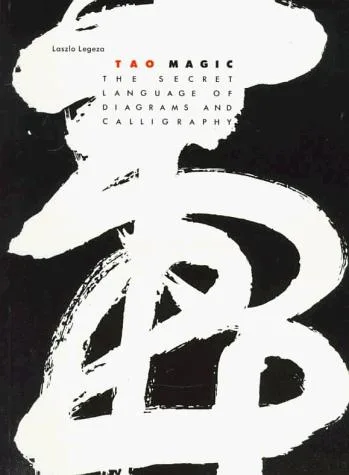
More Free Occult Philosophy Books
View all →