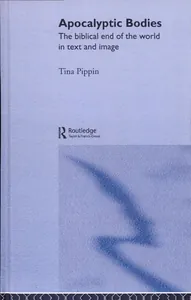
NRSV Apocrypha Text Edition Orange Hardcover NRA0 (Bible Nrsv)

 71
71

NRSV Apocrypha Text Edition Orange Hardcover NRA0 (Bible Nrsv)
The NRSV Apocrypha Text Edition, published by Baker Publishing Group, offers a commendable presentation of a crucial, yet often overlooked, body of ancient literature. Its strength lies in the clarity of the NRSV translation, which renders complex theological and historical narratives accessible to a contemporary audience. The inclusion of texts like Tobit and Wisdom of Solomon provides a vital bridge for understanding the intellectual and spiritual milieu between the Hebrew Bible and the New Testament. However, the hardcover edition itself, while functional, lacks the scholarly apparatus—such as extensive introductions, critical notes, or cross-references—that would elevate it beyond a mere textual collection for academic study. A particularly illuminating passage is found in the Wisdom of Solomon, where the author personifies Wisdom as an attribute of God, interacting with creation, a concept that profoundly influenced later theological developments. This edition serves its purpose as a reliable text but leaves the reader to seek external resources for deeper contextualization. It is a solid, if unadorned, textual resource.
📝 Description
71
Published in 1993, the NRSV Apocrypha Text Edition presents biblical texts often excluded from standard canons.
This 1993 edition from Baker Publishing Group provides the Apocryphal books translated into the New Revised Standard Version. These writings, though not universally accepted as canonical in Protestant or Catholic traditions, carry significant historical and theological importance. They bridge the gap between the Old and New Testaments, influencing later Jewish and early Christian thought. This volume is a critical resource for scholars, theologians, and students of biblical history. It aids in examining the development of religious ideas during the Second Temple and intertestamental periods. Readers interested in comparative religion, textual criticism, and ancient Near Eastern literature will find it valuable for grasping the full scope of ancient Hebraic and Hellenistic religious expression.
The Apocrypha, meaning 'hidden things,' has a complex textual history. Many of these books were included in the Septuagint, the ancient Greek translation of the Hebrew Bible, and were considered authoritative by early Christians, including figures like Augustine of Hippo. However, during the 16th-century Protestant Reformation, reformers like Martin Luther questioned their canonicity. This led to their separation from the main biblical text in many Protestant Bibles, though they were often kept in a distinct section. This NRSV edition reflects a modern scholarly approach to these texts, examining concepts at the intersection of Jewish tradition and Hellenistic philosophy.
The Apocrypha occupies a unique space between canonical scripture and apocryphal or pseudepigraphal texts. These writings, often preserved in Greek and other languages, contain narratives, wisdom teachings, and historical accounts that circulated widely in the centuries before and during the early Christian era. Their inclusion in the Septuagint meant they were familiar to early Jewish and Christian communities, shaping their understanding of history and theology. While later reformers debated their scriptural authority, their continued study offers insight into a broader stream of ancient religious thought that informed later mystical and esoteric traditions.
💡 Why Read This Book?
• Gain insight into the theological and philosophical currents shaping Judaism and early Christianity during the Second Temple period, particularly through texts like the Wisdom of Solomon, which was influential in the 1st century CE. • Understand the historical debate over biblical canonicity by examining texts that were considered scripture by many early Christians but later excluded from Protestant Bibles. • Appreciate the narrative and wisdom traditions that existed alongside, and informed, the development of the Hebrew Bible and the New Testament, as seen in the historical accounts of 1 and 2 Maccabees.
⭐ Reader Reviews
Honest opinions from readers who have explored this book.
❓ Frequently Asked Questions
What is the significance of the Apocrypha texts in biblical studies?
The Apocrypha are significant because they bridge the literary and theological gap between the Old and New Testaments, offering insights into Jewish thought and practice during the Second Temple period (roughly 500 BCE to 70 CE).
Why are these texts sometimes called 'Apocrypha'?
The term 'Apocrypha' generally means 'hidden things.' It refers to books whose authorship or canonicity was questioned by some, leading to their exclusion from certain biblical canons, though they were part of the Septuagint.
Which books are typically included in the Apocrypha?
The Apocrypha commonly includes books such as Tobit, Judith, the additions to Esther and Daniel, 1 and 2 Maccabees, Wisdom of Solomon, and Sirach (Ecclesiasticus).
What is the New Revised Standard Version (NRSV) translation known for?
The NRSV is recognized for its scholarly accuracy, gender-inclusive language where appropriate, and fidelity to the original biblical languages, making it a preferred version for academic and ecumenical use.
When was the NRSV Apocrypha Text Edition first published?
The NRSV Apocrypha Text Edition, as part of the broader NRSV project, was first published in 1993 by Baker Publishing Group.
Where do these Apocrypha texts fit historically?
They largely date from the intertestamental period, between the closing of the Old Testament canon and the beginning of the New Testament era, a time of significant Hellenistic influence on Jewish culture.
🔮 Key Themes & Symbolism
Intertestamental Wisdom Literature
This edition provides access to wisdom texts like the Wisdom of Solomon and Sirach, which offer profound reflections on divine wisdom's role in creation and human life. These works showcase the synthesis of Hebraic tradition with Hellenistic philosophical concepts, exploring themes of ethics, justice, and the afterlife, influencing early Christian understandings of Christ as the embodiment of divine wisdom.
Historical Narratives and Identity
Books such as 1 and 2 Maccabees offer vital historical accounts of Jewish resistance against foreign rule, particularly the Seleucid Empire in the 2nd century BCE. These narratives explore themes of religious persecution, martyrdom, and the struggle to maintain covenantal faithfulness in challenging geopolitical circumstances, providing context for later messianic expectations.
Apocalyptic and Eschatological Visions
Certain texts within the Apocrypha, particularly additions to Daniel and fragments of Enochic literature (though not always included in standard Apocrypha), examine apocalyptic visions and eschatological prophecies. They explore divine judgment, the end times, and the ultimate triumph of righteousness, reflecting a growing interest in future redemption and cosmic order during the period.
The Personification of Divine Attributes
The Wisdom of Solomon is notable for its sophisticated personification of Wisdom, portraying it as an active agent of God in creation and revelation. This theological development offers a precursor to later Christian doctrines concerning the Logos and the divine nature, demonstrating a sophisticated engagement with abstract theological concepts within Jewish thought.
💬 Memorable Quotes
Direct passages from the work, attributed to the author.
“For by insolent men they were corrupted, when they came among mortals.”
— This statement, likely referring to divine principles or laws, highlights the corrupting influence of human vice and secular power on sacred truths. It underscores the tension between spiritual ideals and the worldly realities faced by communities in antiquity.
“They thought to rule over the irrational and savage nations, and to make the world subject to their will.”
— This observation, possibly found in the Maccabean books, critiques the hubris of imperial powers seeking to dominate other cultures and impose their will. It reflects a perspective of resistance against oppressive empires and a belief in a higher divine justice.
💡 Key Ideas
Editorial paraphrase of the work's core concepts — not direct quotes.
Wisdom is radiant and unfading, and she will be readily seen by those who love her, and found by those who seek her.
This line from the Wisdom of Solomon personifies wisdom as an active, almost divine, entity that reveals itself to the earnest seeker. It suggests wisdom is not merely an abstract concept but a discoverable force, accessible through devotion and diligent pursuit.
For the corruptible body burdens the soul, and its earthly tent weighs down the mind that meditates.
This passage from the Wisdom of Solomon articulates a dualistic view, common in Hellenistic thought, where the physical body is seen as a hindrance to the soul's higher aspirations. It anticipates later Gnostic and Christian ideas about the spirit's transcendence over the material realm.
Let us therefore contend for our own lives, and for our holy places, and for our ancestral laws.
This is a paraphrased sentiment reflecting the spirit of resistance found in the Maccabean books. It captures the core motivation for armed struggle: the defense of religious heritage, sacred sites, and ancestral traditions against assimilation or desecration.
🌙 Esoteric Significance
Tradition
While not explicitly a text of a single esoteric lineage, the Apocrypha, particularly works like the Wisdom of Solomon, engages with themes resonant within Hermeticism and Gnosticism. Its exploration of divine Wisdom as an intermediary principle between the ineffable God and creation, and its dualistic undertones regarding the body and soul, echo concepts found in these traditions. It represents a bridge, containing elements that later esoteric schools would draw upon or interpret through their own frameworks.
Symbolism
The concept of 'Wisdom' itself functions as a potent symbol, personified as a divine emanation or agent, often depicted as God's co-creator or mediator. Other symbols include the divine 'breath' or 'spirit' (ruach), which imbues life and understanding, and the recurring motif of light versus darkness, representing divine knowledge and order versus ignorance and chaos, central to many esoteric cosmologies.
Modern Relevance
Contemporary esoteric practitioners and scholars of comparative mysticism find value in the Apocrypha for its insights into the development of Western esotericism. Its exploration of intermediary divine beings and its philosophical underpinnings contribute to understanding the roots of Gnostic and Hermetic thought. Thinkers interested in theosophical interpretations of scripture or the evolution of concepts like Sophia (Wisdom) often reference these texts.
👥 Who Should Read This Book
• Students of comparative religion and ancient philosophy seeking to understand the intellectual milieu that produced both Rabbinic Judaism and early Christianity. • Scholars of biblical textual criticism and history interested in examining the development of scriptural canons and the reception of ancient texts across different traditions. • Individuals exploring esoteric traditions who wish to trace the lineage of concepts like divine wisdom and the soul-body dualism found in later Hermetic and Gnostic writings.
📜 Historical Context
The NRSV Apocrypha Text Edition emerges from a 20th-century scholarly landscape deeply engaged with the complexities of the Second Temple period. Published in 1993, it stands in contrast to earlier theological traditions that either fully embraced or entirely rejected these texts. During the 16th century, figures like Martin Luther initiated the critical separation of the Apocrypha from the main biblical canon, a stance that became normative in Protestantism. This move was part of a broader Humanist project to return to original sources and question medieval interpretations. The discovery of the Dead Sea Scrolls in the mid-20th century further revitalized interest in these texts, providing new manuscript evidence and a richer context for understanding their place within ancient Judaism. Contemporary scholars, working with translations like the NRSV, now analyze these works not just for theological content but as vital historical documents reflecting diverse Jewish thought before the rise of Rabbinic Judaism and early Christianity.
📔 Journal Prompts
The personification of Wisdom in the Wisdom of Solomon: how does this concept compare to other divine intermediaries you have encountered?
The Maccabean struggle for religious autonomy: reflect on the tension between cultural assimilation and the preservation of sacred traditions.
The concept of the 'earthly tent' in the Wisdom of Solomon: explore your own relationship with the physical body and its perceived limitations.
Divine providence as depicted in Tobit: consider instances where seemingly negative events led to positive outcomes in your own life.
The exclusion of the Apocrypha from certain canons: analyze the criteria used to define religious authority and scripture.
🗂️ Glossary
Apocrypha
A collection of Jewish religious texts, not part of the Hebrew Bible, but included in the Septuagint and some Christian canons (e.g., Catholic, Orthodox). Their canonicity has been debated since antiquity.
Second Temple Period
The era of Jewish history from the rebuilding of the Jerusalem Temple around 516 BCE to its destruction by the Romans in 70 CE. A time of diverse Jewish sects and Hellenistic influence.
NRSV
New Revised Standard Version, a modern English translation of the Bible known for its scholarly accuracy and use of gender-inclusive language where appropriate.
Septuagint
The ancient Greek translation of the Hebrew Bible, created in Alexandria, Egypt, starting in the 3rd century BCE. It includes many Apocryphal books.
Hellenistic Influence
The impact of ancient Greek culture, language, and philosophy on non-Greek societies, particularly evident in Jewish thought during the period following Alexander the Great's conquests.
Intertestamental Period
The period of history between the Old Testament and the New Testament, roughly from the 4th century BCE to the 1st century CE, during which the Apocrypha were largely written.
Canonicity
The process and criteria by which religious texts are officially recognized as authoritative scripture within a particular religious tradition.
🔮 Readers Also Liked
Browse all →







More by Baker Publishing Group
All books →
More Free Occult Philosophy Books
View all →