The Alchemy of Tarot
 75
75

The Alchemy of Tarot
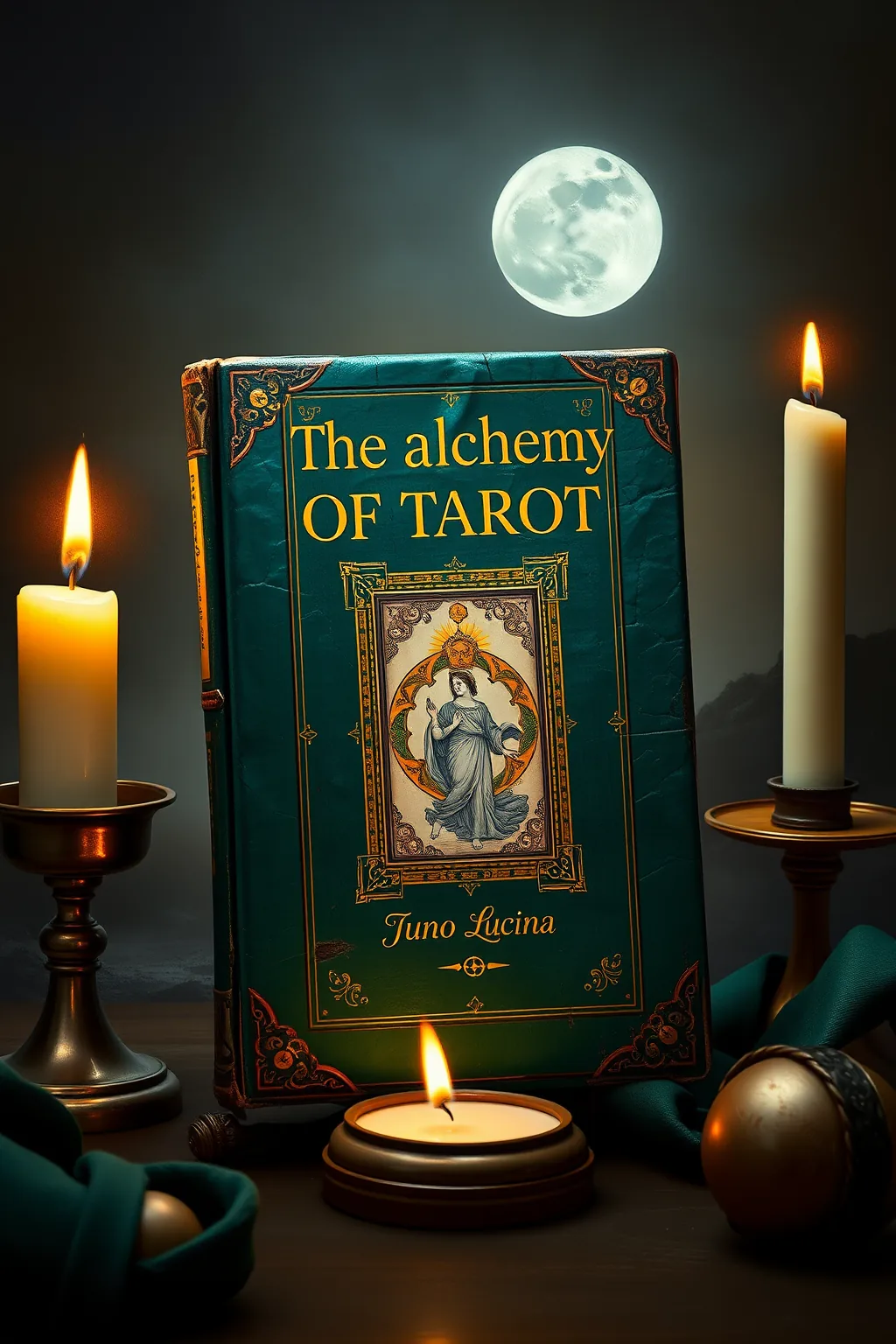
Juno Lucina’s *The Alchemy of Tarot* attempts a bold synthesis, seeking to unlock the Tarot’s deeper meaning by tying it to Qabalah and astrology. The strength of the work lies in its persistent effort to demonstrate an underlying unity in these diverse symbolic systems. Lucina’s interpretation of the Major Arcana as stages of an alchemical process for the psyche is particularly compelling, offering a framework for personal development. However, the book occasionally falters in its execution. While the connections are posited, the explication can sometimes feel more asserted than thoroughly demonstrated, particularly for readers less steeped in Qabalistic terminology. A passage discussing the correspondences between the Hebrew alphabet and the Tarot cards, while informative, assumes a level of familiarity that might alienate newcomers. Despite this, Lucina provides a practical method for divination that encourages introspection and a re-evaluation of one's personal truth through the lens of ancient wisdom. It’s a dense but rewarding exploration for dedicated students.
📝 Description
75
Published in 2011, The Alchemy of Tarot argues the 78 cards are a symbolic map of human archetypes and cosmic principles.
Juno Lucina's 2011 book, The Alchemy of Tarot, proposes that the 78 cards are more than just tools for divination. Instead, Lucina presents them as a symbolic map reflecting fundamental human archetypes and cosmic laws. The work examines the connections between the Tarot, Qabalah, and astrology, suggesting these systems originate from shared ancient mythologies and spiritual traditions. Lucina's goal is to offer readers a practical method for self-discovery and understanding.
This book is aimed at serious students of esoteric subjects, particularly those within the Western Mystery tradition. It is for individuals who want to understand the Tarot beyond its basic meanings, those already familiar with Qabalistic or astrological concepts, and diviners seeking to incorporate a deeper symbolic framework into their practice. The book appeals to those who see connections between all systems of knowledge.
The central idea is that the Tarot functions as an alchemical process for the soul, changing basic perceptions into higher awareness. This transformation happens through understanding how astrological influences and Qabalistic paths are reflected in the Tarot trumps and suits.
The Alchemy of Tarot was published in 2011, a time of growing interest in esotericism and comparative mythology. Lucina draws on established Western occult frameworks like the Qabalah, a key element of Western occultism since the Renaissance, and astrology, which has ancient origins. The book enters into a conversation with earlier syntheses by figures such as Eliphas Lévi and A.E. Waite, offering its own distinct interpretive path through universal myths and archetypes that shape religious and spiritual narratives.
💡 Why Read This Book?
• Gain a practical divination method by understanding the alchemical process as applied to the 78 Tarot cards, moving beyond simple interpretation to symbolic transformation. • Explore the specific interconnections between the Tarot, Qabalah, and astrology as presented by Juno Lucina, revealing shared archetypes and myths that inform spiritual traditions. • Reclaim your personal truth and place in existence through the integrated map the author provides, using the fundamental concepts of the Tarot as a guide.
⭐ Reader Reviews
Honest opinions from readers who have explored this book.
❓ Frequently Asked Questions
What is the core philosophical approach of The Alchemy of Tarot?
The book's core philosophy is that the Tarot is a symbolic representation of universal archetypes and cosmic principles, deeply connected to Qabalah and astrology. It presents Tarot as an alchemical map for personal transformation and self-discovery.
How does Juno Lucina connect Tarot to Qabalah and astrology?
Lucina maps correspondences between the 78 Tarot cards, the Sephiroth and paths of the Qabalah, and astrological signs and planets. This integration aims to reveal a unified symbolic language underlying these esoteric systems.
What does the book mean by 'reclaiming your own truth'?
Reclaiming one's truth refers to using the Tarot as an alchemical tool to understand one's inner landscape and external circumstances, thereby aligning with a more authentic self and recognizing one's place in the cosmos.
Is prior knowledge of Qabalah or astrology required to read this book?
While prior familiarity can enhance the experience, Lucina's work aims to explain these connections. However, a foundational understanding of basic Qabalistic and astrological concepts will likely make the book more accessible.
What kind of divination method does The Alchemy of Tarot offer?
It offers a practical method for divination that emphasizes introspection and self-understanding, viewing readings as opportunities to engage with archetypal energies and cosmic patterns for guidance.
When was The Alchemy of Tarot first published?
The Alchemy of Tarot by Juno Lucina was first published on March 31, 2011.
🔮 Key Themes & Symbolism
Tarot as Alchemical Process
The book frames the Tarot as an alchemical opus for the soul. Each card, particularly the Major Arcana, is seen as representing a stage in a transformative process, akin to the alchemical Great Work. This involves the transmutation of base consciousness (lead) into enlightened awareness (gold). By understanding these stages, readers can identify where they are in their personal alchemical journey and what steps are needed for further spiritual evolution.
Qabalistic and Astrological Correspondences
A central theme is the intricate web of correspondences between the Tarot, the Qabalistic Tree of Life, and astrological planets and zodiacal signs. Lucina posits that these systems are not isolated but form a unified symbolic language. The book details how the Hebrew alphabet, the Sephiroth, and the paths on the Tree of Life align with specific Tarot cards, revealing deeper layers of meaning and predictive potential.
Archetypes and Universal Myths
Lucina explores how the Tarot embodies fundamental human archetypes and the basic myths that underpin holy traditions across cultures. These shared narratives and symbols are presented as keys to understanding the collective unconscious and individual psyche. By recognizing these archetypal patterns within the Tarot, readers can connect with universal truths and their own inherent mythology.
Divination as Self-Reclamation
The work offers a practical approach to divination that moves beyond simple fortune-telling. It encourages readers to use the Tarot as a tool for self-reflection and truth-finding, a means to 'reclaim your own truth.' This involves understanding one's place within the larger cosmic order and awakening to the 'absolute Truth' by integrating personal insights with universal wisdom.
💬 Memorable Quotes
Direct passages from the work, attributed to the author.
“The Tarot is not merely a deck of cards, but a symbolic map of the human soul's journey.”
— This statement expresses the book's core thesis: that the Tarot's power lies in its archetypal representation of spiritual and psychological development, serving as a guide for inner exploration and growth.
“Shared archetypes of humanity and basic myths infuse our holy traditions.”
— This highlights the author's belief in a universal symbolic language that connects disparate spiritual and cultural expressions, suggesting that the Tarot, Qabalah, and astrology tap into this common wellspring of human experience.
“Through exploring fundamental interconnections, one can form a practical method of divination.”
— This emphasizes the book's practical application. By understanding the underlying connections between esoteric systems, readers are empowered to develop their own divination practices that are grounded in deeper symbolic understanding.
“The Tarot serves as an accurate map to guide you in remembering and reawakening to the absolute Truth.”
— This suggests that the Tarot's function extends beyond personal insight to a form of spiritual awakening, helping individuals reconnect with a higher reality or fundamental Truth about existence and their role within it.
“Reclaiming your own truth and your place within existence.”
— This phrase points to the ultimate goal of the alchemical process described in the book: achieving self-authenticity and a profound sense of belonging within the cosmic order through the wisdom gained from the Tarot.
🌙 Esoteric Significance
Tradition
The work is firmly rooted in the Western Esoteric Tradition, drawing heavily from Hermeticism, Qabalah, and Western astrology. It aligns with the Hermetic principle of 'As Above, So Below,' positing that cosmic patterns are reflected in the human psyche and symbolic systems. Lucina's approach is characteristic of later syncretic movements that seek to unify diverse esoteric knowledge streams into a coherent system for spiritual development and divination.
Symbolism
Key symbols include the 78 Tarot cards themselves, interpreted through the lens of alchemical transformation. The Qabalistic Tree of Life serves as a structural framework, with its Sephiroth and paths mapping onto the cards. Astrological symbols, such as the planets and zodiacal signs, are also integrated, revealing layers of meaning that connect the cards to celestial influences and the cycles of the cosmos.
Modern Relevance
Contemporary practitioners of Tarot, Qabalah, and astrology find value in Lucina's synthesis. Thinkers and groups focused on depth psychology, archetypal studies (following Jung), and modern Hermeticism often reference such integrated approaches. The work speaks to a contemporary desire for holistic understanding, seeking to connect personal experience with ancient wisdom in a meaningful way.
👥 Who Should Read This Book
• Advanced Tarot students seeking to deepen their practice beyond basic card meanings by exploring Qabalistic and astrological correspondences. • Practitioners of Western Esotericism interested in how the Tarot can serve as a map for personal alchemical transformation. • Students of comparative mythology and religion looking to understand how ancient myths and archetypes are encoded within symbolic systems like the Tarot.
📜 Historical Context
Published in 2011, Juno Lucina's *The Alchemy of Tarot* emerged during a period of significant public engagement with esoteric subjects, following the popularization of Tarot and Qabalah by figures like A.E. Waite and Dion Fortune in the early 20th century. The book taps into a long-standing Western Hermetic tradition that seeks to synthesize various mystical disciplines. Lucina's work can be seen in dialogue with contemporary esoteric authors exploring comparative mythology and symbolic systems. While not directly engaging with a specific competing school of thought in a polemical way, it implicitly positions itself against purely materialistic or reductionist interpretations of the Tarot, advocating instead for its spiritual and psychological depth. The reception of such works often falls into two camps: enthusiastic embrace by practitioners and skepticism from academic or more orthodox religious circles.
📔 Journal Prompts
The Qabalistic Tree of Life as a map for personal growth.
Archetypes of humanity reflected in the Major Arcana.
The alchemical process of transformation within the Tarot suits.
Astrological influences as perceived through the Tarot cards.
Reclaiming personal truth via symbolic interpretation.
🗂️ Glossary
Qabalah
A complex system of Jewish mysticism and esoteric philosophy that uses symbolic interpretation of scripture and rituals to understand the divine and the structure of the universe.
Sephiroth
The ten divine emanations or attributes of God in Kabbalistic cosmology, often represented as a diagram known as the Tree of Life.
Archetype
In Jungian psychology, a universal, archaic pattern and image that derives from the collective unconscious and is inherited, influencing human behavior and understanding.
Alchemy
An ancient philosophical and protoscientific tradition that aimed to purify, mature, and perfect certain materials. In esoteric contexts, it is often used metaphorically for spiritual transformation.
Major Arcana
The 22 trump cards of a standard Tarot deck, often seen as representing significant life events, spiritual lessons, or archetypal figures in a reading.
Divination
The practice of seeking knowledge of the future or the unknown by supernatural means, often through the use of tools like Tarot cards, astrology, or runes.
Hermeticism
A religious, philosophical, and esoteric tradition based on the purported teachings of Hermes Trismegistus, emphasizing wisdom, divine knowledge, and the interconnectedness of all things.