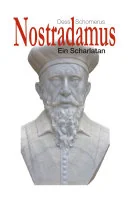
Nostradamus
 81
81

Nostradamus
Dess Schomerus’s treatment of Nostradamus offers a welcome departure from sensationalist interpretations. Instead of focusing solely on ‘what will happen,’ the book anchors Nostradamus in his 16th-century reality, examining the intellectual currents that informed his work. A significant strength lies in Schomerus’s meticulous dissection of the quatrains’ linguistic construction and historical context, particularly how contemporary political anxieties in France likely fueled his cryptic pronouncements. However, the work occasionally leans towards a dense academic style that might deter the casual reader seeking straightforward answers. The exploration of Nostradamus’s own alchemical and astrological practices, while informative, sometimes feels like a missed opportunity to more deeply connect these to the specific prophetic output discussed. Ultimately, Schomerus provides a valuable, grounded perspective on a figure often shrouded in mystique.
📝 Description
81
Dess Schomerus's 2018 book analyzes Nostradamus's quatrains beyond simple prophecy.
Dess Schomerus's examination of Nostradamus moves past simple prophecy recitation to an analytical study of the 16th-century physician and his cryptic verses. The book investigates the historical context in which Michel de Nostredame produced his *Centuries*, demonstrating how contemporary events and beliefs likely shaped his pronouncements. It highlights the linguistic ambiguities and allegorical nature of the quatrains, suggesting they were intended for interpretation within specific socio-political contexts.
This work is for readers who approach prophecy with critical inquiry. It appeals to historians of esotericism, students of Renaissance intellectual history, and anyone curious about the enduring power of predictive literature. Those interested in the intersection of astrology, medicine, and occultism in the 16th century will find substantial material. The book questions how such predictions were conceived and why they continue to capture the imagination.
Schomerus places Nostradamus within the intellectual currents of 16th-century Europe. It details the influence of Neoplatonism, Hermeticism, and Renaissance astrology, which provided a framework for understanding cosmic patterns. Schomerus contextualizes Nostradamus's work against political upheavals, plagues, and religious tensions of the era, arguing these were responses to a world in flux.
This book situates Nostradamus within the hermetic and astrological traditions prevalent in 16th-century Europe. It examines how Neoplatonic thought and Renaissance occult philosophies provided a conceptual framework for understanding cosmic influences and human destiny. Schomerus connects these intellectual currents to Nostradamus's specific methods and the reception of his work, arguing that his pronouncements were deeply embedded in the era's esoteric worldview.
💡 Why Read This Book?
• Understand the specific historical context of 16th-century France that shaped Nostradamus's writings, moving beyond abstract prophecy to concrete socio-political pressures. • Grasp the linguistic and astrological techniques Nostradamus employed in crafting his quatrains, offering insight into the *method* behind the predictions. • Evaluate the enduring appeal of Nostradamus's prophecies by examining how interpretations have evolved since their initial publication, connecting historical reception to modern fascination.
⭐ Reader Reviews
Honest opinions from readers who have explored this book.
❓ Frequently Asked Questions
When was Nostradamus's original collection of prophecies first published?
Nostradamus's seminal work, *Les Propheties*, containing the famous quatrains, was first published in 1555, with subsequent editions expanding its scope.
What was Nostradamus's profession besides prophecy?
Michel de Nostredame was a qualified physician and astrologer, practicing medicine during the Renaissance and integrating astrological knowledge into his worldview and writings.
What does Dess Schomerus's book reveal about the language of the prophecies?
Schomerus's work highlights the deliberately ambiguous and polyglot nature of Nostradamus's quatrains, suggesting they were intended for layered interpretation and could be applied to various events.
How does the book connect Nostradamus to his historical era?
The book situates Nostradamus within the turbulent 16th century, exploring how events like the plague, religious wars, and political intrigue in France likely influenced the themes and tone of his prophecies.
Are Nostradamus's predictions presented as factual in Schomerus's book?
No, Schomerus's book analyzes the prophecies critically, focusing on their historical context, linguistic construction, and the evolution of their interpretation, rather than asserting their factual accuracy.
What is the significance of the quatrain structure in Nostradamus's work?
The quatrain, a four-line stanza, is the primary structural unit for Nostradamus's prophecies. Schomerus likely examines how this concise form contributes to the enigmatic and open-ended nature of the predictions.
🔮 Key Themes & Symbolism
The Ambiguity of Prophecy
Schomerus's analysis focuses on the inherent ambiguity within Nostradamus's quatrains. The text likely explores how the use of multiple languages, historical allusions, and allegorical phrasing allows for flexible interpretations, making the prophecies applicable to vastly different events across centuries. This intentional vagueness is presented not as a flaw, but as a core element of their lasting power and the subject of ongoing debate among scholars and enthusiasts alike.
Renaissance Esotericism
The book situates Nostradamus firmly within the intellectual currents of the Renaissance. It details the prevalence of Hermeticism, Neoplatonism, and astrology during the 16th century, demonstrating how these esoteric traditions provided a framework for understanding cosmic order and human destiny. Schomerus likely examines Nostradamus's medical background alongside his prophetic endeavors, revealing the interconnectedness of science, magic, and divination in this period.
Historical Contextualization
A central theme is the grounding of Nostradamus's predictions in the specific historical circumstances of his time. Schomerus likely investigates how the political instability, religious conflicts, and widespread anxieties of 16th-century France may have directly influenced the content and tone of the prophecies. This approach moves beyond viewing the quatrains as purely supernatural pronouncements to understanding them as reflections of a turbulent era.
The Evolution of Interpretation
The work likely addresses how Nostradamus's prophecies have been interpreted and reinterpreted from his own time to the present day. Schomerus may trace the lineage of commentary, highlighting how subsequent generations have projected their own concerns and historical events onto the quatrains, demonstrating the dynamic relationship between seer, text, and interpreter.
💬 Memorable Quotes
Direct passages from the work, attributed to the author.
“The quatrains' cryptic nature stems from their linguistic elasticity.”
— This interpretation suggests that Nostradamus intentionally crafted his verses using words and phrases with multiple meanings or origins, allowing them to be applied to various historical events and contexts over time.
“Renaissance anxieties fueled the prophetic output.”
— This concept posits that the political and social turmoil of the 16th century, including wars, plagues, and religious schisms, provided the fertile ground and thematic material for Nostradamus's predictions.
“Astrology provided a framework for predicting cosmic influence.”
— This highlights the belief prevalent in Nostradamus's era that celestial movements held sway over earthly affairs, and that understanding these patterns was key to foreseeing future events.
“Interpretations shift with the changing historical landscape.”
— This idea underscores that the meaning derived from Nostradamus's prophecies is not static but evolves, with each era finding relevance by mapping current events onto the ancient verses.
“Nostradamus's medical practice informed his worldview.”
— This suggests that his understanding of the human body, disease, and natural remedies influenced his broader perspective on fate, destiny, and the forces governing the world.
🌙 Esoteric Significance
Tradition
Nostradamus's work is deeply rooted in the Hermetic and Neoplatonic traditions prevalent during the Renaissance. These traditions emphasized the interconnectedness of the cosmos, the influence of celestial bodies on earthly events, and the possibility of accessing hidden knowledge through divine inspiration or esoteric practices. His use of astrology, alchemy, and perhaps even scrying aligns with the broader Hermetic pursuit of understanding the 'as above, so below' principle, seeking correspondences between the macrocosm and the microcosm.
Symbolism
Key symbols in Nostradamus's work often derive from astrological and alchemical lore. For instance, celestial bodies like the Sun (often representing royalty or divine power) and the Moon, as well as planetary symbols, appear frequently, signifying specific influences or actors. Animals, such as the 'great dog' (Canis Major, linked to Sirius) or birds of prey, can symbolize omens or powerful figures. The recurring motif of 'fire' often represents conflict, destruction, or purification, reflecting the era's anxieties and the alchemical concept of transformation.
Modern Relevance
Contemporary esoteric practitioners and scholars of Western esotericism continue to engage with Nostradamus's prophecies. His work is studied within circles interested in predictive astrology, historical divination methods, and the history of occultism. Modern interpretations often draw parallels between his quatrains and contemporary global events, reflecting a continued human fascination with foretelling the future. Thinkers in fields ranging from comparative literature to ufology have also referenced his predictions, showcasing the enduring, albeit varied, influence of his enigmatic verses.
👥 Who Should Read This Book
• Students of Renaissance history and intellectual culture seeking to understand the blend of science, religion, and esotericism in the 16th century. • Critical readers interested in the history of prophecy and divination who wish to analyze the linguistic and contextual factors behind predictive texts. • Enthusiasts of esoteric traditions looking to explore the Hermetic and astrological underpinnings of a figure whose work has captivated imaginations for centuries.
📜 Historical Context
Michel de Nostredame, known as Nostradamus, published his prophetic work in the mid-16th century, a period marked by profound intellectual ferment and societal upheaval across Europe. The Renaissance was in full swing, fostering a renewed interest in classical learning, Hermetic philosophy, and astrology. This intellectual climate, far from being purely scientific, was deeply intertwined with esoteric traditions, where the stars were believed to influence human affairs and divine knowledge was sought through various mystical means. Nostradamus himself was a physician, a respected profession that often incorporated astrological diagnoses and prognoses. His major work, *Les Propheties*, began appearing in 1555, amidst the French Wars of Religion and widespread fear of apocalyptic events. While figures like Paracelsus were also exploring the intersections of alchemy, medicine, and cosmology, Nostradamus’s unique approach lay in his cryptic quatrains. His contemporaries, such as the Calvinist theologian and scholar Theodore Beza, were highly critical of such divinatory practices, viewing them as heretical, yet the popular fascination with prophecy persisted, demonstrating a tension between established religious doctrine and a deep-seated human desire to glimpse the future.
📔 Journal Prompts
Nostradamus's use of polyglot phrasing: How might linguistic ambiguity serve prophetic intent?
The astrologer-physician's worldview: What connections existed between medical practice and cosmic prediction in the 16th century?
The quatrain as a prophetic vessel: Reflect on the power of concise, four-line stanzas to convey complex future visions.
Interpreting historical anxieties: How did the specific fears of 16th-century France shape Nostradamus's pronouncements?
The legacy of the Centuries: Consider how subsequent generations have projected their own concerns onto Nostradamus's verses.
🗂️ Glossary
Quatrain
A stanza or poem consisting of four lines, typically with a specific rhyme scheme. Nostradamus structured his prophecies into quatrains, making them memorable and adaptable.
Hermeticism
A philosophical and religious tradition based on writings attributed to Hermes Trismegistus, emphasizing esoteric knowledge, astrology, alchemy, and the principle of 'as above, so below'.
Neoplatonism
A philosophical system that originated in the Roman Empire, drawing heavily on Plato's ideas, often incorporating mystical and spiritual elements concerning the One, intellect, and the soul.
Astrology
The study of the movements and relative positions of celestial bodies interpreted as having an influence on human affairs and the natural world. Integral to Renaissance medicine and prophecy.
Alchemy
An ancient practice combining chemistry, metallurgy, physics, medicine, and mysticism, primarily focused on the transmutation of base metals into gold and the search for an elixir of life.
Scrying
A form of divination involving gazing into a reflective surface (like a crystal ball or polished metal) to receive visions or insights. Nostradamus was rumored to have used such methods.
Les Propheties
The primary collection of Nostradamus's prophecies, first published in 1555, consisting of hundreds of four-line stanzas (quatrains) organized into 'centuries' (groups of 100).
This book appears in 1 collection
🔮 Readers Also Liked
Browse all →









From the “Nostradamus” Collection
View all →






More Free Occult Philosophy Books
View all →