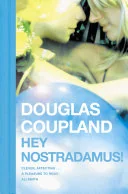
Hey Nostradamus!
 79
79

Hey Nostradamus!
Coupland’s *Hey Nostradamus!* is less about the sensationalism of its inciting incident and more about the quiet, persistent ache of its aftermath. The novel is most effective when it allows its characters’ fractured internal monologues to breathe, particularly in the segments dedicated to the school janitor, a figure often overlooked yet privy to profound moments. The author’s signature blend of the mundane and the existential is present, though at times the philosophical underpinnings feel a touch too overtly stated, occasionally sacrificing the raw emotional impact for conceptual clarity. A particular strength lies in the depiction of collective trauma manifesting as individual guilt, a delicate balance Coupland manages with considerable skill. The narrative’s fragmented structure, while mirroring the characters’ shattered lives, can also feel disorienting, demanding significant reader investment. Ultimately, *Hey Nostradamus!* offers a moving, if at times uneven, portrait of lives irrevocably altered and the arduous process of finding a way forward.
📝 Description
79
Douglas Coupland's 2010 novel, *Hey Nostradamus!*, examines a high school tragedy through fractured perspectives.
The novel follows a group of characters whose lives are irrevocably altered by a violent event at their high school. Coupland structures the narrative non-linearly, allowing readers to piece together the aftermath from multiple viewpoints. Each character grapples with their own burden of loss, guilt, and the difficult search for meaning in the wake of devastation.
The story is a close look at how individuals cope with severe trauma, exploring themes of family, faith, and the lasting effects of violence. It confronts the psychological and spiritual aspects of grief, offering a stark portrayal of human endurance. Coupland's characters attempt to rebuild their lives, confronting the difficult realities of their experiences.
Published in 2010, *Hey Nostradamus!* reflects a cultural moment concerned with school violence and the pervasive influence of digital communication. Coupland, known for his examinations of identity and alienation, uses this novel to probe deeper into existential questions. The characters' search for meaning and spiritual grounding aligns with broader early 21st-century literary trends that addressed a perceived void in secularized society. The novel taps into anxieties about faith and the human condition in a world grappling with rapid change and societal upheaval.
💡 Why Read This Book?
• Gain insight into the psychological toll of school shootings, as depicted through the character of Cheryl, a survivor whose internal landscape reflects the trauma beyond the event itself. • Understand Coupland's unique perspective on faith and doubt, specifically how characters like Father Michael wrestle with divine presence during a crisis. • Experience a non-linear narrative structure that mirrors the fragmented nature of memory and grief, particularly how the "afterlife" of impact is portrayed through interconnected character arcs.
⭐ Reader Reviews
Honest opinions from readers who have explored this book.
❓ Frequently Asked Questions
What is the central theme of Douglas Coupland's Hey Nostradamus!?
The central theme is the profound and lasting impact of a high school shooting on a community, exploring how individuals and families attempt to reconstruct their lives and find meaning in the aftermath of tragedy.
Who are the main characters in Hey Nostradamus!?
The novel features multiple narrators, including Cheryl, a survivor of the shooting; her estranged father, an agnostic; Father Michael, a priest grappling with his faith; and the school janitor, an observer of the unfolding events.
What is the significance of the title Hey Nostradamus!?
The title references the 16th-century astrologer Nostradamus, suggesting themes of prophecy, fate, and the attempt to foresee or understand catastrophic events, contrasting with the characters' struggle to cope with an unpredictable reality.
How does Hey Nostradamus! explore faith and spirituality?
The book examines faith through characters who question God's presence and silence during tragedy, particularly Father Michael's crisis of belief and the janitor's observations on human faith and resilience.
Is Hey Nostradamus! based on a real event?
While the novel is fictional, it draws on contemporary anxieties surrounding school violence, a recurring theme in public discourse since events like the Columbine High School massacre in 1999.
What is the narrative structure of the book?
The narrative structure is non-linear and fragmented, shifting between the perspectives of various characters. This approach mirrors the disjointed experience of trauma and the difficulty of forming a coherent narrative after a devastating event.
🔮 Key Themes & Symbolism
Reconstruction After Trauma
The core of the narrative revolves around the arduous process of rebuilding lives shattered by a violent school event. Characters like Cheryl and her father must navigate their fractured relationships and individual psyches, attempting to piece together a semblance of normalcy. The novel emphasizes that this reconstruction is not a return to the past but a difficult forging of a new existence from the fragments of what was lost, highlighting the psychological and emotional labor involved.
The Silence of God
Central to the novel is the questioning of divine presence and intervention in the face of unimaginable suffering. Father Michael’s crisis of faith is a prominent example, as he grapples with the apparent silence of God during the tragedy. This theme explores the existential void that can emerge when faith is tested, pushing characters to confront the absence of easy answers and the struggle to reconcile belief with horrific reality.
The Enduring Impact of Actions
The novel explores the concept of an 'afterlife' not in a traditional spiritual sense, but as the persistent legacy of actions and events. The shooting becomes a defining moment that continues to shape the lives of everyone involved, long after the immediate crisis has passed. This theme examines how past events create ripples that affect future relationships and personal development, illustrating how the past remains an active force in the present.
The Role of the Observer
The character of the school janitor provides a unique perspective, functioning as an almost silent observer of human drama and tragedy. His role highlights how profound moments are often witnessed by those in unassuming positions, offering a grounded, unvarnished view of the emotional fallout. This theme underscores the idea that significant insights into the human condition can be found in overlooked experiences and perspectives.
💬 Memorable Quotes
Direct passages from the work, attributed to the author.
“The world is a garbage dump. It is a place where people are born and then they die.”
— This statement reflects a nihilistic or deeply pessimistic worldview held by one of the characters, suggesting a profound disillusionment with existence and the perceived futility of life's struggles.
“You spend your life trying to find your place in the world. And then one day you realize that your place is just a place. It is not a destination.”
— This interpretation speaks to the novel's exploration of existential searching and the realization that belonging or purpose is not a fixed point but an ongoing process of being and experiencing life.
“After the shooting, the school was a ghost.”
— This vivid metaphor conveys the profound sense of emptiness and lingering trauma that pervades the school environment following the violent event, suggesting a pervasive atmosphere of loss and absence.
“We are all just people trying to get through life.”
— This simple yet profound observation, likely from the janitor's perspective, emphasizes the shared human experience of navigating life's challenges, highlighting a fundamental commonality amidst individual struggles.
💡 Key Ideas
Editorial paraphrase of the work's core concepts — not direct quotes.
God is not in the business of fixing things. He’s in the business of making people fix themselves.
This paraphrased concept captures Father Michael's struggle with his faith, suggesting a reinterpretation of divine will from direct intervention to empowering human agency and self-reliance in the face of adversity.
🌙 Esoteric Significance
Tradition
While not overtly aligned with a specific esoteric lineage like Hermeticism or Kabbalah, *Hey Nostradamus!* engages with perennial philosophical questions that resonate with Gnostic and existentialist thought. The focus on suffering, the questioning of a benevolent divine presence, and the search for meaning in a seemingly indifferent universe echo Gnostic themes of a flawed creation and the individual's struggle for liberation. It departs from traditional religious dogma by focusing on the immanent experience of trauma and the internal processes of healing and understanding.
Symbolism
The school itself, post-tragedy, functions as a symbol of a broken or corrupted world, a Gnostic 'demiurge' of sorts where innocence has been violently violated. The figure of Nostradamus in the title can be interpreted as a symbol of attempts to find order or prophecy in chaos, a human desire to understand or predict cataclysmic events, contrasting with the characters' actual lived experience of unpredictable tragedy. Father Michael's crisis symbolizes the breakdown of traditional spiritual frameworks when confronted with extreme suffering.
Modern Relevance
The novel's exploration of collective trauma, the fragmentation of identity in the digital age (though less explicit here than in some of Coupland's other works), and the search for spiritual meaning outside of organized religion remains highly relevant. Contemporary thinkers and practitioners in fields like trauma psychology, existential therapy, and even certain strands of post-modern spirituality might find resonance in its portrayal of fractured lives and the persistent human drive to make sense of suffering and loss.
👥 Who Should Read This Book
• Survivors and families affected by trauma seeking literary narratives that explore the long-term emotional and psychological aftermath of violent events. • Students of contemporary Canadian literature interested in Douglas Coupland's evolving thematic concerns and stylistic shifts beyond his earlier works. • Readers of philosophical fiction who appreciate narratives that grapple with existential questions, faith, doubt, and the search for meaning in the face of profound human suffering.
📜 Historical Context
Published in 2010, *Hey Nostradamus!* arrived during a period when discussions of school violence, particularly in the wake of the Columbine High School massacre in 1999 and subsequent incidents, remained a potent cultural concern. Douglas Coupland, who had previously defined a generation with *Generation X* (1991), continued his exploration of contemporary anxieties, albeit with a more introspective and less overtly satirical lens. The novel engaged with the early 21st-century zeitgeist, marked by a persistent questioning of faith and meaning in an increasingly secularized and technologically saturated world. While not directly engaging with specific intellectual movements, it touched upon existentialist themes prevalent in literature and philosophy, resonating with a public grappling with societal trauma and the search for spiritual anchors. The book’s reception highlighted Coupland’s evolving style, moving towards deeper emotional registers.
📔 Journal Prompts
Cheryl's internal experience of the "afterlife" of the shooting.
Father Michael's crisis of faith and the concept of divine silence.
The janitor's perspective on witnessing profound human moments.
Reconstructing a sense of self after a life-altering event.
Interpreting the symbolic meaning of the post-tragedy school environment.
🗂️ Glossary
Nostradamus
A 16th-century French astrologer, physician, and reputed seer, famous for his prophecies compiled in the book *Les Prophéties*. The title references him, suggesting themes of fate and foreknowledge.
The Shooting
The central traumatic event in the novel; a high school massacre that serves as the catalyst for the characters' struggles and the narrative's exploration of grief and recovery.
Afterlife
In the context of the novel, this refers not to a literal spiritual realm, but to the enduring impact and legacy of events and individuals on the lives of others.
Divine Silence
A theological and philosophical concept referring to the perceived absence or lack of response from God during times of intense suffering or crisis, a key struggle for Father Michael.
Reconstruction
The process by which characters attempt to rebuild their lives, relationships, and sense of self in the aftermath of the traumatic event depicted in the novel.
Observer
A role occupied by characters like the school janitor, who witness significant events and emotional turmoil without directly participating, offering a unique, often detached, perspective.
Existential Crisis
A period of intense questioning of one's purpose, values, and the meaning of life, often triggered by traumatic events, as experienced by several characters in the novel.
This book appears in 1 collection
🔮 Readers Also Liked
Browse all →








From the “Nostradamus” Collection
View all →






More Free Occult Philosophy Books
View all →