Yoga Anatomy
 73
73

Yoga Anatomy
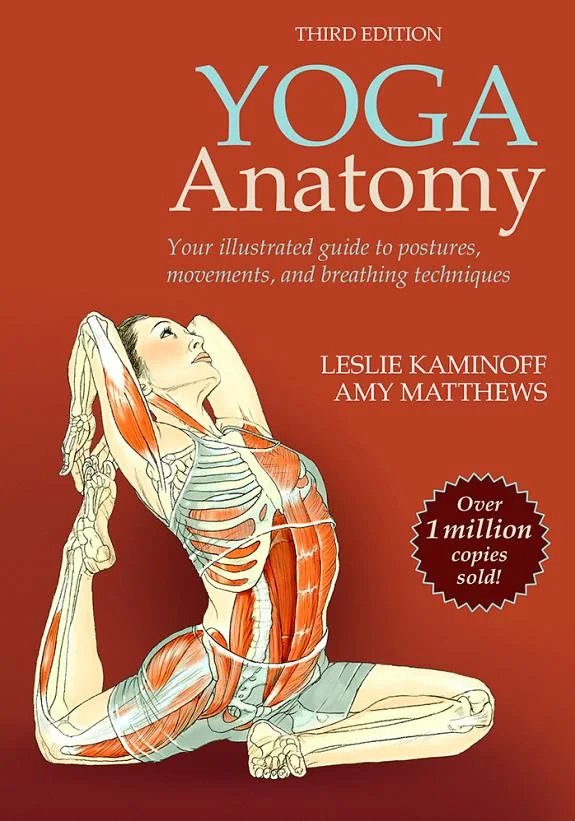
Leslie Kaminoff’s Yoga Anatomy offers a lucid, if occasionally dense, dissection of the physical architecture underlying yogic practice. Its strength lies in the exceptionally clear anatomical illustrations, which render complex muscular actions in asanas almost palpable. The book makes a commendable effort to connect the physical mechanics to the felt experience of a pose, a crucial bridge for many practitioners. However, its sheer detail can sometimes overwhelm the less scientifically inclined reader, presenting a challenge in retaining the information without constant reference. A particularly effective passage details the triangulation of forces in Tadasana (Mountain Pose), illustrating how seemingly simple stances involve sophisticated muscular coordination. Ultimately, Yoga Anatomy serves as an indispensable, albeit demanding, anatomical atlas for serious yoga students and teachers.
📝 Description
73
Leslie Kaminoff's Yoga Anatomy, published in 2011, maps the body's structure for yogic practice.
Published in 2011, Leslie Kaminoff's Yoga Anatomy details the human body's physical mechanics as they relate to yoga postures. The book examines the interplay of muscles, bones, and connective tissues that influence yogic asanas. It serves as a reference, explaining the biomechanics of movement and stability within yoga, with the goal of helping practitioners better understand their own bodies.
This volume is primarily for yoga instructors and serious practitioners who want a deeper anatomical understanding. Physical therapists, chiropractors, and other bodywork professionals may also find it useful for integrating yogic principles with their knowledge of the musculoskeletal system. Those recovering from injuries or looking to improve their alignment for safety and effectiveness will benefit from its detailed explanations.
Yoga Anatomy arrived as global interest in yoga, especially in the West, grew significantly after its late 20th century popularization. While earlier yoga texts often focused on philosophy and spiritual discipline, the early 2000s saw a demand for scientific explanations of asana's physical benefits and mechanics. Kaminoff's book addressed this need, connecting ancient yogic practice with modern physiological understanding, distinguishing itself from earlier works that concentrated solely on spiritual or philosophical aspects of yoga.
💡 Why Read This Book?
• Gain a precise understanding of the skeletal and muscular engagement required for poses like Virabhadrasana II (Warrior II), enabling safer and more effective practice. • Learn how the concept of fascial lines, as detailed in the book's sections on connective tissue, influences posture and movement across the entire body. • Appreciate the biomechanical principles behind breath integration (pranayama) and its impact on spinal alignment, as explored in the chapters dedicated to respiratory anatomy.
⭐ Reader Reviews
Honest opinions from readers who have explored this book.
❓ Frequently Asked Questions
What is the primary focus of Leslie Kaminoff's Yoga Anatomy?
The book's primary focus is the detailed exploration of human anatomy and physiology as it directly relates to the practice of yoga postures (asanas). It emphasizes biomechanics, muscular engagement, and skeletal alignment.
When was Yoga Anatomy first published?
Yoga Anatomy was first published in 2011, marking a significant contribution to the literature available for yoga practitioners seeking detailed anatomical knowledge.
Who is the author of Yoga Anatomy?
The author is Leslie Kaminoff, a renowned yoga educator and anatomical expert who has dedicated his career to studying and teaching the intersection of yoga and anatomy.
Does Yoga Anatomy discuss the subtle body or energetic anatomy?
Yes, while heavily focused on physical anatomy, the book also touches upon concepts of energetic anatomy and subtle body, linking them to physical structures and movements in yoga.
How does Yoga Anatomy differ from general anatomy textbooks?
It differs by specifically contextualizing anatomical information within the framework of yoga poses and practices, illustrating how muscles and bones function during asana execution.
Is Yoga Anatomy suitable for beginners?
It is most beneficial for dedicated practitioners and instructors. Beginners might find the depth of detail challenging, but it serves as an excellent foundational reference for those serious about understanding yoga's physical aspects.
🔮 Key Themes & Symbolism
Skeletal Foundation
The work meticulously details the skeletal system's role in supporting yogic postures. It explores how the alignment of bones—from the pelvis to the cranium—creates a stable base for movement and balance. Understanding the inherent structure of joints, such as the hip socket or shoulder girdle, is presented as fundamental to executing asanas safely and effectively. This focus on the bony framework provides a non-negotiable blueprint for practitioners aiming to cultivate proper alignment and avoid strain, grounding the esoteric practice in tangible physical reality.
Muscular Engagement Dynamics
Kaminoff systematically breaks down the complex interplay of muscles during various yoga poses. The book illustrates which muscles are meant to be engaged (agonist), which are stabilized (stabilizer), and which are stretched (antagonist) in each posture. This granular understanding allows practitioners to move beyond rote memorization of shapes to a conscious activation of the body's motor mechanisms. It highlights how subtle shifts in muscular effort can profoundly alter the experience and benefits of an asana, connecting physical exertion to subtle energetic flows.
Connective Tissue and Fascia
Beyond muscles and bones, Yoga Anatomy studies the often-overlooked field of connective tissues, particularly fascia. The book explains how these web-like structures envelop and connect muscles, organs, and bones, influencing flexibility, posture, and even proprioception. Understanding fascial lines and their role in transmitting force and sensation throughout the body offers a deeper appreciation for the holistic nature of movement in yoga. This perspective suggests that the practice works not just individual parts but the entire interconnected fascial network.
Breath and Movement Integration
The volume underscores the intrinsic connection between breath (pranayama) and physical movement (asana). It explains how diaphragmatic engagement and coordinated breathing patterns can facilitate deeper stretches, improve stability, and calm the nervous system. Kaminoff illustrates how conscious breathing can influence muscular tension and relaxation, guiding practitioners to use breath as a tool to both support and deepen their physical practice. This integration highlights yoga's aim to unite the physical form with vital life force.
💬 Memorable Quotes
Direct passages from the work, attributed to the author.
“The skeleton is your architecture.”
— This concise statement emphasizes the foundational role of the skeletal system. It suggests that understanding our bone structure is the primary step in building a stable and safe yoga practice, akin to an architect understanding the load-bearing elements of a building.
“Muscles provide the dynamic power and stability.”
— This highlights the active role of musculature. Beyond mere support, muscles are presented as the engine for movement, control, and balance within asanas, enabling both exertion and the precise adjustments needed for alignment.
“Fascia connects everything.”
— This interpretation points to the pervasive nature of connective tissue. It implies that the body's tissues are not isolated but form an interconnected web, influencing posture and movement holistically through subtle tensions and releases.
“Your breath is your guide.”
— This emphasizes the vital function of pranayama. It suggests that paying attention to the breath offers critical feedback on alignment, effort, and relaxation, serving as an internal compass during the practice of yoga.
“Alignment is not a static position, but a dynamic process.”
— This concept reframes alignment from a fixed ideal to an ongoing, adaptable state. It acknowledges that the body is constantly adjusting and responding, and proper alignment involves continuous awareness and subtle modifications.
🌙 Esoteric Significance
Tradition
While not explicitly tied to a single esoteric lineage like Kabbalah or Hermeticism, Yoga Anatomy intersects with yogic traditions that historically integrate the physical body (Hatha Yoga) as a vehicle for spiritual development. It bridges the physical discipline with the subtle body concepts prevalent in many Eastern esoteric systems, viewing the physical form as a temple or instrument for consciousness. The work's detailed mapping of physical structures can be seen as a modern interpretation of the ancient yogic science of understanding the body's energetic channels (nadis) and centers (chakras) through their physical correlates.
Symbolism
The book implicitly uses the human body itself as a primary symbol. Each asana, when understood anatomically, becomes a symbol of balance, strength, or surrender. The spine, for instance, symbolizes connection between the earthly and the divine, or the flow of consciousness. The detailed musculature and skeletal framework represent the 'divine architecture' of the microcosm – the human being – reflecting the macrocosm. The integration of breath with posture symbolizes the union of prana (life force) and apana (downward-moving energy), a core tenet in many yogic philosophies.
Modern Relevance
Contemporary yoga instruction, particularly in the West, heavily relies on the anatomical frameworks established by works like Kaminoff's. Yoga therapy, a burgeoning field, directly applies these principles to address specific physical ailments. Furthermore, mindfulness and somatic practices increasingly draw upon detailed bodily awareness, making Yoga Anatomy a foundational text for anyone seeking to understand the physical dimension of mind-body disciplines, including those exploring embodied consciousness and bioenergetics.
👥 Who Should Read This Book
['• Yoga instructors seeking to deepen their understanding of biomechanics and offer more precise alignment cues to students.', "• Dedicated yoga practitioners aiming to refine their personal practice, prevent injuries, and gain a clearer sense of their body's capabilities and limitations.", '• Physical therapists, chiropractors, and movement educators interested in the anatomical underpinnings of yoga and its therapeutic applications.']
📜 Historical Context
Published in 2011, Leslie Kaminoff's Yoga Anatomy arrived during a surge in Western yoga's mainstream acceptance, moving beyond niche spiritual circles to become a widespread fitness and wellness practice. The preceding decades saw figures like B.K.S. Iyengar popularize precise alignment, but detailed anatomical texts specifically tailored for yoga were less common. Kaminoff's work filled a significant gap, providing a scientifically grounded resource amidst a landscape often dominated by anecdotal experience or philosophical discourse. It offered a counterpoint to purely energetic or spiritual interpretations of yoga, grounding practice in the tangible reality of the human form. While not facing direct censorship, the book's empirical approach distinguished it from more traditional, scriptural yoga studies, aligning it with a growing interest in evidence-based approaches to health and movement.
📔 Journal Prompts
The Psoas muscle's role in hip flexion and spinal stability.
The function of the rotator cuff complex in shoulder stability during inversions.
How fascial connections influence the sensation of a forward bend.
The anatomical relationship between the diaphragm and spinal extension.
The engagement of the gluteal muscles in maintaining pelvic neutrality.
🗂️ Glossary
Asana
A physical posture or pose in yoga, originating from Sanskrit. Traditionally, it refers to a steady, comfortable seated position for meditation, but in modern usage, it encompasses all yoga postures.
Pranayama
The yogic practice of controlled breathing. It is considered a fundamental aspect of yoga, aiming to regulate the life force (prana) within the body.
Fascia
A band or sheet of connective tissue, primarily collagen, that surrounds muscles, groups of muscles, blood vessels, and nerves, binding some structures together while permitting others to slide smoothly over each other.
Agonist Muscle
A muscle that is primarily responsible for producing a specific movement. It contracts to create the desired action.
Antagonist Muscle
A muscle that opposes the action of another muscle (the agonist). It must relax or lengthen to allow the movement to occur.
Stabilizer Muscle
A muscle that supports or stabilizes a bone or joint, allowing other muscles to move the limb or body part more effectively.
Proprioception
The sense of the relative position of one's own parts of the body and strength of effort being employed in movement. It is the body's ability to sense its position and movement in space.
🔮 Readers Also Liked
Browse all →









More Free Occult Philosophy Books
View all →