The Complete Guide to Tarot & Cartomancy
 80
80

The Complete Guide to Tarot & Cartomancy
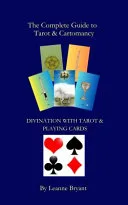
Leanne Bryant’s "The Complete Guide to Tarot & Cartomancy" attempts to bridge the often-separated worlds of Tarot and standard playing card divination, a laudable goal. The book’s strength lies in its systematic breakdown of numerological and elemental associations, presenting them with admirable clarity. Bryant’s discussion of card spread "themes" offers a useful framework for synthesizing individual card meanings into a cohesive narrative, moving beyond simple one-card readings. However, the work occasionally falters in its historical narrative; while it correctly notes the emergence of Tarot-like decks in the 18th century, it could benefit from a more robust engagement with the specific intellectual currents of that period, such as the influence of occultists like Antoine Court de Gébelin. The integration of illustrations is helpful, but some of the interpretations, particularly concerning reversed meanings, feel somewhat superficial, lacking the depth found in more specialized texts. Ultimately, Bryant provides a solid, accessible foundation, but seasoned practitioners may find themselves seeking further exploration of the deeper currents within the art of cartomancy.
📝 Description
80
Leanne Bryant's 2019 guide unifies Tarot and playing card divination.
This book presents a combined approach to divination using both Tarot and traditional playing cards. It traces the historical development of these decks, detailing their origins and the formation of their core meanings. The text systematically breaks down the symbolic language of cards, including numerological significance, elemental correspondences, and astrological links.
Readers will learn to interpret card spreads, such as "color progression" and how to identify the overall "theme" of a reading. The book encourages the development of intuition, moving practitioners beyond memorization to a deeper connection with the cards. It also covers practical matters like interpreting reversed cards, determining timing from card placements, and deck care.
The book examines the historical evolution of cartomancy, acknowledging its roots before modern Tarot. It discusses how systems like Tarot, with its specific structure and imagery, developed from earlier card divination forms in Europe, particularly around the 18th century with Tarot de Marseille-style decks. This historical context informs contemporary practices.
With 17 distinct card reading spreads, practitioners can apply the principles learned. The guide aims for a holistic understanding, blending traditional interpretations with personal intuition. Illustrations are included to reinforce lessons on card meanings, symbolism, and their use in predictive and self-reflective practices.
This guide sits within the Western esoteric tradition of divinatory arts, specifically focusing on cartomancy. It connects the rich symbolism of Tarot, originating in 15th-century Europe and later codified with occult associations, to the older practice of using standard playing cards for fortune-telling. By detailing historical roots and symbolic systems like numerology and astrology as applied to cards, Bryant places these practices within a lineage of esoteric knowledge that seeks to understand patterns and correspondences in the visible world to gain insight into hidden truths.
💡 Why Read This Book?
• Gain a unified understanding of divination by exploring the shared numerological and elemental foundations between Tarot and standard playing cards, as detailed in the section on "numerological meanings." • Develop intuitive reading skills through practical exercises and the analysis of "color progression" and "Theme" interpretation within card spreads, moving beyond rote memorization. • Master 17 distinct card reading spreads, offering varied applications for personal insight and predictive work, supported by clear illustrations and practical tips on card care.
⭐ Reader Reviews
Honest opinions from readers who have explored this book.
❓ Frequently Asked Questions
What is the difference between Tarot and cartomancy as presented in this book?
This guide treats cartomancy as divination using standard playing cards, while Tarot involves a specific deck structure with Major and Minor Arcana. The book explores how both systems share numerological and elemental foundations, allowing for a unified approach to divination.
Does the book explain the historical origins of Tarot and playing card divination?
Yes, "The Complete Guide to Tarot & Cartomancy" traces the history of these decks, discussing their evolution and the establishment of traditional meanings. It touches upon their emergence in Europe, particularly highlighting the 18th century context for Tarot.
How does the book help in developing intuitive reading abilities?
The guide emphasizes intuitive reading by teaching readers to understand the "Theme" of a spread and the concept of "color progression." It encourages moving beyond memorized meanings to a more personal and connected interpretation of the cards.
Are reversed card meanings covered in this guide?
Yes, the book includes interpretations for reversed card meanings, offering a more nuanced understanding of how the energies of the cards can manifest. This adds another layer to the interpretive possibilities during a reading.
How many different card spreads are included in the guide?
The book provides a practical toolkit with 17 different card reading spreads. These are designed to suit various types of questions and situations, offering versatility for both beginners and intermediate practitioners.
What practical advice is offered for Tarot and playing card decks?
Beyond interpretation, the guide offers practical advice on essential aspects of card handling, including tips on timing with the cards and proper methods for storing your decks to maintain their energy and longevity.
🔮 Key Themes & Symbolism
Elemental and Astrological Correspondences
This work meticulously maps the elemental (Fire, Water, Air, Earth) and astrological associations for each card in both Tarot and standard playing decks. It explains how these correspondences are not arbitrary but are rooted in ancient systems of understanding the cosmos and human psychology. By detailing which suits and numbers align with specific planets or zodiac signs, the book provides a framework for deeper interpretation, suggesting how celestial influences manifest through the cards. This approach moves beyond simple divinatory meanings to connect the cards to broader esoteric principles and the cyclical nature of existence.
Numerological Significance
The book offers a detailed exploration of numerology as it applies to cartomancy and Tarot. It systematically breaks down the meaning of numbers 1 through 10, and the significance of court cards, within the context of divination. This section explains how numbers represent stages of a journey or distinct energetic principles. For instance, the number '3' might signify creation or synthesis, while '7' could represent introspection or spirituality. Understanding these numerical underpinnings allows practitioners to interpret the inherent energies of each card and how they interact within a spread, providing a foundational layer of meaning.
Intuitive Development and Spread Interpretation
Beyond factual meanings, Bryant guides readers toward developing their innate intuitive abilities. Concepts like "color progression" and discerning the "Theme" of a spread are introduced to help synthesize information from multiple cards. This moves the practice from a mechanical process to an art form, where the reader's intuition acts as a crucial interpreter. The book advocates for a holistic approach, encouraging practitioners to trust their inner knowing while using the card system as a structured guide, fostering a dialogue between the cards and the querent's subconscious.
Historical Evolution of Decks
The guide traces the lineage of divination cards, acknowledging that playing cards predate the formalized Tarot structure. It discusses how playing cards, used for games and fortune-telling since the 14th century, evolved into the more complex Tarot decks that gained popularity in Europe, particularly in France during the 18th century. This historical context is vital for understanding the shared symbolism and divergence between the two systems. The book highlights how societal changes and occult revivals influenced the development and interpretation of these divinatory tools.
💬 Memorable Quotes
Direct passages from the work, attributed to the author.
“Understanding the "Theme" of a card spread is key to synthesizing disparate meanings.”
— This highlights the book's focus on holistic interpretation. It suggests that a successful reading involves identifying an overarching narrative or central message that connects the individual cards, rather than just listing their separate meanings.
“Numerological values provide a foundational layer of meaning for each card.”
— This points to the book's structured approach, emphasizing that the number on a card is not just a label but carries inherent symbolic weight, offering a systematic way to understand its energy and significance.
“Intuition acts as the final arbiter in card interpretation.”
— This underscores the book's balance between structured knowledge and personal insight. It suggests that while learning meanings is important, the practitioner's inner knowing is essential for truly unlocking the cards' messages.
“Reversed cards offer a different perspective on a card's energy.”
— This indicates that the guide provides a nuanced view of card interpretation, acknowledging that cards can manifest their energies internally, blocked, or in opposition to their upright meaning, adding complexity to readings.
“The elemental and astrological links reveal deeper cosmic connections.”
— This suggests the book connects card meanings to broader esoteric frameworks, implying that understanding these associations can illuminate how universal forces are reflected in individual readings and human experience.
🌙 Esoteric Significance
Tradition
This work aligns with the broad Western Esoteric tradition, particularly its modern manifestations that seek to synthesize various symbolic systems. While not strictly Hermetic or Kabbalistic, it draws upon the numerological and elemental frameworks common within these lineages. It functions as a practical guide, making complex symbolic languages accessible, much like the popularization efforts of Theosophy in the late 19th and early 20th centuries. Its emphasis on intuition also echoes Gnostic principles of inner knowing, albeit applied through a divinatory lens rather than direct spiritual gnosis.
Symbolism
Central symbols include the numerical progression from Ace (1) to Ten, representing cycles of manifestation, and the Court Cards (Page, Knight, Queen, King), symbolizing different archetypes of human interaction and development. Elemental symbolism (Fire for Wands/Hearts, Water for Cups/Diamonds, Air for Swords/Clubs, Earth for Pentacles/Spades) is crucial, linking the cards to fundamental forces of nature and consciousness, as explored in various esoteric schools since antiquity.
Modern Relevance
Bryant's guide speaks directly to contemporary practitioners interested in psychological archetypes and self-discovery, mirroring the Jungian influences prevalent in modern Tarot study. It appeals to the trend of secularized spirituality, where divination serves as a tool for introspection and personal growth rather than solely for fortune-telling. The book's inclusive approach, bridging Tarot and playing cards, aligns with modern eclectic practices that blend diverse traditions for personalized spiritual work.
👥 Who Should Read This Book
['• Aspiring diviners seeking a unified foundation in both Tarot and playing card systems, wanting to understand shared numerological and elemental principles.', '• Intermediate practitioners looking to deepen their intuitive abilities by learning to interpret spread "themes" and "color progression" beyond basic card meanings.', '• Students of Western Esotericism interested in the historical evolution of divination tools and their symbolic connections to ancient systems.']
📜 Historical Context
Published in 2024, Leanne Bryant's work emerges in a contemporary landscape where Tarot has achieved mainstream recognition, often overshadowing its progenitor, the standard playing card deck. Historically, the practice of cartomancy using playing cards gained significant traction in Europe from the 18th century onwards, running parallel to the rise of Tarot decks like those associated with the Tarot de Marseille. While occultists like Antoine Court de Gébelin were theorizing about Tarot's ancient Egyptian origins in the late 18th century, playing cards were widely used for both games and divination across social strata. Bryant’s book implicitly addresses this historical bifurcation, aiming to unify these traditions. Unlike earlier, more specialized works that might focus exclusively on either Tarot or playing cards, Bryant’s comprehensive approach seeks to demonstrate their shared symbolic DNA, a perspective that gains traction as modern occultism looks to synthesize disparate traditions.
📔 Journal Prompts
The "Theme" of a three-card spread: identify its core message.
Numerological significance of the number 7 in your current reading.
Elemental associations of the Hearts suit and their personal meaning.
Developing intuition: trust your first impression of the "color progression."
Historical context: how might the 18th century have viewed this spread?
🗂️ Glossary
Cartomancy
Divination using standard playing cards. This practice involves interpreting the arrangement and symbolism of a 52-card deck, often drawing parallels with Tarot systems.
Color Progression
A concept in card reading that refers to the visual flow and interplay of red and black cards within a spread, suggesting a dynamic or energetic pattern.
Court Cards
The Page, Knight, Queen, and King cards found in both Tarot and standard playing decks, representing archetypal figures, personalities, or stages of development.
Elemental Correspondences
The association of specific cards or suits with the classical elements: Fire, Water, Air, and Earth, used to understand their energetic qualities and influences.
Numerology
The study of the symbolic meaning of numbers. In cartomancy, it's used to interpret the inherent qualities and energies associated with each card's numerical value.
Spread Theme
The overarching narrative or central message that emerges from analyzing all the cards within a particular layout or spread, synthesizing their individual meanings.
Reversed Meanings
Interpretations given to cards when they appear upside down in a spread, often signifying blocked energy, internal issues, or an opposing perspective to the upright meaning.