Neuzeit-Tarot/New Age Tarot
 61
61

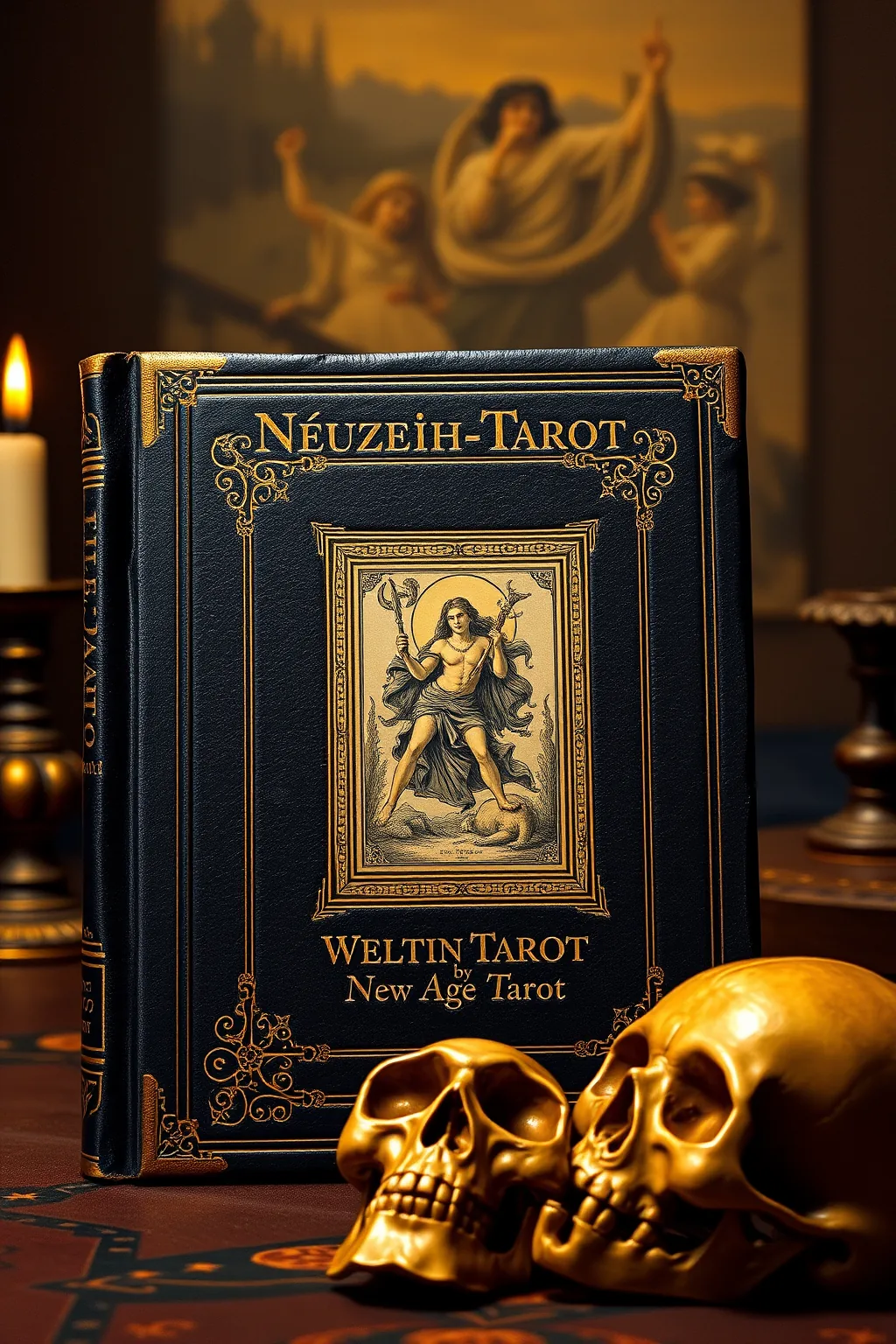
Neuzeit-Tarot/New Age Tarot



Balthazar Finch (Senior Critic, Occult Philosophy) — Walter Wegmuller's 'Neuzeit-Tarot/New Age Tarot' is a revelation for the discerning student of esoteric arts. Wegmuller's profound understanding of Tarot as a symbolic language of the soul is evident on every page. He doesn't just present meanings; he unlocks the energetic matrices and archetypal forces inherent within the deck. The strength lies in its synthesis of Jungian psychology with Hermetic principles, creating a framework that is both intellectually stimulating and spiritually potent. This work is essential for serious Tarot practitioners, mystics, and anyone seeking to integrate ancient wisdom into a contemporary spiritual practice. It elevates the Tarot from a mere fortune-telling tool to a powerful catalyst for personal transformation.
📝 Description
61
Walter Wegmuller published 'Neuzeit-Tarot/New Age Tarot' in 1987, linking tarot to modern consciousness.
Walter Wegmuller's 'Neuzeit-Tarot/New Age Tarot,' released in 1987, presents the tarot as a system for understanding contemporary consciousness. The book moves beyond traditional interpretations to connect the cards with astrological influences and psychological archetypes. Wegmuller structures his work around the Major and Minor Arcana, detailing each card's symbolism and its relation to personal development and cosmic awareness. He frames the tarot not just as a tool for prediction, but as a map for inner transformation and the alignment of individual will with universal patterns.
The author's approach reflects a synthesis of occult traditions and 20th-century psychological thought. He emphasizes the active role of the reader in interpreting the cards, suggesting that their meaning unfolds through personal experience and intuition. The book details the symbolism of each card, linking it to specific planetary and zodiacal correspondences. This creates a framework for self-reflection and a deeper comprehension of one's place within the larger order of existence.
Released in the late 1980s, 'Neuzeit-Tarot/New Age Tarot' emerged during a period of significant interest in integrating esoteric knowledge with contemporary psychological and spiritual frameworks. It follows in the tradition of earlier occultists like Aleister Crowley and Paul Foster Case, who sought to modernize and systematize tarot symbolism. Wegmuller's work specifically addresses the 'New Age' movement's focus on personal growth, consciousness expansion, and the interconnectedness of all things, positioning the tarot as a practical tool for these pursuits.
💡 Why Read This Book?
Delve into the profound symbolism and hidden meanings of the Tarot as never before. 'Neuzeit-Tarot' offers a unique perspective, blending ancient esoteric traditions with modern metaphysical thought. Ideal for seekers of spiritual truth, practitioners looking to deepen their practice, and scholars interested in the rich tapestry of divination.
⭐ Reader Reviews
Honest opinions from readers who have explored this book.
❓ Frequently Asked Questions
What makes 'Neuzeit-Tarot/New Age Tarot' unique?
Wegmuller's approach uniquely bridges ancient esoteric traditions with contemporary psychological and metaphysical insights, revealing the Tarot as a dynamic tool for self-discovery and spiritual evolution, rather than mere fortune-telling.
Is this book suitable for beginners?
While rich in depth, Wegmuller's clear explanations and evocative imagery make it accessible to dedicated beginners willing to engage with its profound symbolism and philosophical underpinnings.
What esoteric traditions influence this work?
The book draws heavily from Hermeticism, Kabbalah, Alchemy, and Jungian archetypal psychology, weaving them into a cohesive and potent understanding of Tarot.
Does this book focus on specific card spreads?
While it covers fundamental interpretations, the emphasis is on understanding the archetypal energies and symbolic language of the cards, empowering readers to develop their own intuitive spreads.
Can this book be used with any Tarot deck?
The core principles and interpretations are universally applicable to most Rider-Waite-Smith-based decks. The artwork in Wegmuller's own deck is distinctive, but the wisdom transcends specific imagery.
🔮 Key Themes & Symbolism
The Archetypal Language of the Soul
Wegmuller posits the Tarot as a universal language of the soul, a symbolic map of human consciousness and its journey through archetypal energies. Each card represents fundamental aspects of the human psyche and the cosmic forces that influence our lives. Understanding these archetypes allows for profound self-reflection and insight into the hidden motivations and potentials within oneself and others, fostering a deeper connection to the collective unconscious and the spiritual dimensions of existence.
The Synthesis of Ancient Wisdom and Modern Metaphysics
This work masterfully interweaves the clear insights of ancient esoteric traditions such as Hermeticism, Kabbalah, and Alchemy with contemporary psychological theories, particularly those of Carl Jung. Wegmuller demonstrates how these seemingly disparate fields converge within the Tarot's structure, offering a holistic framework for understanding reality. It's a proof of the enduring relevance of ancient knowledge in reading through the complexities of the modern world and the ongoing evolution of human consciousness.
Tarot as a Catalyst for Transformation
Beyond simple prediction, 'Neuzeit-Tarot' presents the cards as potent keys to personal transformation and spiritual awakening. By engaging with the symbolic narratives and energetic currents of the Tarot, readers are encouraged to confront their shadow aspects, embrace their divine potential, and align their personal journeys with the greater cosmic order. The book serves as a guide not just to reading the cards, but to living a more conscious, empowered, and spiritually integrated life.
💬 Memorable Quotes
Direct passages from the work, attributed to the author.
“Within each symbol lies an echo of the divine.”
— This highlights the sacred nature of Tarot imagery, suggesting that each card's symbolism is imbued with spiritual significance and connects the user to a higher, universal consciousness.
“The Fool's leap is the beginning of all wisdom.”
— This points to the importance of faith, courage, and embracing the unknown as fundamental steps in the process of gaining true understanding and spiritual insight.
“Alchemy of the self is the ultimate divination.”
— This suggests that the true purpose of Tarot is not just to see what is, but to actively transform oneself, much like an alchemist transmutes base metals into gold.
“The veiled Maiden holds the secrets of creation.”
— This alludes to the mystery and feminine divine inherent in certain Tarot figures, emphasizing intuition and hidden knowledge as crucial elements in deciphering life's deeper meanings.
💡 Key Ideas
Editorial paraphrase of the work's core concepts — not direct quotes.
The Tarot is not a mirror of the future, but a map of the soul's journey.
This quote emphasizes the internal, psychological, and spiritual focus of Wegmuller's interpretation, shifting the emphasis from external prediction to inner exploration and growth.
🌙 Esoteric Significance
Tradition
This work is deeply rooted in the Hermetic tradition, drawing heavily on Kabbalistic numerology, alchemical symbolism, and the archetypal psychology pioneered by Carl Jung. It presents the Tarot as a microcosm of the universe and a macrocosm of the human psyche, aligning with the Hermetic principle 'As Above, So Below.' The book offers a contemporary interpretation of these ancient systems, making their profound wisdom accessible for personal transformation and spiritual enlightenment.
Symbolism
The core of Wegmuller's esoteric insight lies in his interpretation of Tarot symbolism as a visual language for the soul's journey. He studies the archetypal meanings of the Major and Minor Arcana, revealing connections to cosmic forces, psychological states, and stages of spiritual evolution. Key symbols like the Tree of Life, alchemical processes, and mythological figures are elucidated, showing how they map the path of consciousness from the material to the divine, offering clear insights into the hidden workings of existence.
Modern Relevance
In an age often characterized by fragmentation and a search for meaning, 'Neuzeit-Tarot/New Age Tarot' remains profoundly relevant. It provides a framework for understanding the interconnectedness of all things and offers practical tools for self-awareness and personal growth. Its emphasis on archetypal energies and the alchemy of the self empowers individuals to navigate life's challenges with greater insight and to actively participate in their own spiritual evolution, making it an invaluable resource for contemporary seekers.
👥 Who Should Read This Book
This important work is a treasure for a diverse range of individuals. For the **beginner** beginning their Tarot journey, it offers a profound and insightful introduction beyond superficial interpretations. **Scholars** of esotericism and comparative religion will find its synthesis of traditions intellectually stimulating. **Spiritual seekers** and **mystics** will appreciate its depth, its connection to archetypal energies, and its guidance towards self-transformation. Experienced **Tarot practitioners** will discover new layers of meaning and a refined approach to their craft, enhancing their readings and their personal connection to the cards.
📜 Historical Context
Published in an era of burgeoning interest in New Age philosophies and esoteric studies, 'Neuzeit-Tarot/New Age Tarot' emerged as a significant contribution to the spiritual range of the late 20th century. The 1970s and 80s saw a widespread exploration of ancient traditions, Eastern philosophies, and psychological theories, all seeking to offer alternatives to established dogma and provide deeper meaning in a rapidly changing world. Walter Wegmuller's work resonated deeply within this context, offering a sophisticated synthesis that appealed to both seasoned occultists and those newly beginning spiritual paths. Its influence can be seen in the continued exploration of Tarot as a tool for psychological insight and spiritual development, solidifying its place as a foundational text for modern esoteric practitioners.
📔 Journal Prompts
Reflect on the 'Fool's leap' in your own life. Where have you embraced the unknown, and what wisdom did you gain?
Choose a card that appeals to a current challenge. How do its archetypal energies offer a new perspective or solution?
Consider the alchemical process described in the book. What aspects of yourself are you seeking to 'transmute' or transform?
How can the 'echo of the divine' within Tarot symbols guide your daily actions and intentions?
Explore the concept of the 'map of the soul's journey' in relation to your personal aspirations and spiritual path.
🗂️ Glossary
Archetype
Universal, archaic patterns and images that derive from the collective unconscious and are the psychic conditions of the formation of the mythology of a people.
Hermeticism
A religious, philosophical, and esoteric tradition based primarily upon writings attributed to Hermes Trismegistus, emphasizing the unity of all things and the potential for divine knowledge.
Kabbalah
A body of mystical teachings of Judaism, concerning the nature of God and the creation and purpose of the universe, often visualized through the Tree of Life.
Alchemy
An ancient philosophical and protoscientific tradition that aimed to purify, mature, and perfect certain objects. In a spiritual context, it refers to the transformation of the self.
Divination
The practice of seeking knowledge of the future or the unknown by supernatural means, often through the interpretation of signs or omens.
This book appears in 3 collections
🔮 Readers Also Liked
Browse all →
From the “Tarot” Collection
View all →
More Free Divination & Tarot Books
View all →