Tarot and Graphology
 62
62

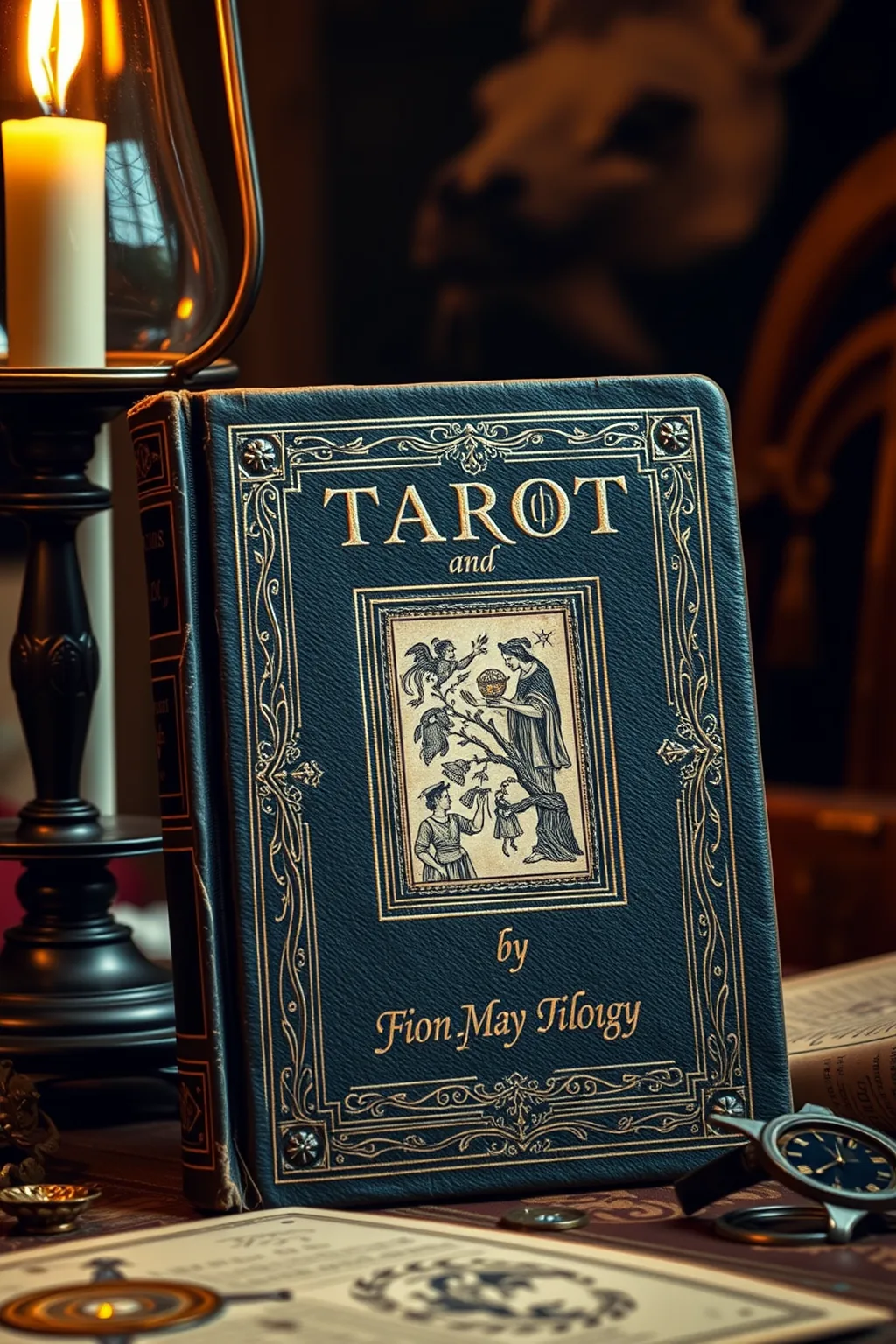
Tarot and Graphology



Lorelei Sage, Contemplative Literature Editor: Fiona MacKay Young's 'Tarot and Graphology' is a revelation, a meticulously researched exploration that bridges two seemingly disparate yet profoundly interconnected esoteric disciplines. Young's authoritative voice guides the reader through the intricate symbology of Tarot, juxtaposing it with the nuanced revelations of graphology. The book excels in its ability to illuminate the subtle energies and psychological underpinnings that link the archetypal imagery of the cards to the personal narrative inscribed in handwriting. This is an essential read for those seeking to deepen their divinatory practices and gain a more holistic understanding of the self, offering unparalleled insights for serious students of occultism and personal growth.
📝 Description
62
Fiona MacKay Young's 1997 book connects Tarot archetypes to handwriting analysis.
Fiona MacKay Young's 'Tarot and Graphology' examines the relationship between the symbolic language of Tarot cards and the insights derived from handwriting analysis. The author posits that the archetypal energies represented in the Tarot deck find a parallel in the characterological information revealed by graphology. She suggests that the patterns and strokes in handwriting can mirror the energetic imprints associated with specific Tarot cards.
This approach offers a unique method for self-understanding and divination, combining two distinct esoteric systems. The book details how to interpret these connections, viewing card symbolism not just in isolation but as a reflection of the subconscious script found in written text. Young aims to provide readers with a dual perspective for exploring the human psyche and its connection to broader cosmic patterns. The text invites a deeper perception of intuition and self-awareness through the silent language of the soul and the written word.
This work sits within the modern esoteric tradition that seeks to find correspondences between various symbolic systems and human psychology. It follows a lineage of thinkers who believed in a universal symbolic language that manifests across different mediums, from celestial bodies to human actions. By linking the established symbolic framework of the Tarot with the personal symbolism embedded in handwriting, Young contributes to a perspective where the inner world and outer expressions are seen as interconnected and decipherable through analogical reasoning. This aligns with practices that use divination tools and physiognomic systems for self-knowledge.
💡 Why Read This Book?
Uncover the hidden resonance between your soul's archetypes and your unique personal expression. 'Tarot and Graphology' offers a rare synthesis, providing unparalleled tools for self-understanding, intuitive development, and a deeper connection to universal energies. Ideal for Tarot enthusiasts, graphology students, and anyone seeking profound self-awareness through esoteric wisdom.
⭐ Reader Reviews
Honest opinions from readers who have explored this book.
❓ Frequently Asked Questions
What is the core principle of combining Tarot and Graphology?
The core principle is that the archetypal energies of the Tarot and the subconscious patterns revealed in handwriting are interconnected, offering a dualistic approach to understanding the self and predicting future potentials.
Do I need prior knowledge of Tarot or Graphology to read this book?
While prior knowledge enhances the experience, the book is structured to guide newcomers through foundational concepts, making it accessible to those new to either discipline.
How can this book aid in personal growth?
By revealing subconscious tendencies and archetypal influences through both Tarot readings and handwriting analysis, the book provides profound insights for self-awareness, overcoming limitations, and fostering personal transformation.
Is 'Tarot and Graphology' suitable for professional diviners?
Absolutely. It offers advanced perspectives and unique methodologies for enhancing professional readings, providing a richer and more nuanced understanding of clients.
What kind of writing samples are best for graphological analysis in this context?
Clear, uninhibited samples of everyday handwriting, such as personal letters or journal entries, are ideal for capturing the subconscious nuances relevant to the book's analysis.
🔮 Key Themes & Symbolism
The Symbiotic Dance of Archetypes and Script
This theme explores the profound, often unseen, connections between the universal archetypes represented in the Tarot deck and the unique, personal language of handwriting. It posits that the energetic vibrations and symbolic meanings of Tarot cards can find their echo in the strokes, loops, and pressure of an individual's script. By examining how the subconscious mind manifests through both symbolic imagery and physical writing, practitioners can unlock deeper layers of self-awareness and intuitive understanding. This symbiotic relationship offers a powerful tool for divination, revealing not only potential paths but also the inner landscape from which those paths emerge.
Unveiling the Subconscious Through Dual Lenses
The book champions a dualistic approach to peering into the depths of the human psyche, utilizing the Tarot and Graphology as complementary tools. Each discipline acts as a distinct yet interwoven lens, providing a more comprehensive and nuanced portrait of an individual's inner world, motivations, and hidden potentials. The Tarot illuminates the grand cosmic narratives and archetypal forces at play, while Graphology deciphers the subtle, individualistic expressions of the subconscious. Together, they offer an outstanding method for self-discovery, enabling seekers to understand the root causes of their experiences and to consciously shape their destiny with greater clarity and insight.
The Art of Esoteric Synthesis and Intuitive Augmentation
Fiona MacKay Young masterfully demonstrates the art of esoteric synthesis, tying together two powerful divinatory systems into a cohesive and potent methodology. This synthesis is not merely additive; it creates a synergistic effect, amplifying intuitive insights and providing richer, more actionable interpretations. For practitioners, this means augmenting their existing skills with a powerful new dimension, enabling them to deliver more profound readings and guide individuals with greater precision. The book serves as a proof of the interconnectedness of esoteric knowledge and the potential for deeper wisdom when different traditions are explored and harmonized.
💬 Memorable Quotes
Direct passages from the work, attributed to the author.
“Tarot maps the stars, Graphology charts the inner cosmos.”
— This highlights the complementary nature of the two disciplines, with Tarot representing outward destiny and Graphology representing the inner landscape that shapes it.
“Every curve, a story; every line, a prophecy.”
— Emphasizes the rich narrative potential within handwriting, suggesting that even the smallest graphical detail can hold significant meaning and foretell future possibilities.
“The silent language of the pen, the vibrant voice of the cards.”
— Illustrates the dualistic communication channels explored in the book – the subtle, often unconscious, expression through writing and the symbolic, archetypal language of the Tarot.
“Where intuition meets inscription, truth unfurls.”
— Suggests that the combination of intuitive perception (Tarot) and tangible evidence (Graphology) leads to a profound revelation of underlying truths about oneself and one's path.
💡 Key Ideas
Editorial paraphrase of the work's core concepts — not direct quotes.
The hand writes the soul's whispered secrets.
This quote expresses the core graphological tenet that handwriting is a direct manifestation of the inner self, revealing subconscious thoughts and emotions.
🌙 Esoteric Significance
Tradition
This work deeply engages with hermetic principles, particularly the axiom 'As Above, So Below,' bridging the macrocosmic archetypes of the Tarot with the microcosmic representation of the individual in Graphology. It also draws from Jungian psychology's exploration of archetypes and the collective unconscious, framing handwriting analysis as a tangible manifestation of these deep psychological structures. The synthesis aligns with traditions that seek to understand the interconnectedness of all things, viewing both symbolic systems as keys to unlocking hidden spiritual and psychological truths.
Symbolism
The book's symbolism is rich and complex. Tarot cards, with their archetypal imagery, represent universal human experiences and cosmic forces. Handwriting, in Graphology, becomes a symbolic language of the self, where line thickness, slant, loops, and letter formations all carry symbolic weight, representing traits like confidence, anxiety, creativity, and intellect. The esoteric significance lies in interpreting how these two symbolic systems reflect and inform each other, revealing deeper layers of meaning about an individual's life path and inner world.
Modern Relevance
In an age increasingly focused on self-awareness, mental well-being, and personalized growth, the insights offered by 'Tarot and Graphology' are more relevant than ever. The book provides a holistic framework for understanding the complex interplay between our inner lives and outer expressions. Its principles empower individuals to harness intuitive knowledge, gain clarity on their personal challenges and strengths, and navigate their life journeys with greater intention and self-possession. The synthesis of symbolic interpretation and empirical observation offers a powerful, enduring tool for personal and spiritual development in the contemporary world.
👥 Who Should Read This Book
This key work is essential for dedicated Tarot enthusiasts seeking to deepen their interpretive skills and explore the subconscious underpinnings of the cards. Graphology students will find it an invaluable resource for understanding the psychological dimensions of handwriting. Spiritual seekers and practitioners of esoteric arts will discover a powerful new methodology for self-exploration and divination. Furthermore, psychologists and counselors interested in symbolic interpretation and non-verbal communication will find groundbreaking insights into the human psyche. It is a must-read for anyone yearning for a more profound and integrated understanding of themselves and the universe.
📜 Historical Context
Published during a period of burgeoning interest in spiritualism and esoteric studies in the mid-to-late 20th century, 'Tarot and Graphology' emerged as a significant contribution to the occult literature landscape. This era saw a growing desire to explore alternative avenues of knowledge and self-understanding beyond conventional science and religion. The confluence of psychology and spirituality was a hallmark of the time, making the investigation into the subconscious through symbolic systems like Tarot and the physical manifestations of the mind in handwriting particularly resonant. Fiona MacKay Young's work tapped into this zeitgeist, offering a sophisticated synthesis that appealed to both academic curiosity and personal spiritual seeking, solidifying its place within the enduring legacy of esoteric exploration.
📔 Journal Prompts
Analyze a sample of your own handwriting: what Tarot archetypes do the dominant strokes and loops seem to represent for you?
Choose a Tarot card that resonates strongly with you today. Write about how the characteristics of this card might be reflected in your current handwriting.
How does the overall 'energy' or 'feeling' of a Tarot spread compare to the overall 'energy' or 'feeling' of a sample of your handwriting?
Consider a significant life event. How might the Tarot's narrative and your handwriting's script both shed light on your experience during that time?
Reflect on a handwriting trait you wish to change. How could consciously working with a corresponding Tarot archetype support this transformation?
🗂️ Glossary
Archetype
In esoteric and psychological contexts, an archetype is a universal, archaic pattern of thought or image derived from the collective unconscious, appearing in dreams, myths, and symbols like those found in the Tarot.
Graphology
The study and interpretation of handwriting to understand personality traits, emotional states, and potential future tendencies, based on the belief that writing is a unique expression of the subconscious mind.
Hermeticism
A philosophical and religious tradition based on writings attributed to Hermes Trismegistus, emphasizing esoteric knowledge, spiritual enlightenment, and the interconnectedness of the divine, human, and natural worlds.
Subconscious Mind
The part of the mind of which we are not aware, but which influences our actions and feelings, believed to be expressed through dreams, intuition, and automatic behaviors like handwriting.
Divination
The practice of seeking knowledge of the future or the unknown by supernatural means, often through symbolic systems such as Tarot cards, astrology, or handwriting analysis.
This book appears in 3 collections
🔮 Readers Also Liked
Browse all →
From the “Tarot” Collection
View all →
More Free Divination & Tarot Books
View all →