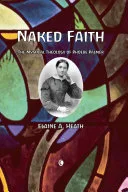
Naked Faith
 80
80

Naked Faith
Elaine A. Heath’s engagement with Phoebe Palmer is a much-needed corrective to the historical amnesia surrounding this pivotal figure in the Holiness Movement. The book’s signal strength lies in its meticulous placement of Palmer within the grand lineage of Christian mystics, a lineage usually populated by European mystics. Heath persuasively argues that Palmer’s sanctification theology, when stripped of its apophatic foundations, lost much of its profound depth. The limitation, however, is that the exploration of these apophatic moorings sometimes feels more theoretical than deeply experiential, leaving the reader yearning for more direct connections to Palmer's lived contemplative practice.
A particularly insightful passage discusses how Palmer’s emphasis on a definite moment of consecration, while central to her doctrine, risks becoming a static theological construct rather than an ongoing mystical encounter. Heath’s argument that this theological ossification contributed to Palmer’s eventual obscurity is compelling. This work effectively reclaims a complex theological and mystical heritage for both academic study and devotional practice.
📝 Description
80
Elaine A. Heath's Naked Faith re-examines Phoebe Palmer's Christian mystical contributions.
Naked Faith scrutinizes the Christian mystical tradition, with a particular focus on Phoebe Palmer's often overlooked role. Heath aims to re-evaluate Palmer's theological ideas by placing them within the wider history of Christian mysticism. This history, Heath notes, is frequently shaped by prominent figures like Catherine of Siena and Teresa of Avila. The book contends that Palmer's distinct theology of sanctification was disconnected from its apophatic spiritual foundations, resulting in her historical marginalization.
The work is suited for scholars of Christian history, theology, and mysticism, and for those interested in the Holiness Movement's development. Readers seeking to grasp the specific ideas of sanctification doctrine and its link to contemplative practices will find it valuable. Individuals keen on rediscovering marginalized voices within religious traditions will also benefit.
Heath positions Phoebe Palmer within 19th-century American religious thought and the emerging Holiness Movement. The book contrasts Palmer's apophatic inclinations with the more propositional theology that later characterized some evangelical groups. It also touches upon how the historical reception of women mystics can alter or obscure their legacies over time.
This book engages with Christian mysticism, a tradition that often emphasizes direct experience of the divine over dogma. Specifically, it highlights apophatic theology, a path that defines God by negation, stressing divine mystery and unknowability rather than fixed attributes. By focusing on Phoebe Palmer, Heath brings attention to a figure whose work intersects with the Holiness Movement's emphasis on entire sanctification, exploring how this doctrine might have been historically severed from its contemplative, apophatic origins. The work thus situates a specific Protestant devotional tradition within a broader mystical current.
💡 Why Read This Book?
• Understand the apophatic dimension of sanctification theology, a concept often overlooked in favor of propositional holiness, as detailed in the book's analysis of Phoebe Palmer's work. • Gain insight into the historical marginalization of key figures within religious movements, exemplified by Phoebe Palmer's decline in recognition after her death. • Explore the connection between 19th-century American religious movements and the broader, ancient tradition of Christian mysticism, as illuminated by the book's comparative approach.
⭐ Reader Reviews
Honest opinions from readers who have explored this book.
❓ Frequently Asked Questions
Who was Phoebe Palmer and why is she important?
Phoebe Palmer (1807-1874) was a significant American Methodist evangelist and writer, a central figure in the Holiness Movement. Her teachings on sanctification and entire devotion were highly influential, yet her contributions have been historically understated.
What does 'apophatic spiritual moorings' mean in the context of this book?
It refers to the negative theological approach where divine reality is understood by what it is not. In Naked Faith, this is presented as the foundational mystical element of Phoebe Palmer's thought, which was later separated from her more explicit sanctification doctrines.
How does Elaine A. Heath connect Phoebe Palmer to other Christian mystics?
Heath situates Palmer's life and thought within the recognized tradition of Christian mysticism, drawing parallels with figures like Catherine of Siena and Teresa of Avila to argue for Palmer's comparable spiritual stature and influence.
What is the Holiness Movement?
The Holiness Movement is a tradition within American Protestantism that emphasizes the doctrine of entire sanctification—a second work of grace after conversion that purifies the believer from the root of sin.
When was Naked Faith first published?
Naked Faith by Elaine A. Heath was first published on August 27, 2010.
What is the central argument about Phoebe Palmer's legacy?
The central argument is that Phoebe Palmer's legacy has been diminished because her theology of sanctification was detached from its apophatic mystical foundations, leading to her historical obscurity and lack of recognition as a major Christian mystic.
🔮 Key Themes & Symbolism
Reclaiming Phoebe Palmer
This work champions Phoebe Palmer, a foundational figure of the Holiness Movement, whose significant contributions have been largely forgotten. It argues for her recognition not merely as a historical theologian but as a Christian mystic on par with established figures. The book meticulously traces how her theological framework, particularly her doctrine of sanctification, was separated from its deeper, apophatic spiritual underpinnings, thereby diminishing her historical stature and the full scope of her spiritual insights.
Apophatic Theology in Practice
A core theme is the exploration of apophatic spirituality within Palmer's work. This approach, which defines the divine through negation and emphasizes divine mystery, is presented as the essential bedrock of her theology. The book illustrates how this apophatic grounding facilitated a more profound and dynamic understanding of sanctification, contrasting it with later, more rigidly defined theological expressions that lost this connection to the ineffable.
Mysticism and Movement Theology
The book bridges the perceived gap between academic mysticism and practical devotional movements like the Holiness tradition. It demonstrates how the experiential and contemplative dimensions, characteristic of Christian mysticism, were integral to Palmer's popular ministry and theological formulations. This highlights how profound spiritual insights can emerge from and shape communal religious life, challenging narrow definitions of both mysticism and denominational theology.
Historical Reception of Women Mystics
Naked Faith implicitly addresses the broader issue of how the legacies of influential women in religious history are often distorted or erased over time. By examining Palmer's posthumous loss of honour, the work prompts reflection on the mechanisms of historical memory and the criteria used to elevate certain spiritual figures while marginalizing others, particularly women, within established traditions.
💬 Memorable Quotes
Direct passages from the work, attributed to the author.
“Phoebe Palmer's sanctification theology was separated from its apophatic spiritual moorings.”
— This core thesis suggests that Palmer's doctrine of holiness, while influential, lost its essential connection to a mystical understanding of God's ineffability, leading to a less profound and ultimately more easily dismissed theological system.
“The Mother of the Holiness Movement still awaits her place of recognition as a Christian mystic.”
— This highlights the book's aim to reposition Phoebe Palmer within the canon of Christian mystics, arguing that her historical significance and spiritual depth have been undervalued and that she deserves recognition alongside more widely celebrated figures.
“Her name all but disappeared.”
— This poignant observation underscores the historical neglect of Phoebe Palmer, indicating a significant erasure from religious discourse and history despite her considerable impact on the 19th-century Holiness Movement.
“Palmer's honour was lost posthumously.”
— This phrase points to the tragic trajectory of Palmer's legacy, suggesting that her reputation and theological contributions were reinterpreted or diminished after her death, leading to a loss of esteem and recognition over time.
“Locates Palmer's life and thought within the great Christian mystical traditions.”
— This describes the book's methodological approach: to analyze Palmer's teachings and life not in isolation but as part of the continuous, historical stream of Christian contemplative and mystical experience, drawing parallels and context from established figures.
🌙 Esoteric Significance
Tradition
Naked Faith situates Phoebe Palmer within the broad lineage of Christian mysticism, a tradition that prioritizes direct, experiential knowledge of the divine. While not strictly adhering to a single esoteric school like Hermeticism or Kabbalah, Palmer's emphasis on an apophatic approach aligns with mystical currents found across diverse contemplative traditions, including Hesychasm and certain strands of Neoplatonism that influenced early Christian thought. The work highlights how this mystical core, often expressed through negation and paradox, can ground even highly practical devotional movements.
Symbolism
The book implicitly engages with symbols of 'nakedness' and 'faith' as central to Palmer's mystical path. 'Naked faith' suggests a stripping away of intellectual constructs and egoic attachments to encounter the divine directly, a motif found in mystics like John of the Cross. The concept of 'sanctification' itself can be seen as a symbolic journey towards divine purity and union, moving from a state of spiritual impurity to one of wholeness, often symbolized by light or divine presence within the soul.
Modern Relevance
Contemporary interest in contemplative prayer, embodied spirituality, and the recovery of marginalized theological voices speaks to Heath's work. Thinkers and practitioners seeking to integrate mystical experience with practical faith, particularly within Protestant traditions, find Palmer's approach clear. The book’s re-evaluation of Palmer speaks to modern desires to diversify the historical narrative of religious thought and to understand the deep wellsprings of spiritual practice beyond institutional dogma.
👥 Who Should Read This Book
• Students of Christian mysticism seeking to broaden their understanding beyond canonical European figures, particularly those interested in 19th-century American religious history. • Scholars of the Holiness Movement and Pentecostalism interested in the theological and spiritual roots of these traditions, especially Palmer's foundational role. • Devout individuals exploring deeper contemplative practices who wish to understand how mystical theology can inform and enrich doctrines of sanctification and holiness.
📜 Historical Context
Published in 2010, Elaine A. Heath's Naked Faith emerged during a period of renewed academic interest in the history of Christian mysticism and overlooked theological figures. The late 20th and early 21st centuries saw scholars increasingly re-examining the contributions of women mystics and the experiential dimensions of religious traditions. The work engages with the legacy of the Holiness Movement, a significant 19th-century American Protestant revival that emphasized entire sanctification. This movement itself can be seen as a counter-current to the more staid, institutionalized forms of Protestantism prevalent at the time. Heath implicitly contrasts Palmer's apophatic leanings with the rising tide of revivalistic fervor and propositional theology that would characterize much of subsequent evangelicalism. While not a direct interlocutor, figures like Charles Parham, a key founder of Pentecostalism, represent a later development influenced by Holiness theology, illustrating the diverse pathways that emerged from this milieu.
📔 Journal Prompts
Phoebe Palmer's 'apophatic spiritual moorings' and their effect on her theology.
The historical process of 'honour lost posthumously' for influential women in religious movements.
Comparing the 'sanctification theology' discussed with your own understanding of spiritual growth.
The challenge of situating a figure like Palmer within 'great Christian mystical traditions'.
Reflecting on the symbolic meaning of 'naked faith' in personal spiritual practice.
🗂️ Glossary
Apophatic Theology
A theological approach that defines God by what God is not, emphasizing divine transcendence and unknowability. It contrasts with cataphatic theology, which uses positive affirmations.
Sanctification
In Protestant theology, particularly within the Wesleyan-Holiness tradition, it refers to the process by which a believer is made holy through the power of the Holy Spirit, often understood as a second work of grace after conversion.
Holiness Movement
A Protestant Christian movement that emerged in the 19th century, emphasizing the doctrine of entire sanctification as a distinct experience following conversion.
Posthumously
Occurring after the person's death. In this context, it refers to the reevaluation or diminished recognition of Phoebe Palmer's contributions after she died.
Moorings
Figuratively, the foundational principles or connections that anchor a belief system or practice. Here, it refers to the spiritual and theological underpinnings of Palmer's theology.
Christian Mystic
An individual who seeks or claims to have experienced direct, personal communion with God or the divine within the Christian tradition, often through contemplative practices.
Honour
In this context, refers to the respect, recognition, and esteemed status accorded to an individual's contributions and legacy.