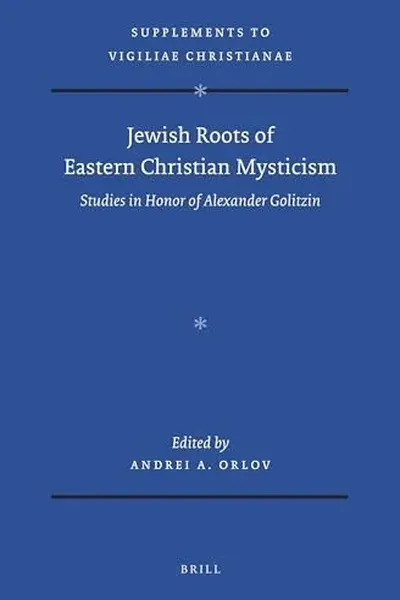
Jewish Roots of Eastern Christian Mysticism

 81
81

Jewish Roots of Eastern Christian Mysticism
Orlov's examination of the Jewish antecedents to Eastern Christian mysticism is a rigorously argued, if dense, scholarly contribution. He compellingly demonstrates the permeation of Merkabah mysticism into early Christian thought, particularly evident in the angelic hierarchies and ascent motifs. The strength lies in his precise textual analysis, revealing how concepts like the divine throne-chariot were not merely borrowed but transformed. A limitation, however, is the book's demanding prose, which may deter readers unfamiliar with the intricate theological debates of late antiquity. The discussion of Pseudo-Dionysius's engagement with these Jewish roots, while insightful, requires careful attention. Ultimately, this work offers a vital, nuanced perspective on the shared spiritual heritage of these traditions.
📝 Description
81
Andrei A. Orlov's 2020 book traces Jewish mystical traditions' influence on early Eastern Christianity.
Andrei A. Orlov's "Jewish Roots of Eastern Christian Mysticism" (2020) examines the deep connections between early Jewish mysticism and the emerging spiritual thought of Eastern Christianity. The book moves beyond simple claims of influence, demonstrating a thorough scholarly engagement with original texts and theological growth. Orlov shows how ideas and symbols from Jewish esotericism were taken up, changed, and understood within the developing Christian mystical discourse.
The work is particularly useful for academics studying comparative religion, church history, and mysticism. Readers interested in the period before the Council of Nicaea, the evolution of Christian worship, or the philosophical basis of early Church doctrine will find it significant. It also speaks to practitioners of contemplative traditions who wish to understand the historical and textual origins of their practices.
Set in late antiquity, a time when Jewish and Christian thought were forming, the book considers the intellectual environment where Greek philosophy, Gnostic ideas, and various Jewish mystical practices, including the Merkabah traditions, interacted. Grasping this context is key to seeing how specific Jewish elements entered Christian theological and mystical language, guiding its early direction.
This study is placed within the context of late antique esotericism, a fertile period for the exchange of mystical ideas between Jewish and Christian communities. It specifically addresses the Merkabah traditions of Jewish mysticism, which involved ascent to heavenly realms and visions of divine glory. Orlov investigates how these concepts, alongside others like angelic structures and interpretations of prophetic visions, found resonance within early Christian circles, particularly in figures who sought to articulate ecstatic experiences and cosmic order. This interaction shaped the vocabulary and conceptual frameworks of early Christian mysticism.
💡 Why Read This Book?
• Understand the Merkabah tradition's influence on early Christian ascent pneumatology, moving beyond generalized claims of "Jewish influence" to specific textual transmissions. • Grasp the theological adaptation of Jewish angelic hierarchies and divine throne-chariot imagery within the developing doctrines of Eastern Christianity, as detailed by Orlov. • Gain insight into the intellectual environment of late antiquity, where Orlov shows how Jewish mystical concepts were recontextualized by early Christian thinkers, shaping their esoteric discourse.
⭐ Reader Reviews
Honest opinions from readers who have explored this book.
❓ Frequently Asked Questions
What is Merkabah mysticism?
Merkabah mysticism refers to a strain of early Jewish mysticism focused on ecstatic ascent to the divine throne-chariot (Merkabah), as described in Ezekiel's vision. It involves visionary experiences of heavenly palaces and angelic encounters, influencing later esoteric traditions.
How did Jewish mysticism influence Eastern Christianity?
Orlov demonstrates how concepts like divine ascent, angelic hierarchies, and throne-chariot imagery, originating in Jewish esoteric traditions, were adopted and reinterpreted by early Christian mystics to articulate their own spiritual experiences and theological frameworks.
When was "Jewish Roots of Eastern Christian Mysticism" first published?
The book "Jewish Roots of Eastern Christian Mysticism" by Andrei A. Orlov was first published in 2020.
Which specific Jewish texts are discussed?
While specific titles vary, the work explores traditions stemming from Ezekiel's vision, Hekhalot literature, and other early Jewish mystical texts that informed concepts of divine ascent and angelic cosmology.
Is this book suitable for beginners in mysticism?
The book is primarily geared towards scholars and advanced students due to its dense academic nature and reliance on primary source analysis, rather than introductory concepts.
What is the significance of Pseudo-Dionysius the Areopagite in this context?
Pseudo-Dionysius is a key figure discussed, as his writings on angelic hierarchies and divine ascent are shown to incorporate and adapt elements from earlier Jewish mystical traditions, bridging the gap between Jewish and Christian esotericism.
🔮 Key Themes & Symbolism
Merkabah Ascent Traditions
The core of Orlov's analysis lies in the Merkabah (chariot) mysticism originating from Ezekiel's vision. This theme explores the ecstatic ascent through heavenly realms, the encounter with the divine throne, and the complex angelic structures that facilitated these journeys. The book details how these specific visionary practices and cosmologies, deeply embedded in Second Temple Judaism, provided a potent symbolic and experiential language that early Christian mystics adopted to articulate their own encounters with the divine.
Angelic Hierarchies and Divine Throne
A significant focus is placed on the development and transmission of concepts surrounding angelic orders and the divine throne. The work traces how Jewish traditions conceptualized celestial courts and the architecture of God's presence, and how these ideas were integrated into Christian angelology. The throne-chariot itself becomes a central symbol, representing the immanent yet transcendent nature of God, and its mystical apprehension becomes a goal for ascetics.
Biblical Visionary Interpretation
Orlov examines the practice of interpreting biblical visions, particularly those found in Ezekiel and Daniel, through a mystical lens. This theme highlights how early Jewish exegetes developed sophisticated methods for accessing deeper, spiritual meanings within prophetic narratives. The book demonstrates how these interpretive strategies were inherited and adapted by Christian mystics, allowing them to find prefigurations of Christ and the Church within ancient Jewish scriptural accounts.
Syncretism in Late Antiquity
The book implicitly addresses the broader phenomenon of religious syncretism in late antiquity. It illustrates how distinct spiritual traditions, including Jewish esotericism, Hellenistic philosophy, and emerging Christian theology, interacted and influenced one another. This theme underscores that the development of Christian mysticism was not an isolated event but part of a dynamic exchange of ideas and practices in the ancient Mediterranean world.
💬 Memorable Quotes
Direct passages from the work, attributed to the author.
“The Merkabah traditions provided a framework for understanding divine ascent.”
— This highlights how early Jewish mystical practices offered a structured pathway and conceptual language for mystics seeking direct experience of the divine realm, a framework later adapted by Christian thinkers.
“Angelic hierarchies structured the heavenly ascent.”
— This points to the organized cosmology of Jewish mysticism, detailing ranks of angels and celestial beings, which served as a map for mystics journeying towards God's presence.
“Ezekiel's vision of the throne-chariot was a crucial source.”
— This emphasizes the foundational importance of the biblical text in Ezekiel for developing mystical traditions focused on the apprehension of God's mobile, majestic throne.
“Christian mystics reinterpreted Jewish visionary motifs.”
— This indicates that the adoption of Jewish esoteric elements by Christians involved not just borrowing, but a conscious process of recontextualizing these symbols and practices within a Christian theological understanding.
“The book explores the interface between Jewish and Christian esoteric thought.”
— This signifies the work's central aim: to chart the specific points of contact and influence where Jewish mystical ideas and practices permeated and shaped early Christian spiritual and theological development.
🌙 Esoteric Significance
Tradition
This work firmly situates itself within the study of Abrahamic mysticism, specifically bridging Kabbalistic precursors and early Christian esoteric traditions. It aligns with the Hermetic and Gnostic interest in divine ascent and celestial hierarchies but grounds these concepts in verifiable Jewish sources, demonstrating a direct lineage rather than purely parallel development. It departs from solely Gnostic interpretations by emphasizing the specific textual and conceptual inheritance from rabbinic and pre-rabbinic Jewish mystical circles.
Symbolism
Key symbols include the Merkabah (divine throne-chariot), representing God's immanent yet transcendent presence and the locus of mystical vision. Angelic hierarchies, often depicted as complex celestial courts, symbolize the structured pathways and intermediaries encountered during ecstatic ascent. The Hekhalot (palaces) represent the stages of the mystical journey, requiring purification and specific knowledge to traverse successfully.
Modern Relevance
Contemporary scholars of comparative religion and esoteric studies continue to draw on Orlov's work to understand the shared roots of Jewish and Christian contemplative practices. Thinkers exploring the history of angelology, mystical theology, and the phenomenology of religious experience find his textual analysis crucial. Modern practitioners seeking to understand the historical underpinnings of their own meditative or visionary practices often look to this research for grounding.
👥 Who Should Read This Book
• Scholars of comparative religion and early Christian history seeking to understand the specific Jewish origins of mystical concepts. • Students of esoteric traditions interested in the textual and historical connections between Merkabah mysticism and later Christian contemplative practices. • Theological historians examining the development of angelology and divine ascent motifs in late antiquity and the Byzantine period.
📜 Historical Context
Andrei A. Orlov's "Jewish Roots of Eastern Christian Mysticism" engages with the vibrant intellectual and spiritual milieu of late antiquity, roughly spanning the 1st to 5th centuries CE. This era witnessed intense interaction between various religious and philosophical currents, including Hellenistic philosophy, Gnosticism, and diverse forms of Jewish esotericism. The work situates itself within scholarship that recognizes the wide impact of Second Temple Jewish mysticism, particularly Merkabah traditions, on the formative stages of Christian thought. It implicitly contrasts with earlier scholarship that sometimes posited a more distinct separation between Jewish and Christian esoteric developments. Orlov's research builds upon the work of scholars like Gershom Scholem, who revitalized the study of Jewish mysticism, and Peter Brown, who illuminated the social and cultural history of late antiquity. The reception of these ideas within Christianity, particularly as seen in the writings attributed to Pseudo-Dionysius the Areopagite, is central to understanding this transmission.
📔 Journal Prompts
The Merkabah traditions' conceptual framework for divine ascent.
The role of angelic hierarchies in structuring celestial journeys.
Ezekiel's vision of the throne-chariot as a mystical source.
The reinterpretation of Jewish visionary motifs by Christian mystics.
The interface between Jewish and Christian esoteric thought explored by Orlov.
🗂️ Glossary
Merkabah
Hebrew for 'chariot'. In mystical contexts, it refers to the divine throne-chariot described in Ezekiel's vision, a central focus of ecstatic ascent traditions seeking direct apprehension of God's glory.
Hekhalot Literature
A genre of early Jewish mystical texts describing ascents through heavenly palaces (Hekhalot) to reach the divine throne. These texts detail angelic encounters and mystical practices.
Angelic Hierarchies
Systems of classifying angels according to rank and function within the celestial realms. These hierarchies were crucial for understanding the structure of the divine court and the path of mystical ascent.
Divine Ascent
The concept and practice of a mystic journeying through heavenly realms or spiritual states to achieve direct communion with the divine presence.
Late Antiquity
The historical period spanning roughly from the 3rd to the 7th century CE, characterized by significant religious, cultural, and intellectual transformations, including the formation of major world religions.
Pseudo-Dionysius the Areopagite
A 5th-6th century CE theologian whose writings on angelic hierarchies and mystical theology profoundly influenced both Eastern and Western Christian thought, often incorporating earlier esoteric traditions.
Second Temple Judaism
The period of Jewish history from the rebuilding of the Second Temple in Jerusalem (c. 516 BCE) until its destruction by the Romans in 70 CE, a time of diverse religious movements and the development of esoteric ideas.
🔮 Readers Also Liked
Browse all →






More by Andrei A. Orlov
All books →



More Free Mysticism & Contemplation Books
View all →